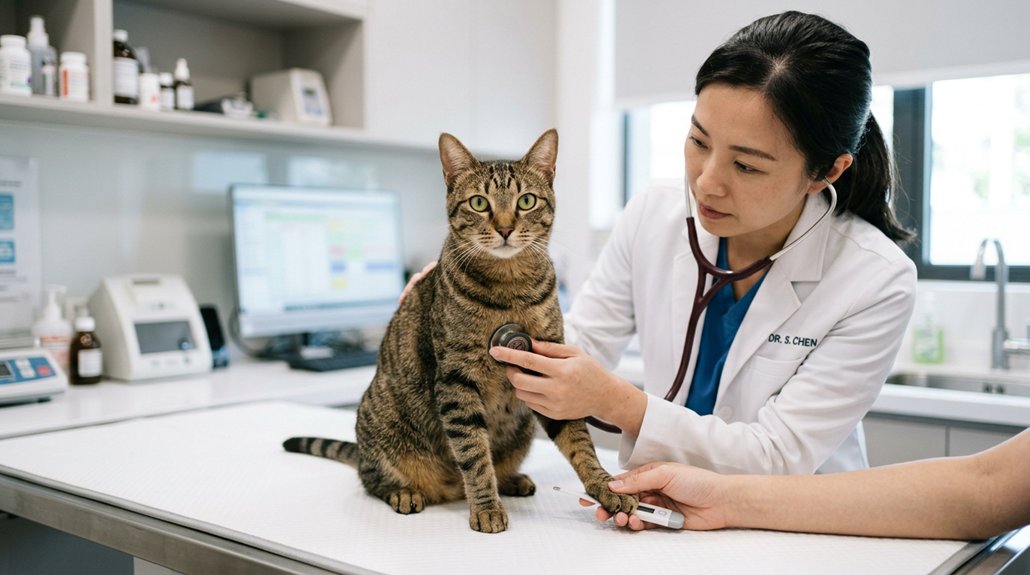
Routine vet visits are essential for your cat’s health and longevity. They establish a healthy baseline, allowing for the early detection of potential issues. Regular checkups can catch illnesses early, making treatments more effective and less costly, while enhancing your cat’s quality of life. Preventive care, such as vaccinations and screenings, protects against severe diseases and maintains well-being. Learn how these checkups greatly contribute to your cat’s overall health and happiness.
Key Takeaways
- Routine vet visits ensure early detection of health issues, allowing for timely and cost-effective interventions.
- Regular checkups help establish health baselines, facilitating monitoring for deviations from expected health patterns.
- Preventive care through screenings and vaccinations reduces risks of serious diseases like rabies and feline leukemia.
- Frequent assessments provide nutritional and behavioral insights, aiding in the prevention and management of obesity and hidden health problems.
- Vet visits tailored to age and condition optimize care, enhancing the quality of life and longevity for cats.
Establishing a Healthy Baseline With Routine Vet Visits
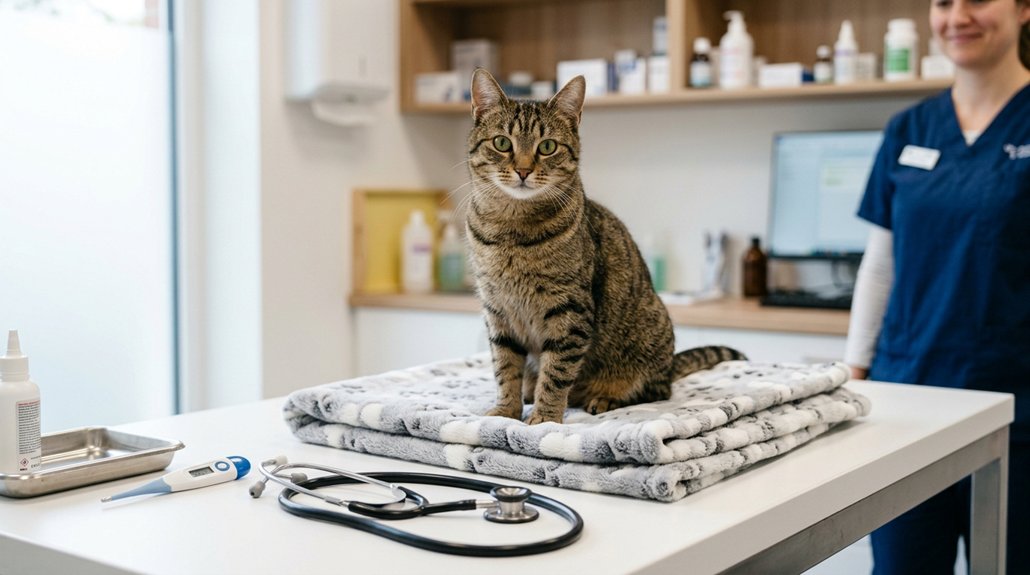
Establishing a healthy baseline through routine vet visits is crucial for maintaining your cat’s long-term health. These visits provide essential health assessments of your cat’s weight, coat quality, and important signs, setting a benchmark for future evaluations. Documenting these normal health values allows veterinarians to identify any deviations that might suggest underlying issues. Regular checkups are an opportunity to monitor changes in behavior, appetite, and physical condition. With this information, your veterinarian can develop wellness plans customized to your cat’s specific needs and lifestyle, ensuring they receive premier care. By having these baselines, you’ll enable more effective and timely interventions, greatly enhancing your cat’s overall well-being and potentially lowering treatment costs in the long run.
Preventive Measures to Detect Illness Early
As a pet owner, you understand the importance of being proactive when it comes to your cat’s health. Detecting early illness is essential, and routine screenings during regular checkups play a significant role. Veterinarians can identify subtle signs of health issues, like dental disease and kidney problems, before they become pronounced. Through preventive measures like routine vaccinations and parasite control, you protect your cat against serious diseases such as rabies and feline leukemia. Blood work and urinalysis during these exams aid in revealing metabolic conditions like diabetes and hyperthyroidism early, allowing for timely intervention. Regular checkups also help in identifying potential issues in indoor cats, like obesity and stress-related conditions, ensuring your feline remains healthy and happy.
How Often Should You Bring Your Cat to the Vet? Tips per Age and Condition
Building on the importance of preventive measures, knowing how often your cat should visit the vet is key to maintaining their health across different life stages. For kittens, regular veterinary visits every 3-4 weeks are essential for vaccinations and monitoring growth. Adult cats require annual checkups to detect any emerging health issues early. When it comes to senior health, cats aged 8 and older benefit from twice-yearly visits to manage chronic conditions like arthritis and kidney disease. Cats with pre-existing conditions may need more frequent checkups as advised by a vet. Always be vigilant—any sudden behavioral or health changes warrant immediate attention.
Here’s a quick guide:
| Cat Age/Condition | Visit Frequency | Focus |
|---|---|---|
| Kittens | Every 3-4 weeks | Kitten vaccinations |
| Adults | Annually | General health |
| Seniors (8+) | Biannual | Senior health |
| Pre-existing Issues | As advised | Condition-based |
Cost Savings and Quality of Life Through Early Detection
Regular checkups for your cat aren’t just about vaccines and weigh-ins. They offer essential financial benefits and wellness advantages through early detection. Identifying conditions like diabetes or kidney disease early can lead to more effective, less expensive treatments compared to managing advanced stages. Here are some advantages:
Early detection during cat checkups can lead to cost-effective treatments and improved wellness.
- Cost Savings: Preventative care can help you avoid expensive emergency visits.
- Wellness Advantages: Early intervention often leads to less invasive treatments.
- Quality of Life: Cats enjoy quicker recovery and improved overall well-being.
- Fewer Emergencies: Regular exams reduce the likelihood of crisis situations.
- Health Baseline: Tracking changes over time guarantees timely response to new health issues.
How Preventive Care Keeps Your Cat Healthier Longer
With consistent preventive care, your cat’s health can be maintained and their life prolonged. The importance of vaccinations cannot be overstated; they play a vital role in shielding your cat from serious diseases like rabies and feline leukemia. By prioritizing regular checkups, you also enable early detection of issues such as diabetes or kidney disease. This allows for timely interventions, often less costly and more effective. Moreover, receiving nutritional guidance during these visits helps manage obesity, enhancing both longevity and quality of life. Routine examinations and screenings not only establish a health baseline but also help track any major changes over time. Behavioral assessments can similarly reveal hidden health problems, ensuring they’re swiftly addressed to maintain your cat’s well-being.
Frequently Asked Questions
Should Cats Get Regular Check-Ups?
Yes, cats should absolutely get regular check-ups. They provide essential preventive care, vital for maintaining feline health. Regular visits guarantee early problem detection, timely interventions, and establish a health baseline, all contributing to a longer, happier life.
What Is the 3-3-3 Rule for Cats?
The 3-3-3 rule outlines a cat’s adjustment period: three days to feel safe, three weeks to acclimate to their new home, and three months to reveal true feline behavior, helping you manage expectations and support them compassionately.
What Is the 3:2:1 Rule in Cats?
Feline health is akin to a delicate garden requiring constant care. The 3:2:1 rule means kittens need wellness checks thrice yearly, adults twice, and seniors annually, ensuring timely vaccinations and early detection of potential issues.
What Is the #1 Cause of Death in Cats?
The #1 cause of death in cats is chronic kidney disease (CKD). It’s essential for feline health to monitor chronic diseases through regular checkups, as early detection can dramatically improve their quality of life and longevity.
Conclusion
By embracing the power of regular checkups, you’re giving your feline friend the world’s greatest gift—good health! These visits establish a health baseline, catch potential issues before they become life-threatening, and ultimately lead to cost savings and a happier cat. Remember, it’s not just about longevity; it’s about ensuring every moment together is as joyful as catnip on a sunny day. Prioritize preventive care, and your cat will thank you with a lifetime of purrs and love.