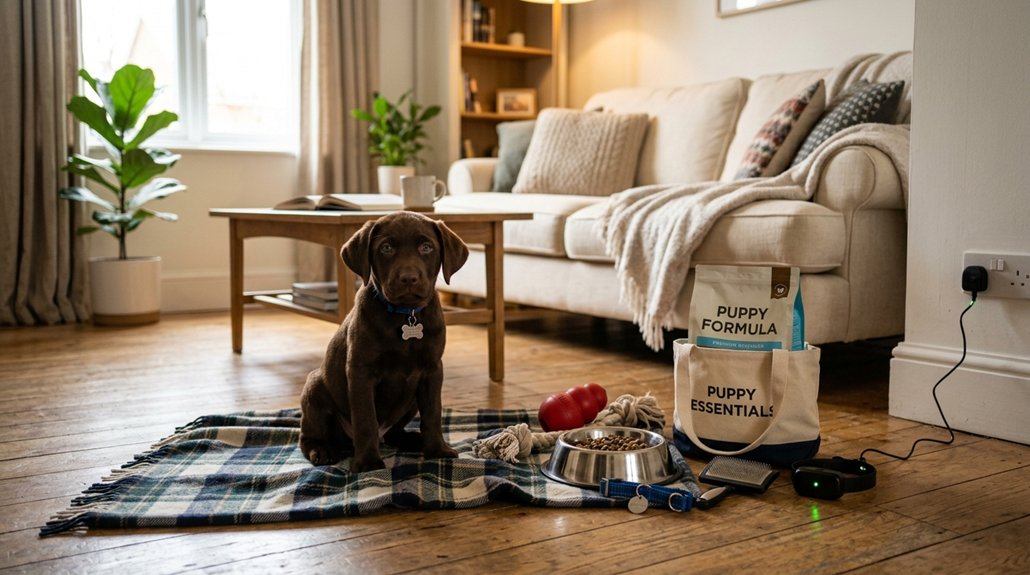
As a first-time dog owner, you’ll need essential supplies to guarantee a safe and comfortable environment for your pup. Invest in a durable collar and ID tag, a secure leash, and a cozy bed or crate. Choose stainless steel or ceramic bowls for hygiene and consider elevated options for larger breeds. Stock up on pee pads, toys, grooming tools, and flea prevention. Establish routines for feeding and socialization. Discover more on setting the foundation for a happy, healthy pet.
Key Takeaways
- Use a durable collar with an ID tag for reliable identification and enhanced safety.
- Opt for stainless steel bowls for long-lasting durability and hygiene in feeding.
- Invest in a cozy bed or crate to provide a secure resting environment.
- Provide engaging toys to ensure mental stimulation and reduce boredom.
- Utilize grooming tools like brushes and nail clippers for good hygiene and health.
The Essential Supplies to Welcome Your New Dog
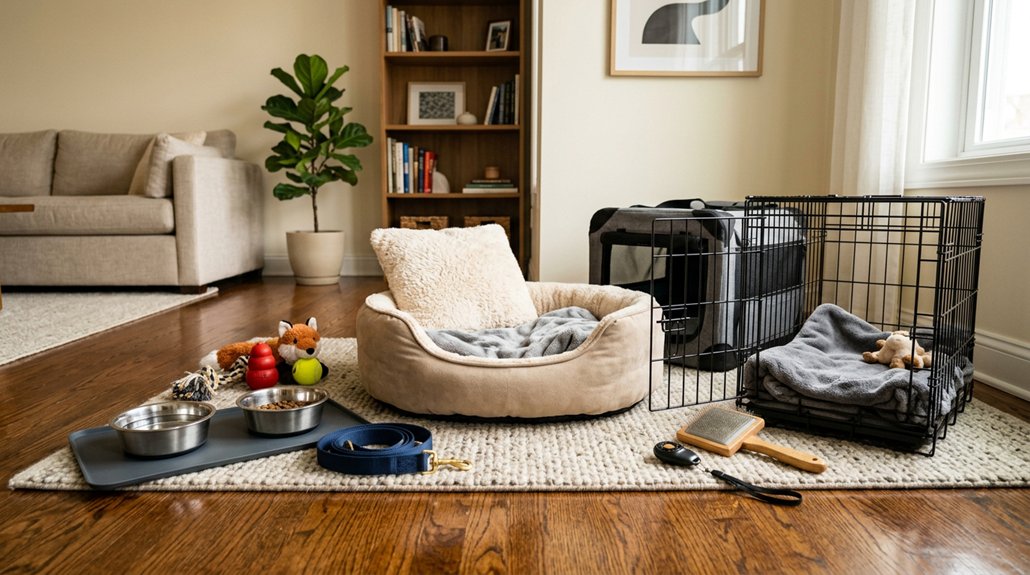
When preparing to welcome your new dog, it’s essential to equip yourself with important supplies to guarantee their health and comfort from the beginning. Start with dog proofing your home by removing hazards to create a safe environment. Understanding dog behavior helps in anticipating potential risks, such as chewable cords or toxic plants. Equip your space with a durable collar and ID tag, fundamental for identification. A secure leash is critical for walks, considering the dog’s energy and behavior patterns. Provide a cozy bed or crate, promoting restful sleep and secure space. Toys designed for mental stimulation cater to their need for play. Also, prepare for house training using pee pads strategically placed to assist their learning process.
Choosing High-Quality Food and Water Bowls
Have you considered the impact your choice of food and water bowls has on your dog’s health? Selecting the right bowls is essential for preventing health issues. When evaluating bowl material options, opt for stainless steel or ceramic, as they’re durable, non-toxic, and inhibit bacterial growth better than plastic. For larger breeds, elevated bowl benefits include improved posture and reduced joint strain, making mealtimes more comfortable. Incorporate these factors when choosing:
- Stainless steel or ceramic bowls for durability and hygiene.
- Elevated bowls for large breeds to promote ergonomic eating.
- Non-slip bases to prevent mess and stabilize the bowls.
Selecting appropriately sized bowls guarantees your dog eats comfortably, minimizing stress and enhancing their overall well-being. Regular cleaning is vital to maintain peak hygiene.
Set Up a Cozy Bed or Crate for Your Dog
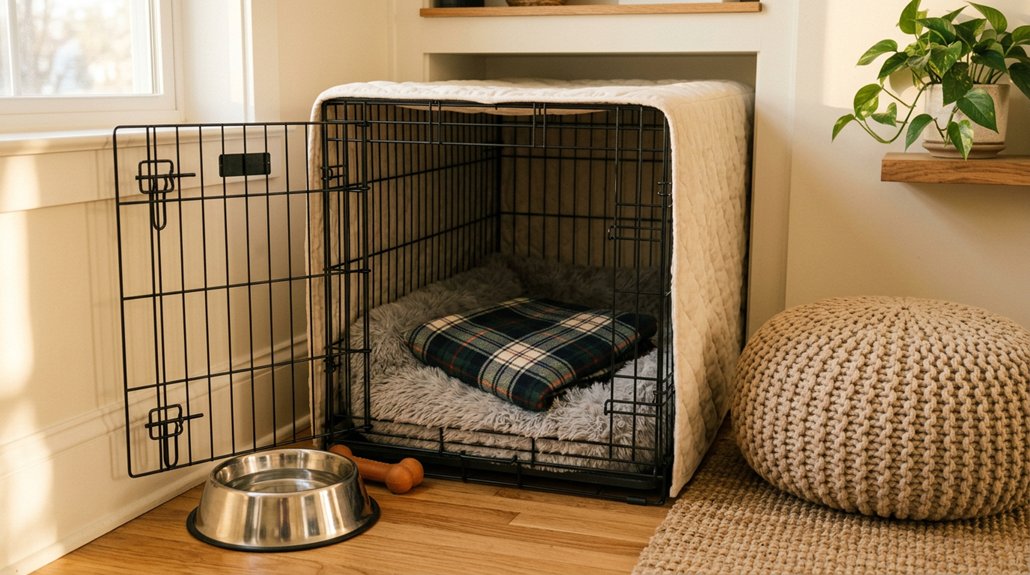
A nurturing environment goes beyond nutritious meals and hydrating bowls; ensuring your dog has a comfortable resting spot is fundamental to their well-being. Implementing crate training offers a safe haven, facilitating your dog’s acclimation and fostering a sense of security. Choose a crate that’s appropriately sized to allow rest and relaxation, while also considering bed materials for added comfort. Orthopedic or memory foam beds are excellent, especially for dogs with joint issues, enhancing overall comfort levels. Invest in waterproof or washable bed covers to maintain hygiene and freshness. Additionally, a cozy kennel pad can introduce warmth and plush support, promoting excellent relaxation and health. By setting up a thoughtful sleeping area, you’re supporting your dog’s physical and mental wellness.
Select Safe Collars and Leashes for Training
Selecting safe collars and leashes is essential for effective dog training, guaranteeing both your pet’s comfort and security. A sturdy, well-fitting collar serves as your dog’s primary safety measure and identification. Consider these critical collar types and leash materials:
- Breakaway Collars: Minimize choking risks by releasing if snagged during adventurous play.
- Fixed-Length Leashes: Choose durable leash materials offering superior control, especially in busy areas. Avoid extendable versions for safety.
- Comfort and Dual Grips: These features improve handling for different leash materials, tailored to your dog’s pulling behavior.
Regularly check your dog’s gear to verify it stays in top condition as they grow. Prioritizing these elements will lead to a healthier and safer training experience for both you and your pet.
Pee Pads and Cleaning Supplies for Potty Training
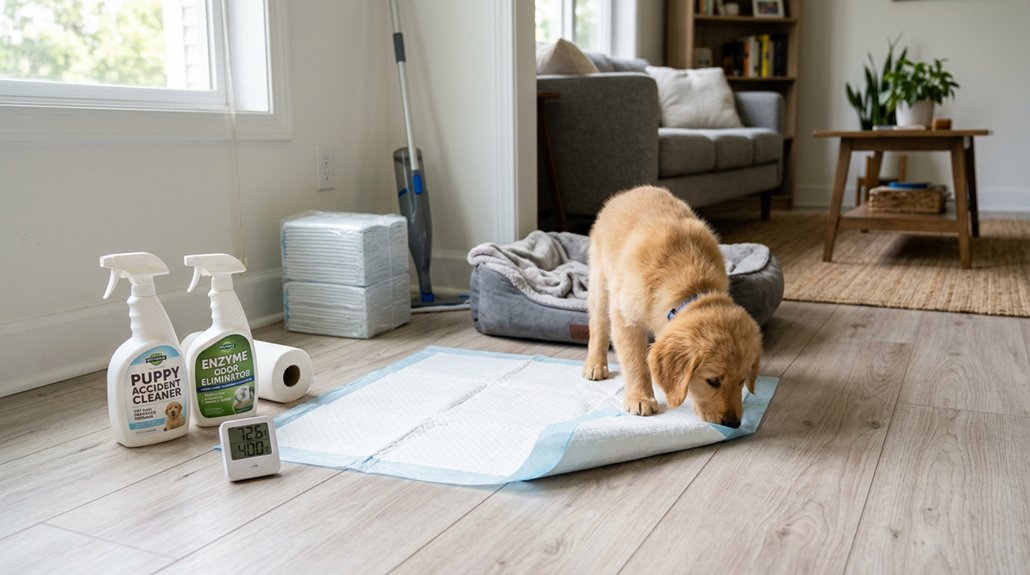
To effectively potty train your new dog, strategically placing pee pads guarantees easy access and maximizes their efficacy in both teaching and accident management. Monitor their usage to make timely adjustments to your training techniques, reinforcing positive behaviors and maintaining a clean environment. It’s crucial to have pet-specific cleaning supplies on hand to eliminate odors and prevent repeat incidents, promoting a healthy and hygienic setting for your dog’s comfort.
Proper Pee Pad Placement
When commencing on the journey of potty training, understanding proper pee pad placement can greatly expedite the learning process for your new furry companion. To guarantee training success, consider strategic pee pad locations. Place them in high foot traffic areas or where your dog frequently spends time for easy access. By monitoring your dog’s behavior, you can identify their preferred potty spots and adjust pee pad placement for more effective house training.
It’s important to remember:
- Multiple Options: Provide multiple pads throughout the home initially, gradually reducing them as your puppy becomes reliable.
- Hygiene Priority: Keep pee pads away from food and water bowls to maintain sanitary conditions.
- Routine Replacement: Regularly replace used pads to prevent odors and maintain a positive training environment.
Essential Cleaning Tools
After establishing the best spots for your pee pads, it’s equally important to equip yourself with the right cleaning tools to maintain a hygienic environment during your pup’s potty training phase. Start by exploring pee pad alternatives like washable options, which reduce waste and are often more absorbent. Cleaning product recommendations focus on high-quality, enzyme-based cleaners. These products are essential because they effectively neutralize odors and break down organic compounds in urine and feces, preventing re-marking behaviors.
Ensure you have expendable tools such as paper towels and disposable gloves for swift clean-up. Having an arsenal of these essentials allows you to promptly tackle any accident. Regularly monitor and replace pads to encourage consistent use, maintaining a clean and sanitary training space for both you and your puppy.
Choose Toys for Fun and Mental Engagement
A well-rounded selection of toys is essential for nurturing a dog’s mental and physical health. Interactive toys and puzzle challenges are crucial for engaging your dog’s mind, preventing boredom, and reducing destructive behaviors. These toys often include treat-dispensing mechanisms, encouraging critical thinking and sustained interest. Incorporate chew satisfaction with sturdy chew toys, supporting dental wellness by mitigating tartar buildup. Enhance engagement and physical exercise through interactive play, like tug ropes or erratically moving balls, strengthening your bond with your furry friend.
Remember to rotate the toys regularly for maximum rotation benefits, offering fresh stimuli and keeping your dog interested and challenged. Here are the must-have toys for first-time dog owners:
- Puzzle Toys
- Chew Toys
- Interactive Balls
Grooming and Health Products You Need
Ensuring your dog’s well-being starts with having the right grooming supplies, such as brushes, nail clippers, and ear cleaners, tailored to their coat type for ideal skin health. Don’t overlook the necessity of regular dental care, using tools like toothbrushes and dental chews, to prevent oral diseases that could compromise overall health. Additionally, arm yourself with essential preventative health products, including flea, tick, and worming treatments, to safeguard your furry friend from parasites and related health complications.
Essential Grooming Supplies
To maintain your dog’s health and well-being, investing in essential grooming supplies is crucial. Proper dog coat care involves selecting a high-quality brush tailored to your dog’s specific coat type. Regular brushing not only reduces shedding and matting but also promotes healthy skin and fur. Nail maintenance is indispensable for preventing discomfort and potential injuries; hence, having reliable nail clippers is a must. Routine ear cleaning with specialized ear cleaners helps prevent infections, particularly in breeds prone to ear problems. Cultivate dental hygiene by using dog toothbrushes and dental chews to thwart gum disease. Finally, grooming towels are important for efficient drying, keeping your furry friend comfortable and your home tidy.
- High-quality brush for coat care
- Nail clippers for nail maintenance
- Ear cleaner for ear cleaning
Preventive Health Essentials
For every new dog owner, understanding and acquiring preventive health essentials is essential to your dog’s well-being and long-term health. Start with flea prevention to avoid infestations that can lead to severe health complications. Utilize both topical treatments and oral medications to effectively shield your pet. Dental care is equally important; integrate daily toothbrushing and provide dental chews to combat periodontal disease, affecting over 80% of dogs by age three. A thorough first aid kit should be readily available, ensuring you’re prepared for minor injuries. Invest in high-quality grooming tools like nail clippers and specialized brushes to maintain healthy coat and skin. Finally, routine veterinary visits for vaccinations and wellness check-ups are indispensable to safeguard your dog’s health.
Build Routine and Socialize Your Dog for Success
While starting as a first-time dog owner might feel overwhelming, establishing a structured routine and promoting early socialization are essential to your dog’s overall well-being. A consistent daily routine involving feeding, potty breaks, and playtime helps your canine companion understand expectations. Implementing socialization techniques, like gradually exposing your pup to various environments, different people, and other animals, is vital for building their confidence and reducing anxiety.
Leverage high-value treats for effective training, ensuring treats comprise no more than 10% of daily caloric intake. Incorporate basic commands—“sit,” “stay,” and “come”—into daily interactions to enhance communication and reinforce obedience.
- Consistent Daily Routine: Establish stability.
- Socialization Techniques: Gradual exposure boosts confidence.
- Structured Training: Commands improve interactions.
Frequently Asked Questions
How Do I Find a Reputable Vet for My New Dog?
Research vet clinics online, prioritize ones with positive reviews. Confirm your vet has proper credentials, like a DVM degree and state licensing. Network with pet owners and consider clinics offering thorough pet care and emergency services for long-term wellness.
What Should I Know About Pet Insurance Options?
You’ve got various pet insurance options to ponder, like thorough or accident-only policy types. Evaluate coverage limits carefully, focusing on vet bills, chronic illnesses, and routine care. It’s essential for managing unexpected health expenses for your dog.
How Often Should My Dog Visit the Vet?
Your dog should visit the vet annually for wellness checkups. Depending on their vaccination schedule, additional visits may be required for boosters. Regular vet visits help monitor health, ensuring ideal well-being through updated vaccinations and preventive care.
What Are Signs of Stress or Anxiety in Dogs?
“A stitch in time saves nine” captures it best. Look for stress indicators like excessive panting, trembling, or destructive behavior. Address anxiety with relief techniques: consistent routines, mental stimulation, and environmental enrichment are essential for your dog’s well-being.
How Can I Help My Dog Adjust to a New Home?
To help your dog adjust, start crate training for security. Gradually introduce toys that stimulate mental health. Maintain a consistent routine, offering patience and positive reinforcement to alleviate stress and foster a sense of stability.
Conclusion
As you immerse yourself in the delightful chaos of dog ownership, every choice you make—every high-quality bowl, cozy bed, and durable leash—lays the foundation for your pup’s health and happiness. Make certain your home’s stocked with pee pads for mishaps and stimulating toys for boundless mental engagement. Become a grooming guru and a socializing savant. With the right essentials, you’re not just welcoming a dog; you’re crafting a haven, a sanctuary, a palace of pooch perfection! Welcome to the bark-side!