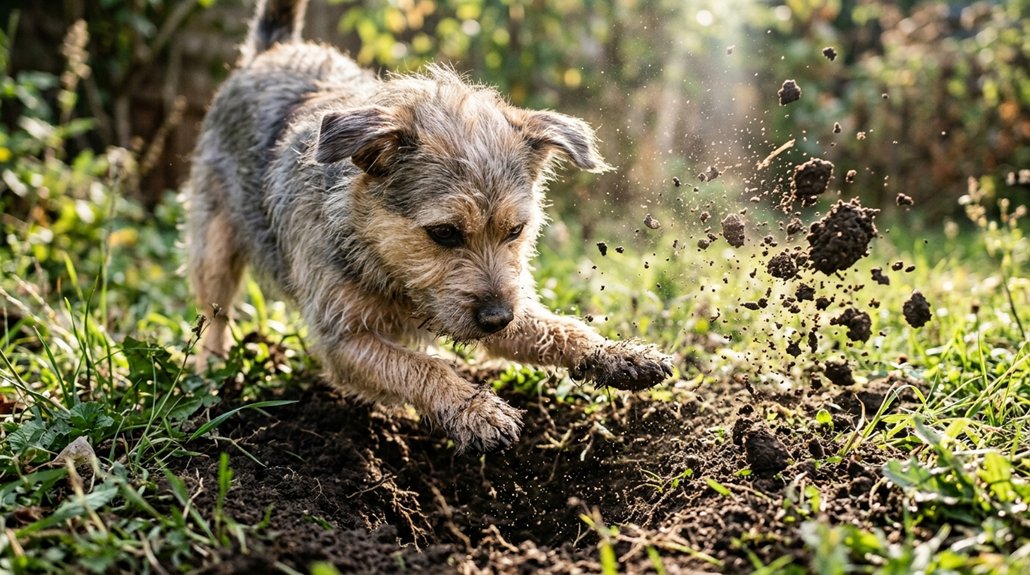
Dogs dig holes due to instinctual behaviors inherited from their wild ancestors, aimed at survival and comfort, like creating shelters and regulating temperature. Stress and boredom can amplify this tendency, especially in breeds like terriers that were bred for hunting. Weather conditions also play a role; dogs dig to find relief from hot or cold environments. By understanding these behaviors, you can effectively manage your dog’s digging habits and explore further strategies for engagement.
Key Takeaways
- Dogs dig holes due to instinctual behaviors derived from their ancestors’ survival strategies, such as creating secure resting spots.
- Digging fulfills emotional needs and instincts linked to temperature regulation and territory marking, like burying toys or bones.
- Certain breeds are genetically predisposed to digging because of ancestral roles, notably terriers with their hunting backgrounds.
- Dogs often dig as a coping mechanism for boredom or stress, which can be mitigated through exercise and mental engagement.
- Weather influences digging behaviors, as dogs seek cooler soil during hot weather or shelter in cold climates.
Why Do Dogs Dig Holes?
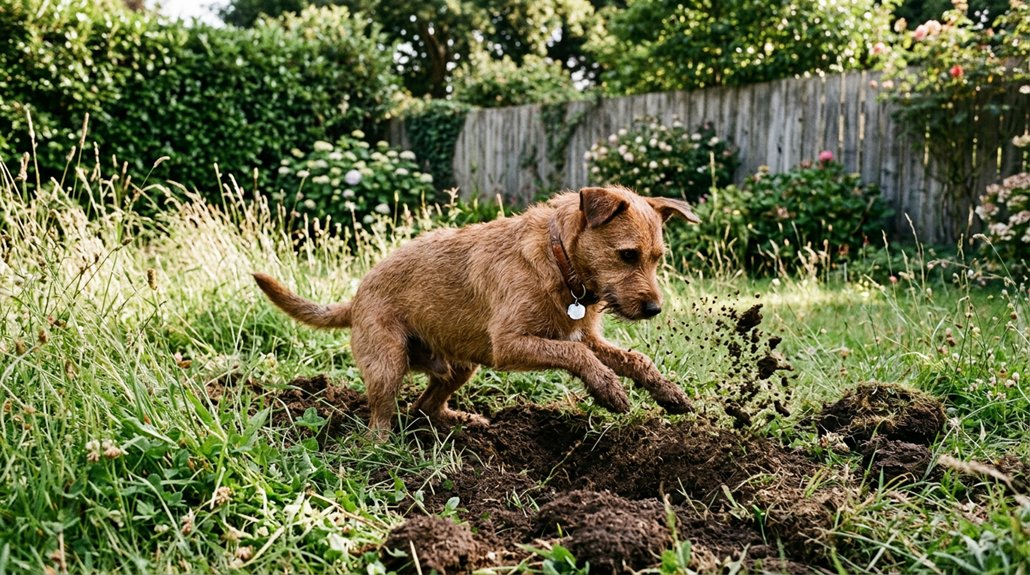
Unraveling the mystery of why dogs dig holes reveals a tapestry of instinctual behaviors rooted in their evolutionary past. Digging can be linked to underlying emotional needs, suggesting a deeper psychological landscape tied to both survival and comfort. While some dogs dig to fulfill territorial instincts—burying toys or bones—the act may also stem from a need for temperature regulation. On hot days, they seek cooler earth, and when it’s chilly, a dug hole can offer warmth, ensuring digging safety against environmental stressors. In addition, certain breeds like terriers and dachshunds exhibit more pronounced digging behaviors because of selective breeding. Understanding these tendencies allows you to perceive their actions as more than mere nuisances but as integral parts of their complex, instinct-driven existence.
Why Your Dog’s Ancestors Made Them Natural Diggers
Understanding your dog’s instinctual digging behavior requires examining their ancestral roots, where activities like digging rested at the core of survival strategies. Select breeding, particularly in certain dogs like terriers, has amplified this intrinsic tendency, reflecting adaptations developed in natural habitats over generations. By recognizing these behaviors as inherited traits, you can better manage and respond to your dog’s digging habits today.
Instinctual Digging Behavior
Although your dog’s digging behavior might seem puzzling or even frustrating at times, it’s deeply rooted in their ancestral instincts. Rooted in survival, dogs’ digging techniques have evolved as instinctual behavior. Wild ancestors, such as wolves, used digging to create secure resting spots and shelters. These techniques have been passed down, making today’s domesticated dogs natural diggers. Here’s how these instincts impact your dog:
| Instinct | Purpose |
|---|---|
| Shelter Creation | Building dens |
| Thermoregulation | Finding cool or warm spots |
| Prey Capture | Uncovering hidden food |
| Genetic Predisposition | Certain breeds like terriers |
These behaviors reflect adaptable genetic instincts and environmental influences, illustrating how deeply ingrained these actions are in canine heritage, ensuring comfort and survival.
Breeding History Influence
Your dog’s digging tendencies, far from being just a quirky behavior, are deeply entwined with their breeding history. This inherent behavior stems from a genetic predisposition linked to their ancestors, where wild canines dug for secure resting spots or shelter. Selective breeding over generations has intensified this instinct in certain breeds. Consider:
- Terriers – Specifically bred for their ability to hunt by digging, showcasing their heightened genetic predisposition.
- Earthdogs – A category that includes breeds adept at unearthing burrowing animals, highlighting the direct role of selective breeding.
- Wild Heritage – Digging isn’t learned but an innate trait passed down from ancestors, shaped by natural selection.
Understanding your dog’s breed history reveals their natural instincts, explaining pronounced digging tendencies in some breeds.
Natural Habitat Adaptations
When considering the natural habitat adaptations that made your dog’s ancestors skilled diggers, it is vital to recognize how environmental challenges shaped their survival strategies. Habitat evolution played an important role as dogs’ ancestors, like wolves, engaged in instinctual behavior by digging to create comfortable resting spots. This instinct, still seen today, was initially a means to seek refuge from scorching heat by finding cooler ground or to shield against harsh winds.
Certain breeds, particularly terriers, were developed for their digging prowess to hunt burrowing animals, underscoring their natural inclination. The behavior wasn’t just about comfort; it had survival aspects too. Digging allowed ancestors to cache resources like food, safeguarding against competition. Additionally, denning helped secure safe spaces for rearing young, affirming the evolutionary significance of digging.
Breeds Prone to Digging
When considering dog breeds prone to digging, it’s essential to understand the natural instincts embedded in certain breeds like terriers and dachshunds. Terriers were specifically bred for their ability to hunt small, burrowing animals, which is why they often show a strong inclination to dig. Similarly, dachshunds’ history of badger hunting explains their notorious digging behavior, as they’re instinctively driven to unearth prey.
Natural Digging Instincts
While many dog breeds exhibit digging behaviors, certain breeds are particularly prone due to their natural digging instincts, a characteristic deeply rooted in their genetic makeup. These tendencies arise from evolutionary behavior meant for survival and adaptation. For instance, breeds like Beagles and Border Collies have a pronounced genetic predisposition to dig. They’re inclined to simulate hunting or exploring, echoing ancestral behaviors. Understanding this instinctual trait is essential for effective management.
Here’s how you can recognize and manage these tendencies:
- Recognize digging as instinct: It’s more than mere habit; it’s an inherited trait tied to hunting and exploration.
- Channel energy appropriately: Provide physical and mental stimulation to balance their digging urges.
- Establish designated digging zones: Create controlled environments where this behavior can be safely expressed.
Terrier and Dachshund Traits
Terriers and Dachshunds, two remarkable examples of breeds with a pronounced inclination to dig, showcase behaviors rooted deeply in their historical development for hunting burrowing animals. Terrier instincts are finely tuned for this task, with breeds like the Jack Russell Terrier and Bull Terrier bred specifically for their digging abilities to flush out prey. Similarly, Dachshund behavior is heavily influenced by their genetic background. These dogs were developed to hunt badgers, benefiting from their unique body shape and strong digging drive.
This instinct is often heightened by their high energy levels, requiring significant physical and mental stimulation. Providing designated digging areas can help manage this natural proclivity, allowing Terriers and Dachshunds to channel their ancestral “earthdog” traits constructively and reduce potential behavioral issues.
How Boredom and Stress Cause Digging
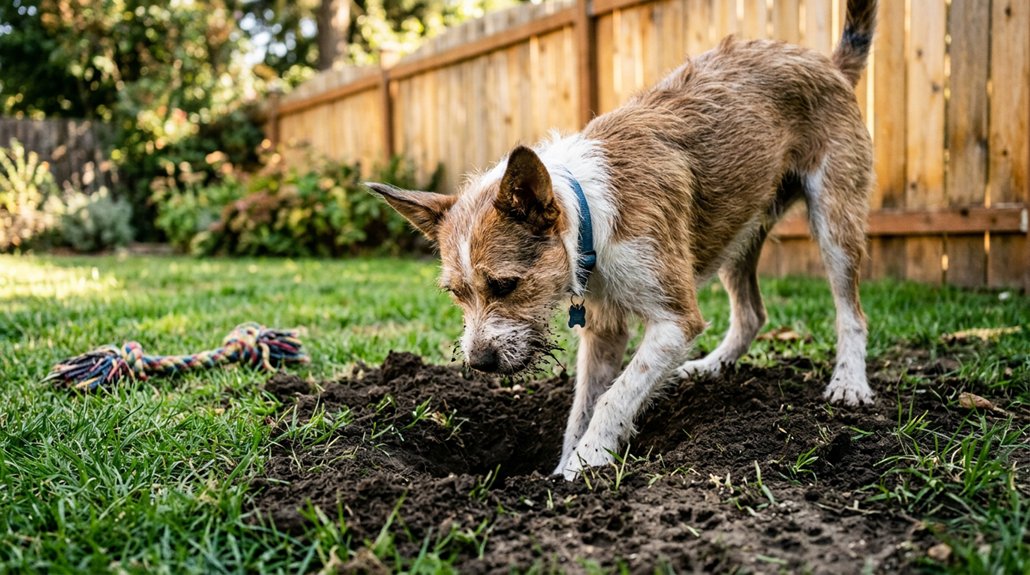
Although often overlooked, boredom and stress are major factors that can lead to a dog’s digging behavior. When left alone without mental stimulation or sufficient exercise, dogs may dig to seek boredom relief. Stressful situations like loud noises or household changes can drive dogs to dig as a form of stress management.
To address these behaviors, consider the following strategies:
- Provide Regular Exercise: Guarantee dogs get ample physical activity to expend pent-up energy that could lead to yard destruction.
- Engage with Interactive Toys: Toys and food puzzles can stimulate your dog’s mind, reducing boredom-related digging.
- Create a Stable Environment: Minimize stress by maintaining consistency in your dog’s routine and environment.
Implementing these measures can appreciably mitigate digging due to boredom and stress.
Digging as a Hunting Behavior
Driven by their predatory instincts, many dogs engage in digging as a form of hunting behavior deeply rooted in their ancestral past. With keen senses of smell and hearing, your dog can detect hidden burrowing animals like chipmunks and moles underground. This triggers their natural hunting instincts, leading to concentrated digging efforts around roots and shrubs where they sense prey movement or activity. Breeds like terriers are particularly adept, having been bred specifically for these underground pursuits, thereby emphasizing their role in prey detection and capture. Digging is not merely about accessing these subterranean creatures; it’s an expression of natural behaviors passed down from wild canines. At times, this instinct also leads to persistent digging if rodents activate their protective instincts.
How Weather Influences Dog Digging
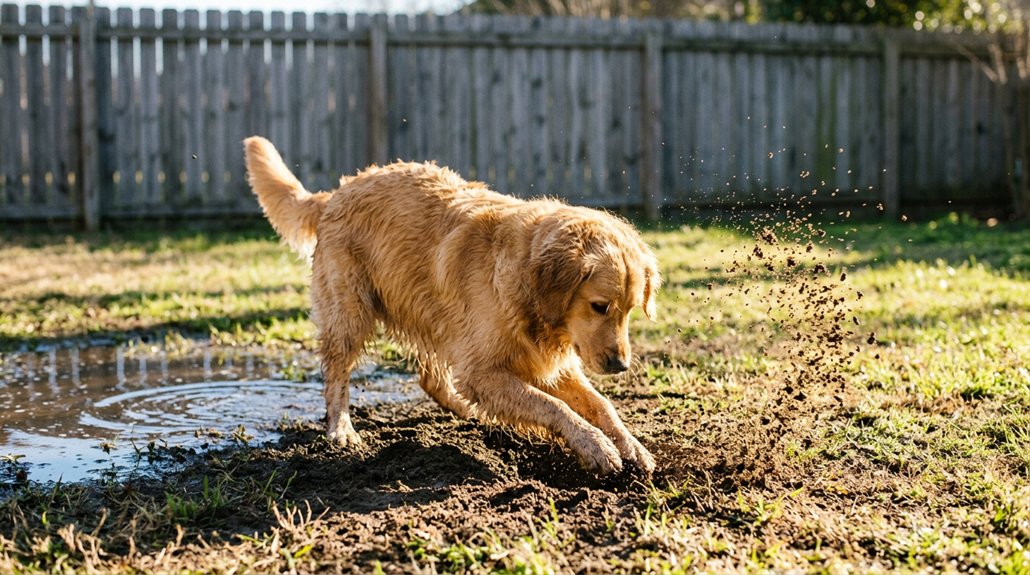
- Hot Weather: Dogs often dig to uncover cooler soil, reducing their body temperature and finding respite from excessive heat.
- Cold Weather: Conversely, in colder climates, digging provides a sheltered space, protecting dogs from harsh winds and low temperatures.
- Stress Response: Weather extremes, including storms, may amplify anxiety, prompting dogs to dig as a comforting action.
Understanding these motivations underscores the necessity of providing environmental adjustments, such as sufficient shade and insulated shelter, mitigating the drive to dig.
Creating a Designated Digging Zone
One effective strategy to manage a dog’s digging behavior is the creation of a designated digging zone. This dedicated area, such as a sandbox, channels the natural digging instinct into a controlled environment. By offering digging alternatives, you’re redirecting energy away from garden beds or lawns. Burying toys, bones, or treats within this zone acts as playful reinforcement, encouraging your dog to dig here rather than elsewhere. Consistent redirection and rewarding appropriate digging behavior promote positive engagement with the area. This structured approach alleviates stress and boredom while providing physical exertion. Moreover, integrating agility or scent work activities can enhance mental stimulation, ensuring your canine companion remains satisfied and engaged in their allotted exploration space.
Effective Methods to Prevent Unwanted Dog Digging
Having established a designated digging zone, it’s important to also focus on effective methods to prevent unwanted dog digging. To implement successful digging prevention, it’s essential to understand the underlying reasons behind your dog’s behavior. Common causes include boredom, stress, or innate instincts.
Three structured approaches can guide you:
- Increase mental and physical stimulation—daily exercises, interactive toys, and engaging playtime can mitigate excessive digging by satisfying your dog’s energy and curiosity.
- Enhance your outdoor environment—burying wire or placing rocks along fences prevents escape-driven digging by providing a secure area.
- Supervise and reinforce—consistently monitor your dog outdoors and use positive reinforcement to reward acceptable behaviors, redirecting energy positively.
These strategies harness scientific insight into dog behavior, fostering harmonious pet-human interactions.
Frequently Asked Questions
How Do You Say “I Love You” in Dog Language?
You’re saying “I love you” in dog language through canine communication by engaging in physical closeness, reciprocating playful behaviors, and nurturing emotional bonding. Acknowledge their body language and gentle vocalizations to build a strong, affectionate relationship with your dog.
How Do Dogs Say They’re Sorry?
Your dog’s apology is as clear as a flashing neon sign through their body language. Their canine behavior may include lowered heads, tucked tails, or offering paws, revealing their regretful nature while seeking your understanding and forgiveness.
What Are the Signs of an Unhappy Dog?
You can identify signs of an unhappy dog by observing its behavior. Stress indicators include excessive digging and chewing, while anxiety signs might involve changes in eating habits. A drop in playful antics also signals potential distress.
What Are Signs of a Poor Dog’s Quality of Life?
Imagine your dog, Max, incessantly barking and losing weight. Such behavior signals poor quality indicators like environmental stressors and health issues. It’s vital to address these dog behaviors promptly to guarantee Max’s well-being.
Conclusion
Understanding why dogs dig holes is like piecing together a biological puzzle. Their ancestors’ instincts, combined with specific breed traits, boredom, stress, and even hunting instincts, all play their roles. Weather can also act as a catalyst, nudging these behaviors forth. By creating a designated digging zone, you’re channeling their natural tendencies constructively. So, think of it as maneuvering through a maze—understanding each twist and turn leads to a harmonious coexistence between you and your furry friend.