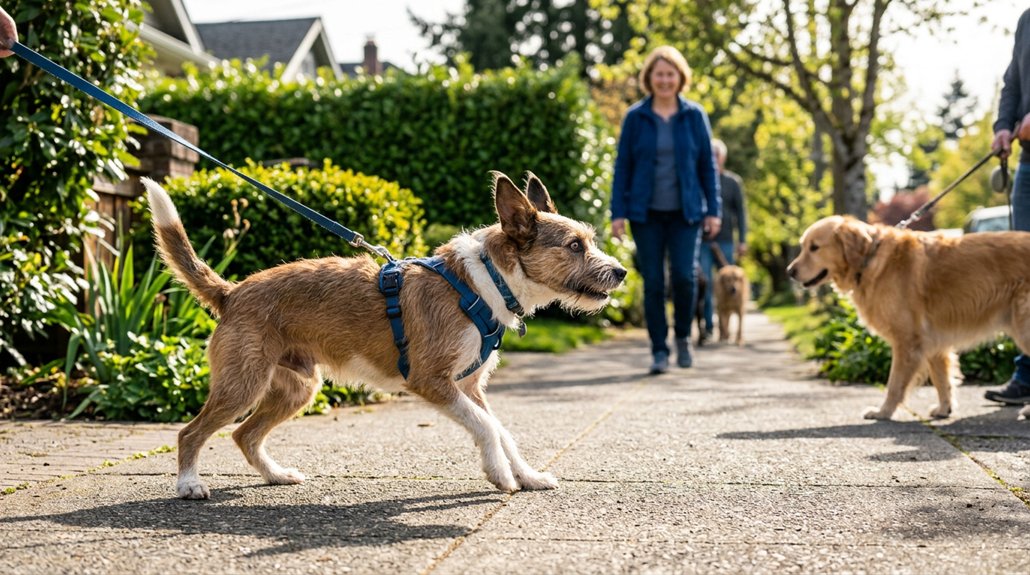
Your dog likely reacts to other dogs on walks due to fear or frustration. These emotions can manifest as lunging, barking, or growling, often triggered by head-on approaches or a tense leash. Understanding your dog’s body language, like a tucked tail or bouncing, helps identify the emotional root. A relaxed leash can reduce tension, and positive reinforcement aids in emotion regulation. Exploring further will provide strategies to manage and modify your dog’s behavior effectively.
Key Takeaways
- Leash reactivity often stems from a dog’s fear or frustration when encountering other dogs.
- Tight leashes can increase stress, leading to heightened reactivity during dog encounters.
- Recognizing body language helps identify if the reactivity is due to fear or frustration.
- Trigger stacking and proximity to other dogs may amplify a dog’s reactive response.
- Positive reinforcement and gradual exposure can help shift a dog’s reactions to other dogs.
Leash Reactivity in Dogs: Causes and Solutions
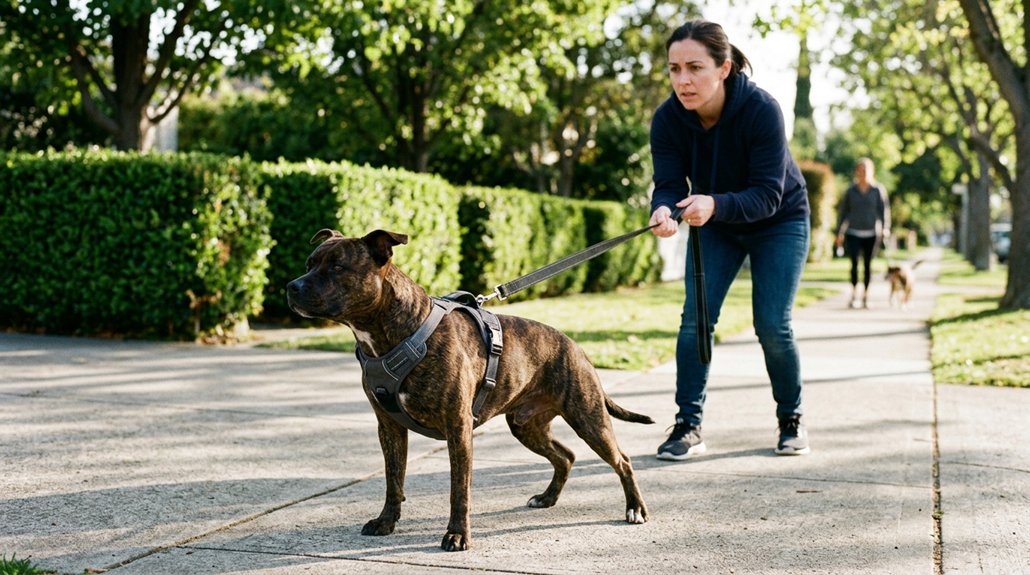
When you’re dealing with leash reactivity in dogs, understanding the underlying causes is essential to crafting effective solutions. Emotion regulation plays a pivotal role, as reactivity often stems from fear or frustration. These emotions might manifest as either distance-increasing behaviors (like growling) or distance-decreasing ones (such as playful barking). Key triggers include head-on approaches, tight leashes, and punitive reactions, which often heighten a dog’s emotional response.
Implementing positive reinforcement with consistency is fundamental for successful training. By pairing triggers with high-value treats, you can foster positive associations, gradually shifting your dog’s reactions. Consistent training and gradual exposure help in reducing reactivity, ultimately making your walks more enjoyable. Stay patient, and reward your pup’s calm demeanor consistently to build lasting results.
Signs Your Dog Is Reacting Out of Fear or Frustration
Understanding the root of leash reactivity is only part of the equation; recognizing whether your dog is reacting out of fear or frustration is equally essential for effective training. Fear indicators often encompass a low body posture, tucked tail, and growling, aimed at increasing distance from perceived threats. Conversely, frustration signals include enthusiastic barking, lunging, or bouncing—behaviors driven by the desire to engage with, rather than escape from, the trigger. Be watchful for subtle cues such as avoiding eye contact, lip licking, or quick head turns, which can reveal your dog’s emotional state before a full reaction. By discerning these signs, you can better develop targeted behavioral modification strategies that address the specific emotional roots of your dog’s reactivity.
Identifying Triggers: An Observational Guide
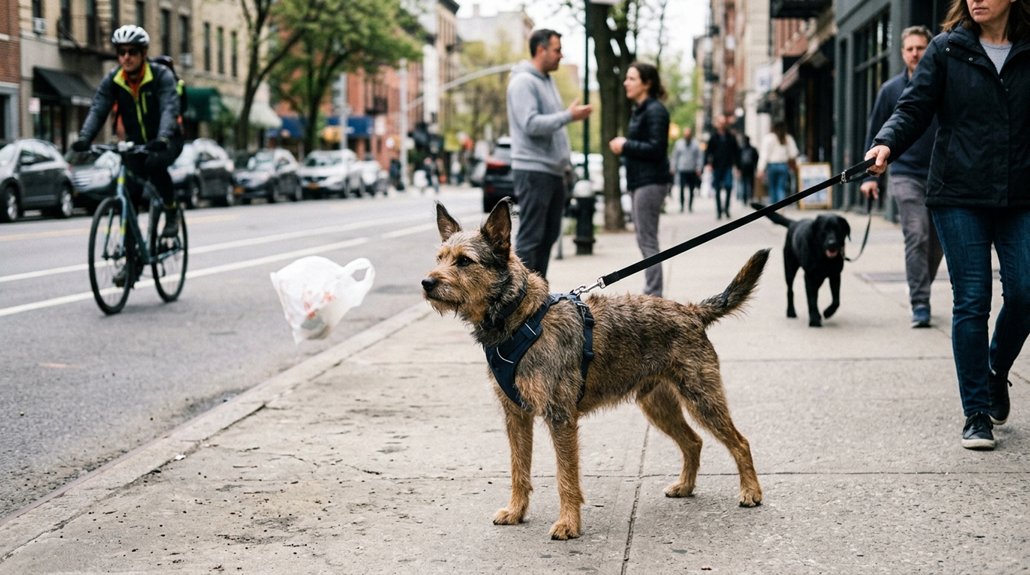
To effectively manage your dog’s reactivity on walks, it is crucial to observe their body language and recognize precise triggers like other dogs or unfamiliar stimuli. Keeping track of these reactions in a journal can aid in identifying patterns, allowing you to better manage situations by staying outside your dog’s threshold distance. Additionally, be mindful of trigger stacking, where multiple small triggers can accumulate, increasing the likelihood of an unwanted response.
Observing Canine Body Language
As you commence walks with your dog, utilizing a keen eye to observe canine body language can be an invaluable tool for identifying behavioral triggers. Recognizing canine communication through body language signals allows you to gauge comfort levels and anticipate reactions. Dogs often communicate through:
- Lowered tails and flattened ears: Signs of fear.
- Avoidance behaviors: Indicates discomfort or anxiety.
- Bouncy movements and playful barking: Signs of frustration.
- Growling or lunging: Indicators of feeling threatened.
- Direct eye contact and stiff posture: A sign of perceived threat.
Understanding these signals can help you preemptively manage situations, avoiding escalation by recognizing your dog’s comfort zones and adjusting accordingly. Consider keeping a journal of these observations to better understand and manage your dog’s reactivity.
Pinpointing Specific Behavior Triggers
Recognizing your dog’s body language is just the first step; pinpointing specific behavior triggers requires deeper observation and analysis. Start by examining environmental factors like loud noises or sudden movements during walks that might provoke reactivity. Document these in a journal for pattern recognition and effective problem analysis. Breed differences can play a significant role; certain breeds might inherently react more to the presence of other dogs or specific stimuli. Understanding your dog’s threshold for reactivity—how close a trigger needs to be—will guide your tailored training strategy. Individual characteristics such as past experiences or socialization history are vital for interpreting reactivity. Pay close attention to changes in body language, like barking or tail wagging, to decode emotional responses accurately.
Recognizing Trigger Stacking Patterns
Frequently, multiple stressors can stack up during a walk, leading to a phenomenon known as trigger stacking, which greatly increases the likelihood of reactivity in dogs. Understanding trigger stacking requires careful observation and trigger identification. By recognizing reactivity patterns, you can better manage your dog’s responses. Look for:
- Body language changes, such as increased tension or posture shifts.
- Encounters with common triggers like other barking dogs.
- Exposure to passing cyclists or unfamiliar people.
- Increased stress signals indicating threshold nearing.
- Use of a journal to document and analyze behavioral incidents.
Proactively managing your environment by avoiding known triggers and gradually introducing lesser stressors helps mitigate trigger stacking. Together, these strategies enhance your ability to predict and prevent reactivity, fostering a calmer walking experience.
Avoiding Common Mistakes With Reactive Dogs
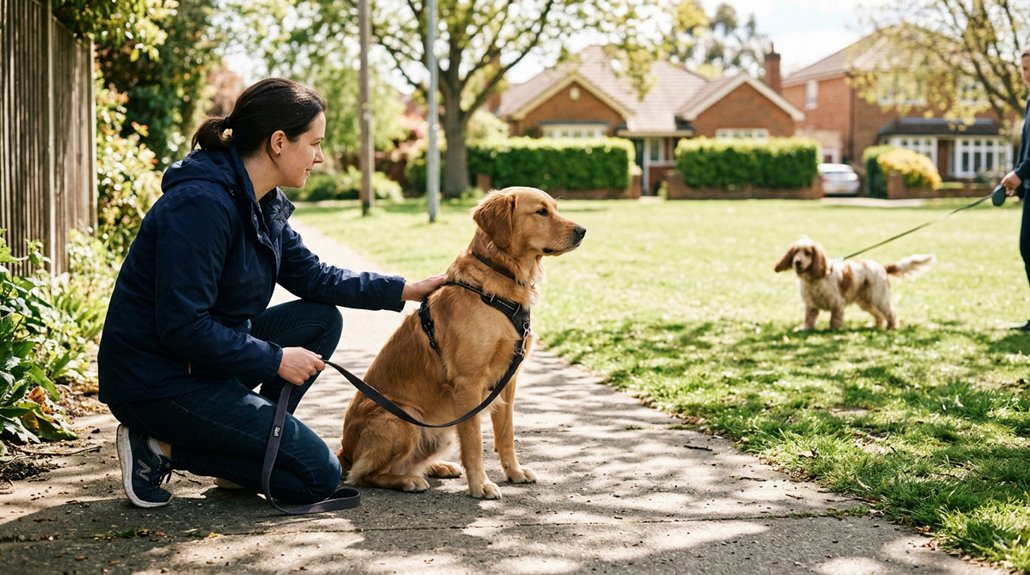
When addressing reactivity in dogs, it’s essential to understand their body language and maintain a relaxed leash tension. By observing subtle cues, like a stiffened body or focused gaze, you can anticipate potential reactions and intervene calmly before they escalate. A loose leash not only fosters a sense of security but also diminishes the human-induced tension that often intensifies a dog’s reactive behavior.
Recognize Body Language Cues
In a dance of subtle signals, a dog’s body language can reveal a wealth of information about their emotional state and intentions during walks. By honing your skills in canine communication, you can enhance your emotional awareness of your dog’s needs. Recognizing these cues is key to managing reactivity effectively:
- Growling or barking: Indicators of feeling threatened or overexcited.
- Tensing up or backing away: Signs your dog desires distance due to fear.
- Playful barking or lunging: Frustrated attempts to get closer.
- Stiff posture, raised hackles, or a tucked tail: Indicators of anxiety or threat.
- Positive reinforcement: Reward calmness when near other dogs to shape behavior.
Being attuned to these common cues helps you predict and manage potential reactions before they escalate.
Maintain A Loose Leash
Striking a balance with a loose leash can set the stage for a more harmonious walk with your reactive dog. A tight leash adds tension, amplifying your dog’s stress and reactivity as they feel trapped. In contrast, loose leash benefits include reducing this tension, urging relaxation, and preventing feelings of confinement. Scientifically, tension-free leashes facilitate communication enhancement between you and your dog, allowing for clearer interpretation of cues and commands. This improved communication can diminish the frequency of reactive episodes. Training methods like rewarding calmness or employing non-restrictive gear encourage a consistently relaxed leash. Additionally, your calm demeanor, demonstrated through slow breathing, helps your dog mirror tranquility, further lessening stress related to triggers and contributing to a positive walking experience.
Implementing Effective Modification Techniques
Although tackling leash reactivity in dogs can seem intimidating, employing effective modification techniques can greatly ease this challenge. Utilizing desensitization techniques, start by gradually introducing your dog to triggers, rewarding calm behavior with high-value treats. Consistent positive reinforcement is key to encouraging desired behaviors. Here are some expert strategies you can employ:
Start desensitizing your dog to triggers with gradual exposure, rewarding calmness to encourage positive behavior.
- Implement the “Look at That” (LAT) game, promoting non-reactive behavior.
- Maintain a safe distance from triggers to keep your dog below their threshold and in a controlled state.
- Teach incompatible behaviors like “watch me” to redirect focus.
- Engage with commands like “find it” to divert attention from potential triggers.
- Practice patience, fostering lasting changes while building positive associations with other dogs.
Strategic Walk Planning to Reduce Reactivity
Planning your dog’s walks strategically can drastically reduce instances of reactivity. Opt for quiet times when fewer dogs and people are out, diminishing potential triggers. Route selection is key; choose paths that are less crowded to allow for distance maintenance, minimizing opportunities for your dog to become overwhelmed. Consistently watch your dog’s body language to catch early signs of stress or excitement. Employ evasive actions, like crossing streets or turning onto side roads, to avoid encounters with other dogs, keeping anxiety levels low. Gradual exposure is also beneficial—let your dog observe other dogs from afar, rewarding calm behavior. This builds positive associations and supports a less reactive walking experience, enhancing your dog’s comfort and confidence on walks.
Deciding When Professional Help Is Needed
Even with careful walk planning, some dogs exhibit reactivity that requires more specialized intervention. If your dog lunges or aggressively barks at other dogs, a professional assessment may be necessary. Engaging a certified trainer or behaviorist experienced in leash reactivity can provide targeted behavioral modification tailored to your dog’s needs. Here’s when to seek professional help:
Seek professional help if your dog displays reactivity like lunging or aggressive barking on walks.
- Lunging or Aggressive Barking: Considerably disruptive reactions can benefit from expert guidance.
- Difficulty Learning: Professional intervention is essential if your dog is too aroused to absorb training.
- Underlying Health Issues: A veterinary behaviorist can diagnose health conditions contributing to reactivity.
- Tailored Strategies: Customized approaches address specific triggers.
- Progress Tracking: Regular assessments adapt strategies for best results.
These steps can considerably improve your walks and your dog’s behavior.
Understanding the Role of Leash Dynamics
Steering through the complexities of leash dynamics is essential for fostering peaceful and productive dog walks. The leash imposes a physical constraint on your dog’s natural escape behaviors, potentially heightening anxiety and triggering reactive responses. A common pitfall is leash tension, which couples with emotional transfer, escalating the situation when encountering other dogs. Reactivity may manifest as aggressive or frustrated behaviors like lunging and barking. Practicing informed leash handling and maintaining movement dynamics are crucial. Ensuring a loose leash facilitates a calm connection, mitigating stress and aligning with your dog’s emotional equilibrium. Recognizing this interplay can address anxiety triggers.
| Factor | Impact on Dog | Solution |
|---|---|---|
| Leash Tension | Heightens stress | Maintain loose leash |
| Emotional Transfer | Amplifies reactivity | Stay relaxed |
| Escape Behaviors | Limited movement | Allow free movement |
Effective Strategies for Managing Reactive Behavior
It’s often challenging to manage a dog’s reactive behavior on walks, but employing specific strategies can make a substantial difference. As you navigate these issues, a reward strategy using high-value treats can reinforce calmness around other dogs. This positive approach creates a constructive association. Implement desensitization techniques to progressively expose your dog to other dogs at a manageable distance, then gradually bring them closer. Redirecting attention with commands like “look at me” cultivates focus and diminishes reactiveness. Consider parallel walking with a calm, well-socialized dog, fostering appropriate social behavior in a controlled setting. Remember, a loose leash is essential to minimize stress, preventing your dog from feeling trapped.
- Reward strategy with treats
- Desensitization techniques
- Attention redirection
- Parallel walking
- Maintain a loose leash
Frequently Asked Questions
Why Is My Dog Reacting to Other Dogs on Walks?
Your dog reacts to other dogs due to insufficient socialization skills, resulting in heightened body tension. This tension can amplify frustration or fear responses. Analyzing their body language helps you understand and manage these emotional triggers scientifically.
What Is a Red Flag Puppy’s Behavior?
A red flag puppy’s behavior can be the tip of the iceberg, with fear signals, unfulfilled socialization needs, environmental factors, and past experiences converging. You’ll notice inappropriate greetings, aggression, or over-excitement, indicating underlying behavior challenges needing expert analysis.
How Do I Train My Dog to Not React to Other Dogs on Walks?
Use positive reinforcement, rewarding calmness with treats, alongside effective leash training. Practice behavior analysis through the “Look at That” game to slowly desensitize your dog. Maintain a loose leash to reduce stress and guarantee effective communication.
What Dog Breed Is Most Likely to Be Reactive?
Terriers, known for scoring lower on temperament tests, are more prone to reactivity due to common temperaments and breed characteristics. You might find their high energy and instinctual drive make them more likely to react than other breeds.
Conclusion
In tackling leash reactivity, you’ve journeyed through a labyrinth akin to a behavioral Rubik’s Cube. With a scientific approach, understand triggers through observation, while avoiding common pitfalls. Modify reactions with patience, and plan walks strategically; these are the keystones to success. Embrace leash dynamics in your strategy, and consider professional help if needed. Remember, shaping your dog’s behavior is a marathon, not a sprint, requiring expert insight and dedication to fostering calm, positive experiences.