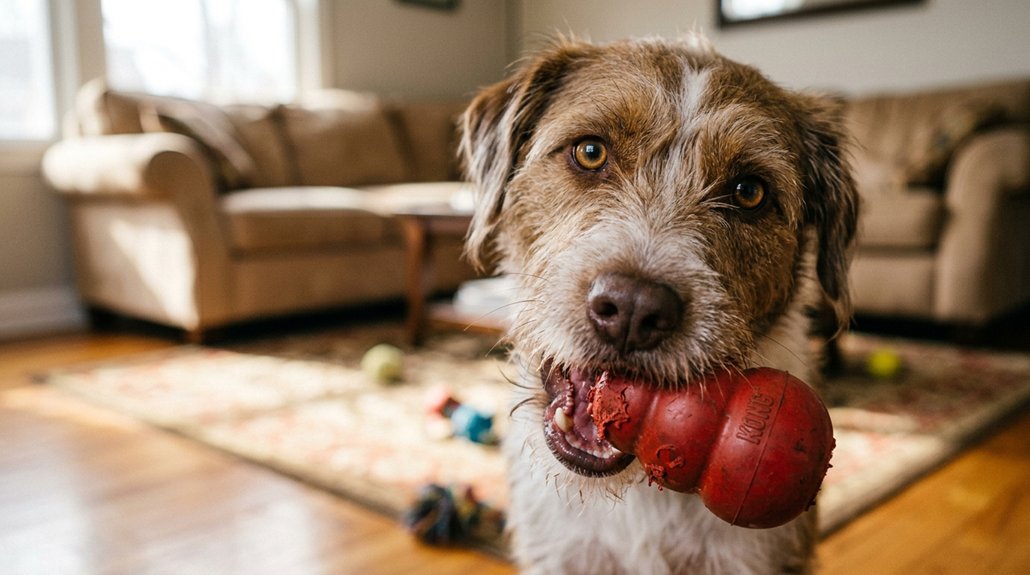
Dogs chew due to natural instincts, anxiety, boredom, teething, and for dental health. To redirect this behavior, offer a variety of durable chew toys that cater to their needs. Use positive reinforcement when they choose appropriate items and increase their exercise to combat boredom and anxiety. A dog-proofed, enriched environment can reduce unwanted chewing. With consistent training, you can effectively manage and redirect your dog’s chewing behavior. Explore further to master these techniques.
Key Takeaways
- Dogs chew due to natural instincts, anxiety, boredom, teething, attention-seeking, and for dental health.
- Redirect chewing by offering a variety of durable, safe chew toys with different textures and flavors.
- Use positive reinforcement like praise and treats when dogs engage with suitable chew toys.
- Increase exercise and mental stimulation through activities like extended walks and interactive play sessions.
- Create a safe, enriched environment with puzzle toys and distraction-free zones to reduce destructive chewing.
Quick Solutions to Stop Destructive Chewing
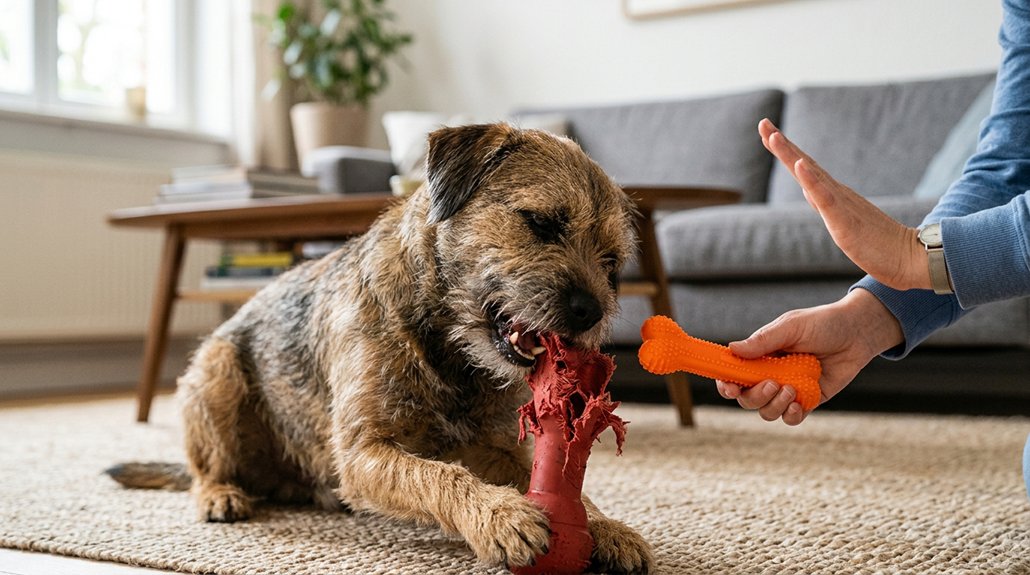
Prevent destructive chewing by systematically redirecting your dog’s attention to safe and engaging chew toys. Chewing statistics show that providing consistent access to varied, appropriate chew toys can greatly decrease incidents of destructive behavior. There are various toy types available, such as rubber, nylon, and treat-dispensing toys, catering to different chewing preferences. When you catch your dog fixing their teeth on furniture, offer a more suitable toy immediately and praise them for engaging with it. This positive reinforcement reinforces desirable habits. Dog-proof your environment by securing belongings out of reach and applying taste deterrents to immovable items. Increasing their physical exercise through extended walks and interactive play sessions can further reduce potential triggers for destructive chewing.
Common Reasons Dogs Chew: Anxiety, Boredom, and Teething
Dogs chew for various reasons, including anxiety, boredom, and teething, each presenting unique challenges for owners. Anxiety-induced chewing often occurs when dogs are left alone, with barking, whining, and urination as signs of separation anxiety. This chewing behavior is a coping mechanism to relieve stress. Conversely, when dogs lack adequate mental stimulation, boredom sets in, leading to destructive chewing on household objects. Providing engaging toys or puzzles can mitigate this need for exploration. In teething puppies, chewing alleviates gum pain, beginning around four months and potentially continuing until over a year. It’s essential to understand these behaviors, as even adult dogs might chew to gain attention, reinforcing undesirable habits. Recognize the cause to better address your pet’s needs.
Effective Chewing Redirection Techniques

Effectively redirecting a dog’s chewing behavior requires employing several targeted techniques. Providing a selection of durable chew toys with varied textures and flavors acts as effective chewing alternatives, ensuring your dog remains engaged and disinterested in inappropriate items. Positive reinforcement should be employed; when your dog chooses these toys over household objects, offer praise and occasional treats to reinforce desirable behavior consistently. Utilize trade techniques by swiftly swapping inappropriate items for suitable chew alternatives to redirect focus seamlessly. Regularly rotate toys and introduce new ones to maintain interest and prevent boredom. Monitor your dog’s individual motivations—whether teething, anxiety, or boredom—and adapt your strategies accordingly. Consistency in training is paramount in reshaping your dog’s chewing habits effectively and authoritatively.
Simulating Environments to Reduce Dog Chewing
To effectively reduce destructive chewing behaviors in your dog, create a safe and stimulating space that minimizes external stressors. Incorporate a variety of textures and scents within the environment to engage your dog’s natural curiosity while providing appropriate chew toys to maintain their interest. Establishing a routine of physical and mental exercises will further discourage anxiety-driven chewing tendencies, promoting a calm and content pet.
Safe and Stimulating Spaces
Amid attempts to curtail canine chewing habits, constructing a safe and stimulating environment is essential. Designate a specific area for your dog, filled with appropriate chewing alternatives to prevent damage to household items. Integrate environmental enrichment by including interactive puzzle toys and treat dispensers, which engage your dog’s mind and reduce boredom-induced destructive chewing. Limiting unsupervised access to certain rooms can further deter inappropriate chewing behaviors on furniture or personal items. Rotate and introduce new toys and textures regularly to maintain an engaging and stimulating environment, curbing the tendency to seek out improper chew items. If anxiety surfaces in particular zones, offer a calm, scent-familiar space to alleviate unease and mitigate stress-related chewing incidents.
Reducing External Stressors
While managing canine chewing behavior, reducing external stressors plays a pivotal role in promoting calmness and preventing destructive tendencies. Implement calming techniques and environmental modifications to create a serene setting for your dog.
- Calm Environment: Designate a quiet space away from loud noises and unfamiliar animals. Provide soft music or white noise to mask anxiety-inducing sounds like thunderstorms or fireworks.
- Safety Assurance: Dog-proof your home by removing or securing harmful items. This reduces stress from access to dangerous objects and decreases chewing temptations.
- Secure Spaces: Gradually introduce crate training to combat separation anxiety, providing a sanctuary for your dog. Combine this with regular exercise and mental stimulation to reduce energy levels and stress, lessening the likelihood of stress-induced chewing.
Engaging Sensory Environments
Having addressed the importance of reducing external stressors, let’s now explore how engaging sensory environments can play a significant role in rechanneling your dog’s chewing habits. To effectively engage your dog, introduce scent exploration by rotating different scents during playtime, encouraging your pet to utilize its keen sense of smell. Texture variety is equally essential; provide chew toys, textured balls, or ropes in various shapes and materials. These options allow diverse sensory interaction, directing the dog’s focus away from inappropriate objects. Puzzle toys also introduce problem-solving elements, stimulating mental engagement and diminishing boredom-induced chewing. Regularly revitalizing stimuli guarantees sustained interest, while also incorporating social playdates to fulfill interaction needs, ultimately minimizing anxiety-driven behaviors.
Best Chew Toys for Dogs
When selecting chew toys for your dog, prioritize those made from durable materials like rubber or nylon to withstand heavy chewing and guarantee longevity. Consider integrating food puzzle toys that mentally engage your dog while providing them with a rewarding chew experience. Tailor your selection to your dog’s preferences, regularly rotating toys with different textures and shapes to keep them stimulated and prevent destructive chewing behavior.
Choosing Durable Chew Materials
Selecting the right chew toys for your dog involves considering materials that can withstand even the most vigorous chewing sessions. Prioritize options made from rubber or nylon for their unmatched chew durability. The natural materials in these toys guarantee they’re safe while providing lasting engagement. Here’s how to make the best choices:
- Material Selection: Opt for rubber or nylon, known for their ability to withstand strong jaws and extend toy lifespan.
- Regular Inspection: Consistently check and rotate toys to maintain interest and guarantee safety. Replace any that show wear.
- Variety in Texture: Offer different textures and shapes to suit varying chewing preferences, keeping the experience stimulating.
Follow these guidelines, and you’ll help guarantee a safer and more satisfying chewing experience for your dog.
Engaging Food Puzzle Toys
After identifying durable materials for chew toys, another effective approach to managing your dog’s chewing behavior involves the use of engaging food puzzle toys. Interactive treat puzzles like Kongs and Buster Cubes stimulate cognitive activity by requiring problem-solving skills, enhancing mental stimulation, and reducing boredom. Fill these toys with enticing fillers such as peanut butter or cheese to motivate engagement. By selecting puzzle toys with varying puzzle difficulty levels, you guarantee sustained interest and prevent destructive behavior. Freezing these toys extends playtime and benefits teething puppies.
| Toy Type | Interactive Treats | Puzzle Difficulty |
|---|---|---|
| Kong | Yes | Variable |
| Buster Cube | Yes | Adjustable |
| Frozen Fillers | Yes | Moderate |
Incorporate them into your routine to encourage appropriate chewing habits.
Tailoring Toys to Preferences
Chew toys constructed from durable materials like rubber or nylon cater to different chewing habits and play styles, which are essential for maintaining ideal dental health in dogs. Consider toy customization to address your dog’s specific preferences. Personalized choices can greatly impact their interest in the toy. Here’s how you can optimize their chewing experience:
- Variety: Select a range, including Kongs or Buster Cubes, to engage them mentally while satisfying chewing instincts.
- Fillers: Use different fillers like peanut butter or cheese to maintain interest and prolong chewing sessions.
- Rotation: Regularly rotate toys to keep them fresh and exciting, reducing boredom-induced chewing on unsuitable items.
Frozen stuffable toys provide soothing relief, particularly for teething puppies, extending engagement and ensuring a safe and enjoyable experience.
Managing Anxiety-Related Chewing
When dogs exhibit anxiety-related chewing, it’s often a sign of deeper emotional distress that needs addressing. Recognizing anxiety signs is essential; excessive chewing can accompany whining, barking, or inappropriate urination, alerting you to your pet’s discomfort. To counteract stress-induced chewing, introduce chew alternatives suited to their preferences, giving them appropriate outlets for this behavior. Calming aids like collars or diffusers can effectively manage such anxiety, decreasing the likelihood of destructive habits. Regularly monitor your dog’s behavior to identify specific stress triggers. This ongoing observation allows for intervention tailored to reduce anxiety and minimize stress-related chewing. Proactive steps, including recognizing signs and offering alternatives, can alleviate your dog’s emotional strain and foster a calmer, happier environment.
How to Create a Chew-Friendly Space

Addressing your dog’s anxiety-related chewing can greatly contribute to improving their overall well-being. Creating a chew-friendly space is essential in this process. Start by designating a specific area with comfortable bedding options and a selection of safe chew toys. Use baby gates to restrict access to areas with valuable or dangerous items. To keep your dog engaged and prevent boredom, consider the following steps:
- Toy Rotation: Regularly change the chew toys in the area to sustain interest.
- Calming Environment: Guarantee the space is free from distractions and anxiety triggers.
- Mental Stimulation: Include puzzle toys to engage your dog’s mind.
Following these steps will facilitate a safe and enjoyable environment for your dog, promoting healthier chewing habits.
Using Positive Reinforcement Consistently
Positive reinforcement, a pivotal aspect of behavior modification in canines, is instrumental in curbing inappropriate chewing behaviors. By applying positive reinforcement techniques, you guarantee your dog understands acceptable chewing practices. Consistently rewarding dogs with treats or praise when they opt for chew toys refines their choices. Accurate reward timing is critical; offering treats immediately reinforces desired actions. Implement regular training sessions, allowing continuous learning by building on past successes.
Keep an emotional log of favorite chew toys to monitor and encourage correct choices. Here’s how toy selection and routine can influence behavior:
| Chew Toy | Enthusiastic Praise | Behavior Reinforcement |
|---|---|---|
| Rope knots | High | Consistent |
| Rubber bones | Moderate | Sufficient |
| Plush toys | Low | Needs improvement |
Utilize these strategies to manage and redirect chewing.
Frequently Asked Questions
What Are the 4 Signs Your Dog Thinks of You as Their Parent?
Your dog’s bonding behaviors that indicate parental instincts include seeking your attention and approval, leaning against you or nuzzling, bringing you toys to play, and exhibiting submissive behaviors like rolling over or showing their belly.
What Is the 10 Minute Rule for Dogs?
The 10 Minute Rule for dogs isn’t just about time commitment; it effectively reduces dog anxiety and unwanted chewing. With structured activities, you’re using proven chewing techniques to provide both physical activity and mental stimulation.
Do Dogs Forgive You for Yelling at Them?
Yes, dogs forgive you for yelling at them, but the yelling impact causes confusion and fear, affecting their emotional understanding. Instead, focus on positive reinforcement to repair trust and guarantee a healthy bond with your dog.
How Do Dogs Say “I Love You”?
It’s no coincidence that dogs express “I love you” through canine communication, like leaning against you or wagging their tails low. Affectionate gestures, such as bringing toys or gentle eye contact, further signify their profound emotional connection.
Conclusion
Understanding why dogs chew and effectively redirecting this behavior is essential for a harmonious home. Did you know that nearly 80% of dogs experience destructive chewing due to anxiety or boredom? By creating a chew-friendly space, utilizing positive reinforcement, and providing appropriate toys, you can curb this behavior greatly. With consistency and patience, you’ll foster an environment where both you and your dog thrive. Remember, your effort can transform challenges into rewarding training successes.