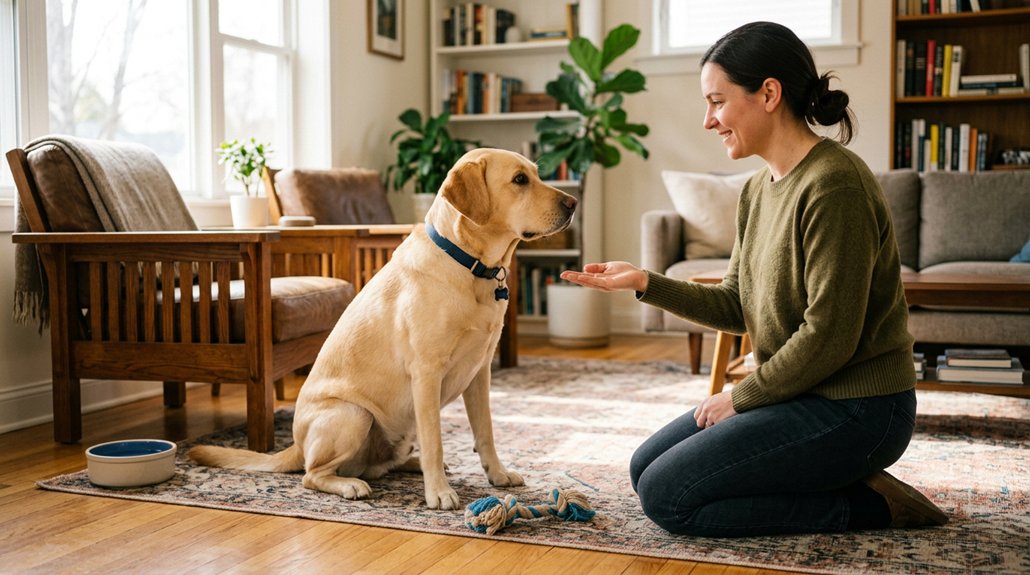
Building trust with a reactive dog involves recognizing stress signals, such as lip-licking or tensed muscles, and creating a calm, predictable environment. Introduce triggers slowly and encourage decision-making by allowing choices. Use positive reinforcement to reward calm behavior, fostering confidence without pressure. Establish consistent routines to provide emotional security. If challenges persist, consulting a behavioral specialist may be beneficial. There’s so much to explore about enhancing your dog’s comfort and trust levels.
Key Takeaways
- Recognize early stress signs in your dog, such as lip-licking or freezing, to intervene before reactivity escalates.
- Create a trigger-free living space with predictable routines to provide safety and stability for your reactive dog.
- Empower your dog with choices during walks, reducing anxiety by offering options and analyzing triggers.
- Use positive reinforcement and gradual exposure to safely build confidence and desensitize your dog around triggers.
- Consult a behavioral specialist if reactivity persists, seeking professional guidance for tailored intervention strategies.
Spotting Early Stress Signs
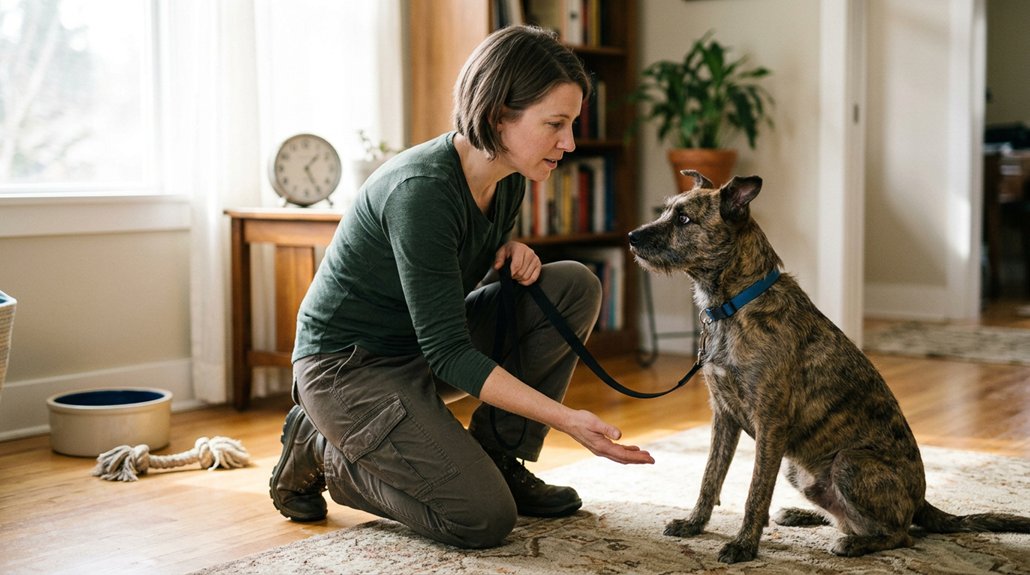
Recognizing early stress signs in dogs is crucial for preventing reactivity, providing you with the opportunity to approach their needs with empathy and expertise. By closely observing body language cues like lip-licking, yawning, or attempts to hide, you can identify emotional triggers affecting your dog’s well-being. Stress often manifests through subtle changes: tensed muscles, dilated pupils, or increased drooling. These signs indicate anxiety or fear, not aggression. When a dog seems overwhelmed, watch for behaviors such as frantic bouncing or freezing. Understanding these cues helps you intervene effectively, preventing reactivity before it escalates. By acknowledging what drives barking or lunging—often misinterpreted as aggression—you can foster a compassionate, trust-building approach, helping your dog feel more secure and understood.
Setting Up a Trigger-Free Living Space
Having recognized the early signs of stress in your dog, the next step is setting up a living environment that minimizes potential triggers and promotes comfort. Start by creating a designated safe zone where your dog can retreat, offering refuge from overwhelming stimuli. Implement visual barriers like rearranged furniture or curtains to manage triggers by limiting outside distractions in the indoor environment. Utilize baby gates to construct a controlled space that offers routine stability and spatial comfort. Maintain a consistent daily routine with quiet times, ensuring predictability for your reactive dog. Regularly assess and make sensory adjustments to the living space, staying vigilant to new stimuli resulting from changing environments or household dynamics. This proactive trigger management fosters trust and comfort.
Empower Your Dog Through Choice
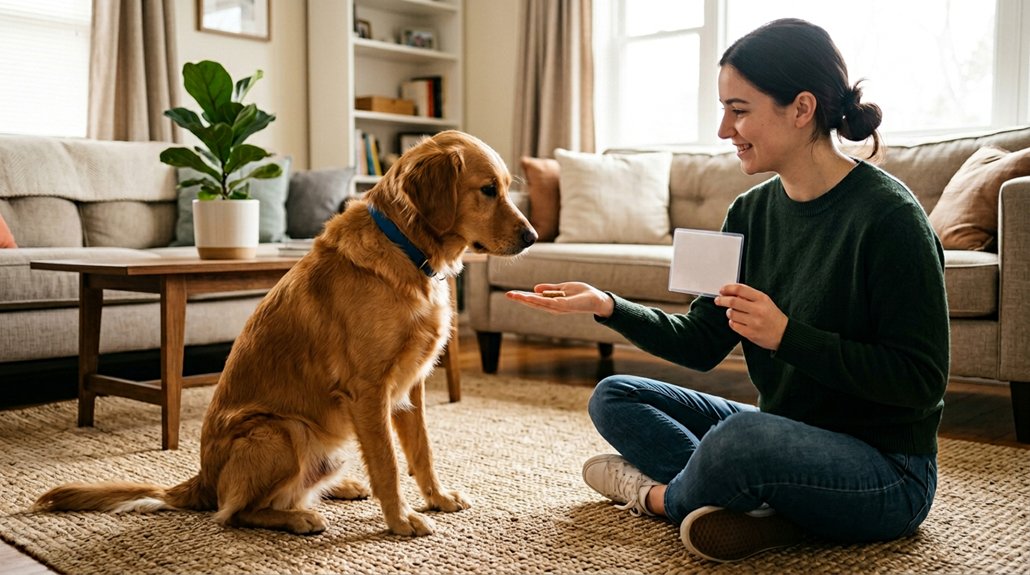
Empowering your reactive dog through choice can make a world of difference in their confidence and overall wellbeing. Encourage decision-making by offering them opportunities to explore and engage with their environment in ways that respect their comfort zones. Whether it’s allowing natural exploration during walks or providing options for different activities, giving your dog control helps in fostering trust and reducing anxiety.
Encourage Decision-Making Opportunities
Giving your reactive dog the power to make choices can be transformative. By empowering your dog with multiple options, like choosing their walking direction or sniffing spots, you provide a proactive engagement that can alleviate anxiety. This decision making benefits your dog by reducing stress, as it helps them take control over their environment. Adjusting routines to include these choices acts as confidence building activities, encouraging a calmer demeanor. Analyzing reactive triggers and offering your dog “walk away” options are effective dog empowerment strategies, allowing your pup to feel safer by disengaging from stressors. Noticing changes in your dog’s body language cues indicates success in these techniques, showing improved interactions and better coping mechanisms.
Respect Individual Comfort Zones
Understanding and respecting your dog’s individual comfort zones is essential for fostering trust and reducing anxiety. Every dog has unique comfort zone indicators, like body language changes, that signal their boundaries. Recognizing these signs can help you respond appropriately, building a stronger bond. Empower your dog by allowing them choices, like approaching a trigger or staying at a safe distance. This enhances their confidence and helps them feel secure. Boundary recognition is vital during grooming or medical care; consent-based techniques teach your dog they’re in control, reinforcing trust.
| Comfort Zone Indicator | Boundary Recognition Action |
|---|---|
| Tail between legs | Offer distance or retreat |
| Ears pinned back | Pause interaction |
| Lip licking or yawning | Provide calming space |
Allow Natural Exploration Time
Respecting your dog’s comfort zones sets the stage for another key aspect of building trust—allowing natural exploration time. By embracing exploration techniques like sniffari walks, you empower your dog with choice, providing a crucial sense of autonomy. Letting them lead the way by choosing directions not only reduces anxiety but also helps build their confidence. These walks encourage them to engage more freely with their environment, discovering the world at their own pace.
Incorporating sniffari benefits into your routine signals your role as a supportive partner in managing their reactivity. By valuing their instincts and responses, you reinforce trust. Additionally, applying consent-based handling during grooming or allowing a “walk away” cue gives your dog control, ensuring they feel safer and more secure.
Using Positive Reinforcement for Reactive Dogs
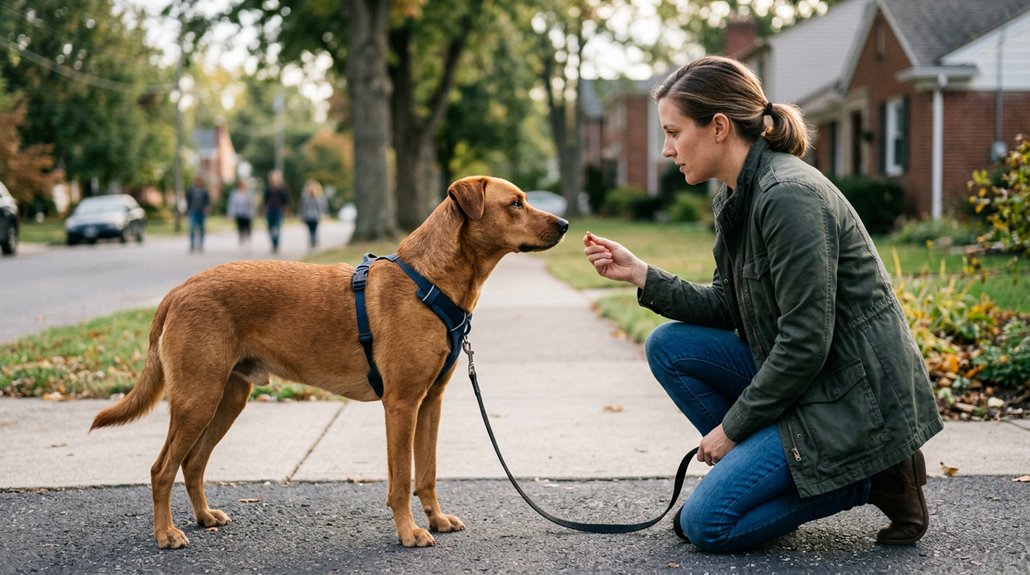
When you’re working with a reactive dog, positive reinforcement is a powerful tool that rewards desired behaviors, fostering behavioral changes without fear or pressure. By consistently implementing gentle training techniques and reinforcing calm reactions, you help your dog develop new, positive associations with previously stressful situations. Remember, your patience and commitment will create a safe environment that encourages confidence and improves their ability to manage reactions over time.
Reward-Based Behavioral Changes
While you’re managing life with a reactive dog, employing positive reinforcement can transform your training sessions into powerful agents of change. Focusing on reward selection is essential; opting for high-value treats or a favorite toy enhances motivation. The key is in behavior timing—reward your dog immediately after a desirable response to a trigger. This strengthens the positive associations your dog makes, helping reduce their anxiety and fear over time.
Using gradual exposure to stressors, paired with these rewards, progressively desensitizes your dog without overwhelming them. This method fosters a calming shift in demeanor and strengthens your bond of trust. Consistent rewards boost your dog’s confidence, encouraging positive engagement and more effective behavior modifications for a truly transformative journey.
Consistent, Gentle Training Techniques
Creating a nurturing environment with consistent, gentle training techniques is instrumental for building trust with reactive dogs. Start with gradual desensitization techniques by conducting training at a distance from triggers, ensuring your dog isn’t overwhelmed. Positive engagement strategies, like rewarding calm behavior immediately, steadily build confidence and trust. Encourage choice by letting your dog engage with stimuli at their own pace or take breaks when needed. This empowers them and cultivates a sense of safety. Incorporate consent-based handling to reduce stress and cooperation, making your dog feel at ease during interactions. Regularly practice controlled meetings with calm dog role models, gradually reinforcing positive interactions. Over time, these methods help transform reactivity into a foundation of trust and security.
Reinforcement for Desired Behaviors
To effectively reinforce desired behaviors in reactive dogs, employing positive reinforcement is key, as it encourages them to repeat behaviors like remaining calm in triggering situations. Consistent, immediate reward timing is essential. High-value treats or engaging play can motivate and help shift your dog’s emotional responses. Here’s how to enhance training:
- Reward Timing: Offer treats or praise immediately when your dog displays calm behavior. Timing is critical to guarantee they associate positivity with their actions.
- Treat Variety: Use a range of high-value treats your dog loves to keep their interest peaked and reinforce calm behaviors.
- Gradual Exposure: Start with known triggers at a distance, rewarding calmness, and then slowly decrease the distance over time.
This approach fosters trust and secures your bond.
How to Slowly Introduce Triggers
Observing your dog’s body language is essential to understanding how to slowly introduce triggers without overwhelming them. Acknowledge their trigger sensitivity by identifying the distance at which they begin to show stress or reactivity. Gradual exposure is key—start from a comfortable distance and slowly decrease it, ensuring your dog remains calm throughout the process. Emphasize positive reinforcement with treats or praise immediately when your dog notices the trigger without reacting negatively, fostering a positive association. Begin with less intimidating situations, allowing your dog to build confidence before facing more challenging triggers. Patience and consistency are vital; multiple sessions may be needed to help your dog grow in trust and manage their reactions effectively. It’s about progress, not perfection.
Establishing Consistent Routines for Emotional Security
Despite the challenges faced with a reactive dog, establishing consistent routines offers them a comforting foundation that enhances emotional security. Predictability factors, such as set times for feeding and walks, are key to routine benefits, helping reduce anxiety. Incorporate regular mental stimulation like scent work or puzzle toys to engage their minds and boost confidence. Here’s how you can create an anxiety-reducing environment:
- Predictable Daily Schedule: Implement fixed feeding, walking, and training times to foster familiarity and security.
- Engaging Activities: Regularly introduce mental stimulation through scent games or puzzle toys to stimulate and reassure your dog.
- Gradual Changes: Adapt routines progressively to prevent distress and build emotional security gradually.
Consistent grooming practices also promote trust, providing a stable, reassuring experience.
Improving Social Interactions With Calm Dogs
While working with reactive dogs, fostering healthy social interactions with calm, well-socialized peers can be transformative. Calm dog introductions serve as positive role models, helping your reactive pet feel at ease. Start with gradual exposure strategies, like controlled meet-and-greets, to reduce anxiety in low-pressure environments. Ascertain both dogs are leashed and under control to create a safe, predictable setting. Observing your dog’s body language is essential; it enables you to intervene if they show stress signals or become overwhelmed. By using positive reinforcement—treats or praise—during successful interactions, you strengthen the association with good experiences. Over time, these efforts will boost your dog’s confidence and enhance their ability to engage in social interactions smoothly.
When to Consult a Behavioral Specialist
How do you know when it’s time to consult a behavioral specialist for your reactive dog? When your dog’s reactivity escalates despite consistent training, it’s vital to seek a professional’s expertise for a tailored behavioral assessment and intervention strategies. Here’s when you should consider reaching out:
- Aggression Issues: If your dog shows aggression towards people or other dogs, specialized guidance guarantees safety and effective behavior modification.
- Persistent Stress Responses: When stress or anxiety leads to behaviors like incessant barking or lunging at triggers, a specialist can help restore harmony in daily life.
- Lack of Progress: Professional support allows you to understand the underlying causes of reactivity and implement structured training techniques like desensitization to promote improvement.
Frequently Asked Questions
How to Get a Reactive Dog to Trust You?
To get a reactive dog to trust you, use trust building techniques like positive reinforcement. Reward calm behavior around triggers with treats or praise. Understand their body language and provide them choices to empower safe interactions and enhance trust.
What Is the 3-3-3 Rule With Dogs?
The 3-3-3 timeline involves the first three days for decompression, three weeks for routine establishment, and three months for full adjustment. These trust-building techniques help your dog confidently embrace their new environment and develop a true personality.
How to Snap a Dog Out of Reactivity?
To snap a dog out of reactivity, use positive reinforcement and distraction strategies. Employ counterconditioning techniques by redirecting their focus using treats or toys, and incorporate calming exercises to promote relaxation and build trust gradually.
What Is the 7 7 7 Rule for Dogs?
The 7-7-7 rule is like nurturing a delicate flower. First, allow seven days for your puppy’s socialization; then, seven weeks for leash training routines; finally, seven months for a deep connection, fostering trust and understanding.
Conclusion
Building trust with a reactive dog is a journey, not a race. You’ve set the stage by spotting stress signals and creating a trigger-free zone. Empower your furry friend by offering choices and reinforcing good behavior. Slowly introduce them to triggers and establish routines to bolster their emotional security. Foster social interactions with calm dogs and know when it’s time to call in a specialist. Remember, “slow and steady wins the race,” and your patience will pay off.