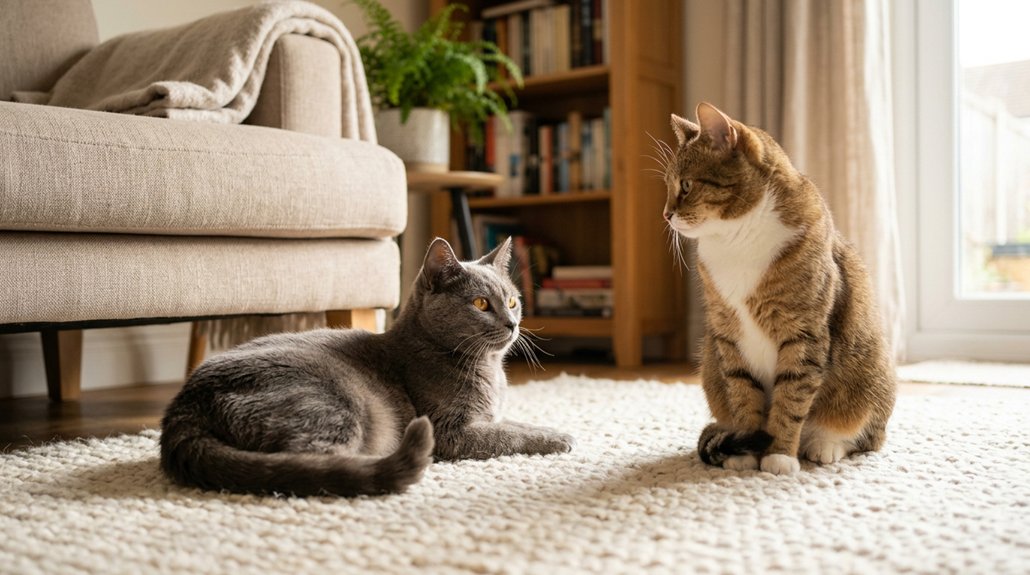
You can observe if your cats are bonding by noting behaviors such as curling up together, mutual grooming, or playful interactions like gentle chasing. These actions indicate trust,…
Cat Behavior
How to Reduce Tension in Multi-Cat Homes
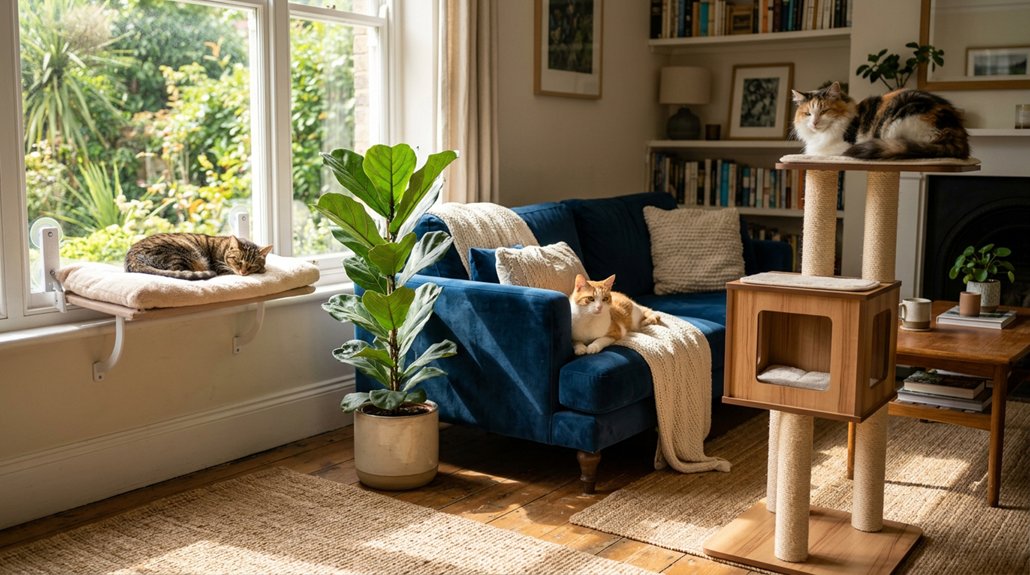
In multi-cat homes, reduce tension by understanding resource competition and social hierarchy. Guarantee equal access to food, water, and litter boxes to minimize territorial disputes. Encourage positive interactions…
Cat Behavior
What to Do When Cats Don’t Get Along
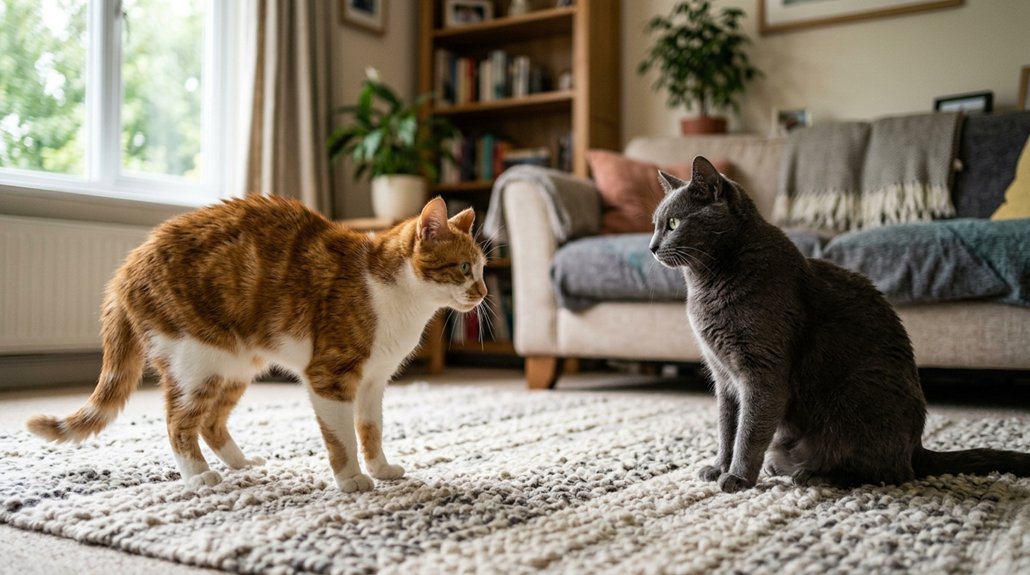
When your cats aren’t getting along, first identify triggers such as territorial disputes or personality clashes. Safety measures like providing vertical spaces and distributing resources prevent competition. Gradually…

Cat Behavior
How to Introduce a Cat to a Dog Safely
To safely introduce a cat to a dog, create separate, secure spaces while managing initial interactions. Monitor body language for stress signals and use scent familiarization techniques to…
Cat Behavior
How to Introduce a Cat to Other Cats Without Fighting
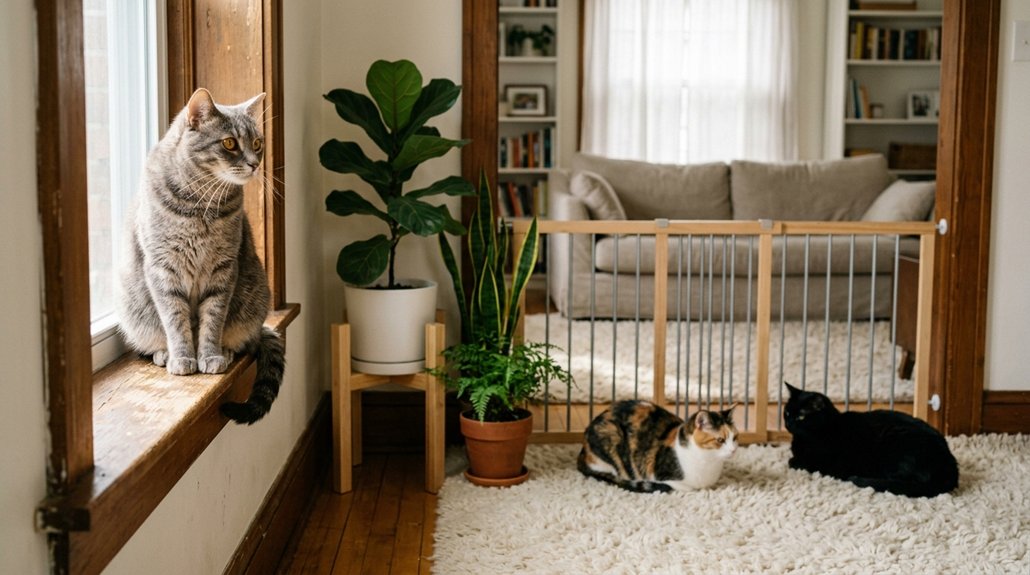
To introduce a new cat to your existing cats without fighting, start by isolating the newcomer with familiar items to reduce stress. Use scent exchange techniques with bedding…
Cat Behavior
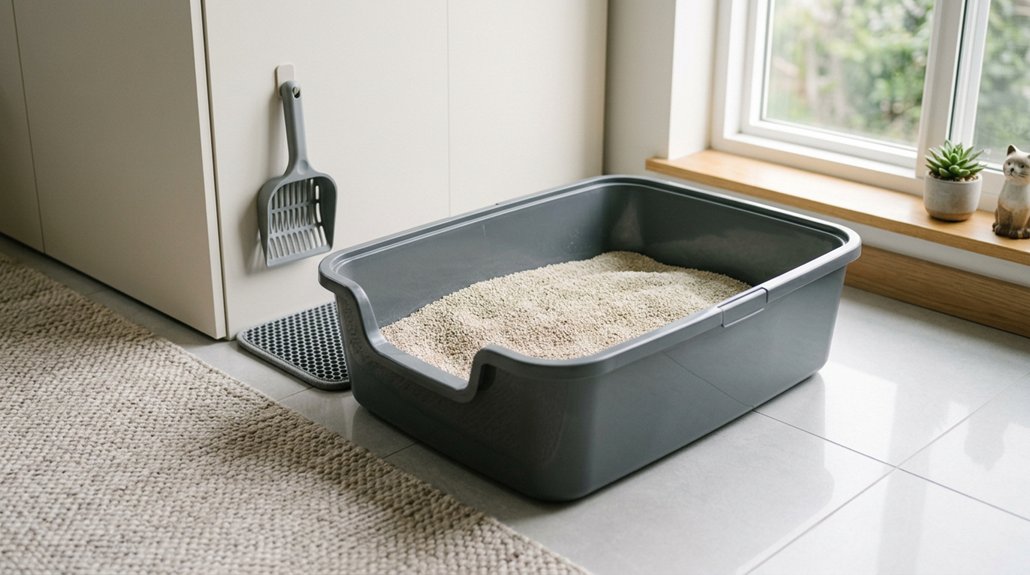
How to Set Up a Litter Box the Right Way
To set up a litter box correctly, guarantee it’s 1.5 times your cat’s body length, opting for low sides for easier entry. Use unscented, scoopable litter to favor…
Cat Behavior
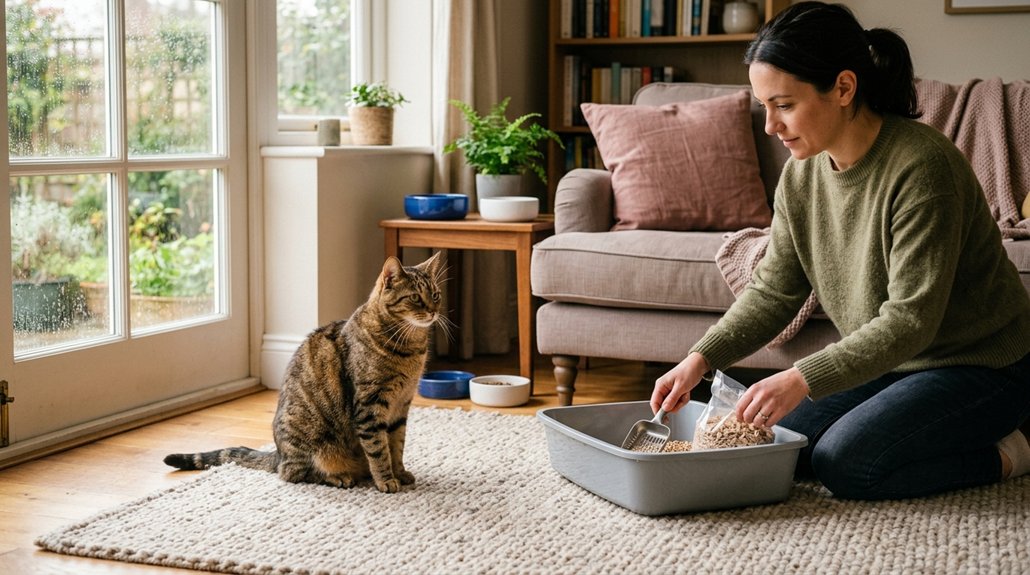
What to Do When Your Cat Starts Having Accidents
When your cat begins having accidents, it could indicate health issues like urinary infections or stress-related problems. Make certain there’s a clean litter box for each cat, plus…
Cat Behavior
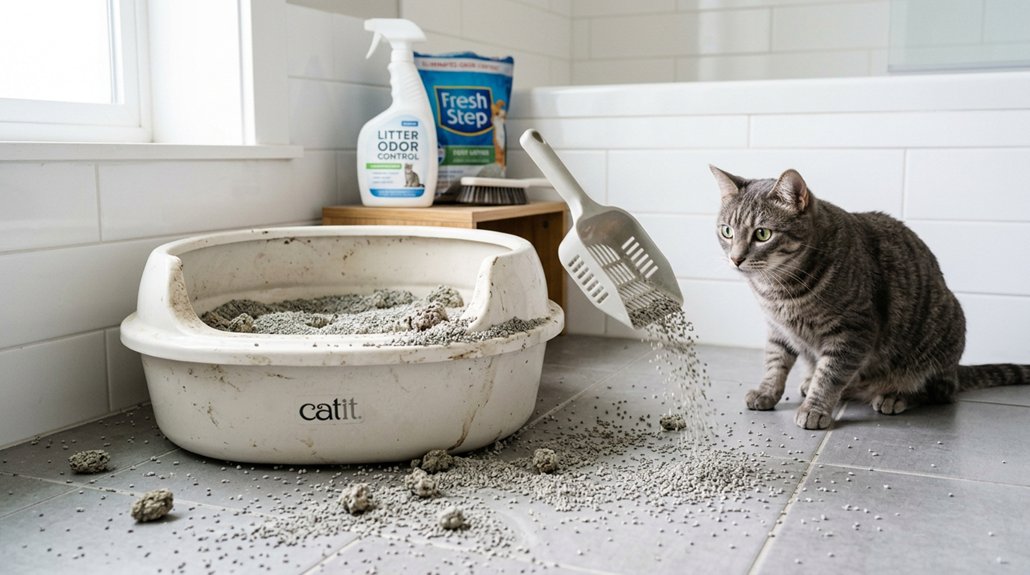
Common Litter Box Problems and Solutions
You may encounter several litter box problems, like improper hygiene or environmental stressors, which upset your cat. For medical avoidance, conditions like UTIs, arthritis, or bladder stones necessitate…
Cat Behavior
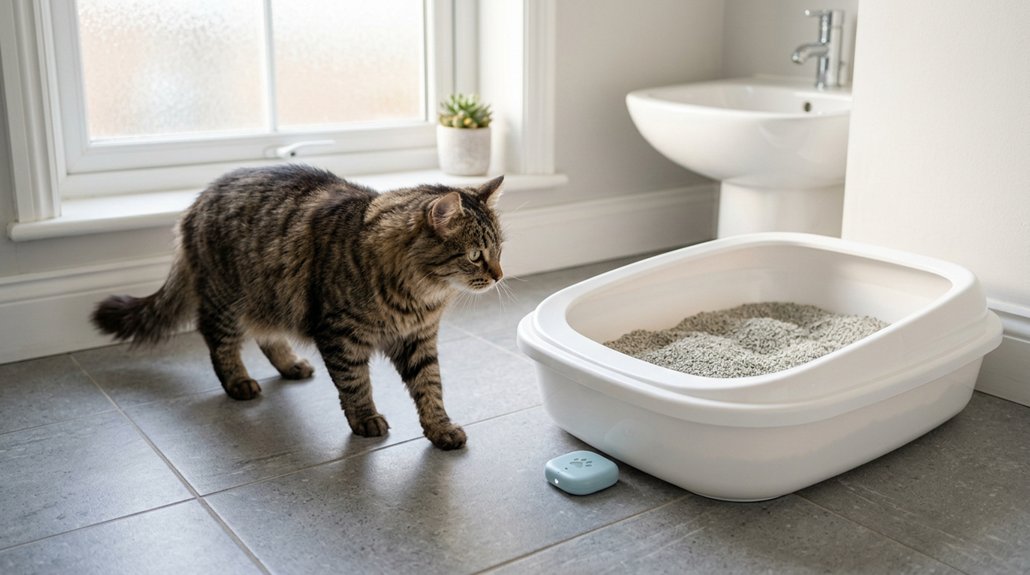
How to Retrain a Cat to Use the Litter Box
To retrain your cat to use the litter box, first rule out any medical issues with a veterinary check-up. Examine environmental factors causing aversion, like litter type and…
Cat Behavior
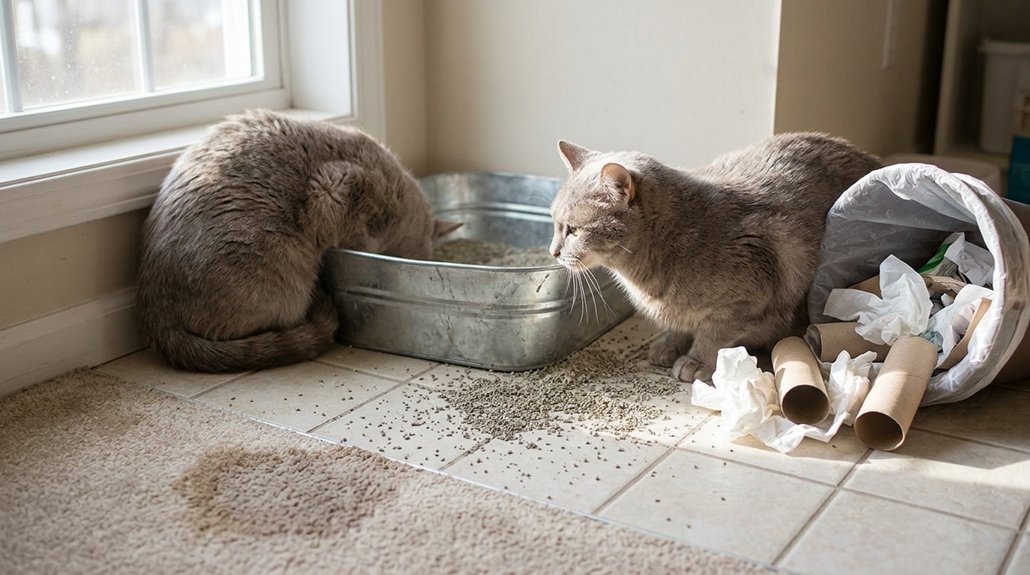
Why Cats Don’t Use the Litter Box (and How to Fix It)
Cats might avoid the litter box due to territorial disputes, anxiety, or medical issues like UTIs or diabetes. Stress from changes or loud noises in the environment can…
Cat Behavior
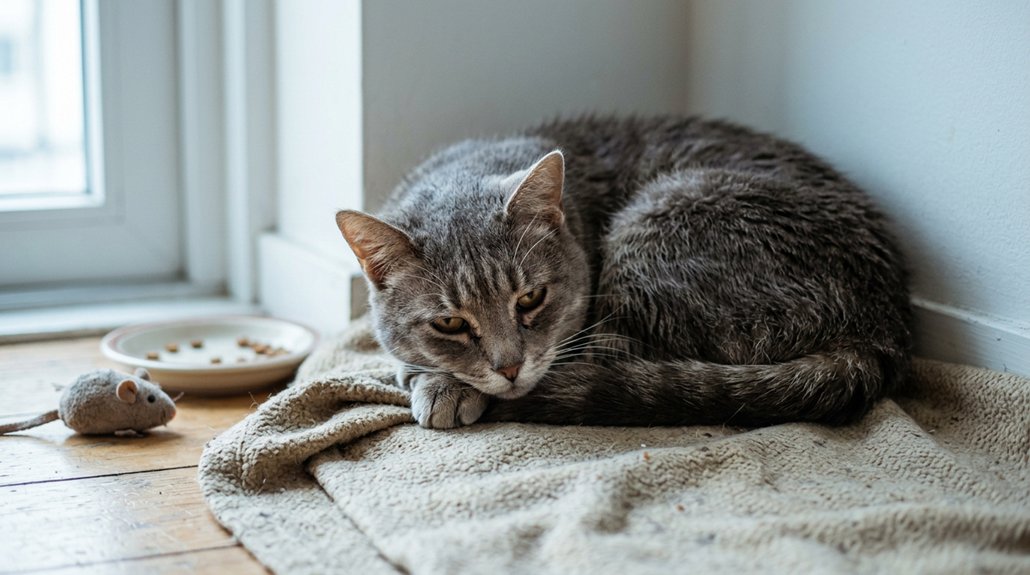
How to Recognize Depression in Cats
To recognize depression in cats, watch for behavioral changes like reduced food intake or altered sleeping patterns. These shifts can indicate emotional distress. Look for social withdrawal, grooming…
Cat Behavior
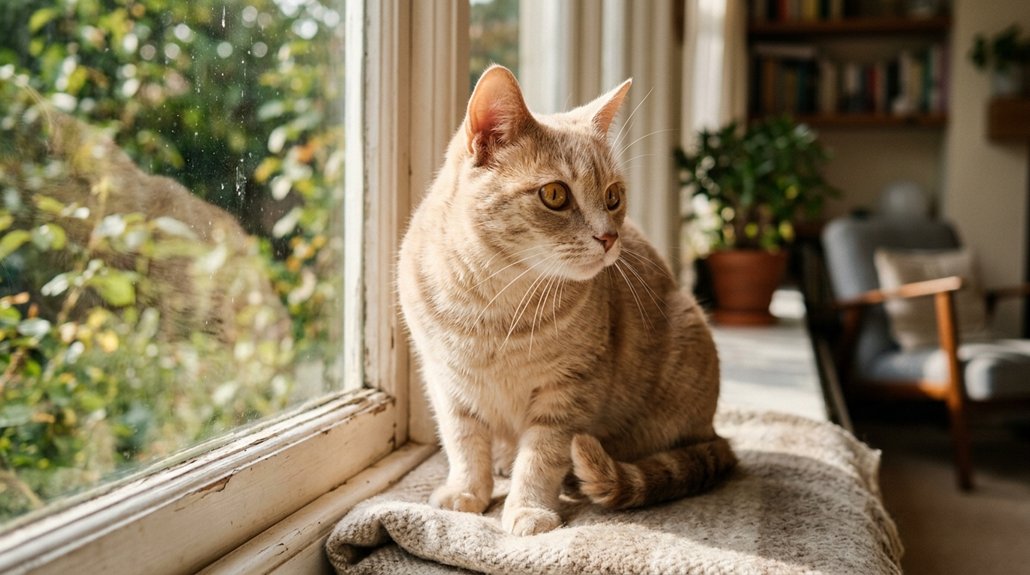
What Causes Behavioral Changes in Cats
Behavioral changes in cats often stem from health issues like hyperthyroidism or dental disease, environmental stressors such as loud noises or territorial threats, and dietary imbalances. Social dynamics…
Cat Behavior
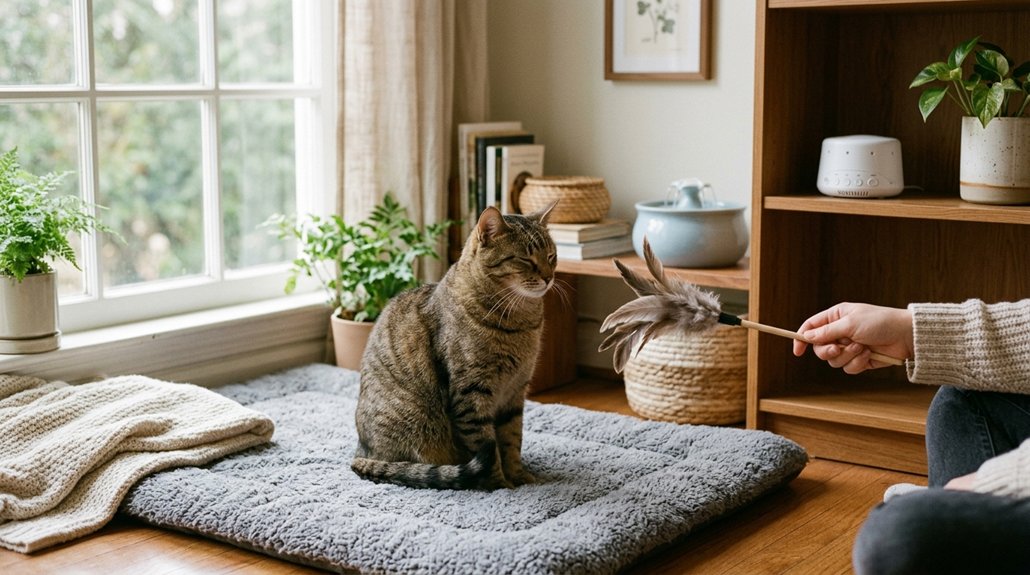
How to Reduce Anxiety in Cats at Home
To reduce anxiety in cats at home, recognize symptoms like excessive grooming or restlessness. Create a calming environment with safe zones and minimize noise. Employ pheromone diffusers and…
Cat Behavior
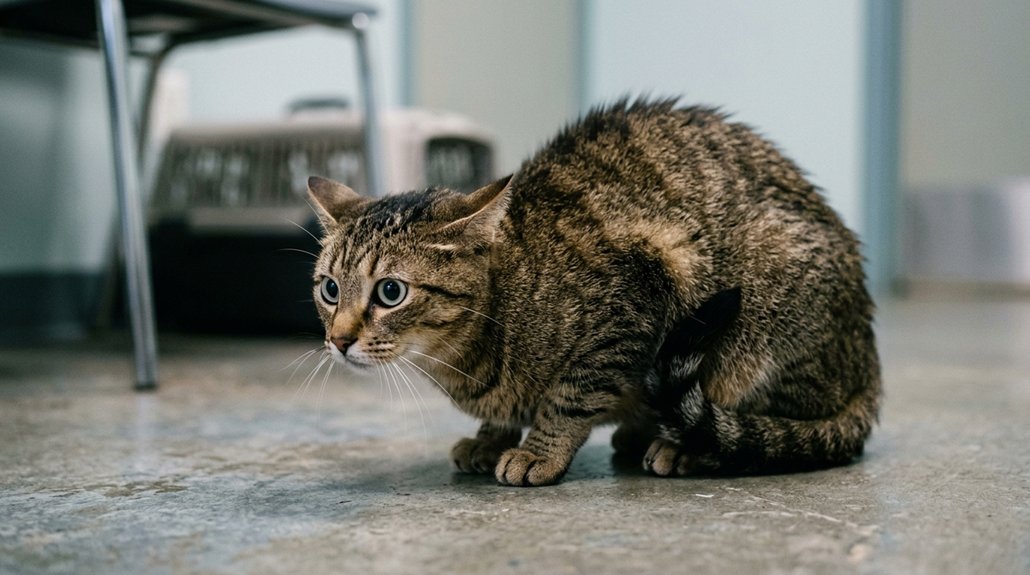
Signs Your Cat Is Stressed or Anxious
To identify if your cat is stressed or anxious, watch for increased vocalizations, frequent hiding, or changes in eating habits. Excessive grooming can lead to bald spots, while…
Cat Behavior
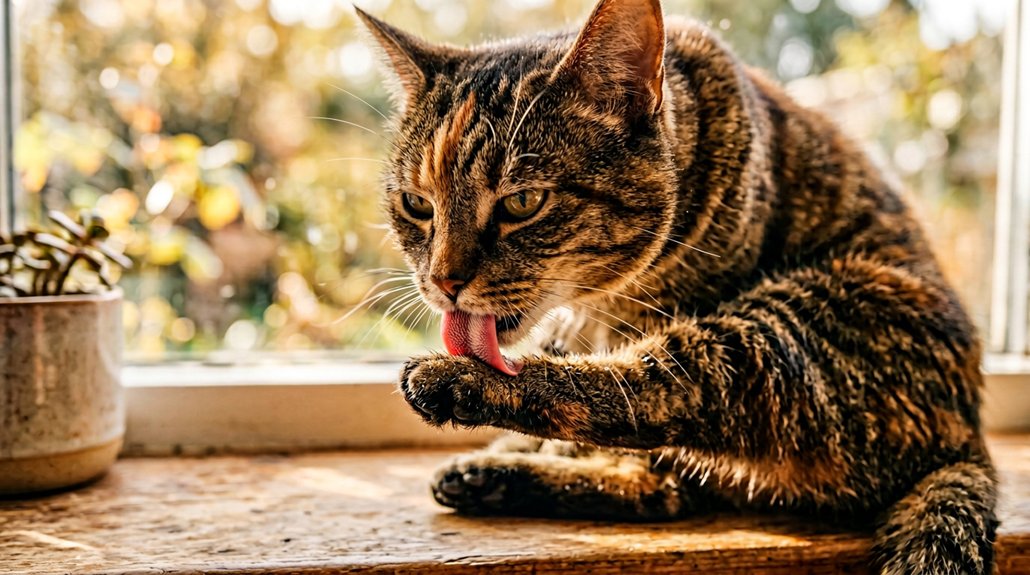
Why Cats Lick Themselves Excessively
Cats may lick themselves excessively due to psychological and health-related factors. Stressors such as environmental changes and new pets can trigger self-soothing through overgrooming. Allergies, flea infestations, and…