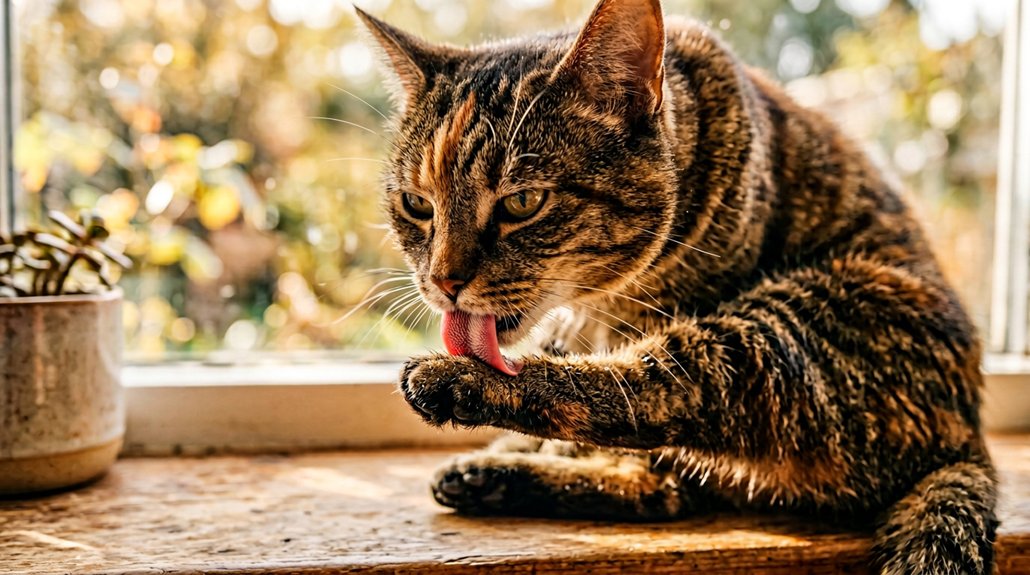
Cats may lick themselves excessively due to psychological and health-related factors. Stressors such as environmental changes and new pets can trigger self-soothing through overgrooming. Allergies, flea infestations, and infections are common culprits, causing skin irritations that lead to persistent licking. Maintaining stable routines and providing environmental enrichment can mitigate stress-induced behaviors. Consulting a veterinarian is essential to address underlying medical issues like allergies or parasites. Exploring further will reveal proven strategies to manage these behaviors.
Key Takeaways
- Cats may lick excessively due to psychological stressors such as environmental changes or the introduction of new pets.
- Allergens and flea infestations can cause itchy skin, leading to compulsive licking for relief.
- Pain from underlying conditions, like urinary tract infections, results in targeted licking of specific areas.
- Lack of mental stimulation can cause boredom-induced overgrooming, which may be alleviated by interactive toys and structured playtime.
- Veterinary care is essential to diagnose and treat potential medical issues driving the excessive licking behavior.
Understanding the Causes of Excessive Licking in Cats
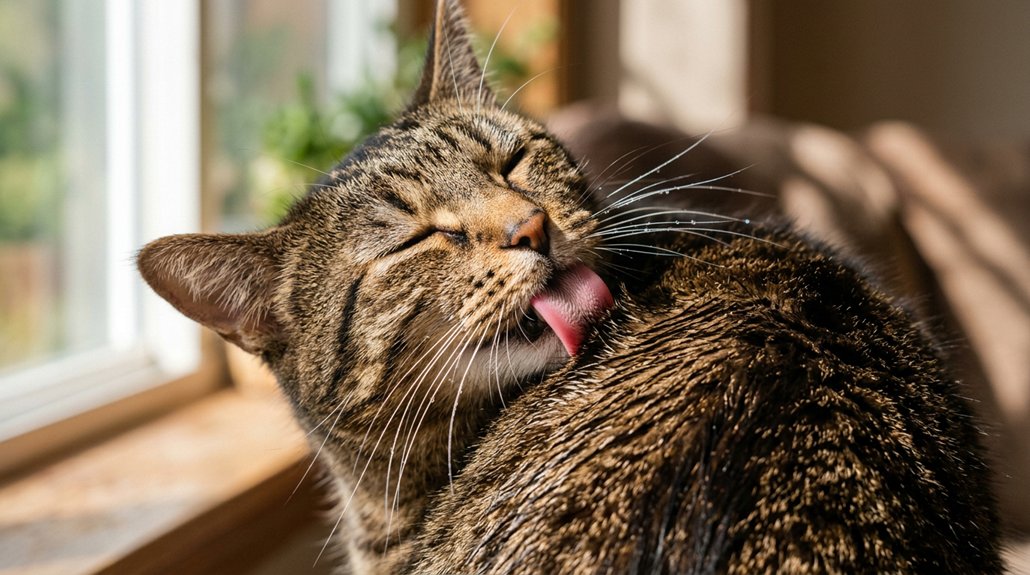
When examining the phenomenon of excessive licking in cats, it becomes crucial to recognize the diverse etiologies that may influence this behavior. Behavioral tendencies often evolve from psychological triggers, turning routine grooming into a compulsive practice. Stress or disruptions in a cat’s environment—like moving or adding new pets—act as significant psychological triggers. These stressors may provoke over-grooming, used as a coping mechanism to mitigate anxiety. Additionally, itchy diseases caused by allergens or parasites can exacerbate this behavior, as discomfort often results in widespread licking. Distinguishing between psychological and physical etiologies is essential—identifying the root cause guarantees appropriate intervention. Consequently, understanding these behavioral tendencies aids in formulating a thorough management plan, tailoring interventions to address the specific underlying causes.
Health Issues Linked to Overgrooming
While excessive licking might appear as a benign habit, it’s often linked to underlying health issues warranting attention. Allergy symptoms, including skin irritations, are prevalent causes of overgrooming in felines. Flea allergies can lead to intense itching at the base of the tail, prompting relentless licking. Similarly, infestations such as ear mites result in hair loss and scabbing on the neck and ears, further urging compulsive grooming. Additionally, urinary tract infections provoke discomfort, causing cats to focus grooming efforts on their lower belly or genital regions. Painful conditions like disc disease or anal sac impaction can lead cats to specifically target areas of discomfort through licking. Timely identification of these medical issues is imperative to avoid complications, including secondary skin infections and severe health problems.
Influence of Stress and Environment on Grooming
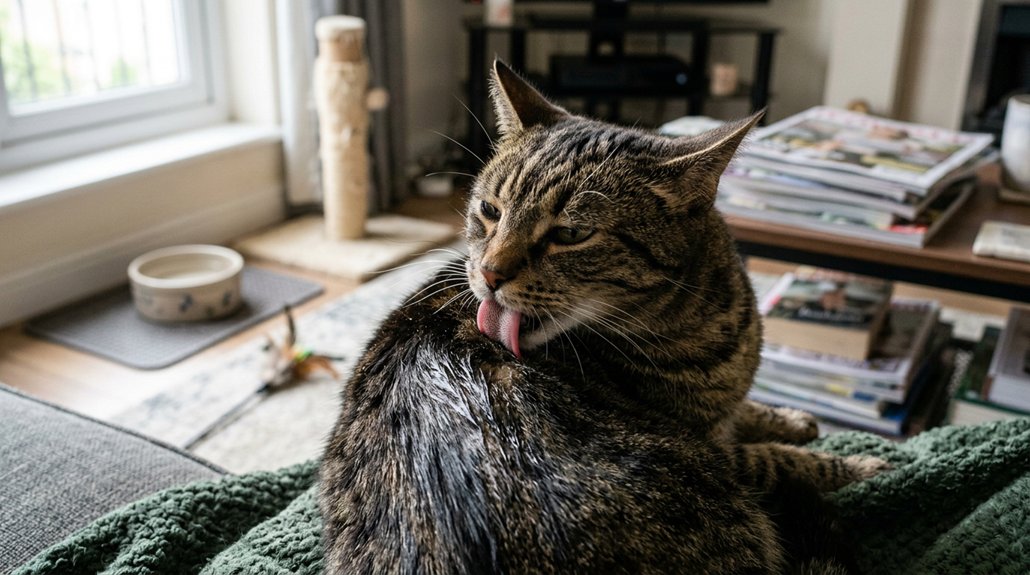
Stress and environmental changes can play a significant role in a cat’s grooming behavior. Cats often resort to excessive licking as a self-soothing mechanism when faced with disruptions like moving homes or adding new pets. These changes destabilize their environmental stability, eroding the consistent routines they rely on for mental health. Much like humans who fidget under stress, cats frequently groom themselves repetitively to alleviate anxiety. Ensuring environmental stability involves maintaining familiar routines and consistent interaction, essential for minimizing stress-induced overgrooming. High places where cats can retreat offer security, mitigating these behaviors. In addition, regular playtimes stimulate them mentally and physically, additionally reducing stress levels. Consequently, balanced environments and predictable routines help maintain your cat’s grooming practices within healthy bounds.
Spotting the Signs Your Cat Is Overgrooming
Examining your cat’s grooming patterns can offer insights into their emotional well-being. Overgrooming may manifest in bald patches or “barbered” fur, where hair appears shortened, indicating your cat might be experiencing stress or an underlying medical condition. When monitoring grooming frequency, be vigilant for skin abnormalities such as lesions, redness, wounds, or scabs—all potential signs of problematic behavior. Healthy cats maintain fur and skin without visible distress. Therefore, notable changes in appearance or grooming habits warrant attention. Increased grooming can lead to more hairballs and skin infections, compounding health issues if left unchecked. Behavioral changes often accompany overgrooming, suggesting the need to evaluate environmental stressors influencing your cat’s behavior. Precision in observation is essential to identify and address these signs early.
When to Worry About Your Cat’s Licking Habits
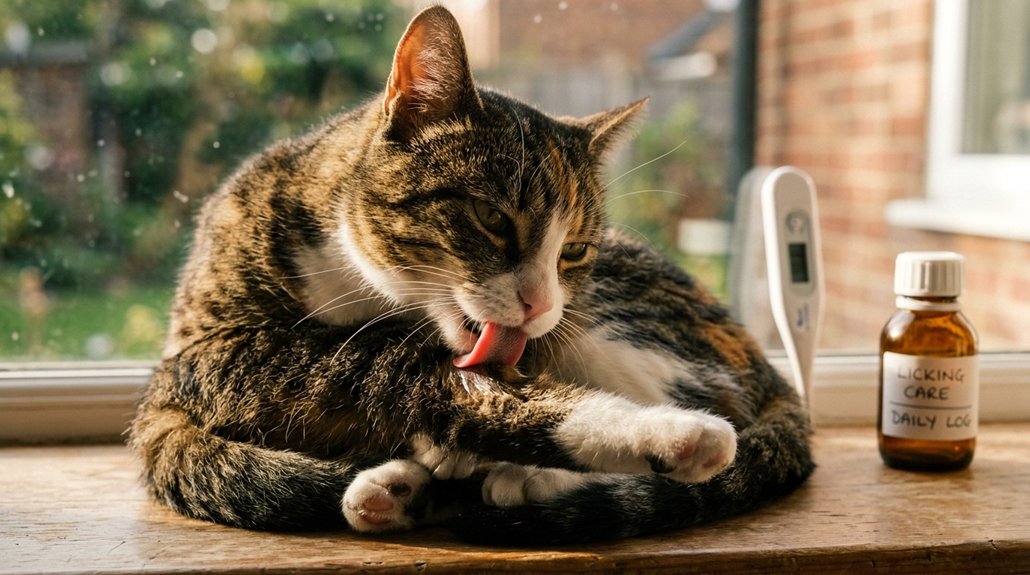
When your cat’s grooming routine results in bald patches or sores, it’s time to contemplate potential underlying health issues. Compulsive licking that interferes with your cat’s daily activities or leads to changes in behavior might indicate stress or a medical concern that requires professional attention. Persistent behaviors that don’t improve with stress-reduction techniques necessitate consulting with a veterinarian to explore underlying psychological or physiological causes.
Signs of Abnormal Grooming
While a cat’s self-grooming routine is typically a healthy behavior contributing to their well-being, abnormal grooming patterns warrant attention. You should be vigilant for bald patches and barbered fur, as these are indicative signs of overgrooming. Bald patches reveal areas of concentrated licking, while barbered fur—noticeably shortened rather than absent—suggests persistent grooming activity. Examine your cat’s skin for redness, wounds, or scabs, as these can signal underlying issues like allergies, parasites, or stress. Additionally, excessive grooming may predispose your feline to secondary skin infections due to compromised skin integrity. If your cat’s grooming behavior changes dramatically in frequency or targets specific areas, it indicates the need for veterinary evaluation to exclude medical etiologies informing this altered grooming conduct.
Addressing Underlying Health Issues
If your cat’s licking habits deviate from their usual grooming routine, it’s vital to take into account the potential for underlying health issues. Excessive licking may indicate allergies, skin infections, or parasitic infestations, all of which require thorough veterinary evaluation. Allergy testing can help identify specific allergens, allowing for targeted treatment strategies. Protecting your cat from fleas and ticks through diligent parasite prevention is important in eliminating common irritants. Additionally, be vigilant for indicators such as skin damage, bald patches, or lesions—these can signal severe medical conditions. Don’t overlook gastrointestinal disorders and urinary tract infections, as they too can prompt increased grooming particularly in sensitive areas. Regular veterinary check-ups facilitate early detection and effective management of such health issues.
Reducing Stress-Related Licking in Cats
Excessive licking in cats can often be attributed to stress, manifesting as a form of compulsive grooming. Implementing calming techniques and environmental modifications can notably mitigate these behaviors. Here’s how you can assist:
Excessive licking in cats often stems from stress, but calming techniques can help mitigate these compulsive behaviors.
- Environmental Modifications: Gradually introduce changes, such as new pets or household relocations, providing familiar items like bedding for comfort.
- Safe Retreats: Create elevated spaces to serve as safe havens. High perches reduce anxiety by allowing cats to observe and escape as needed.
- Interactive Stimulation: Engage in regular playtime to offer both mental and physical exercise, essential for reducing stress-induced over-grooming.
- Professional Consultation: For severe cases, it’s prudent to seek veterinary advice on anti-anxiety medications for effective control of compulsive licking habits.
Proven Strategies to Stop Overgrooming in Cats
To effectively stop overgrooming behaviors, you should first address any underlying stressors by consulting a veterinarian who can identify medical issues like allergies or infections and prescribe appropriate treatments. Implementing environmental enrichment is essential; incorporate interactive toys and climbing spaces to alleviate stress and boredom, which are common triggers for excessive licking. Additionally, maintaining a stable routine and gradually introducing environmental changes can minimize anxiety, further supporting your cat’s behavioral health.
Address Underlying Stressors
When managing stress-induced overgrooming in cats, it’s important to introduce changes in their environment gradually, as sudden alterations can exacerbate this behavior. Identifying behavioral triggers and fostering emotional comfort plays a key role. To address these issues effectively, consider the following:
- Familiar Items: Introduce known bedding and toys during changes to offer emotional comfort and alleviate anxiety, reducing the likelihood of overgrooming.
- Vertical Spaces: Implement cat trees or wall-mounted shelves to provide safe retreats, which are essential for stressed cats seeking high vantage points.
- Interactive Play: Engage your cat with daily interactive play sessions and mental stimulation through toys and puzzles to combat boredom-related overgrooming.
- Veterinary Consultation: For severe cases, seek veterinary advice on anti-anxiety medications to manage stress and control concurrent overgrooming.
Implement Environmental Enrichment
While addressing feline overgrooming, implementing environmental enrichment is crucial to curbing this behavior effectively. Providing interactive toys, like puzzle feeders, engages your cat’s cognitive functions, alleviating boredom and consequently reducing excessive licking. Establishing vertical spaces, such as cat trees and shelves, promotes exploration and physical exercise, which are essential in lowering stress and anxiety contributing to overgrooming. A structured playtime routine, incorporating games with owners, reinforces bonding and serves as a distraction from self-grooming. Maintaining routine consistency minimizes stress triggers, offering predictability and stability that deter compulsive habits. Additionally, the introduction of calming products, including pheromone diffusers or soothing music, can create a peaceful atmosphere, further diminishing anxiety-related grooming behaviors in felines.
How Veterinary Care Can Resolve Excessive Licking
Veterinary intervention is paramount in addressing excessive licking in cats by pinpointing and treating underlying health conditions such as skin infections, allergies, or parasites. Nutritional deficiencies can exacerbate this behavior, as imbalanced diets may lead to dermatological problems. Understanding your cat’s behavioral patterns is essential; a veterinarian may suggest diagnostics like skin tests or bloodwork to identify root causes. Here’s how veterinary care can help:
Veterinary care is crucial in diagnosing and treating health issues causing excessive licking in cats.
- Prescribe medication: Targeted treatments for allergies or infections can markedly decrease abnormal grooming.
- Conduct further diagnostics: Extensive tests might clarify if nutritional or environmental factors contribute to excessive licking.
- Address stress-related issues: Vets can recommend behavioral strategies or anti-anxiety medications.
- Ensure regular check-ups: Consistent examinations keep feline health issues at bay, reducing excessive licking risks.
Frequently Asked Questions
Is It Normal for a Cat to Lick Themself Constantly?
It’s not normal for a cat to engage in constant licking. Excessive grooming can signify behavioral concerns or underlying health issues. Watch for signs like bald patches or skin irritation; seek a veterinarian’s advice if these occur.
What Is the 3-3-3 Rule for Cats?
The 3-3-3 rule helps you understand kitten behavior and grooming habits during adjustment. Expect three days of stress, three weeks of acclimation, and three months for full integration, aiding in minimizing excessive licking.
What Is “I Love You” in Cat Language?
In cat language, “I love you” is conveyed through purring, slow blinking, and other cat vocalizations, signifying feline affection. These behaviors indicate trust and comfort, supported by numerous studies highlighting their role in bonding and emotional communication.
How Do I Say Sorry to My Cat?
Imagine a cat unraveling yarn to mend a broken bond; apologizing gestures include offering treats or engaging playfully, which pacify feline emotions. Evidence supports that a secure environment and soft vocal tones affirm sincerity in reconciliation.
Conclusion
In a symphony of whiskers and tails, your cat’s grooming habits play a vital role in their overall well-being. However, excessive licking transforms this melody into a cacophony pointing to underlying issues. By understanding the health risks, stress factors, and signs of overgrooming, you can act as a maestro, orchestrating a healthier environment. Don’t hesitate to consult a veterinarian to fine-tune your cat’s behavior. With informed interventions, harmony can be restored to your feline’s life.