Behavioral changes in cats often stem from health issues like hyperthyroidism or dental disease, environmental stressors such as loud noises or territorial threats, and dietary imbalances. Social dynamics in multi-cat households and the introduction of new pets or visitors can also trigger shifts. Indicators including altered grooming, vocalizations, and litter box habits warrant attention. Understanding these factors from a clinical perspective equips you to address your cat’s needs effectively, and further information can enhance your insight.
Key Takeaways
- Health issues like hyperthyroidism or dental disease can alter eating, drinking, and litter box behaviors in cats.
- Environmental changes, such as loud noises or new pets, can trigger stress and behavioral shifts.
- Genetics and routine greatly influence a cat’s core behaviors and stress levels.
- Nutrient imbalances or dietary sensitivities may lead to aggression, anxiety, or energy fluctuations in cats.
- Social dynamics and territorial disputes in multi-cat households often cause behavioral changes and aggression.
Recognizing Core Behavioral Traits in Cats
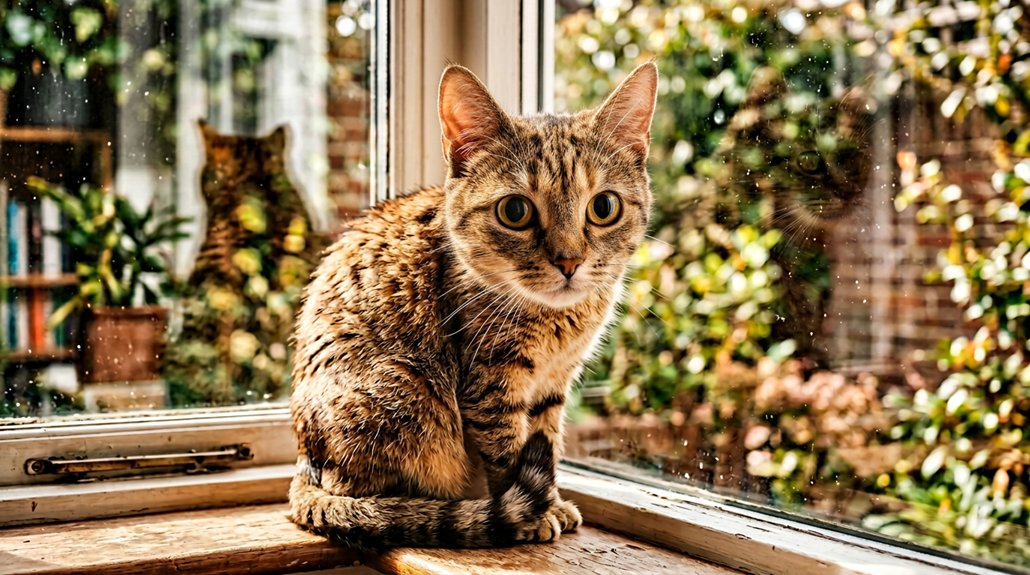
How do you effectively recognize the core behavioral traits in cats? Start by observing their playful tendencies and social interactions. Each cat’s unique personality, shaped by genetics, experiences, and the environment, influences these core behaviors. Playful tendencies might be expressed through chasing toys and interactive play, essential for mental stimulation and physical fitness. Social interactions further reveal a cat’s disposition—some may be gregarious, seeking companionship, while others prefer solitude. By monitoring body language—such as dilated pupils or flattened ears—you can assess emotional states like fear or aggression. Understanding these indicators allows you to identify potential stressors or health issues early, facilitating timely intervention to improve well-being. Recognizing these traits guarantees you respond appropriately, fostering a harmonious cat-human relationship.
Health Issues Affecting Behavior
When you notice changes in a cat’s eating and drinking habits, such as increased appetite due to hyperthyroidism or decreased appetite from dental disease, it’s essential to take into account underlying health issues. Altered litter box behaviors, like inappropriate elimination, might indicate conditions such as urinary tract infections, necessitating immediate veterinary evaluation. Additionally, unexpected aggression or increased vocalizations could signal discomfort from pain-related illnesses, underscoring the need for a thorough clinical assessment.
Eating and Drinking Changes
If you’ve noticed changes in your cat’s eating or drinking habits, it’s imperative to contemplate the potential underlying health issues. Appetite fluctuations, such as increased or reduced food intake, could signal conditions like hyperthyroidism or diabetes, necessitating immediate veterinary evaluation. A decrease in intake is particularly concerning due to the risk of Hepatic Lipidosis, a severe liver condition. Hydration changes are equally significant; increased thirst might suggest renal or hepatic problems, whereas diminished fluid consumption could indicate physical weakness. It’s important to monitor water intake, especially with dietary changes, as dry food consumption requires increased hydration. These observations are vital for early detection and intervention in potentially serious health problems that impact your cat’s overall well-being.
Litter Box Habits
Changes in a cat’s litter box habits can be a strong indicator of underlying health issues. If your cat begins urinating or defecating outside its litter box, it might be experiencing medical conditions such as urinary tract infections or arthritis, potentially exacerbated by limited litter box accessibility. Stress and anxiety, often due to environmental shifts or pet conflict, can also trigger litter box avoidance. Immediate veterinary attention is necessary if you notice reduced litter box usage or urine with blood. As a preventive measure, guarantee litter box cleanliness and prefer unscented litter. Here’s how to encourage proper elimination behaviors:
- Maintain litter box cleanliness for hygiene and health.
- Guarantee litter box accessibility to reduce discomfort.
- Consult a veterinarian to differentiate medical from behavioral issues.
Aggression and Pain
Understanding the link between aggression and pain in cats is essential for addressing behavioral issues effectively. Elevated aggression often signifies underlying medical concerns, with sudden behavioral changes indicating distress. Pain identification is imperative, especially when cats exhibit aggression triggers like swatting or hissing upon touch near painful areas. Conditions such as osteoarthritis can lead to defensive behavior towards humans or other pets due to discomfort. Clinicians observe that approximately 27% of cats surrendered to shelters for behavioral reasons were due to aggression, highlighting pain as a significant factor. Recognizing and alleviating pain through veterinary intervention can transform a cat’s behavior, reducing aggression linked to health issues. Proper pain management can drastically improve feline welfare and human-cat dynamics.
Environmental Impact on Cat Behavior
You should recognize that environmental changes play a critical role in cat behavior, often triggering stress-related reactions like aggression or hiding. Evidence suggests that cats are highly sensitive to alterations in their surroundings, including new pets, unexpected visitors, and even noise disturbances, which can lead to heightened anxiety and behavioral shifts like increased vocalization. Adaptive strategies for minimizing these impacts might include maintaining a consistent routine and providing ample enrichment to help alleviate their stress and foster a sense of security.
Stress Factors in Environment
Maneuvering the complexities of a cat’s environment reveals a tapestry of stress factors that can profoundly impact behavior. Certain environmental triggers can elicit stress reactions, leading to notable behavioral alterations. For instance, environmental changes like moving homes or the introduction of new pets can destabilize a cat’s routine, resulting in hiding or increased aggression. Additionally, loud noises from construction or household appliances often cause anxiety, prompting behaviors such as excessive vocalization or scratching. Moreover, the perception of territorial threats, particularly from outdoor cats, can instigate defensive aggression or territorial marking indoors.
Consider these critical influences:
- Environmental changes: New homes or pets.
- Auditory stressors: Construction noise or fireworks.
- Territorial threats: Presence of unfamiliar animals.
Understanding these factors facilitates effective management of feline stress.
Adaptation to Environmental Changes
When cats encounter environmental changes, their intrinsic sensitivity demands careful management to avoid stress-induced behavioral shifts. Various environmental triggers, such as new furniture or routine alterations, can provoke behavioral adaptation challenges. Stressors like loud noises and new odors might incite anxiety, manifesting in aggression or reclusive behaviors.
| Environmental Triggers | Behavioral Adaptation |
|---|---|
| New pets | Territorial aggression |
| Relocation or new home | Hiding and litter box issues |
| New household members | Increased vocalization |
Relocation necessitates particular clinical attention, as hiding behaviors and litter box aversion often arise. A stable, enriched environment promotes effective adjustment by providing security and comfort. Consistency aids accustomization, attenuating stress responses and facilitating healthy behavioral adaptations. Awareness of these factors is pivotal in mitigating adverse effects and promoting well-being in feline patients.
Spotting Stress and Anxiety Signs in Cats
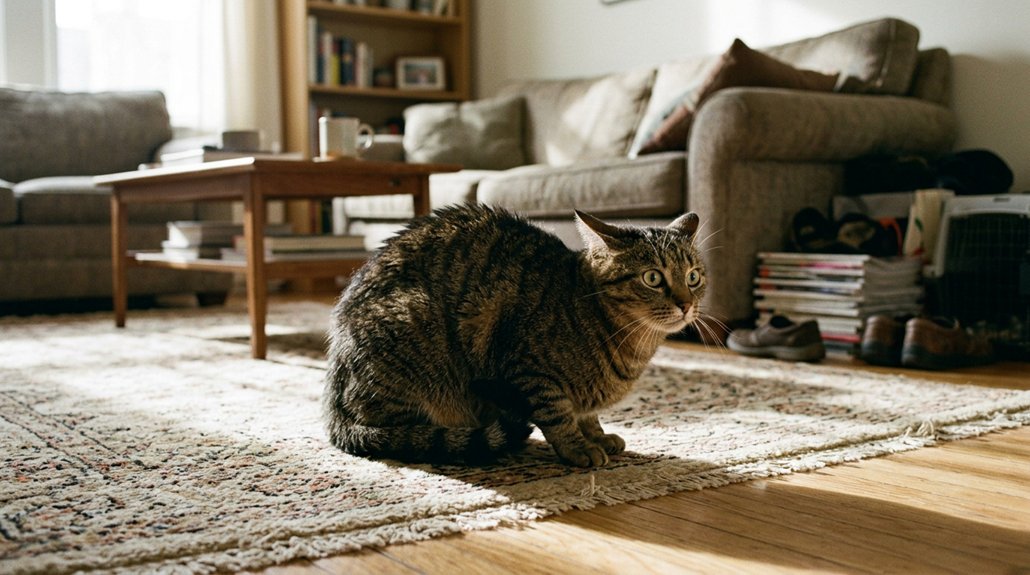
Identifying subtle behavioral indicators is essential in understanding stress and anxiety in cats. Through careful observation, you can pinpoint stress triggers contributing to behavioral changes. Symptoms often overlap but can be distinct if you monitor them closely. Here’s a systematic way to identify them:
- Grooming Alterations: Notice reduced or excessive grooming. It can manifest from anxiety about their environment, serving as an important signal for anxiety management.
- Vocalization Changes: Listen for increased yowling or crying. Such vocal shifts might indicate distress requiring further evaluation or intervention for stress triggers.
- Social Withdrawal: Observe hiding or decreased interaction. These are classic signs of stress or anxiety in response to new visitors or environmental changes, necessitating careful assessment.
How Diet Influences Cat Behavior
While dietary influences might not be immediately recognized, they play a pivotal role in shaping your cat’s behavior. Dietary sensitivities can drive changes in appetite and energy, manifesting as altered behavior if your cat’s food doesn’t suit their preferences or contains irritants. Nutrient imbalances, particularly deficiencies in B vitamins and taurine, can elicit aggression, lethargy, or anxiety. High carbohydrate content may increase hyperactivity or trigger aggression, while poor-quality ingredients might cause gastrointestinal discomfort, affecting your cat’s demeanor. Cats suffering from dental issues may eat less, resulting in weight fluctuations and behavioral shifts, such as increased hiding or irritability due to pain. A sudden change in eating patterns often signals underlying health issues, potentially altering behavior like withdrawal or irritability.
Interacting With Others: Social Dynamics in Cat Behavior
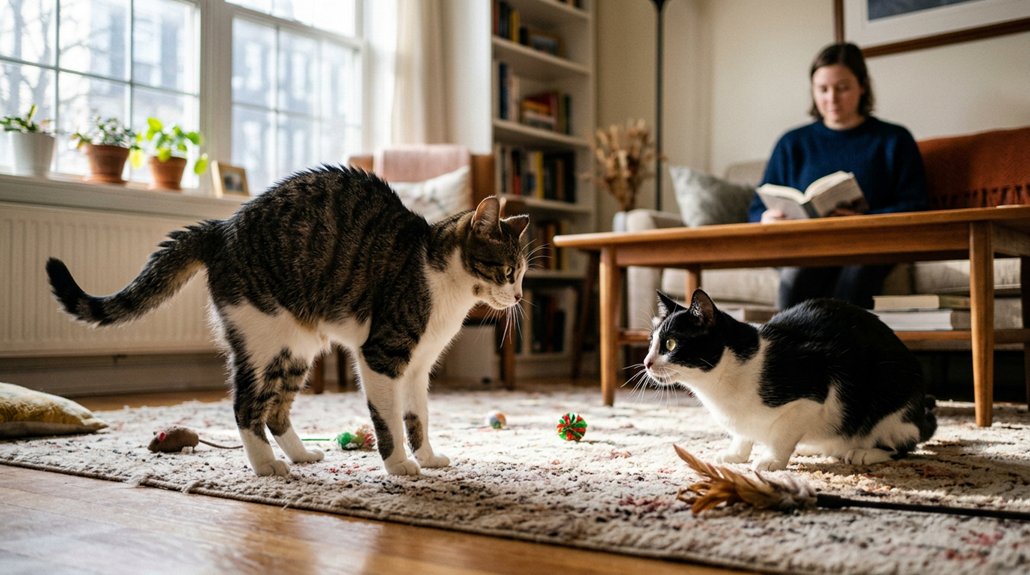
A cat’s dietary habits undeniably influence its behavior, yet social interactions also greatly affect behavioral patterns, especially in multi-cat households. Understanding feline communication is essential for managing interactions, as territory disputes and resource competition can exacerbate aggression triggers. Social cues, like body language, indicate potential conflicts arising from group hierarchy dynamics. Implementing a structured introduction strategy can mitigate play behavior transforming into hostility. Here are three steps to promote harmony:
- Identification of Aggression Types: Recognize signs such as fear aggression or status-induced aggression, often tied to competition for dominance.
- Observation of Social Cues: Monitor behaviors like dilated pupils and flattened ears, key indicators of impending aggression.
- Use of Positive Reinforcement and Gradual Introductions: Foster peaceful coexistence by reducing stress and utilizing gradual familiarization techniques.
When to Consult a Veterinarian on Cat Behavior
When you notice persistent behavioral changes in your cat, it’s important to consult a veterinarian promptly to rule out underlying health problems. Behavioral triggers like aggression, excessive vocalization, or changes in elimination habits, lasting over 12 to 24 hours, indicate the need for immediate veterinary guidance. Cats often mask illness, so employing observation techniques and understanding your cat’s personality are essential for identifying issues. Regular wellness checks, including annual vet visits for healthy adults and semi-annual evaluations for seniors, form the cornerstone of preventative care. Variations in eating, drinking, grooming, or litter box routines can be early indicators of health concerns, necessitating professional intervention. Addressing these signs swiftly enables better management of potential underlying conditions.
Frequently Asked Questions
Why Do Cats Suddenly Change Behavior?
Your cat’s behavior might change suddenly due to stress factors, health issues, environmental changes, or routine disruptions. It’s essential to evaluate their environment and consult a vet for any underlying medical or psychological conditions affecting their wellbeing.
What Is the 3-3-3 Rule for Cats?
Picture your cat’s adjustment as dancing through thunderstorms. The 3-3-3 rule involves phased adoption adjustment: initial feline fears, exploration, and secure routine. Clinically, it embraces stress reduction and behavioral settling over three days, weeks, and months.
When Should I Be Worried About My Cat’s Behaviour?
Be concerned if your cat’s behavior changes dramatically for over 12 hours. Stress triggers, health issues, or environmental factors disrupting social interactions require a clinical assessment to rule out underlying conditions needing evidence-based intervention.
What Is a Red Flag Behavior in Cats?
In a whirlwind of fur and claws, sudden aggression emerges—a red flag signaling potential triggers: pain, stress, or fear. Recognize these stress indicators as critical, driving you to assess underlying issues from a clinical perspective.
Conclusion
In your quest to decipher feline mood swings, remember: cats are like your GPS—occasionally clear, often cryptic, and sometimes just spinning in circles. From health hiccups to the latest gourmet scandal affecting their diet, every quirk has a source (except chasing invisible bugs; that’s pure feline fun). Consider their social dynamics as an elaborate game of chess, and don’t forget to consult the vet—especially when Mr. Whiskers decides the curtains are public enemy number one.