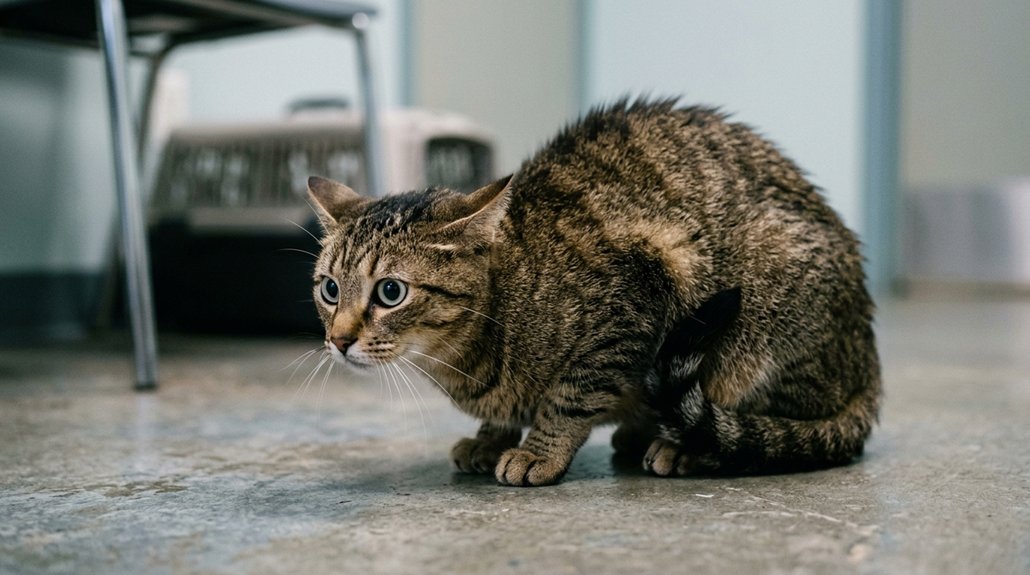
To identify if your cat is stressed or anxious, watch for increased vocalizations, frequent hiding, or changes in eating habits. Excessive grooming can lead to bald spots, while inappropriate elimination may signal distress. Respiratory issues like panting, as well as more sleep or altered vocal patterns, are key indicators. Monitor these behaviors to maintain your cat’s well-being. Understanding these signs will enlighten you on how to effectively support your feline companion.
Key Takeaways
- Increased vocalizations, like excessive meowing or yowling, indicate your cat may be stressed or anxious.
- Frequent hiding or preference for secluded spaces suggests feelings of overwhelm or anxiety.
- Inappropriate elimination outside the litter box can signal stress or territorial insecurity.
- Excessive grooming resulting in bald patches is a physical sign of anxiety in cats.
- Changes in appetite or eating habits can reflect stress or anxiety levels.
What Causes Stress in Cats?
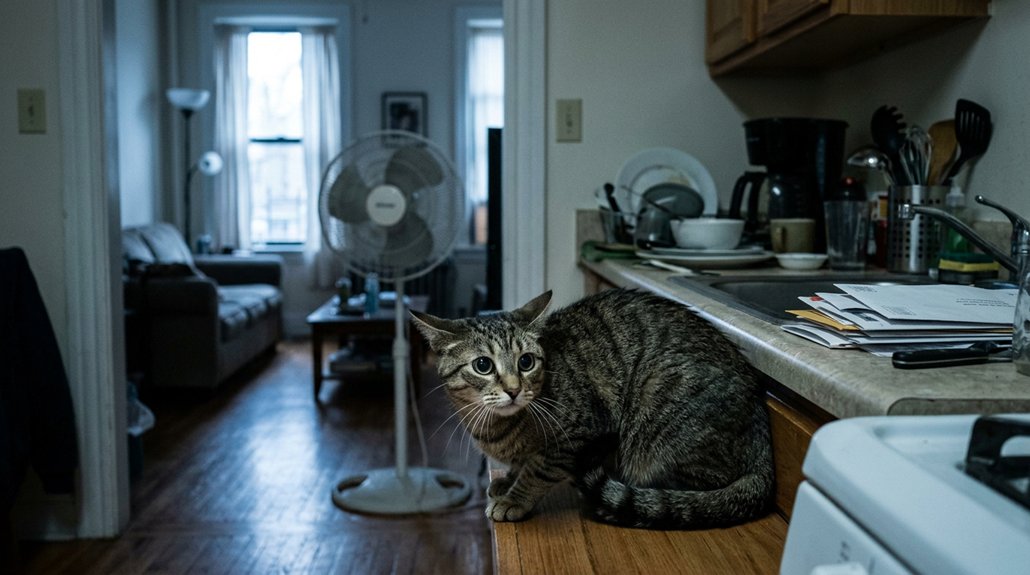
Although cats often seem independent, several factors can easily disrupt their mental well-being, causing stress. Environmental changes, like moving to a new home, impact their sense of security. New introductions, whether pets or family members, threaten their territory, increasing anxiety. Cats have acute hearing, making loud noises such as thunderstorms and fireworks particularly distressing by triggering instinctive fear responses. Routine disruptions, including changes in feeding schedules or prolonged solitude due to shifts in your personal schedule, elevate stress levels as they’re creatures of habit. Physical handling that’s either excessive or undesired can leave them feeling threatened or trapped, inducing further stress. Being mindful of these stressors and managing them effectively can help maintain your cat’s emotional equilibrium.
How Can You Tell If Your Cat Is Stressed?
To assess if your cat is stressed, observe for behavioral changes like hiding, decreased social interaction, or increased aggression. Listen for excessive vocalizations, which could mean your cat is feeling threatened or in distress. Also, watch for physical symptoms such as excessive grooming or changes in eating habits that might indicate anxiety.
Behavioral Changes Indicating Stress
Identifying stress in cats requires careful observation of their behavior, as these changes are often subtle yet telling. Pay close attention to vocalization patterns; increased meowing or yowling may indicate distress and a demand for your attention. Likewise, a cat frequently seeking hiding spots might feel overwhelmed, retreating to these secluded areas as a coping mechanism. Stress may manifest in inappropriate elimination behaviors, such as urinating or defecating outside the litter box, indicating discomfort with their environment. Additionally, look for excessive grooming, leading to bald patches or skin irritation, suggesting stress-related compulsive behavior. Finally, monitor changes in eating habits—stress can result in a decreased appetite or refusal to eat, potentially causing weight loss and complicating health.
Physical Symptoms of Anxiety
Stress in cats can manifest in various physical symptoms that are critical to recognize. Being aware of these symptoms can aid in effective anxiety management and help identify stress triggers. Look for signs such as:
- Excessive Grooming: This may result in skin irritations and hair loss (psychogenic alopecia), a sign that your cat is attempting to cope with stress.
- Respiratory Distress: Watch for panting or rapid breathing. These can indicate significant anxiety levels requiring immediate attention.
- Gastrointestinal Issues: Frequent vomiting or diarrhea are potential stress indicators, reflecting internal anxiety and behavioral changes.
Increased sleep patterns and changes in vocalization, including more meowing or yowling, further signal distress. Identifying these symptoms allows for timely interventions, aiding in reducing your cat’s anxiety.
Why Is My Cat Meowing More Lately?
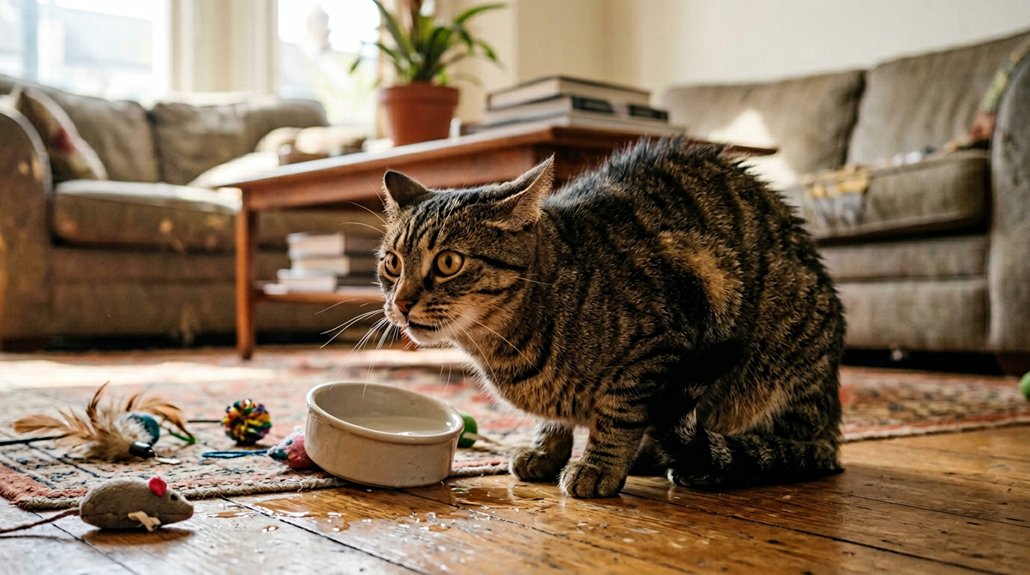
Have you noticed your cat meowing more than usual lately? This increase in vocalization patterns can be due to various behavioral triggers. Cats may meow more as a response to stressful situations like changes in routine or environment. Additionally, territorial intrusions such as unfamiliar pets or loud noises can heighten vocal behaviors as your cat seeks attention or reassurance. Here’s a look at potential behavioral triggers and their implications:
| Trigger | Implication |
|---|---|
| Change in household routine | Seeking attention or comfort |
| Unfamiliar pets | Feeling threatened |
| Loud noises outside | Anxiety or fear |
| Environmental stressors | Need for social interaction |
If your cat’s vocalization changes markedly in frequency or tone, particularly with additional stress or anxiety signs, consulting a veterinarian could be essential.
What Does Excessive Grooming Indicate?
Excessive grooming in cats often signals stress relief, as it triggers endorphin release to counter anxiety. However, this behavior can compromise skin health, possibly resulting in conditions like psychogenic alopecia, which leads to bald patches. To address underlying triggers, consider changes in your cat’s environment and consult professionals for guidance on interventions like recovery collars or medications.
Signs of Stress Relief
When your cat engages in excessive grooming, it might not simply be a matter of hygiene but rather an indicator of stress relief attempts. This grooming behavior often acts as a comfort mechanism, temporarily soothing your feline by releasing endorphins. However, this isn’t just about cleanliness; it can signal anxiety or a response to changes in routine.
Consider these signs of excessive grooming:
- Frequent licking: Your cat may concentrate on specific areas, leading to hair thinning.
- Persistent nibbling: This can escalate to skin irritation or small wounds.
- Obsessive behavior: Grooming seems never-ending, potentially indicating significant stress.
Such behaviors highlight the need for potential interventions, like environmental enrichment and calming strategies, to effectively manage your cat’s stress levels.
Impact on Skin Health
While grooming can comfort your cat amidst stress, it often signals deeper issues when it becomes excessive. Cats may groom excessively to release endorphins, but this behavior can lead to grooming disorders that manifest as skin conditions. You might notice bald patches, skin irritations, or even infections—clear indicators of potential emotional distress. In some cases, this compulsion escalates into psychogenic alopecia, necessitating a veterinarian’s intervention to treat both psychological and physical symptoms. Environmental changes or routine disruptions frequently trigger this coping mechanism. It’s essential to monitor your cat’s grooming habits closely. If the behavior persists, seek a professional evaluation to identify and address any underlying health issues, ensuring your cat’s well-being isn’t compromised by unchecked stress signals.
Addressing Behavioral Triggers
If you’ve noticed your cat grooming more than usual, it is crucial to understand the underlying behavioral triggers driving this action. Excessive grooming often indicates stress or anxiety, typically triggered by environmental changes, such as new pets or altered household dynamics. Cats derive comfort from grooming, but overdoing it can cause skin irritations or conditions like psychogenic alopecia.
To mitigate this behavior, consider:
- Environmental enrichment: Introduce new toys, climbing structures, or scratching posts to provide mental and physical stimulation.
- Grooming alternatives: Offer distractions like interactive playtime or puzzle feeders to redirect focus and energy.
- Routine assessment: Maintain a consistent daily routine to minimize stressors.
Consult a veterinarian if excessive grooming persists to rule out health issues or discuss anti-anxiety options.
How Does Stress Cause Aggression in Cats?
Stress can markedly alter a cat’s behavior, but how precisely does it lead to aggression? When stress triggers arise, such as changes in routine or new pets, a cat’s ‘fight or flight’ response kicks in. This instinctive reaction often results in cat aggression. Faced with perceived threats, cats may become aggressive, exhibiting stalking, scratching, and biting. These behaviors indicate their attempt to protect themselves when feeling overwhelmed. Warning signals, like hissing or growling, also highlight their defensive stance when anxious. Furthermore, underlying medical issues, such as cognitive decline, can intensify stress-induced aggression. It is crucial to recognize these signs and consult a veterinarian if your cat’s behavior changes, ensuring you address both psychological and health-related factors contributing to their stress.
Is My Cat Hiding Because of Stress?
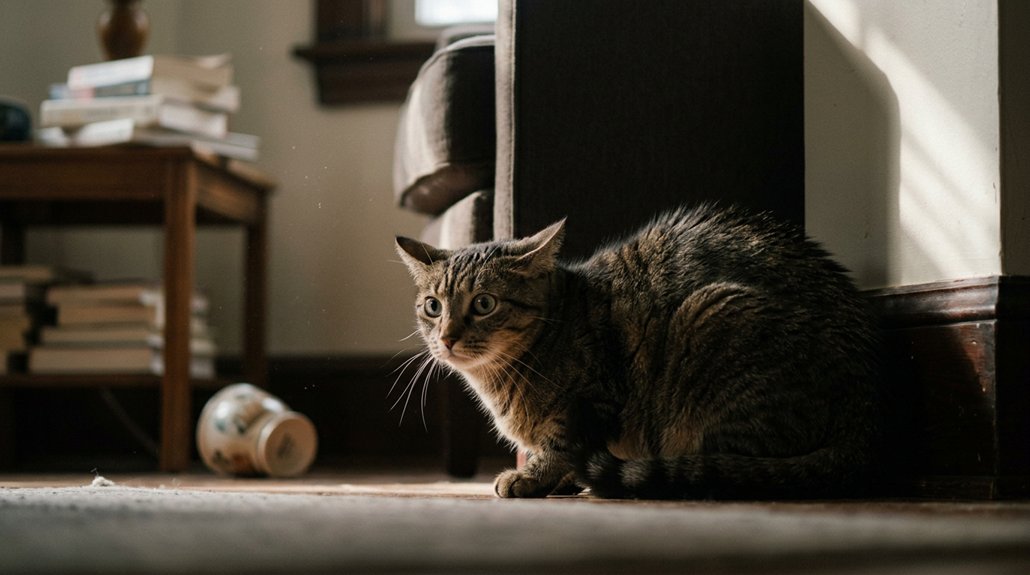
Curiously, could your cat’s preference for cozy hideaways be hinting at underlying stress? Cats often retreat to hiding spots or comfort zones to avoid perceived threats. If your feline friend’s hiding behavior increases, it might be experiencing stress. Typical stress indicators include:
Could your cat’s love for cozy nooks indicate hidden stress? Increased hiding may signal underlying anxiety issues.
- Increased hiding in secluded or enclosed spaces, such as under furniture or in closets.
- Response to changes in household dynamics, like new pets or family members.
- Sudden reclusiveness or disappearance, signifying anxiety due to environmental disturbances.
Note that prolonged hiding isn’t just a quirky habit; it could reveal deeper stress issues. Monitoring these patterns helps assess when to evaluate behavioral evaluations or consult a veterinarian. Stay attuned to how altered environments impact your cat’s comfort zones.
Could Stress Be Affecting My Cat’s Appetite?
While stress might seem inconsequential, it can greatly impact your cat’s appetite. Appetite changes can manifest as decreased interest in food, potentially leading to weight loss or gastrointestinal issues. Increased anxiety is a common culprit, causing the cat to eat less frequently or even avoid meals altogether. Stressors such as environmental changes, routine disruptions, or new pets can exacerbate these issues. Monitoring your cat’s feeding habits is essential, as prolonged appetite suppression can result in serious health complications. Make sure you’re aware of any shifts in how or when they eat. Maintaining a consistent feeding schedule alongside a calm environment is beneficial. If appetite changes persist or seem severe, consulting with a veterinarian is advised to prevent health deterioration.
What Can You Do to Help a Stressed Cat?
Changes in your cat’s appetite can be a telling sign of stress, but effective measures can help alleviate their anxiety. Start by creating a safe space with familiar items like their bed and toys, fostering a secure environment during stressful situations. Incorporating a consistent routine assists in reducing their anxiety, providing stability. Additionally, explore calming aids such as pheromone diffusers or sprays, designed to mimic reassuring natural scents. These tools can significantly enhance your cat’s sense of peace.
- Consult your veterinarian for guidance on behavioral strategies or medications.
- Engage in interactive play therapy for physical and mental stimulation.
- Maintain regular feeding and playtime schedules to guarantee your cat feels secure.
Taking these steps can effectively soothe your feline friend.
Frequently Asked Questions
Is My Cat Just Stressed or Truly Anxious?
Assess your cat’s behavior changes. Stress triggers like environmental shifts cause temporary distress. Anxiety symptoms like compulsive behaviors suggest persistent fear. Evaluate duration and intensity—prolonged, intense responses might indicate anxiety needing therapeutic intervention or medication.
What Is the 3-3-3 Rule of Cats?
The 3-3-3 rule’s a guiding light for cat behavior understanding: first three days, your cat’s wary, evaluating stress signals; three weeks, exploring safety; and three months, settling into comfort. Patience’s key to their adjustment.
What Is the Best Anti Anxiety Medication for Cats?
Fluoxetine, clomipramine, and buspirone are common choices for feline anxiety. Consult your vet for dosages or explore natural remedies. Environmental enrichment and understanding feline behavior are essential in supporting anti-anxiety treatment plans effectively.
What Is “I Love You” in Cat Language?
“I love you” in cat language involves cat communication through specific feline behavior like slow blinking, purring, gentle headbutting, kneading, and presenting gifts. These actions affirm your cat’s trust, affection, and desire to bond deeply with you.
Conclusion
Understanding your cat’s stress is essential—it’s like deciphering the Da Vinci Code of feline behavior. By observing changes in meowing, grooming, aggression, or appetite, you can identify stressors early. A stressed cat might hide or avoid meals, turning their world topsy-turvy. But don’t fret! With patience and a calming environment, you can alleviate their stress and restore harmony. Remember, a well-understood cat is a purring symphony of happiness waiting to be released.