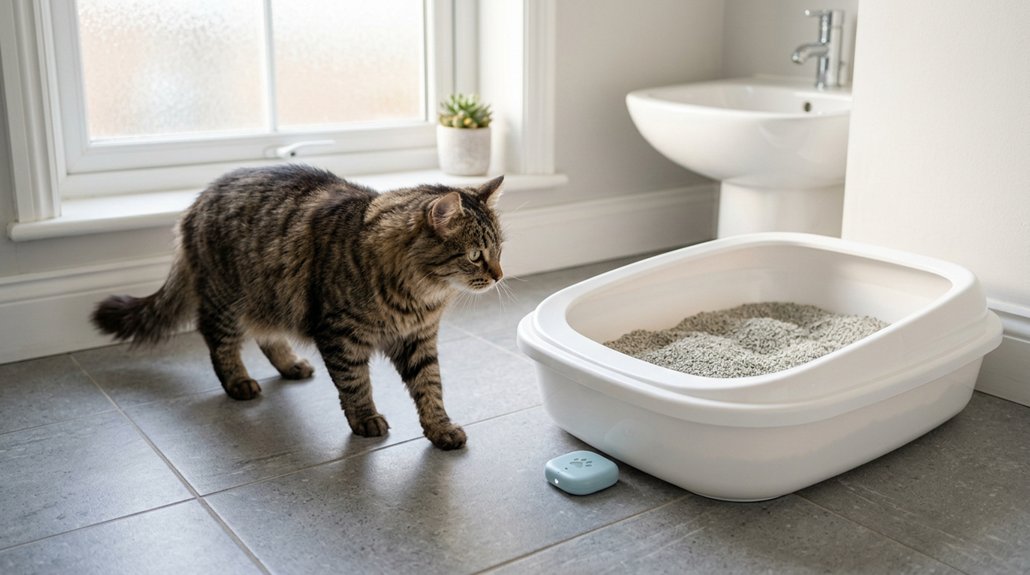
To retrain your cat to use the litter box, first rule out any medical issues with a veterinary check-up. Examine environmental factors causing aversion, like litter type and box location. Set up the ideal environment with unscented clumping litter and maintain one box per cat, plus an extra. Start confinement training, gradually reintroducing your cat to its home. Clean accidents with enzyme-based cleaners and monitor progress. Explore more to gain deeper insights into effective techniques and detailed strategies.
Key Takeaways
- Conduct a veterinary examination to rule out medical causes before focusing on behavioral strategies for litter box training.
- Use unscented clumping litter and ensure litter boxes are quiet and private to encourage usage.
- Provide one litter box per cat plus an extra, maintaining cleanliness by scooping daily.
- Gradually introduce different litter types side-by-side to identify preferences, monitoring usage to adapt accordingly.
- Employ enzymatic cleaners on soiled areas to eliminate smells, preventing repeat accidents and reinforcing proper habits.
Ruling Out Medical Causes First
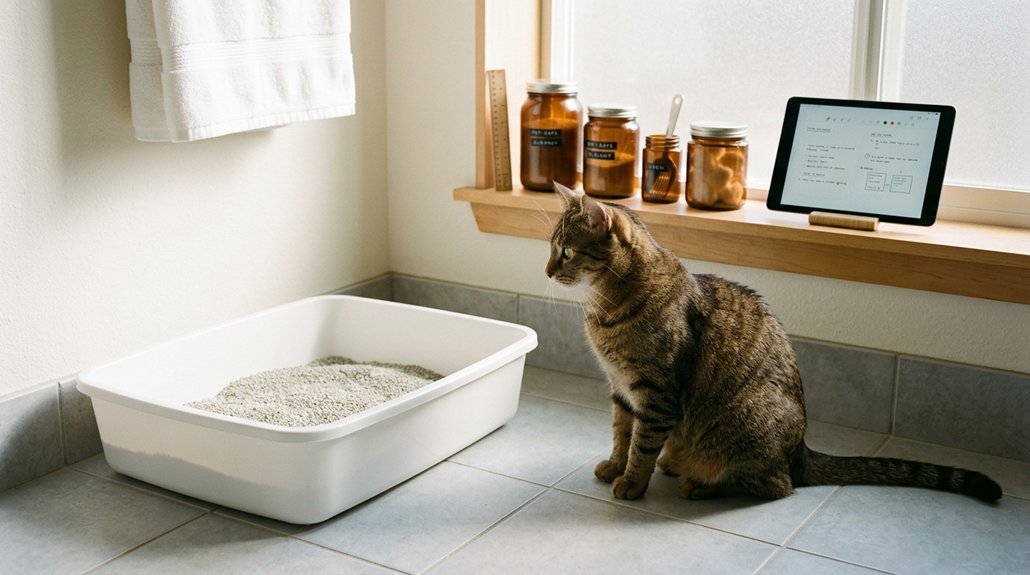
Before initiating litter box retraining, conducting a thorough veterinary examination is essential to rule out any medical conditions influencing your cat’s elimination behavior. Begin with a urinalysis, which will help identify urinary tract infections or bladder stones by detecting crystals or blood in the urine. If necessary, X-rays can further diagnose obstructions affecting cat health, like bladder stones, that may cause painful urination, resulting in litter box aversion. Address any detected medical conditions with appropriate medications before moving to behavioral solutions. Treating underlying health issues guarantees that elimination behavior isn’t compromised by physical ailments. Once confirmed healthy, if your cat continues to avoid the litter box, you’ll know to focus mainly on behavioral strategies to restore proper litter box use.
Why Do Cats Avoid Litter Boxes?
Many factors can lead to a cat’s avoidance of the litter box, each requiring careful analysis to address effectively. Environmental triggers, such as changes in the home or inter-cat aggression, can profoundly impact a cat’s litter box usage, leading to behavioral stress. Medical issues, like urinary tract infections or bladder stones, often result in litter box anxiety due to pain or discomfort during elimination. Cats are also sensitive to the physical characteristics of their litter box; inadequate size, poor cleanliness, or an unsuitable litter type can deter use. Preferences lean towards unscented clumping litter mimicking fine sand. Additionally, insufficient litter box availability, often one per cat plus an extra, can escalate stress through competition, prompting inappropriate elimination behaviors.
Creating the Ideal Litter Box Setup
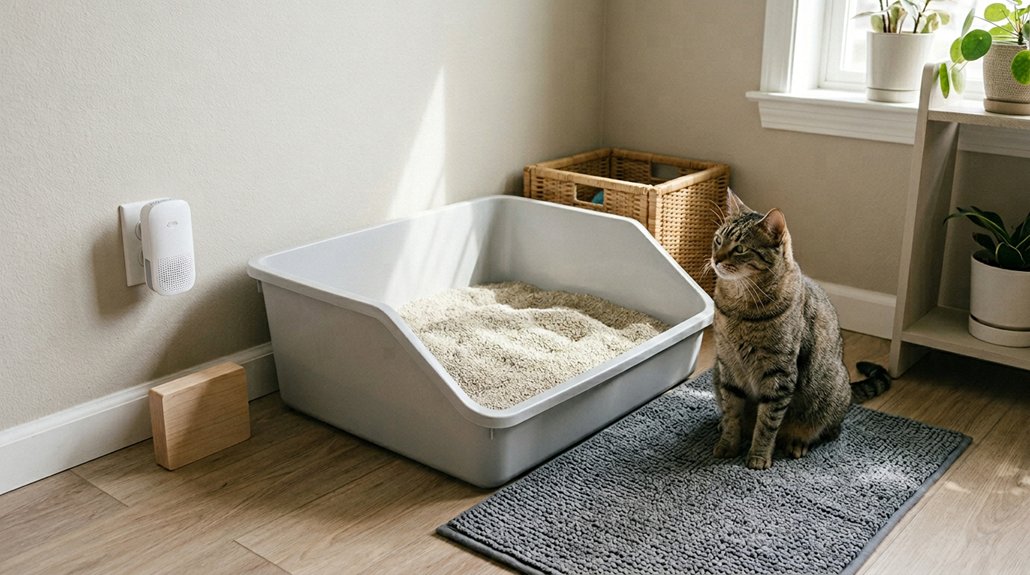
To foster proper litter box habits, guarantee the boxes are placed in quiet, private locations, away from your cat’s food and water, enabling a stress-free environment for elimination. Select unscented, clumping litter with a medium to fine texture to closely mimic natural substrates, which most cats generally prefer. Maintain accessibility and hygiene by providing one box per cat plus one extra, scooping daily, and regularly changing the litter.
Optimal Box Placement
One key aspect of optimizing box placement for your cat involves guaranteeing the litter boxes are situated in quiet, private locations. This respects your cat’s privacy preferences, encouraging usage. Follow these guidelines to perfect your litter box location strategy:
- Positioning: Place each box away from high-traffic zones. A calm atmosphere reduces stress for your cat.
- Accessibility: Select a spacious, uncovered box so your cat can move easily, enhancing comfort and accessibility.
- Quantity: Maintain one box per cat plus an extra. This minimizes territorial disputes and guarantees every cat has choice.
- Separation: Avoid placing the litter box near food and water bowls. Cats instinctively prefer to separate their eating and elimination areas.
Providing these conditions can greatly improve litter box usage and your cat’s well-being.
Litter Type Selection
Ever wondered why your cat might ignore the litter box despite your best efforts? Cats can be particular about their litter, with strong litter texture preferences being a key factor. Opt for unscented clumping litter in a medium to fine texture, as this mimics the natural feel of sand, enhancing your cat’s digging experience. Offer a variety of litter types side by side, allowing them to select their preference, which can considerably decrease litter aversion. Avoid excessively deep litter; a depth of 2-3 inches is ideal, preventing discomfort while digging. Using a spacious box devoid of hoods or liners encourages use. By aligning with your cat’s specific preferences, you create an inviting environment that supports consistent litter box use.
Accessibility and Maintenance
When endeavoring to create the ideal litter box setup for your feline companion, addressing both accessibility and maintenance is essential. Proper litter box design guarantees your cat’s comfort and reduces stress, encouraging consistent use. To optimize box accessibility and maintenance, consider the following guidelines:
- Litter Box Quantity: Have one litter box per cat plus an extra to satisfy preferences and minimize territorial issues.
- Box Design: Choose a spacious, uncovered box at least one and a half times your cat’s length for ease of movement and comfort.
- Location: Position boxes in quiet, accessible places away from high-traffic areas, food, and water.
- Regular Cleaning: Scoop daily and replace litter frequently to prevent aversion and inappropriate elimination.
Following these steps guarantees a consistent and positive litter box experience.
Testing Litter Types for Cat Preferences
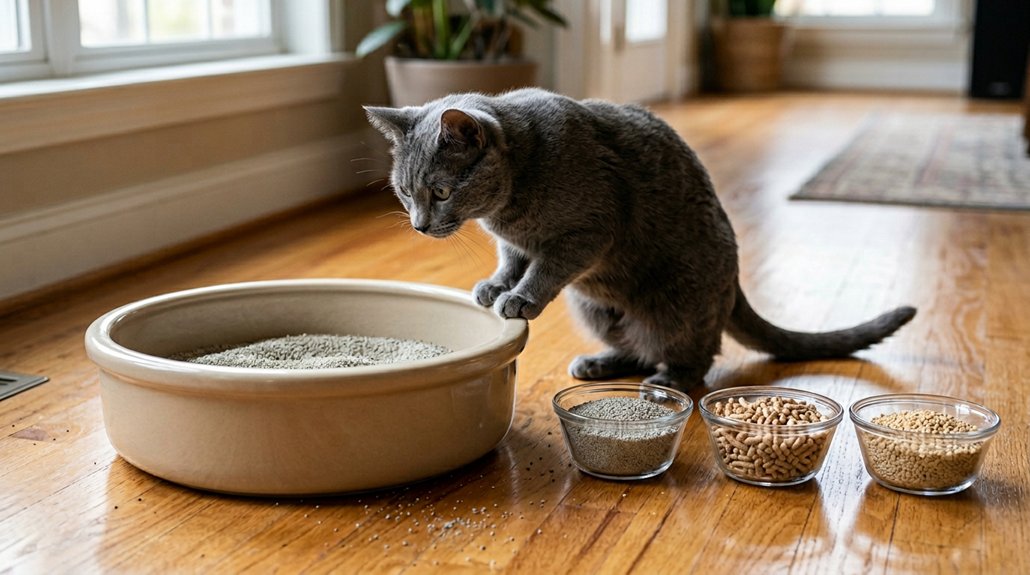
Although each cat is unique in their preferences, understanding how to test different litter types methodically can greatly improve their comfort and hygiene. Begin by evaluating litter texture and scent preferences. Many cats lean towards unscented clumping litter with a medium to fine texture, resembling natural substrates. To determine their preference, utilize box variety; place side-by-side litter boxes with different litters, allowing your cat to select without unnecessary stress. Engage in a gradual introduction of new litter, ensuring changes are seamless and mitigate aversion. This incremental approach prevents abrupt developments, enhancing acceptance. Monitor usage behavior closely and routinely clean boxes with enzymatic cleansers to eliminate odors, which might affect their preference. Through careful observation, you can optimize their litter box experience.
Starting With Confinement Training Techniques
To commence confinement training effectively, you should create a controlled, stress-free environment by placing your cat in a small space such as a bathroom containing only essentials like a litter box, food, and water. This setup offers confinement benefits, allowing for precise behavior observation vital during retraining. Keep the area free from bedding or soft surfaces to minimize distractions and potential accidents. Monitor your cat’s litter usage diligently over a seven-day period, cleaning the litter box often to reinforce proper habits.
Consider the emotional milestones your cat will encounter:
- Adjusting to limited space can reduce stress.
- Consistent litter box use builds confidence.
- Frequent cleaning signals care and support.
- Daily interaction encourages comfort and reassurance.
Patience and attention are key to success.
Gradual Home Reintroduction Steps
Once your cat has shown consistent use of the litter box during confinement, begin its gradual reintroduction to the rest of the home through controlled, supervised visits. Carefully monitor your cat’s behavior during these short outings to guarantee appropriate litter box usage, employing distraction techniques when necessary to prevent accidents. Gradual exposure is key, expanding the duration of visits as positive habits cement. If any inappropriate elimination occurs, return to confinement to reinforce training. Consistency guarantees success, so consider multiple litter boxes in various locations. By the fourth week, your cat should have increasing access; however, nighttime confinement might benefit consistency. Rely on strategic placement and vigilant observation of your cat’s behavior throughout this critical change phase.
| Step | Action | Purpose |
|---|---|---|
| 1 | Supervised Visits | Gradual exposure |
| 2 | Behavior Monitoring | Prevent accidents |
| 3 | Home Access | Reinforce training |
Dealing With Cat Stress and Anxiety
Expanding a cat’s access to its environment can sometimes lead to heightened stress or anxiety, which might manifest in ways that counteract the training process. Recognizing stress signals is essential for mitigating cat anxiety effectively. Here are key strategies:
Expanding a cat’s freedom can sometimes inadvertently heighten its stress or anxiety, counteracting training efforts.
- Identify Triggers: Observe any changes such as moving homes or new pets that may contribute to the cat’s stress.
- Safe Room Setup: Create a dedicated space with essentials, offering a haven from stressors.
- Pheromones: Utilize synthetic pheromones like Feliway to help reduce anxiety.
- Multiple Resources: Verify there are ample litter boxes and food dishes, particularly in multi-cat homes, to minimize conflicts.
Effective Cleaning Tips for Accidents
When addressing cat accidents, it’s vital to utilize enzymatic cleaners specifically designed for pet-related messes, as these break down the proteins that cause odors, effectively preventing your cat from re-marking the area. Begin by thoroughly saturating the affected spot and allowing the cleaner to sit for the recommended time to guarantee complete odor elimination. Avoid strong-smelling soaps that only mask odors, as they can lead to repeat mishaps by making the area more enticing for your feline.
Enzymatic Cleaners for Odors
Although cleaning up after your cat’s accidents can be frustrating, using enzymatic cleaners is an effective strategy for eliminating persistent odors. Their enzyme effectiveness targets the proteins in urine and feces, breaking down odor persistence at its source. Here’s how to utilize them correctly:
- Choose Wisely: Use a cleaner specifically formulated for pet odors. Regular cleansers won’t break down scent markers effectively.
- Saturate Thoroughly: Apply the enzymatic cleaner generously to guarantee deep penetration into affected areas.
- Allow Time: Let it sit for the recommended duration to ensure maximum efficacy.
- Rinse If Needed: Some products require rinsing post-application to prevent residue that could deter litter box use.
Following these steps will help maintain a fresh, inviting environment for your feline.
Preventing Repeat Mishaps
While dealing with a cat’s accidents can be challenging, effective cleaning is essential to prevent repeat mishaps. Begin by thoroughly cleaning affected areas with enzyme-based cleaners like Urine Off. These tackle odors missed by soap and water, important for addressing territorial markers that cats might return to. Additional measures include keeping your litter boxes impeccably clean to avert habitual reinforcement of inappropriate behaviors. After cleaning, use odor-neutralizing solutions to eliminate residual smells that might attract your cat. Additionally, strategically block access to previously soiled areas with deterrents such as aluminum foil or double-sided sticky tape. Finally, place treats near the litter box to encourage exploration, redirecting your cat’s habitual elimination tendencies back to the right spot and reinforcing positive associations.
Effective Deterrents for Cats
An effective deterrent strategy for cats begins with addressing accidents using enzymatic cleaners such as Urine Off to thoroughly eradicate odors that traditional soap and water often miss. Cats tend to avoid returning to these spots if they can’t detect previous odors. For deterrent effectiveness, follow these actionable steps to manage cat preferences:
- Block Access: Use aluminum foil or double-sided sticky tape on previously soiled areas. Cats dislike these textures.
- Outdoor Solutions: Cover areas like gardens with rocks or mulch to prevent unwanted wandering and elimination.
- Litter Box Maintenance: Maintain a pristinely clean litter box — cats are meticulous about hygiene and prefer consistent cleanliness.
- Stress Reduction: Use Feliway or similar pheromone diffusers to encourage calm behavior in problematic zones.
Implement these to maintain harmony.
Recognizing Progress and When to Seek Help
When monitoring your cat’s progress during retraining, it is important to regularly observe their litter box usage to detect consistent patterns of success. Look for behavioral signs like the absence of accidents over several days, indicating improvement. Document any alterations in behavior or environment; stressors might hinder retraining and may necessitate situation reevaluation.
Should your cat persistently avoid the litter box, despite thorough health checks, consulting a veterinary behaviorist for specialized guidance can be advantageous. If your cat resumes regular litter box use after a confinement period, it points to successful retraining. However, if accidents continue for weeks, it is crucial to revisit veterinary assessments. This excludes medical causes and enhances targeted behavioral strategies, ensuring thorough evaluation.
Frequently Asked Questions
How Do I Get My Cat to Start Using His Litter Box Again?
Make certain your cat’s litter box is clean and in a quiet location. Rule out medical issues first. Experiment with different types of litter to suit your cat. Address potential behavioral issues by creating a stress-free environment.
Will Prozac Stop My Cat From Peeing?
Prozac might help reduce your cat’s inappropriate urination by addressing anxiety-related behaviors. The medication’s effects, combined with behavioral changes, usually require 4-6 weeks. Consult your vet to ascertain the right dosage and monitor any side effects.
How to Discipline a Cat for Not Using a Litter Box?
Don’t discipline the cat for litter box avoidance. Instead, focus on litter box troubleshooting and feline behavior modification. Enhance the environment and offer positive reinforcement. Address medical issues and adjust box conditions to align with the cat’s preferences.
How to Reintroduce Cats to the Litter Box?
To reintroduce cats to the litter box, slowly allow room access while observing their preferences. Verify proper cleanup methods with clumping, unscented litter. Maintain cleanliness consistently to encourage correct use, adjusting locations as necessary for success.
Conclusion
So, you’ve navigated the path to retraining your feline friend, ruling out medical concerns and understanding why kitty became a litter box rebel. With the ideal setup and careful litter selection, you’re giving your cat every reason to return to good habits. Confinement training acts like a VHS rewind, letting you start fresh, while gradual reintegration and stress management guarantee comfort. Monitor progress closely; seek a professional if needed. Consistency and patience are your best allies.