
To introduce a new cat to your existing cats without fighting, start by isolating the newcomer with familiar items to reduce stress. Use scent exchange techniques with bedding to promote familiarity. Implement the barrier method, allowing cats to observe each other without direct contact while offering treats for calm behavior. Engage them in parallel play with interactive toys to build positive associations. Address any aggression swiftly by separating them, and explore further strategies for smooth introductions.
Key Takeaways
- Isolate the new cat initially to manage stress and prevent direct confrontation.
- Conduct a scent exchange to familiarize cats without face-to-face meetings.
- Use a barrier method for safe observation and gradual acclimation.
- Utilize interactive toys for playful bonding and positive association.
- Separate cats at the first sign of aggression to prevent escalation.
Effective Cat Introduction Techniques
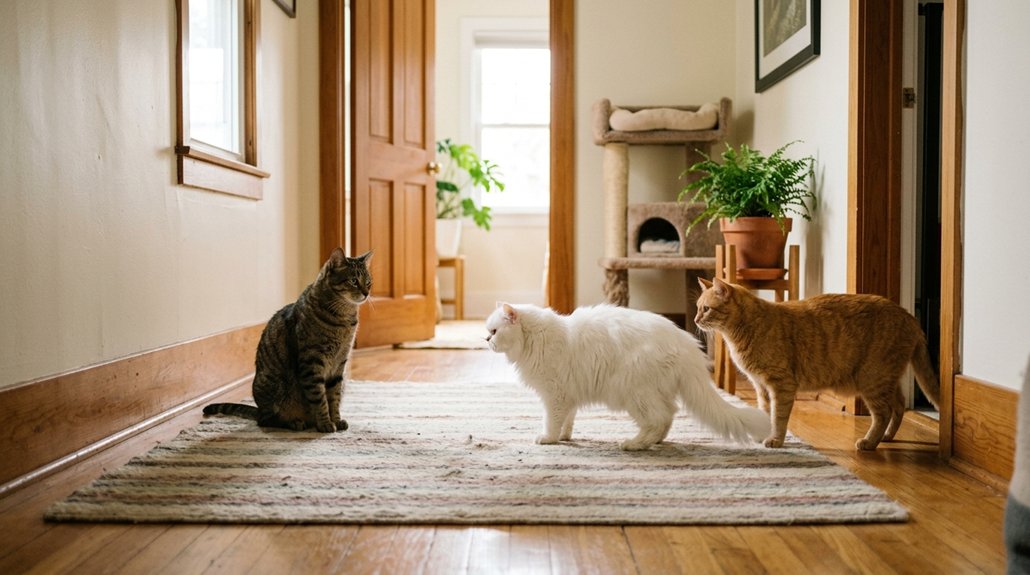
When introducing a new cat to your household, employing effective cat introduction techniques is essential for ensuring a harmonious change. Initially, isolate the new cat in a separate room filled with its familiar items. This helps manage cat behavior while reducing potential stress. Monitor stress signals—like flattened ears or a puffed-up tail—during this period. Implement a feeding strategy by placing food bowls on opposite sides of a closed door to foster positive associations without visual contact. Once scent swapping through blankets or bedding has been successful, you can cautiously introduce visual contact using barriers such as baby gates. This allows for observation without physical interaction. Engage both cats in interactive play to further mitigate stress and encourage bonding.
Methodical Scent Exchange Process
As you begin the methodical scent exchange process, start by exchanging blankets or bedding between the resident and new cats, as it’s essential for promoting familiarity without direct contact. This method increases scent familiarity and encourages gradual exposure. Place scent soakers like beds and scratching posts in the new cat’s space to establish their territorial scent. Gradually introduce shared spaces by allowing each cat to explore the other’s areas without meeting face-to-face to avoid aggression.
Use the following strategies:
| Strategy | Description | Purpose |
|---|---|---|
| Blanket Exchange | Swap bedding between cats | Promote scent familiarity |
| Scent Soakers | Use of beds and scratching posts | Establish territorial scent |
| Shared Exploration | Allow area exploration while separated | Gradual exposure |
| Positive Association | Feed on either side of a closed door | Associate scent with reward |
| Monitor Responses | Observe calmness and curiosity | Assess readiness |
Encourage positive associations by feeding them on opposite sides of a door. Continue this process until both cats show calm curiosity.
Implementing the Barrier Method for Initial Meetings
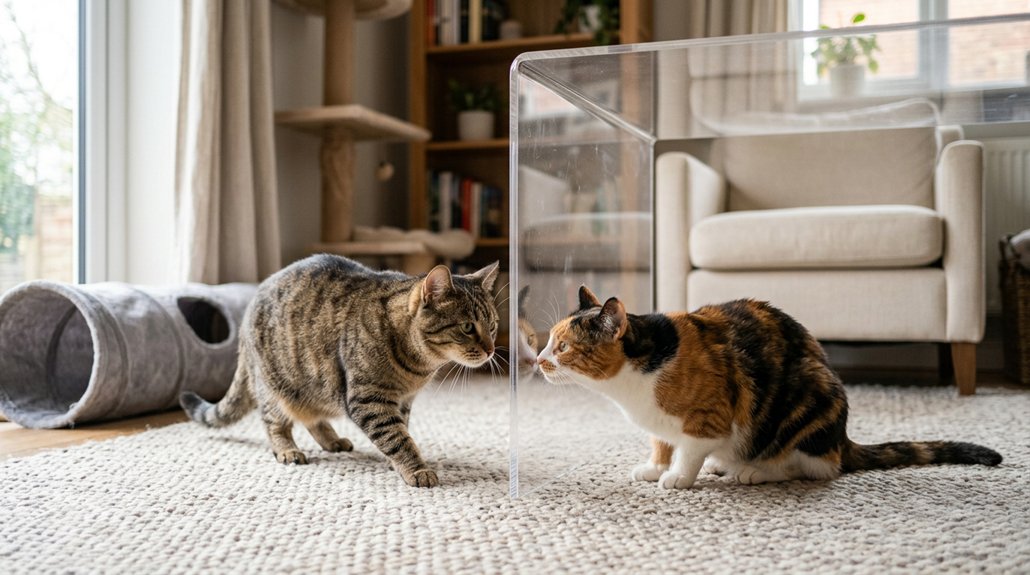
While establishing a harmonious multi-cat household, implementing the barrier method is a critical step for initial meetings. Providing barrier benefits, this technique uses physical dividers like baby gates, facilitating gradual exposure. Here’s how to effectively apply it:
- Separate Spaces: Start with each cat in distinct areas, allowing them to see and smell each other without direct contact.
- Positive Reinforcement: Offer treats or toys near the barrier to build positive associations with one another’s presence.
- Monitor Reactions: Observe body language for signs of stress or aggression such as hissing, growling, or flattened ears.
- Gradual Time Increase: Extend time near the barrier progressively, ensuring both cats stay calm, paving the way for direct, safe introductions.
This structured approach minimizes stress and fosters peaceful cohabitation.
Encouraging Playful Bonding Sessions
To foster playful bonding sessions between your cats, first guarantee you’re utilizing interactive toys like feather wands or laser pointers, which create shared and enjoyable experiences without causing direct competition. Engage them in parallel play to help associate each other with fun and minimize potential conflicts. Utilize multiple play areas with a variety of toys to prevent resource guarding, allowing simultaneous, stress-free play. During these sessions, monitor their body language for any signs of stress or aggression. Use positive reinforcement by offering treats when they remain calm and focused on play. An “Eat, Play, Love” routine integrating structured playtime can profoundly enhance their bond. Over time, such activities will nurture a harmonious relationship, benefiting both cats.
Resolving Conflict During Introductions

Fostering a harmonious relationship between your cats through structured play is paramount, yet it’s equally important to address any arising conflicts during introductions. Carefully monitor initial interactions for stress indicators, such as flattened ears, hissing, or growling. These behavioral signs warrant prompt action to prevent escalation. Here’s how you can manage conflicts effectively:
- Observe Closely: Note stress indicators during interactions. Respond swiftly by separating them if aggression is evident.
- Utilize Distractions: Use gentle techniques like clapping or tossing toys to redirect focus and decrease tension.
- Implement Cooling-Off Periods: If tensions rise, separate the cats and retry once calm behavior is restored.
- Seek Expertise: Persistent conflicts may require consulting a veterinarian or animal behaviorist to address underlying issues.
Be proactive, ensuring a peaceful introduction process.
Frequently Asked Questions
What Is the 3-3-3 Rule for Cats?
The 3-3-3 rule refers to a cat’s adjustment process: three days to acclimate, three weeks for initial comfort, and three months for full integration. Understanding feline emotions and cat behavior during each phase guarantees a smoother shift.
What Are the Red Flags When Introducing Cats?
Look for cat body language like growling, hissing, and stiff postures. Feline stress signs include territorial aggression, excessive grooming, or avoidance behaviors. Changes in eating habits and persistent hiding can signal your approach needs reassessment.
What Is “I Love You” in Cat Language?
In cat communication, “I love you” manifests through slow blinks, head rubs, and gentle purring. These feline behaviors demonstrate trust, affection, and a strong bond, signifying your cat’s comfort and happiness in your presence.
What Not to Do When Introducing Two Cats?
Don’t rush introductions; skipping gradual exposure leads to common mistakes like increased aggression and stress. Avoid negative reinforcement or sudden encounters. Instead, use barriers, watch for stress signals, and promote positive associations to guarantee successful interactions.
Conclusion
Successfully introducing cats without conflict requires patience and strategy. Studies show that 60% of cat owners who follow structured introduction techniques report peaceful coexistence. Begin with a methodical scent exchange to familiarize them without direct contact. Use a barrier for first meetings to guarantee safety, then gradually progress to supervised interactions. Encourage playful bonding to build positive associations. Remember, each introduction step is crucial in preventing and resolving conflicts, guaranteeing a harmonious multi-cat household.