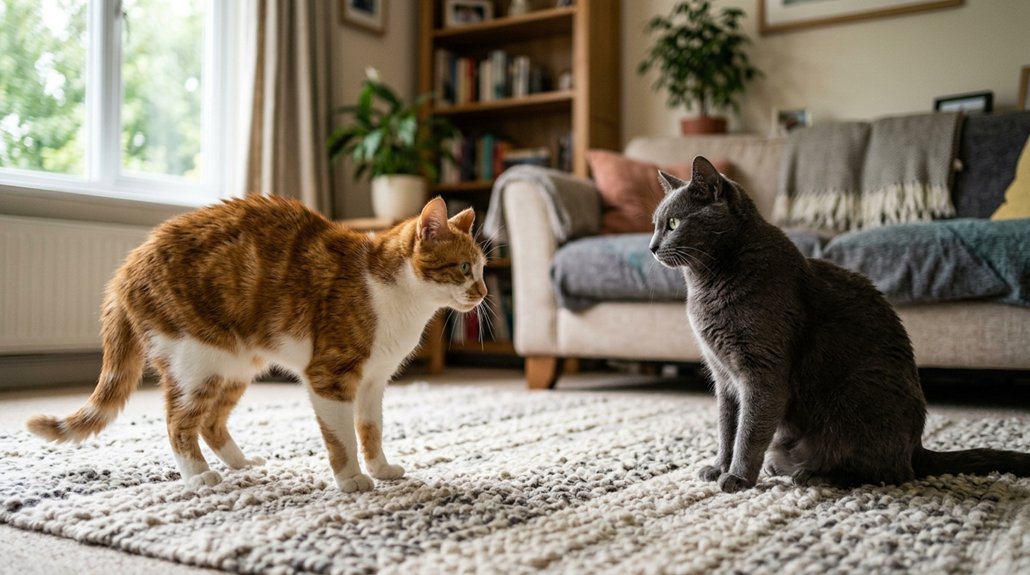
When your cats aren’t getting along, first identify triggers such as territorial disputes or personality clashes. Safety measures like providing vertical spaces and distributing resources prevent competition. Gradually introduce cats using scent familiarization and controlled interactions. Watch for signs of stress through body language and consult a behavior specialist if conflicts persist. Ascertain each cat’s health is evaluated to rule out underlying medical issues. With these strategies, you’ll discover more about fostering feline harmony.
Key Takeaways
- Gradually introduce cats to each other using scent swapping, visual barriers, and supervised interactions to build comfort and reduce tension.
- Monitor and interpret cat body language to detect early signs of aggression and intervene promptly to prevent altercations.
- Provide multiple resources like litter boxes, food, and water in various locations to minimize competition and territorial disputes.
- Consult a feline behavior specialist for persistent aggression to assess underlying causes and develop tailored management strategies.
- Conduct veterinary evaluations to rule out health issues contributing to aggression, ensuring each cat’s physical well-being is prioritized.
Why Do Cats Fight? Understand Triggers First
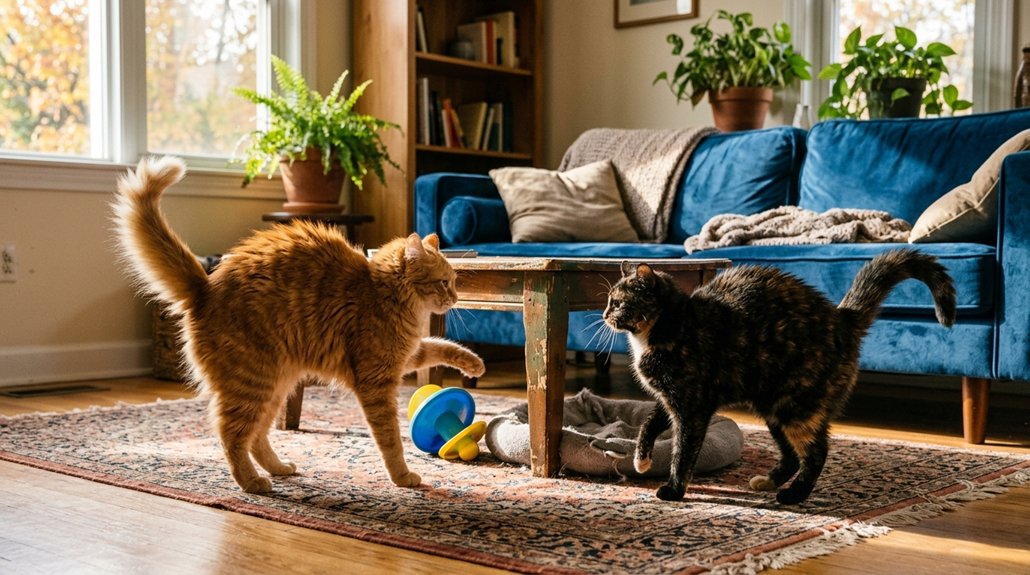
When attempting to understand why cats fight, it’s essential to identify the underlying triggers that incite such behavior. Territorial instincts are a primary reason, especially when a new cat enters the established environment of a resident cat. This can spark aggressive attempts to defend perceived territory. Stress factors, such as environmental changes or loud external stimuli, often lead to redirected aggression. Personality clashes also play a significant role; cats with incompatible temperaments, particularly unrelated males or females, may struggle due to differing socialization backgrounds. Additionally, social hierarchy disputes can lead to tension when roles within the group remain unclear. Recognizing these triggers provides insight into feline aggression, aiding in managing conflict effectively within your multi-cat household.
Make Your Home Safe for Aggressive Cats
Ensuring your home is a safe haven for aggressive cats is fundamental in mitigating conflicts and promoting harmony. Start by creating vertical spaces like shelves or cat trees. These allow cats to escape potential confrontations, providing vantage points to observe securely. Deploy calming pheromones in common areas through diffusers or sprays to foster a relaxed atmosphere. It’s imperative to offer multiple hiding spots—cozy boxes and tunnels can serve as essential retreats, ensuring each cat feels secure. Effective resource distribution is also important; place litter boxes, food, and water bowls in various locations to prevent competition and territorial issues. Regularly monitor body language to catch early signs of stress or aggression, enabling prompt intervention and preserving peace.
Steps for Gradual Cat Introductions
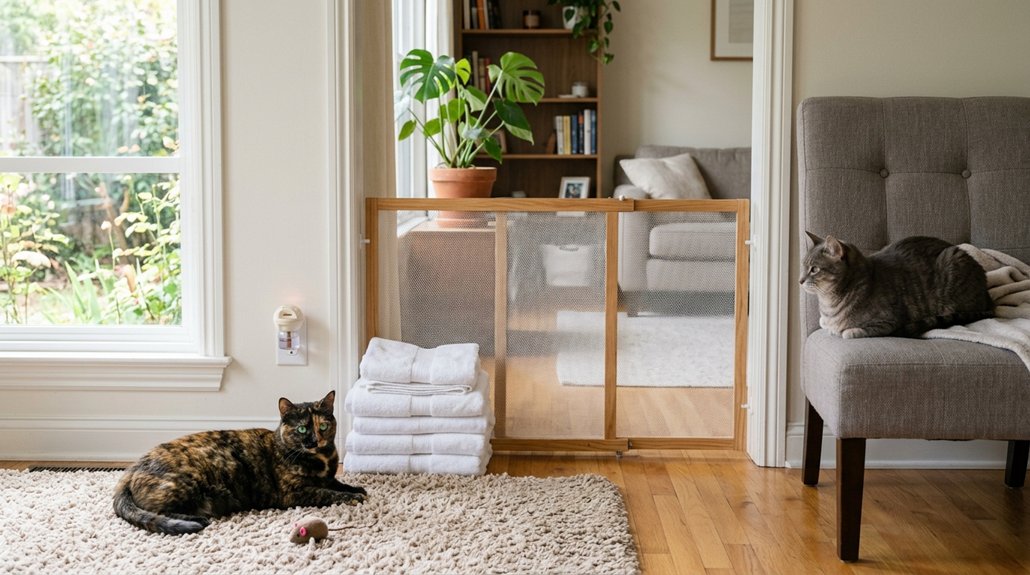
When introducing cats, start by familiarizing them with each other’s scents using bedding or toys, creating an essential first step in easing their anxiety. Use controlled visual interactions, such as baby gates, to let them acclimate to each other’s presence without direct contact, gradually increasing the duration of these exchanges. As they become more comfortable, bring them together in short, supervised meetings while rewarding calm behavior to encourage a positive association.
Scent Familiarization Techniques
Even though introducing new cats to one another can be a challenging experience, utilizing scent familiarization techniques can greatly ease the process. Start with scent swapping by exchanging bedding or toys between the cats. This helps them recognize each other’s scent in a non-threatening way. Additionally, take a clean cloth to gently rub each cat, then place it with the other cat. Encourage positive associations by rewarding calm behavior with treats or playtime when they’re exposed to new scents. Feed each cat near the other’s area, without direct contact, associating the scents with positive experiences. Continuously monitor their reactions to these scents, adjusting the process if you notice signs of stress, ensuring a smooth and gradual introduction.
Controlled Visual Interactions
Why are controlled visual interactions essential to introducing new cats? These interactions offer a vital step beyond initial scent familiarization, bridging the gap between olfactory and visual scent cues. Begin by positioning a baby gate to allow feline observations without physical contact. This sight-based barrier lets cats adjust to each other’s presence and body language. Watch for stress markers like hissing or flattened ears; these observations assess their comfort levels. Start small, gradually increasing the duration of visual interactions as each cat displays relaxation. Reinforce their encounters with treats or praise to encourage positive behavior. Controlled visual interactions improve acceptance between cats and establish harmony before moving forward with more advanced introduction strategies. Your role in monitoring and rewarding is pivotal for success.
Gradual Physical Proximity
To facilitate a smooth shift during gradual cat introductions, it’s essential to establish a process of slowly increasing physical proximity. Begin by addressing proximity challenges through scent swapping, allowing each cat to become familiar with the other’s scent. Create separate spaces with individual resources for initial comfort. These steps promote gradual adjustments.
- Use barriers like baby gates for visual contact without direct confrontation, easing cats into each other’s presence while prioritizing safety.
- Gradually extend supervised interactions as cats exhibit comfortable behavior, observing for any signs of stress, such as flattened ears or hissing.
- Always be ready to intervene and separate if any aggression arises during these sessions, ensuring a safe environment.
Minimize Competition With Resource Distribution

When it comes to minimizing competition among cats, strategic resource distribution is essential in maintaining peace within your feline household. Start by addressing litter box placement—ensure you have one per cat, plus an extra, to prevent territorial disputes and encourage proper usage. Position them in different areas to avoid crowding. For feeding station distribution, place food and water bowls in multiple locations around your home. This arrangement reduces meal-time competition, ensuring each cat has comfortable access. Toys should be evenly spread out to prevent possessiveness. Personal resting areas are also important; provide each cat with a distinct space where they can retreat and find solace. Regularly check and replenish these resources to maintain harmony and prevent conflict.
Use Positive Reinforcement to Prevent Aggression
Effective use of positive reinforcement can greatly reduce aggression between cats in your home. By implementing reward strategies that focus on calm behavior, you’ll encourage positive associations. Methods such as clicker training allow you to reinforce desired interactions, promoting a peaceful environment. Regularly rewarding both cats during shared activities with treats or praise reinforces mutual respect, easing territorial disputes.
- Reward strategies: Provide treats or praise during calm interactions to foster positive associations.
- Training techniques: Utilize clicker training to systematically encourage desired behavior.
- Simultaneous engagement: Engage both cats in shared play or treat-giving sessions to strengthen their bond.
Avoid negative reinforcement, which risks exacerbating stress. Instead, maintain a consistent routine that balances rewards, ultimately creating a secure and harmonious atmosphere for your cats.
Read Your Cat’s Body Language
Recognizing your cat’s body language is essential for maintaining harmony in a multi-cat household. Effective cat communication relies on understanding feline expressions that signal comfort or distress. Watch for flattened ears, puffed tails, and dilated pupils, which indicate stress or aggression, suggesting that cats need separation to prevent escalation. Vocal warnings like hissing, growling, and swatting shouldn’t be ignored; they’re precursors to more serious altercations. Observe body postures—crouching or a raised back can show fear or a potential for fighting, marking one cat as feeling threatened by the other. Avoidance behaviors such as hiding indicate discomfort. Monitoring these cues closely allows you to intervene appropriately, mitigating tensions and fostering a peaceful environment for your cats.
Health Check and Behavioral Follow-Up
To guarantee a harmonious multi-cat environment, it’s imperative to rule out any underlying health issues that could contribute to aggressive behaviors. Schedule a veterinary evaluation for each cat to ascertain they’re physically healthy. This step is fundamental as medical problems often manifest as irritability. Additionally, document any changes in behavior or interaction patterns. This behavior documentation provides insights into specific triggers and patterns leading to aggression. By pinpointing these cues, effective interventions can be devised. Regular observation of their interactions will further illuminate tensions and specific instances of escalation.
Schedule veterinary evaluations for each cat to identify health issues contributing to aggression. Document and observe behavior changes for insights.
- Conduct thorough interaction observations to identify triggers.
- Document behavior changes and interaction patterns diligently.
- Adjust the home environment and resource allocation to mitigate stress.
Implementing these strategies is essential in managing discord and fostering a peaceful coexistence.
Know When to Consult a Behavior Specialist
When your cats continue to exhibit aggressive behavior despite your best efforts at management, it’s a sign that professional intervention might be necessary. A feline behavior specialist can pinpoint the underlying causes of aggression, such as territorial disputes or fear-based reactions, and provide strategies tailored to your situation. Early consultation is essential to prevent escalation and maintain a harmonious environment for your cats.
Persistent Aggression Issues
Persistent aggression between cats can be both stressful and challenging to manage, especially if you’ve already implemented common strategies without seeing improvement. At this point, consulting a feline behavior specialist can be beneficial. These professionals can decipher complex issues in your home, from cat territory disputes to gaps in feline communication. Here’s how they can help:
- Behavior modification techniques: Tailored strategies to manage aggression and improve interaction.
- Environmental adjustments: Changes that could ease tension, respecting each cat’s need for personal space.
- Structured reintroduction methods: Gradual integration plans to diminish hostility and foster positive relationships.
Behaviorists will collaborate with veterinarians to rule out medical causes. Early intervention is vital in establishing peace, ensuring a safer, more pleasant home environment.
Professional Intervention Signs
Maneuvering persistent aggression between cats can be intimidating, even after applying well-known solutions. When cat interactions escalate to physical fights or serious injuries, it’s essential to contemplate a behavioral assessment. If typically sociable cats suddenly become aggressive or withdrawn, you may face issues needing specialist consultation. If you’ve adjusted the environment and resources for weeks without success, expert guidance is warranted. Signs such as excessive hiding or litter box aversion might indicate stress requiring a feline behaviorist’s insight.
Here’s an evaluation approach:
| Behavioral Indicator | Action Needed | Timeframe |
|---|---|---|
| Serious Injuries | Immediate specialist consultation | Emergency |
| Sudden Aggression | Schedule behavioral assessment | Within days |
| Stress Symptoms Persist | Consult behaviorist | Within weeks |
| Environmental Efforts Fail | Seek expert guidance | After adjustments |
| Life Changes Impact | Tailored strategies consultation | Align with changes |
Escalating Behavioral Concerns
If your cats’ aggressive behaviors, such as hissing, swatting, or chasing, are escalating and resulting in physical harm, it’s essential to consult a feline behavior specialist. Recognizing the underlying causes and behavioral triggers is significant for a successful intervention. When your efforts in adjusting environment and resources fail, a professional can offer insight into deeper behavioral issues and recommend tailored strategies.
- Persistent aggression despite modification attempts may signify deeper problems beyond typical territorial disputes.
- Continued stress indicators like excessive grooming or avoidance can reveal unseen struggles a specialist can address.
- A sudden behavioral change such as litter box avoidance might hint at unresolved concerns that require expert intervention.
Monitoring these signs prepares you to act promptly, ensuring both cats’ well-being.
Frequently Asked Questions
Will Cats That Fight Eventually Get Along?
Yes, with gradual introductions addressing behavioral triggers, cats can eventually get along. Consistently observe interactions to identify triggers. Utilize positive reinforcement and manage resources. Be patient, as forming a peaceful coexistence may require weeks or even months.
What Is the 3-3-3 Rule for Cats?
The 3-3-3 rule revolves around gradual gains: three days to decompress, three weeks to socialize sustainably, and three months to master mingling. Introducing kittens requires patience; socialization techniques should be steady and structured for success.
How Do I Get My Cat to Stop Attacking My Other Cat?
Start by observing feline body language to identify triggers. Separate feeding areas minimize territorial behavior. Use calming pheromones and gradually reintroduce them. If aggression persists, consult a veterinarian or feline behaviorist for tailored strategies.
What Are the Odds of Two Cats Getting Along?
The odds are about 50%, influenced by cat personality traits and breed characteristics. Some breeds like Ragdolls and Maine Coons are typically more sociable, while individual temperaments largely impact compatibility. Environmental factors and gradual introductions improve success.
Conclusion
Steering through the intricate world of cat relationships can feel like unraveling an ancient mystery, but it’s not insurmountable. By understanding their triggers and diligently following introduction protocols, you become the diplomat in your feline-driven United Nations. Dividing resources and harnessing the power of positive reinforcement can transform your home from a warzone into a feline utopia. Remember, reading their body language is your secret decoder ring, and never hesitate to seek expert guidance if the claws persistently come out.