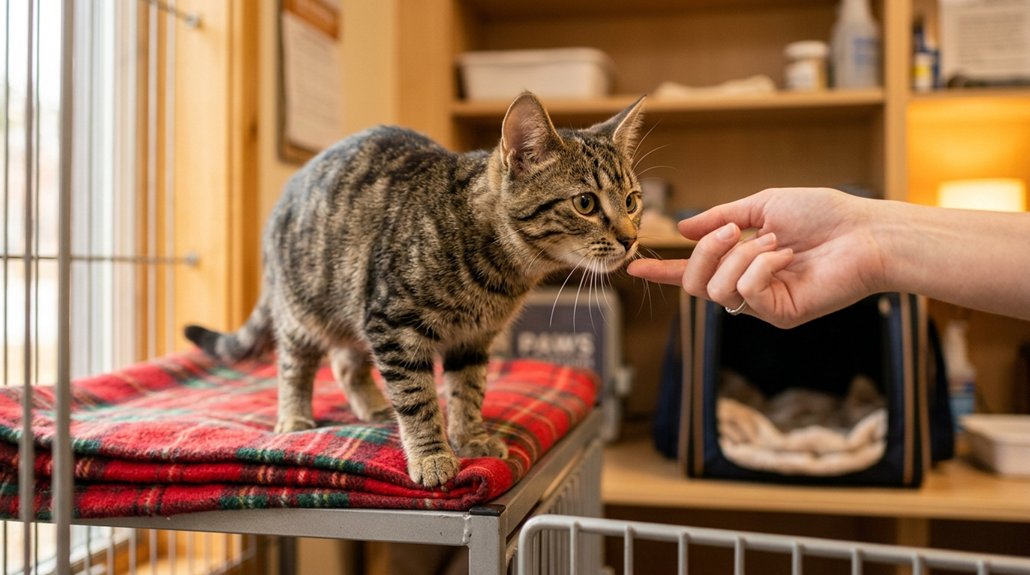
Before bringing your cat home, guarantee a smooth changeover by preparing your space and gathering supplies. Create a safe environment by removing hazards like cords and toxic plants. Set up a cozy, quiet space with a bed, litter boxes, and vertical play areas. Gradually adjust their diet while monitoring for stress signs, such as hiding. Get high-quality food, a collar with an ID tag, and treats. Discover more insights to foster a harmonious introduction.
Key Takeaways
- Gather essential supplies: bowls, collar with ID tag, bed, and treats for your new cat.
- Prepare a calm, hazard-free environment by removing dangerous items like cords and toxic plants.
- Set up a designated safe room with cozy resting and hiding spots for the cat’s comfort.
- Ensure litter boxes with unscented, fine-grained clumping litter are in quiet, accessible areas.
- Facilitate a gradual diet change from shelter food to prevent digestive issues.
Preparing for a New Cat: Understanding Essentials
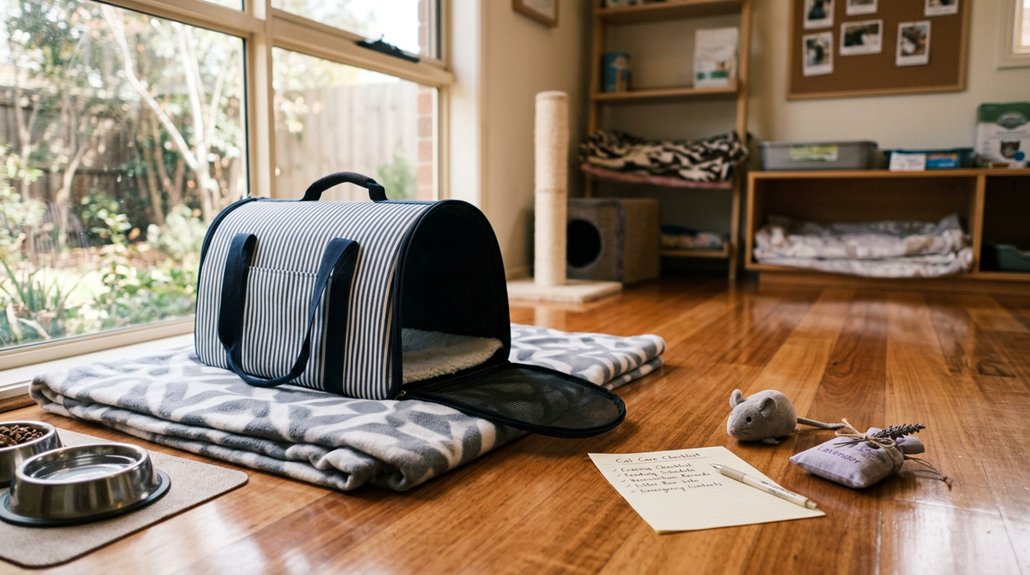
How can you guarantee your new cat feels comfortable in their new home? Start by understanding cat personality traits—each cat is unique, requiring tailored attention. Gather essential supplies like food and water bowls, a collar with an ID tag, comfortable bed, and treats to foster trust. Remember, feline health care is essential; facilitate a gradual diet change from the shelter’s food to yours to avoid digestive issues. Monitoring behavior is significant; watch for stress signs like decreased appetite or excessive hiding. Create a calm, hazard-free environment by removing dangers like loose cords or toxic plants. A confined safe space with a litter box, food, water, and hiding spots will aid adjustment, promoting well-being in your pet’s new surroundings.
Setting Up a Cat-Friendly Living Space
When bringing a new cat into your home, creating a cat-friendly living space is essential for a smooth adjustment. Start by setting up a designated safe room, offering a cozy retreat with features like feline friendly furniture and barriers to hazardous items. Consider litter alternatives that suit your lifestyle and the cat’s preferences, ensuring they have at least two litter boxes. Introduce vertical spaces such as cat trees or shelves to promote exercise and play. Enhance comfort by offering multiple cozy resting and hiding spots, like beds and cardboard boxes. Don’t forget to cat-proof your home by removing hazards like cords and toxic plants. Securing windows and doors helps prevent unexpected escapes, ensuring your cat feels safe and secure.
Gathering Essential Supplies for Your Cat

Before bringing your new feline friend home, it’s vital to gather the essential supplies that will help them settle in comfortably. Proper cat care starts with making sure you have everything ready for their arrival. Begin by preparing a feeding schedule and selecting high-quality cat food, ideally sticking with the brand they’ve been eating to avoid digestive stress. Don’t overlook these significant items:
- Food and water bowls: Fresh water and consistent meals make your cat feel secure.
- Comfortable bed or blanket: Offers a warm and safe haven for rest.
- Collar with ID tag: Important for quick identification, consider microchipping too.
- Litter box: Use clean litter, and make sure there’s one box per cat, plus one extra.
- Essential litter supplies: Scoop regularly to maintain cleanliness.
Attending to these details makes for a smooth changeover for your new companion.
Creating a Safe and Comfortable Environment
Bringing your new cat into a safe and comfortable environment is essential for their well-being. Start by employing cat proofing techniques to remove potential hazards. Secure rubber bands, strings, and small items that could be swallowed, and store cleaning supplies out of reach. Cover electrical cords and consider using baby gates to restrict access to unsafe areas. Ascertain windows have locked screens to prevent escapes.
Create a secure safe space by setting up a designated room before your cat arrives. Include a comfortable bed, litter box, and food and water bowls. Scatter toys to provide comfort and promote play. Multiple litter boxes throughout your home maintain cleanliness; scoop daily and deep-clean every two weeks. Incorporate vertical spaces like cat trees for exploration and security.
How to Manage Cat Stress and Anxiety

As your new cat settles into their safe and cozy surroundings, managing their stress and anxiety is the next important step. To guarantee a smooth changeover and stress relief for your feline, consider these key strategies:
- Allow time for adjustment by confining your cat to a single room initially.
- Look for signs of cat anxiety like decreased appetite or hiding.
- Provide an enriching environment with hiding spots and vertical spaces.
- Gradually change diets to reduce dietary stress.
- Observe behavior, consulting a veterinarian if issues persist, such as prolonged hiding.
Each cat is unique, and patience is essential during this settling-in phase. By being attentive and proactive, you’ll help your cat overcome anxiety and adapt confidently to their new home.
A Healthy Diet for Your Cat
When shifting your new cat to a healthy diet, starting with their current food is essential to prevent gastrointestinal upset. Begin the diet change with familiar food, gradually introducing new elements over a week. This cautious approach—25% new food for the first two days, increasing to 50% by days three and four, and full conversion by day seven—minimizes digestive disturbances. Monitor your cat’s eating closely. Stress from relocation can cause reduced appetite, so consult your vet if they haven’t eaten for more than 48 hours. Establishing a feeding schedule, whether it’s once, twice daily, or free choice, aids in maintaining their health. After settling in, introducing food-dispensing toys encourages natural foraging behaviors and provides essential mental stimulation.
Litter Box Training Tips for Success
Initiating your cat’s litter box training involves selecting the right materials and ensuring a welcoming environment. Choose unscented, fine-grained clumping litter for a texture your cat will find comfortable, and keep the box meticulously clean to encourage consistent use. If you notice your cat isn’t using the box, consider multiple locations and consult a vet to rule out stress or health issues.
Choosing Appropriate Litter Material
While selecting the right litter material for your cat might seem straightforward, it actually holds significant importance in guaranteeing their comfort and successful litter box training. The texture and scent are critical; most cats prefer unscented, clumping litter that mimics sand, aiding in easy digging and burying of waste. Experimenting with litter options, such as clay or corn-based types, is key to discovering your cat’s preferences.
To further support litter training success:
- Avoid strong-smelling cleaners; opt for mild soap.
- Place the box in a quiet, accessible area, away from food and water bowls.
- Ascertain each cat in the home has an uncovered litter box.
- Test various litters, like recycled paper, to find what works best.
- Scoop daily to encourage consistent use.
Your attentiveness will promote a positive experience for your cat.
Maintaining Box Cleanliness
Maintaining box cleanliness is essential for successful litter box training. One of the key box maintenance tips is providing each cat with at least one uncovered litter box, ideally maintaining a 1.5-times ratio of boxes to cats. This guarantees effective litter box accessibility and helps reduce territorial behavior. Scoop the litter daily and deep clean every two weeks with mild soap, as strong cleaners might deter use. Opt for fine-grained, clumping litter, which absorbs odors and offers comfort. Position the box in a quiet, low-traffic area to minimize stress and make sure your cat feels safe. Regularly monitor usage, and if your cat avoids the box for more than 24 hours, consult a veterinarian to rule out health issues.
Encouraging Positive Box Use
A clean and welcoming environment is key to encouraging your cat to use its litter box confidently. Ensuring proper litter box placement is essential; choose a quiet, low-traffic area where your cat feels secure. Here are some tips to promote positive box use and minimize stress indicators:
- Clean regularly: Scoop daily and sanitize with mild soap every two weeks.
- Select wisely: Use an uncovered box; avoid strong-smelling cleaners that deter use.
- Monitor behavior: Notice decreased usage or avoidance as it may signal stress or health issues.
- Avoid territorial clashes: Have one litter box per cat, plus an extra.
- Observe preferences: Every cat has unique likes, so adapt accordingly.
Encouraging Safe Exploration and Play
Guiding your cat toward safe exploration and play helps them adjust comfortably to their new environment. Begin with exploration tips such as gradually introducing them to larger home areas, ensuring their safe room remains accessible for quick retreats. Utilize thoughtful play strategies by engaging your cat with toys and treats, positively reinforcing their curiosity and helping them step out of their comfort zone. Enhance their surroundings with secure vertical elements like cat trees or shelves, allowing them to climb and observe safely. Provide hiding spots such as boxes or tunnels, offering them sanctuary in unfamiliar spaces. Always supervise these initial adventures, watching out for hazards like exposed cords or small items, ensuring their safety while they explore this exciting new world.
Harmonizing New Cat With Family and Pets
Bringing a new cat into your home requires careful planning and understanding from everyone involved. Introducing pets involves patience and strategic steps to guarantee harmony. Encouraging your family and existing pets to give the newcomer space is essential. Start by keeping the new cat in a separate room, allowing gradual, stress-free exploration. Monitor interactions closely, using positive reinforcement to foster good behavior. Remember, every pet has unique temperaments and some may require extra time.
- Allow scent swapping to familiarize existing pets with the new cat’s presence.
- Use positive reinforcement techniques to reward calm interactions.
- Keep initial introductions limited to observation from a distance.
- Explain the importance of patience and space to family members.
- Be prepared for adjustments in temperament and timing with each pet.
Frequently Asked Questions
What Is the 3-3-3 Rule for Cats?
The 3-3-3 rule for cats helps you understand feline adjustment post-cat adoption. Your cat will acclimate in three days, gain confidence in three weeks, and feel fully settled in three months. Be patient and supportive.
What Is the #1 Cause of Death in Cats?
Sadly, the leading cloud over feline health is chronic kidney disease, impacting nearly 30% of elderly cats. Regular vet visits are vital since early signs are often hidden. Understanding common diseases helps guarantee a healthy, long life.
What Is “I Love You” in Cat Language?
In cat communication, “I love you” translates to slow blinking, gentle purring, or kneading—feline affection at its finest. When your cat approaches with an upright tail and a little headbutt, know they’re expressing affection for you.
What Is the Least Wanted Cat Color?
Black cats are statistically the least wanted in shelters, influenced by cat color psychology and superstitions. Understanding these feline adoption trends can help you see their unique charm and encourage adopting these often overlooked, affectionate pets.
Conclusion
Bringing a new cat home is an exciting journey, isn’t it? By preparing with the essentials, creating a welcoming environment, and providing a healthy diet, you’ll guarantee your feline friend shifts smoothly. Remember, patience is key as your cat explores, plays, and learns to use the litter box. By managing stress and fostering harmony with other pets, you’ll create a loving home where everyone feels safe and happy. Enjoy this rewarding experience with your new companion!