
To adopt a cat, start by evaluating your lifestyle and space to match the cat’s energy and social needs. Budget for adoption fees and ongoing care costs. Explore reputable shelters via platforms like Petfinder, ensuring ethical standards. Engage with cats to assess temperament and compatibility before completing the adoption application. Prepare your home for your new feline, providing safety and comfort. With attention to these areas, you’ll gain thorough knowledge for a successful adoption experience.
Key Takeaways
- Evaluate your living space and lifestyle to ensure compatibility with a new feline companion.
- Research and find a reputable shelter or rescue organization with high care standards.
- Prepare for adoption costs, including fees, ongoing care, and emergency funds.
- Complete the adoption application process, including potential interviews and home visits.
- Cat-proof your home and prepare a safe, welcoming environment for your new pet.
Choosing the Right Cat for Your Lifestyle
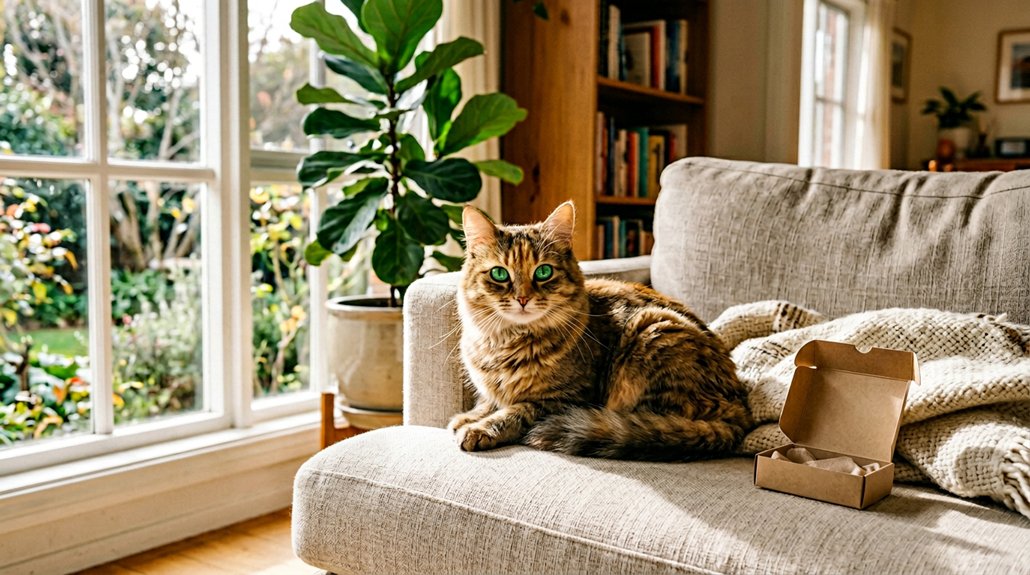
When selecting a feline companion, it’s imperative to evaluate your living environment carefully, guaranteeing it meets essential requirements such as adequate space, compatibility with existing pets, and adherence to any landlord-imposed restrictions. A thorough assessment regarding cat energy and lifestyle match can optimize the adoption process. Kittens, with their high energy levels, demand more interaction and mental stimulation, making them suitable for more active households. Conversely, mature cats exhibit reduced activity, possibly aligning better with tranquil environments. Prior to adoption, engage shelter personnel to discern the temperament and specific behavioral traits of prospective cats. Additionally, incorporate an analysis of medical history and dietary requirements to facilitate seamless integration into your day-to-day routine. This thoughtful approach guarantees a harmonious and well-adjusted feline-human dynamic.
Budgeting for Cat Adoption
Although adopting a cat can be a delightful endeavor, allocating an appropriate budget is crucial for a smooth shift into pet ownership. One-time expenses such as adoption fees range from $50 to $200 and often include essential services like spaying/neutering and vaccinations. Beyond initial expenses, ongoing costs for food, litter, and general care are approximately $50 to $100 monthly. Routine veterinary evaluations, vaccinations, and preventative care typically tally $100 to $300 annually, underpinning feline health. In addition, consider unforeseen medical expenses by setting aside an emergency fund of $300 to $500. Factor supplementary annual costs of $250 to $500 for necessary supplies like toys and grooming tools. Strategic financial planning guarantees your commitment to cat adoption remains sustainable and rewarding.
Finding and Selecting a Reputable Shelter or Rescue

How can you verify the shelter you choose for cat adoption is reputable? Conduct a thorough shelter evaluation using online resources like Petfinder and Adoptapet to locate organizations with a commitment to animal welfare and responsible adoption criteria. Positive reviews and testimonials are vital indicators of high standards of care. Confirm the shelter’s status as a registered nonprofit, highlighting ethical practices. A personal visit allows observation of the facility’s cleanliness and the animals’ well-being, essential factors in extensive shelter evaluation. Additionally, inquire about the adoption criteria and post-adoption support, ensuring spaying/neutering, vaccinations, and behavioral assessments are in place.
| Evaluation Factors | What to Look For | Importance |
|---|---|---|
| Online Reviews | Positive feedback from adopters | Indicates high standards |
| Nonprofit Status | Registered charity | Commitment to ethical practices |
| Personal Visit | Cleanliness, staff friendliness | Insights into care practices |
Navigate the Adoption Process Step-by-Step
To begin the adoption process, you’ll need to locate nearby shelters or rescue organizations by reviewing online databases and adoption listings relevant to your requirements. It’s essential to assess each cat’s temperament and compatibility with your lifestyle, which involves attending events or visiting shelters to interact directly with potential adoptees. Once you’ve identified a suitable match, you must complete an adoption application detailing your living situation and readiness for responsible pet ownership, which might include aspects like a home visit or interview.
Finding Nearby Shelters
Initiating your search for a feline companion can be streamlined with a strategic approach to finding nearby shelters. Begin by leveraging online resources such as petfinder.com to identify local adoption listings specific to your region. These databases can pinpoint shelters or rescues where cats are ready for adoption. Additionally, explore community assets like social media groups or your local animal control agencies; they frequently update information about available felines. If you have a particular breed in mind, investigate breed-specific rescue organizations dedicated to matching cats with ideal homes. Attend local adoption events organized by shelters, where personal interaction with multiple cats optimizes match suitability. Always contact shelters directly to ascertain their unique adoption processes, ensuring a seamless experience.
Evaluating Cat Compatibility
Once you’ve pinpointed potential shelters, it’s time to focus on evaluating cat compatibility. Be sure to inquire about the cat’s personality and temperament to guarantee it aligns with your household’s energy and dynamics. Request the cat’s medical history from the shelter to identify any health needs or dietary restrictions. Discuss with the staff how the cat handles stress to gain insight into their stress responses and prepare for their shift to your home. Spend time with the cat to assess their sociability and comfort level.
Consider these factors:
- Compatibility of personality and energy levels with your family.
- Understanding stress responses to provide ideal care.
- Physical health and dietary needs, guaranteeing your support capacity.
- Observing interactions for signs of sociability and comfort.
Completing Adoption Application
Adopting a cat involves more than just good intentions; it’s crucial to accurately complete the application to guarantee a compatible match. Begin by providing honest and thorough answers about your living situation and pet care experience. This transparency in your application honesty helps shelter staff in evaluating compatibility. Document your current pet dynamics, highlighting any experience with feline care. Be prepared for possible interviews or home visits, as these are essential in determining the suitability of your environment. Remember, adoption fees typically encompass vaccinations, spaying or neutering, and microchipping. If needed, inquire about cat reservations while you prepare. Review each shelter’s application specifics online—procedures vary, and having the right documentation secures a smooth adoption process.
Preparing to Adopt a Cat
Initiate the path to adopting a cat by thoroughly evaluating your readiness to provide the best care for a feline companion. Assess your lifestyle, ensuring you’ve time and financial resources for essential responsibilities like feline nutrition. Cat proofing your home is vital; make your space welcoming and safe for your future pet.
- Imagine the joy and companionship of a cat curled up with you after a long day.
- Envision the happiness in providing a loving home to a rescue cat in need.
- Feel satisfaction in knowing you’re supporting animal welfare through adoption.
- Consider the positive impact on your existing pets’ dynamics and home environment.
Check for landlord approval, synchronize vet visits post-adoption, and explore local shelters to find your perfect feline friend.
First Week Essentials for Your New Cat
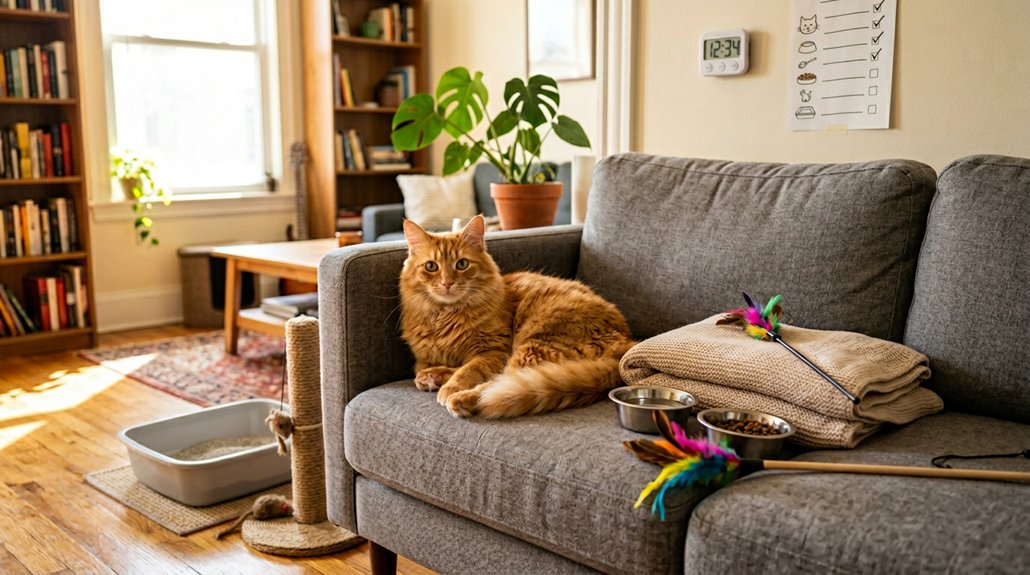
Establishing a safe, structured environment is paramount during your cat’s initial week at home. Designate a safe space equipped with essentials: food and water bowls, a litter box, a scratching post, and a comfortable bed, fostering acclimation. Ascertain your cat’s diet shift by beginning with their current shelter food, gradually introducing your preferred choice. This mitigates gastrointestinal distress. Engage in behavior monitoring; observe for signs of stress like decreased appetite or hiding. Keep the litter box uncovered, cleaned daily, and filled with familiar litter to prevent elimination issues. Prioritize mental stimulation through diverse toys and commit to interactive playtime. This nurtures comfort and engagement, facilitating adaptation. A well-structured environment guarantees a seamless integration into your household.
Frequently Asked Questions
How Can I Help My Cat Settle in During the First Month?
Start by providing your cat with environmental enrichment and guarantee gradual introductions to new stimuli or household members. It’s essential for their mental stimulation and stress reduction, facilitating a smooth change during their initial settlement period.
What Common Health Issues Should I Be Aware of in Cats?
You should be aware of common ailments in cats like dental disease, diabetes, and upper respiratory infections. Implementing preventative care such as regular check-ups and vaccinations will mitigate these issues and safeguard your cat’s ideal health.
How Do I Manage Introducing the Cat to Other Household Pets?
To manage introducing your cat to other pets, employ scent swapping first. Gradually introduce them in a controlled environment, observing behavior closely for signs of stress or aggression. Utilize positive reinforcement techniques to facilitate peaceful adjustment.
What Steps Should I Take if My Cat Shows Signs of Stress?
Don’t worry; recognizing cat stressors early is essential. Try calming techniques, like pheromone diffusers or interactive play, to alleviate anxiety. Also, consult a veterinarian for additional clinical strategies tailored to your cat’s welfare.
How Often Should I Schedule Veterinary Check-Ups After Adoption?
Post-adoption, it’s essential you schedule veterinary check-ups semi-annually for your cat’s routine vaccinations. Additionally, monitor dental care closely by arranging an annual oral examination to prevent periodontal disease, ensuring ideal animal welfare and overall health.
Conclusion
Adopting a cat isn’t just a coincidence—it’s a rewarding journey ending in companionship. As you adjust to their habits and they to yours, you’ll discover it’s the perfect match. You’ve budgeted responsibly, chosen the right shelter, navigated the adoption maze, and mastered the initial essentials. Now, you can focus on enriching your new feline friend’s life with proper care and love. It’s this nurturing commitment that guarantees a healthy, harmonious relationship. Welcome to the world of responsible cat guardianship.