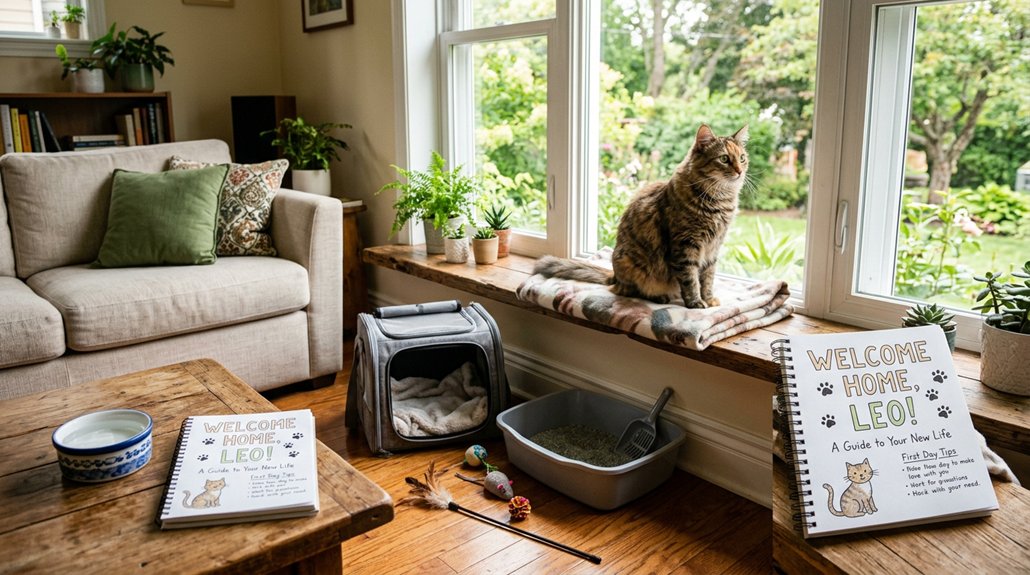
Before bringing your adopted cat home, prepare a serene space in a quiet, low-traffic room with essentials like food, water, a litter box, and a comfy bed. Use familiar items for comfort and provide hideaway spots. Shift their diet gradually and guarantee the litter box is spacious and clean. Let your cat adjust before exploring wider spaces. Have must-have supplies and make the environment stress-free. A well-prepared home sets the stage for a smooth change and more insights await.
Key Takeaways
- Prepare a quiet room equipped with essentials like food, water, and a litter box for your cat’s stress-free transition.
- Ensure the new environment is cat-proofed by removing hazards such as exposed cords and toxic plants.
- Start with the same diet from the shelter, gradually transitioning to new food over a week to minimize stress.
- Provide a large, uncovered litter box for comfort and scoop daily to maintain cleanliness for your cat.
- Allow gradual exploration from the designated “safe room” once the cat shows signs of comfort and relaxation.
Creating a Stress-Free Space for Your New Cat
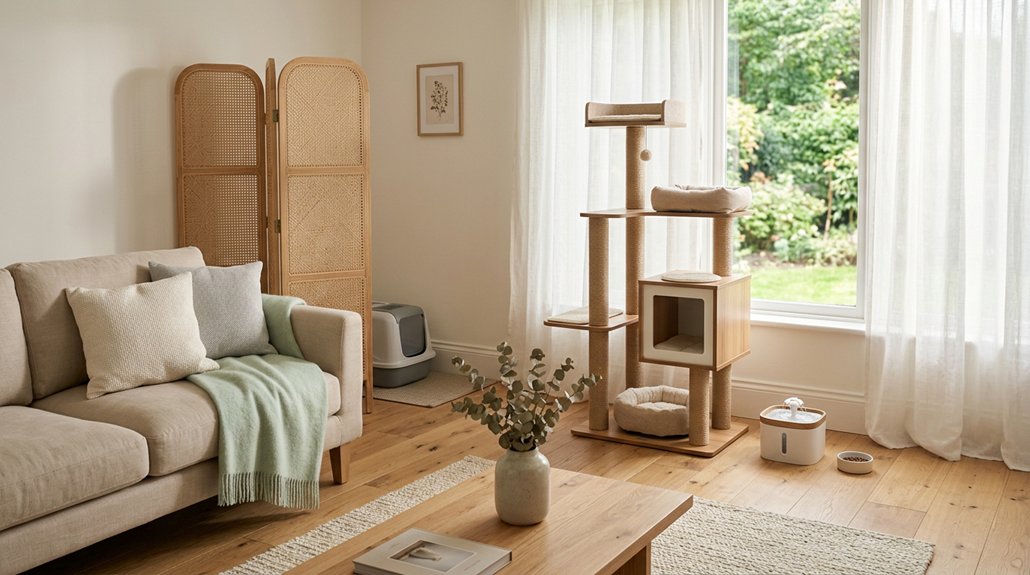
Creating a stress-free space for your new cat is essential for guaranteeing a smooth change into their new environment. Designate a quiet, low-traffic room where your cat can feel secure, equipped with essential supplies like food, water, a litter box, and a comfortable bed. Utilize familiar items such as the cat’s bed or a blanket from their previous home to craft a comforting ambiance. Hideaway spots, like cardboard boxes with holes, provide necessary refuge, allowing them to emerge at their own pace. Safeguard the area by removing hazards, including exposed cords and toxic plants. Introduce enriching toys and scratching posts gradually to encourage engagement without causing overwhelm. This thoughtful preparation guarantees a balanced and stress-free initial environment for your new feline companion.
Must-Have Supplies for a Comfortable Transition
After establishing a stress-free environment for your newly adopted cat, it’s essential to equip the space with the necessary supplies to guarantee their comfort and safety. Here are the essential supplies you’ll need:
- Food and Water Bowls: Choose stainless steel or ceramic bowls. Provide high-quality cat food that matches their current diet, along with treats for positive reinforcement.
- Litter Box: A large, uncovered litter box kept clean is significant. Proper litter box maintenance promotes correct usage and minimizes stress.
- Familiar Items: Include a comfortable cat bed or a blanket from their previous home to ease the adjustment and create familiar surroundings.
Additionally, invest in a collar with an ID tag and consider a microchip for safety. A scratching post or cat tree also enriches their environment.
Help Your Cat Transition to a New Diet
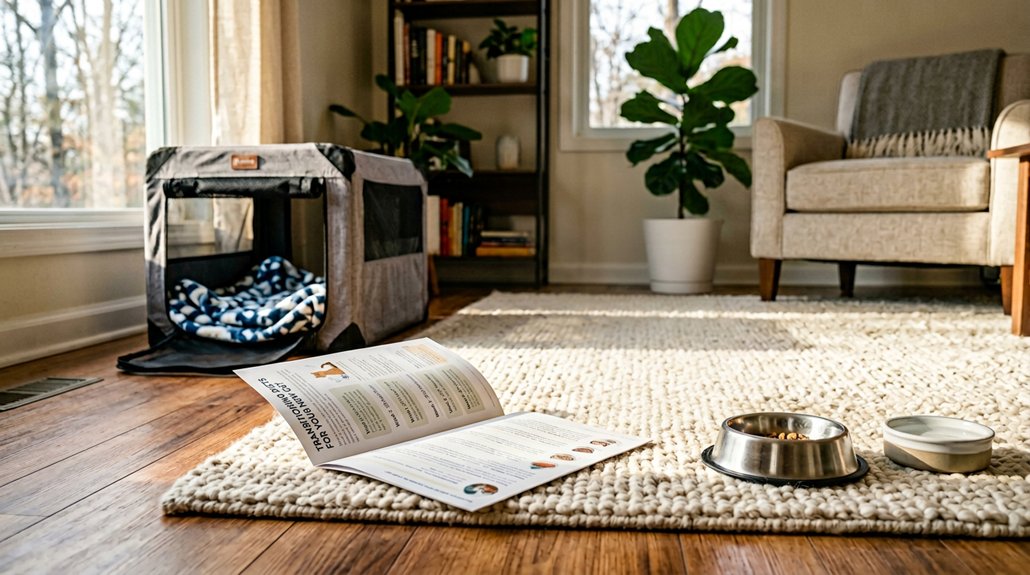
Shifting your newly adopted cat to a new diet requires care and patience. Begin by offering the same food they ate at the shelter, minimizing digestive issues and stress. Gradually alter dietary preferences by mixing the current food with the new over a week. Start with a 25-75% mix on days 1-2, progress to 50-50% on days 3-4, then 75-25% on days 5-6, reaching 100% new food by day 7. Maintain a consistent feeding schedule to provide security in the unfamiliar environment. Monitor eating habits closely, as some cats may eat less when stressed. After the initial adjustment period, introduce food-dispensing toys to keep your cat mentally engaged. Always guarantee access to fresh water to support hydration.
Choosing the Perfect Litter Box
With your cat’s dietary changes underway, it’s time to focus on another essential element of their new environment: the litter box. Ensuring the right litter box size is vital. A large, low, uncovered box lets cats access and maneuver comfortably.
A spacious, low, and open litter box is crucial for easy feline access and comfort.
To avoid issues, observe these guidelines:
- Box Quantity: Provide one litter box per cat, plus an additional one to discourage territoriality and guarantee constant availability.
- Liner Use: Refrain from using liners since many felines dislike the texture and prefer direct contact with litter, improving adherence to litter box usage.
- Litter Box Maintenance: Scoop daily to remove waste, and perform bi-weekly deep cleans using mild, unscented soap. This regular maintenance maintains an odor-free environment, promoting consistent use.
Helping Your Cat Explore Safely
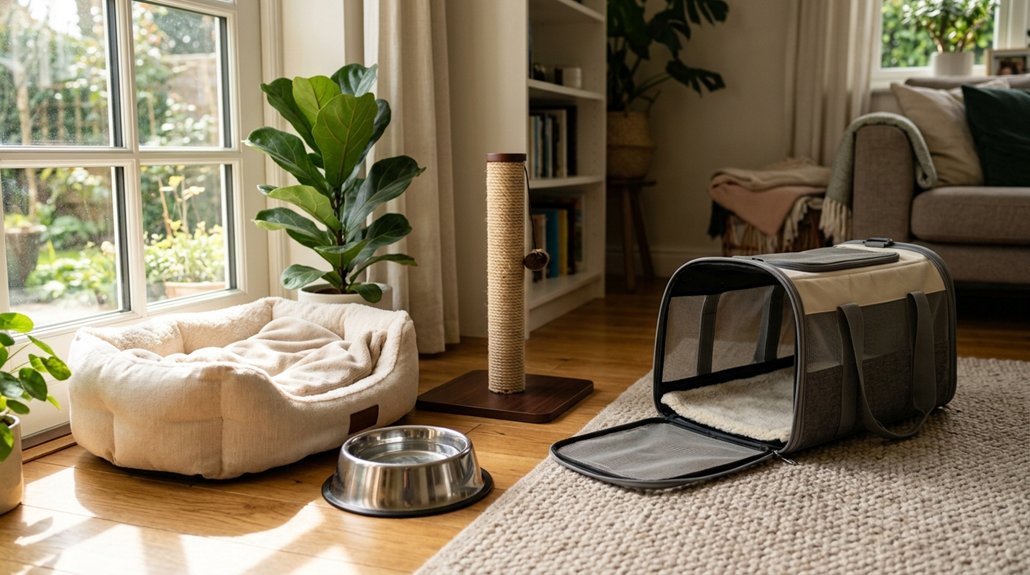
When you’re ready to help your adopted cat explore safely, start by establishing a secure and contained area known as a “safe room.” This space should contain essential items like a cozy bed, litter box, food, and water, easing the shift and reducing initial stress. The first step in the safe room setup involves the gradual introduction of familiar items from their last home to encourage relaxation. Always keep the safe room door closed initially. Once your cat is comfortable, permit them to explore gradually. Verify all home hazards are cat-proofed beforehand.
| Safe Room Essentials | Gradual Exploration Tips |
|---|---|
| Cozy bed | Close initial safe room door |
| Litter box | Monitor stress signals |
| Food and water | Familiar items introduction |
| Personal blanket | Restrict tight space access |
| Stress visuals | Secure loose cords |
Always provide a clear and stress-free return path to their safe room.
Frequently Asked Questions
What Is the 3-3-3 Rule for Cat Adoption?
The 3-3-3 rule for cat adoption outlines three adjustment phases: three days for stress, three weeks for comfort, and three months for bonding. Understanding cat behavior and the bonding process eases the adjustment to their new home.
Where Should My Adopted Cat Sleep on the First Night?
Make certain your adopted cat’s first night offers a safe sleeping environment by confining them to a single, hazard-free room. This initial setup should include a bed, blanket, and essentials to facilitate comfort and reduce stress.
What Is “I Love You” in Cat Language?
“I love you” in cat language involves purring sounds, slow blinks, and specific tail language. A softly erect tail with a curved tip means affection. Their soft purring and trusting eye contact communicate warmth, comfort, and trust towards you.
How Long Does It Take for an Adopted Cat to Feel at Home?
An adopted cat’s adjustment period varies widely, from several days to months. Observing feline behavior changes such as reduced hiding, increased exploration, and play signifies growing comfort, indicating they’re gradually feeling at home in their environment.
Conclusion
Bringing your adopted cat home requires preparation as meticulous as a gardener tending to delicate blossoms. Guarantee their space is stress-free with calming essentials to ease their adjustment. Stock necessary supplies to promote comfort and adapt them gently to a new diet. A thoughtfully selected litter box will suit their needs. Encourage safe exploration within your home to foster confidence. With careful planning and empathy, you can create a nurturing environment where your feline companion will thrive.