
Before applying to adopt a cat, cat-proof your home by securing hazardous materials and removing toxic plants. Create a designated sanctuary room equipped with essentials like a litter box, bedding, and toys. Stock up on supplies such as a pet carrier, stainless steel bowls, and scratching posts. Establish daily care routines for feeding, grooming, and playtime. Discuss responsibilities and budgeting with your family to guarantee cohesive care. Make sure you consider ongoing veterinary needs, and there’s more to explore for a successful adoption.
Key Takeaways
- Research cat breeds to find one that matches your lifestyle and family dynamics before beginning the adoption process.
- Discuss allergies and family commitments to ensure a compatible and harmonious environment for the cat.
- Prepare a budget covering initial adoption fees and monthly expenses for optimal care and well-being.
- Cat-proof your home by securing hazardous items and creating a designated sanctuary room for the new cat.
- Investigate local veterinary clinics for the initial vet visit, ensuring continuity in health care and vaccinations.
Why Cat-Proofing Your Home Prepares You for Cat Adoption
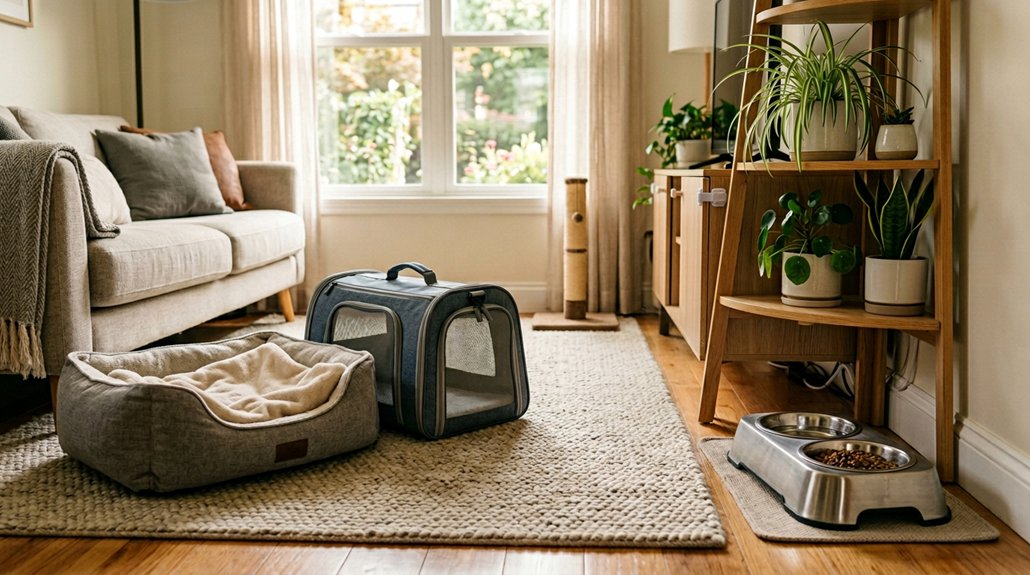
Even before the arrival of your new feline companion, cat-proofing your home is a critical step that assures their safety and well-being. Begin with cat safety by strategically storing household cleaners, chemicals, and medications out of their reach to prevent accidental ingestion. Remove plants like lilies and azaleas—common toxic hazards for cats. Secure electrical cords and dangling wires; their curiosity can lead to entanglement or injury. Pet proofing involves meticulously checking for small objects that might be swallowed, risking choking or intestinal blockage. Lock doors to restricted areas to limit exploration of unsafe spaces. This systematic approach to eliminating dangers facilitates a smoother change, sets the stage for a nurturing environment, and emphasizes the importance of cat safety in your home preparation.
List of Essential Cat Supplies for a Smooth Transition
When preparing for your new cat’s arrival, having the right supplies guarantees a smooth changeover to their new home. Start with a durable pet carrier for safe transport. Opt for a litter box with unscented clumping litter to maintain hygiene. Stainless steel food and water bowls are best, as they resist bacteria and prevent spills. A scratching post or cat tree is essential to manage scratching behavior and provide exercise. Interactive cat toys, like feather wands and electronic sound toys, help keep your cat mentally and physically engaged. Don’t overlook important grooming supplies; a self-cleaning slicker brush and de-shedding tool are critical. These tools maintain coat health and reduce hairballs, ensuring your cat’s well-being.
Create a Sanctuary Room for Stress-Free Adjustment

When adopting a cat, it’s vital to designate a small, quiet room as a sanctuary to ease their adjustment. Equip this space with fundamental items like an unscented clumping litterbox, comfortable bedding, toys, and a few hiding places to foster a secure environment. This sanctuary allows your cat to gradually acclimate to new surroundings, minimizing stress and protecting both the cat and existing pets from potential health risks.
Essential Sanctuary Room Elements
Establishing a sanctuary room is crucial to guarantee a seamless shift for your new feline friend. Choosing a small, quiet space, like a laundry room or guest bedroom, is part of the sanctuary room essentials that form effective cat adjustment strategies. Enclose the area with key necessities to promote comfort and security.
- Litter Box & Bedding: Equip the room with an unscented clumping litter box and cozy bedding. This provides comfort and addresses basic needs.
- Interactive Toys & Hiding Spots: Stocking with engaging toys and discreet hiding spaces helps to nurture play and exploration, fundamental for adjustment.
- Hydration & Trust Building: Provide fresh water, and consider hand-feeding treats. Sitting quietly there encourages trust and fosters familiarization at the cat’s pace.
Acclimatization Benefits for Cats
A well-prepared sanctuary room serves as more than just initial spatial confinement; it’s a controlled environment designed to ease your cat’s entry into its new home. Shift challenges are minimized through this personalized space, which curates essential items like an unscented litter box, water, bedding, and toys. This setup guarantees your cat feels secure while gradually acclimating to new surroundings. Expect initial hiding behavior, often lasting several days, underscoring the importance of patience during this shift period. Bonding techniques like spending quiet time in the room and offering treats can foster trust and interaction, aiding smoother household integration. Additionally, this sanctuary protects existing pets from potential illnesses, safeguarding everyone as the new cat acclimates to unfamiliar scents and sounds.
Understanding Daily Cat Care Routines
Preparing for daily cat care routines is essential for fostering a healthy and joyful life for your feline friend. Establishing consistent feeding schedules with high-quality cat food is critical for maintaining a balanced diet, usually 1-2 times a day. Regular grooming techniques, especially for long-haired breeds, are important to prevent matting and reduce shedding, requiring attention several times a week. Here’s a snapshot of what you can expect:
- Feeding: Serve high-quality food at the same time(s) daily to support digestive health.
- Grooming: Brush your cat’s coat several times a week, focusing on techniques suitable for their breed and hair length.
- Litter Box Maintenance: Scoop daily and clean thoroughly every 1-2 weeks to guarantee sanitation.
These steps set the foundation for your cat’s well-being.
How Much Time Does Cat Care Require?

Having a routine in place provides a seamless experience for daily cat care. Cat interaction is essential, as it plays a significant role in preventing loneliness and boredom. Allocate 30 minutes to an hour each day for feeding, litter box maintenance, and interactive play. Grooming needs vary; long-haired cats require more frequent sessions to address tangles and matting, while short-haired breeds may need less attention. Routine veterinary care, such as annual check-ups and vaccinations, also demands scheduling and travel time. For kittens, additional time is important for training and socialization to guarantee they adapt well to your home. Consider these time commitments seriously, as they are crucial for your cat’s health and emotional well-being.
What Does It Cost to Own a Cat?
When you’re considering adopting a cat, it’s essential to understand the financial aspects involved. The initial adoption fees typically range from $50 to $150, covering essential procedures like spaying/neutering, vaccinations, and microchips. Beyond that, regular veterinary care, monthly food, litter, and supply costs can add up, and potential emergency expenses should also be factored into your budget.
Initial Adoption Fees
Adopting a cat comes with various initial costs, primarily covering adoption fees that typically range from $50 to $150. These fees are a critical part of the adoption process and require thoughtful financial planning. While this might seem like a modest investment, the included services offer significant savings. Typically, you’ll find:
- Spaying/Neutering: This procedure is often included in adoption fees, preventing future costs.
- Microchipping: Essential for identifying your pet, usually part of the adoption package.
- Vaccinations: Shelters often provide initial sets, which could cost $75 to $100 separately.
Ongoing Veterinary Expenses
Owning a cat involves ongoing veterinary expenses that are essential to their health and well-being. Routine veterinary care, including vaccinations and check-ups, typically costs between $300 to $500 per year. To safeguard against unforeseen emergencies, consider veterinary insurance options, which can alleviate financial stress from bills that potentially reach thousands. Regular dental care is another critical aspect, adding $200 to $800 annually. Additionally, preventive medications for fleas and ticks usually range from $100 to $200 yearly. Implementing effective budgeting strategies can assist in managing these expenses, ensuring your cat gets the necessary care without compromising your financial stability. Remember, grooming supplies and services, particularly for long-haired breeds, can also incrementally add $50 to $300 to your yearly budget.
Monthly Supply Costs
While managing veterinary expenses is a significant part of cat ownership, it’s equally important to allocate funds for monthly supply costs to guarantee a comfortable life for your feline friend. Employing effective budgeting strategies can help you manage these costs which range between $75 to $170 monthly. Here’s a breakdown:
- Food: Expect to spend $30 to $60, depending on the brand and dietary needs. Comparing costs across brands aids in selecting the best nutrition without overspending.
- Litter: Depending on type and number of boxes, costs can range from $15 to $30. Evaluate options to suit your budget and your cat’s comfort.
- Miscellaneous Supplies: Toys, grooming tools, and scratching posts generally add $10 to $30. Routine cost comparisons help secure quality supplies at affordable rates.
Choosing the Perfect Cat for Your Lifestyle
When selecting the ideal cat for your lifestyle, it’s essential to align the feline’s personality and needs with your own household dynamics. Consider cat personality and breed considerations, ensuring you cater to your environment and activity level. Active families might seek energetic breeds to match their liveliness, while quieter households might prefer more docile types. Assess age: kittens need more play and training, whereas adult cats typically require less fostering. Evaluate grooming needs; for example, long-haired breeds need regular brushing, while short-haired ones demand minimal upkeep. Also, consider space availability; active cats benefit from larger areas to roam, conversely, smaller spaces suit sedentary breeds. Finally, account for allergies, selecting breeds aligning with health needs.
Schedule Your First Vet Visit
Scheduling your first vet visit is an essential step in ensuring your new cat’s health and longevity. This vet preparation helps you establish a relationship with a veterinarian, allowing for thorough health assessments. Begin by choosing a local clinic that meets your needs. Bring any medical records from the adoption center to your appointment to maintain care continuity. Discuss key aspects like vaccinations and spaying/neutering to form a complete health plan for your cat. Consider the following steps:
- Research and choose a local veterinary clinic: Factor in location, services, and reviews.
- Prepare for costs: Annual exams and vaccines may cost $300-$500, excluding unforeseen expenses.
- Address health assessments: Includes vaccinations, preventative care, and spay/neuter options.
These steps optimize your pet’s well-being.
How to Discuss Adoption With Your Family
How do you effectively engage your family in discussions about adopting a cat? Begin by acknowledging family roles in the care process, guaranteeing responsibilities are clear, as cat adoption requires shared commitment. Address any allergies within the household to create a safe space for everyone before moving forwards. Scheduling family meetings helps review essential topics like budgeting for the cat’s needs—consider food, litter, veterinary care, and unforeseen expenses. Discussing suitable timelines for adoption aligns expectations and prepares everyone better. Choosing a cat whose personality fits your family’s dynamics promotes a smooth changeover. Focusing on energy levels and lifestyles will create a harmonious environment for the new pet. Thorough discussions help prepare each member for the responsibilities of owning a cat.
What to Expect When Adopting a Cat?
Before starting on the journey of adopting a cat, it’s crucial to understand that the process involves more than just choosing a feline friend. You’ll go through a cat adoption application that typically requires identification and possible references, ensuring you’re well-prepared for the commitment. Expect these key steps:
- Personality Assessment: Engage in an interview with adoption staff. They evaluate how the cat’s personality will mesh with your household dynamics and lifestyle.
- Budget Management: Consider adoption fees covering veterinary services like spaying/neutering, vaccinations, and microchipping.
- Home Environment: Anticipate a home inspection to verify a safe environment for the future family member.
Moreover, remember that after adoption, there’s an adjustment period, requiring patience as the cat settles into their new home.
Frequently Asked Questions
What Is the 3 3 3 Rule for Adopting a Cat?
The 3 3 3 rule is essential in understanding a cat’s adjustment timeline. Initially, your cat will hide, then start revealing their personality, and finally form bonds. Patience is key during these feline bonding rituals for successful adoption.
What Color Cat Is Least Desired?
Black cats are the least desired due to adoption myths and cat color preferences linking them to bad luck. Despite these misconceptions, remember that their personalities aren’t defined by color—black cats can be as loving as any other.
What Do I Need to Prepare to Adopt a Cat?
To adopt a cat, verify you’ve cat-proofed your home and gathered essential adopting supplies. Secure toxic plants and chemicals, and stock up on a litter box, food, scratching posts, toys, and unscented clumping litter.
What Is “I Love You” in Cat Language?
“I love you” in feline communication includes slow blinking, head bunting, and purring. Sure, cats can’t say it, but their body language speaks volumes. Tail positions like an upright tail and kneading demonstrate affection too. Cats, never verbal romantics!
Conclusion
Congratulations, you’re about to commence the noble yet hair-covered adventure of cat adoption! You’ve cat-proofed, gathered supplies like a feline knight preparing for crusade, and crafted the perfect sanctuary—soon to be your cat’s kingdom. Daily routines might feel like you’re running a gourmet kitchen for a tiny dictator, but remember, this purring overlord‘s approval is not guaranteed. With family onboard and your vet ready, brace yourself for a life of accidental cat naps and strategically placed hairballs.