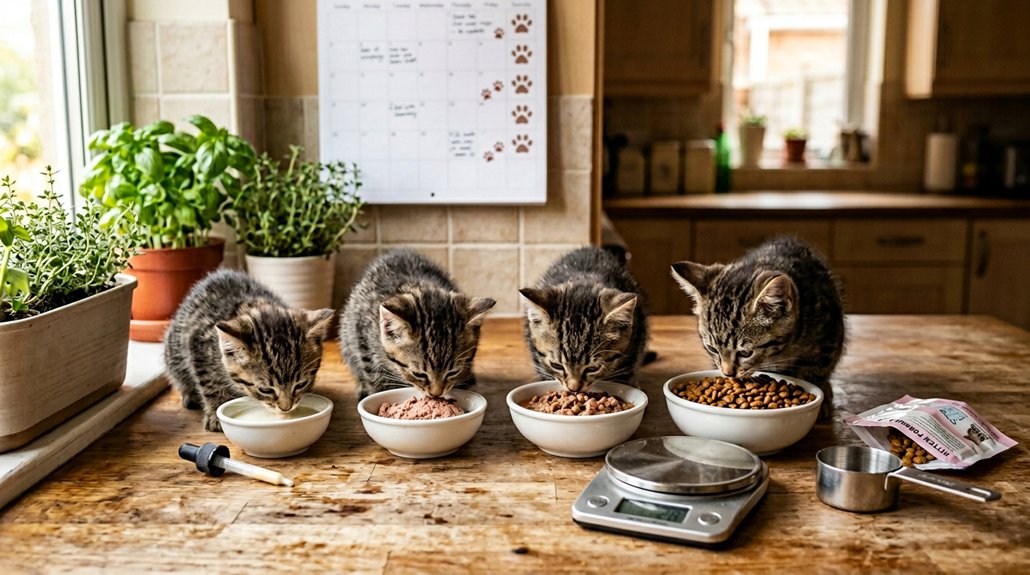
To establish the best feeding schedule, feed kittens 3 to 4 times daily from 4 to 12 weeks, reducing to 2 to 3 meals from 12 to 24 weeks. Use 1/4 to 1/2 cup of moistened kibble or 1/2 to 1-1/2 cans of wet food per meal, ensuring hydration and weight monitoring. Shift to adult food gradually at 6 months, maintaining a routine. With these guidelines, further insights await as feeding strategies advance alongside your kitten’s growth.
Key Takeaways
- Feed 4-8 week old kittens 3-4 times daily with moistened kibble or wet food, monitoring for daily weight gain.
- Kittens aged 8-16 weeks need 2-4 meals daily with gradually introduced dry food and consistent hydration.
- Transition to adult food at 6 months, starting with 25% adult food; increase gradually over 7-10 days.
- Maintain fresh water availability at all times and monitor weight gain, aiming for ½ ounce daily.
- Establish a consistent feeding routine to prevent feeding anxiety and support nutritional balance.
Feeding Your Kitten: What You Need to Know First
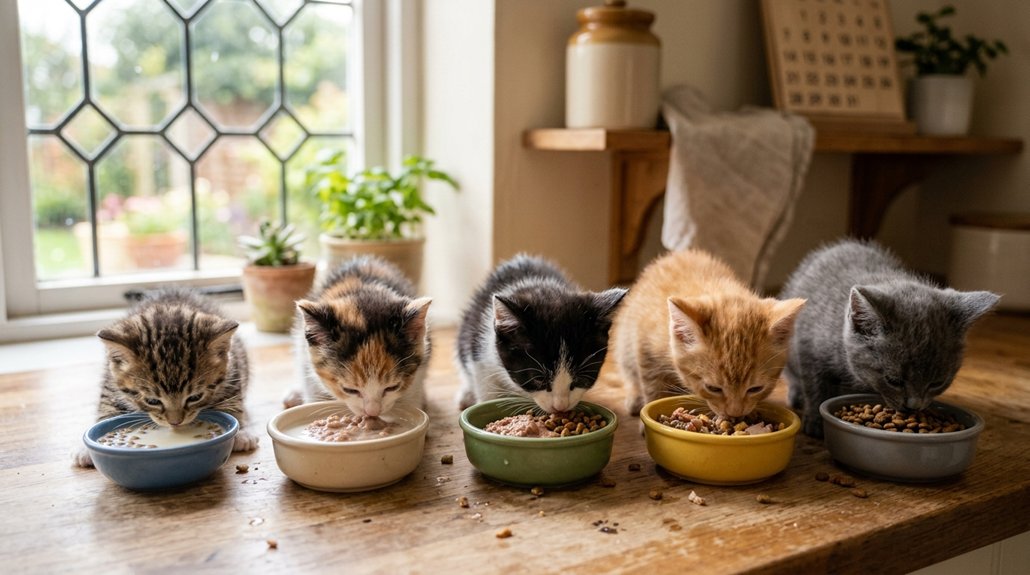
Before delving into feeding schedules, it is essential to understand the fundamentals of kitten nutrition, as this sets the foundation for their health and growth trajectories. Kitten hydration and feeding behavior are key components. Proper nutrient intake supports developmental milestones and overall well-being. Kittens need 3 to 4 meals daily from 4 to 12 weeks, adapting to 2 to 3 meals from 12 to 24 weeks. Portions should be carefully measured: 1/4 to 1/2 cup of moistened dry food or 1/2 to 1-1/2 cans of wet food initially, increasing with age. Establishing a consistent feeding routine bolsters nutritional benefits, with regular assessments to meet specific needs. Consult your veterinarian to tailor a plan ensuring best hydration and consistent, evidence-based feeding practices for your kitten.
What to Feed Newborn Kittens: Nursing and Bottle Tips
Even though newborn kittens ideally receive essential nutrients from their mother’s milk, you’ll need to intervene if they’re separated or losing weight. Immediately consult a veterinarian to assess their condition. For bottle feeding, use a specialized kitten formula like KMR, diluted in a 1:2 ratio with water, and warmed precisely to 98-102 degrees Fahrenheit. Test on your wrist to avoid burns. Employ appropriate nursing techniques: hold kittens in a natural suckling position. Kittens under 4 weeks can’t eliminate waste independently; gently stimulate their genital area post-feeding to induce urination and bowel movements. Monitor their weight rigorously; kittens should gain about ½ ounce daily. Any weight loss warrants prompt veterinary consultation to ascertain their health and well-being.
Introducing Solid Foods Around 4 Weeks: How and When
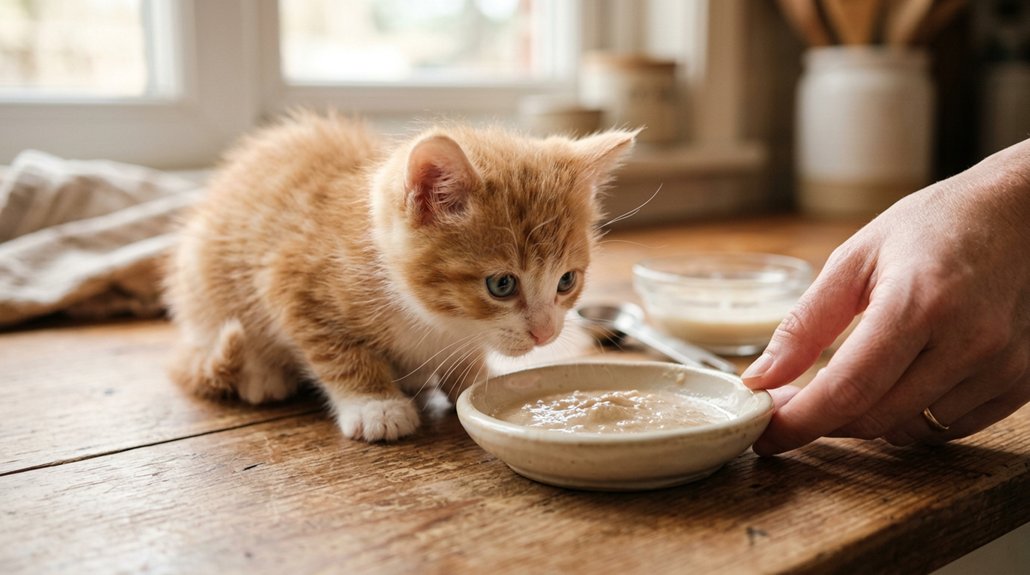
As kittens reach the age of four weeks, they’re ready to start the gradual change from milk to solid foods. This alteration, known as solid food exploration, coincides with weaning. Begin with a gradual introduction by offering a palatable gruel made from canned food mixed with kitten milk replacer. Moistened dry kibble or wet food should be initially introduced in small amounts. To support their developmental milestones, slowly increase the solid food proportion while ensuring it’s specifically formulated for kittens. It’s essential to observe each kitten’s acceptance and monitor any adverse reactions. A steady change to solid foods, without rushing, will facilitate their growth and help achieve complete weaning by 6 to 8 weeks, ensuring nutritional adequacy and health benefits.
Age-Specific Feeding Guide for 4 to 8 Week Old Kittens
At 4 to 8 weeks, kittens enter a critical phase of shifting from mother’s milk to solid foods, necessitating careful consideration of weaning and feeding schedule essentials. You’ll need to offer 3 to 4 meals daily, consisting of 1/4 to 1/2 cup of moistened kibble or 1/2 to 1-1/2 cans of wet food to guarantee they meet their nutritional requirements. Monitor their growth closely, aiming for a daily weight gain of about ½ ounce while gradually introducing new food textures and flavors to encourage healthy development.
Weaning and Solid Foods
When kittens reach 4 weeks of age, it’s crucial to shift them from mother’s milk to solid foods as part of their weaning process. Initiate by introducing wet food or moistened dry kibble, gradually increasing quantities as the weeks progress. Weaning forges a seamless changeover from milk to nutrient-rich solid food, requiring precise monitoring of intake and weight gain.
| Age (Weeks) | Type of Food | Meals per Day |
|---|---|---|
| 4 | Moistened Dry/Wet | 3-4 |
| 5 | Moistened Dry/Wet | 3-4 |
| 6 | Wet/Dry Formulations | 3-4 |
| 7 | Wet/Dry Formulations | 3-4 |
| 8 | Wet/Dry Formulations | 3-4 |
Ensure consistent weight gain of approximately ½ ounce daily. By 8 weeks, kittens should adjust to 3-4 complete meals, supporting ideal growth and development without the necessity for milk supplementation.
Feeding Schedule Essentials
Initiating a feeding regimen for 4 to 8-week-old kittens requires precision and attentiveness to their dietary evolution from mother’s milk to solid foods. Establish a structured schedule focusing on timing importance and a stable feeding environment to foster healthy development.
- Begin feeding every 4 to 6 hours from 4 to 6 weeks, shifting from nursing to solid foods.
- Introduce wet food or moistened kibble for ideal digestion when kittens start nibbling around 5 to 6 weeks.
- Offer 3 to 4 meals daily by 7 to 8 weeks, using specially formulated kitten food to guarantee nutritional adequacy.
- Maintain consistent feeding times to reinforce security and foster bonding.
- Adjust portion sizes between 1/4 to 1/2 cup of moistened food or 1/2 to 1-1/2 cans, based on activity and weight.
Creating Consistent Feeding Routines: 8 to 16 Weeks
Establishing a routine is essential for kittens aged 8 to 16 weeks, as a consistent feeding schedule of 2 to 4 meals a day meets their high energy and nutritional needs. A predictable routine is vital for minimizing feeding anxiety, aligning with typical kitten behavior in this rapid development phase. Introduce dry food gradually, providing 1/3 to 2/3 cups daily, ensuring it’s high-quality to support active lifestyles and growth. Encourage autonomy by keeping fresh water available at all times. Consistency strengthens bonds and security between you and your kitten. Regular monitoring of weight and food intake prevents obesity—a common issue due to their appetite—and supports healthy growth, aiming for an approximate weight gain of ½ ounce per day, ensuring ideal development.
Adjust Feeds as Kittens Grow: 16 Weeks to 6 Months
As your kitten shifts from 16 weeks to 6 months, their nutritional needs increase considerably, requiring you to adjust their feeding routine to 2 to 3 meals daily. Monitoring growth progress is essential, with daily caloric intake generally ranging from 250-280 calories to support healthy development. Consistently consulting with your veterinarian will guarantee that you’re accurately meeting your kitten’s dietary requirements and making necessary adjustments to their food portions.
Nutritional Needs Increase
Given the accelerated growth phase that kittens undergo between 16 weeks and 6 months old, their nutritional requirements greatly increase. Ensuring an adequate caloric intake and providing a suitable food variety is essential during this period. Aim for about 250-280 calories per day, using a combination of wet and dry food options. This dual approach not only meets caloric needs but also promotes hydration and dental health.
Key guidelines include:
- Caloric Intake: Aim for 250-280 calories daily.
- Meal Frequency: Serve 2 to 3 meals daily.
- Food Variety: Integrate both wet and dry foods.
- Portion Sizing: 1/3 to 2/3 cup of dry food or 1-1/2 to 2 cans of wet food.
- Regular Monitoring: Adjust portions as necessary, under veterinary guidance, to promote ideal growth and prevent obesity.
Transition Feeding Routine
When kittens progress to the age range of 16 weeks to 6 months, the frequency and composition of their meals should be adjusted to match their developmental needs. Implement portion control by feeding them 2 to 3 meals daily, ensuring each meal provides balanced nutrition essential for growth. The table below outlines dry and wet food guidelines:
| Feeding Frequency | Dry Food Portion | Wet Food Portion |
|---|---|---|
| 2 times daily | 2/3 cup total | 2 cans total |
| 3 times daily | 1/3 cup per meal | 2/3 can per meal |
Incorporate interactive feeding to engage their keen senses and to control portions effectively. Consistency in feeding times establishes a familiar routine, meets higher protein and fat requirements, and supports their well-being.
Monitoring Growth Progress
Monitoring the growth progress of kittens during the crucial age of 16 weeks to 6 months is essential for safeguarding their health and development. Conduct regular weight checks and maintain a growth chart to track progress accurately. An evidence-based approach involves adjusting feeding schedules, typically 2 to 3 meals per day, informed by weight and activity levels.
- Offer between 1/3 to 2/3 cup of dry food or up to 3 cans of wet food, depending on nutritional needs.
- Expect weight gains of 1 to 2 ounces weekly; adjust feedings as necessary.
- Introduce and encourage gradual exploration of solid foods.
- Confirm dietary hydration continues alongside solid food introduction.
- Regular veterinary consultations can tailor feeding plans for peak growth.
Precision in monitoring fosters healthy development during this critical period.
Transitioning to Adult Food: Preparing 6-12 Month Kittens
As kittens approach the half-year mark, their dietary needs start to shift in preparation for adulthood. Adjusting techniques involve gradually introducing adult cat food, starting with a mixture of 25% adult food and 75% kitten food. This staged approach facilitates essential digestive adjustments and minimizes the risk of gastrointestinal disturbances. You should slowly increase the proportion of adult food over seven to ten days, closely monitoring your kitten’s response. Should any digestive issues arise, it’s wise to slow the adjustment, allowing more time for adaptation. Consistent observation is key to ensuring a smooth change. For a personalized plan, consult with a veterinarian. Individual health factors and preferences impact how your kitten should adjust to adult food effectively.
Tackle Feeding Challenges: Tips and Tricks
Building on the understanding that preparing kittens for adult food requires careful planning, addressing feeding challenges is pivotal for their development. Kitten mealtime challenges, like overcoming picky eaters, often require consistent troubleshooting to guarantee nutritional adequacy.
Consider these strategies:
- Establish a consistent feeding routine: Aim for 3 to 4 meals daily until 6 months old.
- Blend new foods gradually: Introduce over a week to avoid digestive upset.
- Monitor preferences and adjust portions: Use feeding charts to prevent overfeeding.
- Start with wet or moistened food: Entice exploratory eating from 5 to 6 weeks.
- Facilitate smooth weaning: Increase solid food intake, decreasing nursing by 8 weeks.
Applying these tips effectively addresses common dietary issues, supporting healthy kitten growth.
Monitor Health Through Diet: What to Watch For
Maintaining a kitten’s health through its diet demands vigilance and precision. Carefully monitor weight gain, as ideal growth requires a kitten to gain about ½ ounce daily or 3 to 4 ounces weekly. If weight loss occurs, consult a veterinarian promptly. Equally, assess stool consistency; healthy stools should be formed and not too watery, reflecting adequate nutrition and digestive health.
Pay close attention to feeding patterns, as consistent meal times facilitate bonding and security. Notice any signs of feeding discomfort or resistance, which may signal dietary issues or sensitivities, requiring adjustments to their diet. Also, track elimination patterns to assess hydration and digestion, with urination expected post-feeding and bowel movements 1 to 4 times daily. These measures maintain nutritional and overall well-being.
Expert Advice for Lifetime Feeding Plans
Understanding your kitten’s nutritional needs is essential for developing a feeding plan that guarantees long-term health and vitality. You’ll start with frequent meals to accommodate high energy requirements, then shift to fewer feedings as they mature, guided by their changing caloric demands. Your veterinarian’s insights are invaluable for customizing these plans, as they’ll provide evidence-based guidance tailored to your kitten’s growth and activity levels.
Nutritional Needs Overview
Given the critical role nutrition plays in a kitten’s development, ensuring their diet meets all essential energy and nutrient requirements from infancy to adulthood is imperative. Ideal feeding behavior supports rapid growth and development, particularly in the early stages of life. During the first year, a kitten’s high metabolic rate demands:
- Frequent feedings: Newborns (0-4 weeks) needing nourishment every 2-3 hours.
- Gradual shift: From milk to solid food starting at 4-12 weeks.
- Increased meal sizes: Adjusting portions to support ongoing growth.
- Reducing meal frequency: Down to 2-3 times daily by 12-24 weeks.
- Introduction of adult diet: Around 12 months, ensuring digestive equilibrium.
Such structured planning fosters well-rounded growth, aligning with each life stage’s distinct nutritional profile.
Feeding Transition Stages
While moving your kitten from milk to solid food, it’s essential to follow methodical stages that align with their developmental needs. Begin around 5-6 weeks when nursing decreases and introduce wet or moistened dry kitten food. Gradually increase solid intake over two weeks. By 8 weeks, kittens should be weaned onto specially formulated kitten food, feeding 3-4 meals daily, matched to energy demands. Shifting to adult food starts around 12 months; mix with kitten food progressively over 7-10 days to minimize digestive upset. Use the table below for precise progression:
| Age (weeks) | Food Type | Feeding Frequency |
|---|---|---|
| 5-6 | Wet/Moistened Dry | Gradually Increase |
| 8 | Formulated Kitten Food | 3-4 Meals Daily |
| 12 Months | Gradual Mix of Adult/Kitten Food | Personalized Adjustment |
Consult your vet to tailor dietary plans.
Frequently Asked Questions
What Is the 3-3-3 Rule for Kittens?
The 3-3-3 rule for kittens highlights their adaptation stages over three weeks. Initially, they’ll need a calm environment, follow feeding guidelines, and experience gradual socialization, essential for balanced kitten development and long-term well-being.
What Is a Good Meal Schedule for a Kitten?
Think of meal times as anchors in your kitten’s growth journey. Feed them frequently from age-appropriate, reducing intervals as they get older. Understand their feeding preferences linked to nurturing routines and firm grounding in their development.
What Annoys Cats the Most?
Cats are most annoyed by loud noises and sudden movements disrupting their environment. Changes in routine and excessive handling further stress them. Understanding cat behavior helps minimize feline annoyances by maintaining consistency and respecting their need for autonomy.
Which Food Is Irresistible to Cats?
Studies show 85% of cats prefer wet food due to high moisture content. Consider enticing flavors like chicken or fish, aligning with cat food preferences rooted in natural proteins. Gradually introduce new options to stimulate interest.
Conclusion
In the thrilling journey of feline nutrition, a precise, age-specific feeding regimen is your ticket to a cat that’s not just healthy, but vibrantly thriving. Mastering newborn nursing, shifting to solids with finesse, and crafting the perfect adult diet can feel like wrestling with a lion, yet these actions are backed by solid evidence. By aligning their diet with developmental milestones, you’re not just feeding a kitten; you’re sculpting a future feline olympian, robust and agile.