
To rabbit-proof your home effectively, start by identifying hazards like electric cords and toxic plants. Use cord protectors, elevate wires, and secure furniture with covers or guards. Create a safe zone with barriers and enrich their environment with safe chew toys and tunnels. Supervise your rabbit and use web cameras for remote monitoring. Regularly inspect for damage and conduct safety audits to guarantee a secure space for your furry friend. Discover more tips to enhance your rabbit-proofing efforts.
Key Takeaways
- Identify and eliminate hazards like electric cords and toxic plants from rabbit-accessible areas to ensure safety.
- Use sturdy barriers or gates like metal puppy pens to restrict access to dangerous zones.
- Apply cord protectors such as split loom tubing around wires to prevent chewing damage.
- Provide safe chew toys like untreated pine wood to redirect rabbits’ natural chewing instincts.
- Regularly monitor and inspect spaces for potential risks, ensuring a clean and organized environment.
Get Started: Basics of Rabbit-Proofing
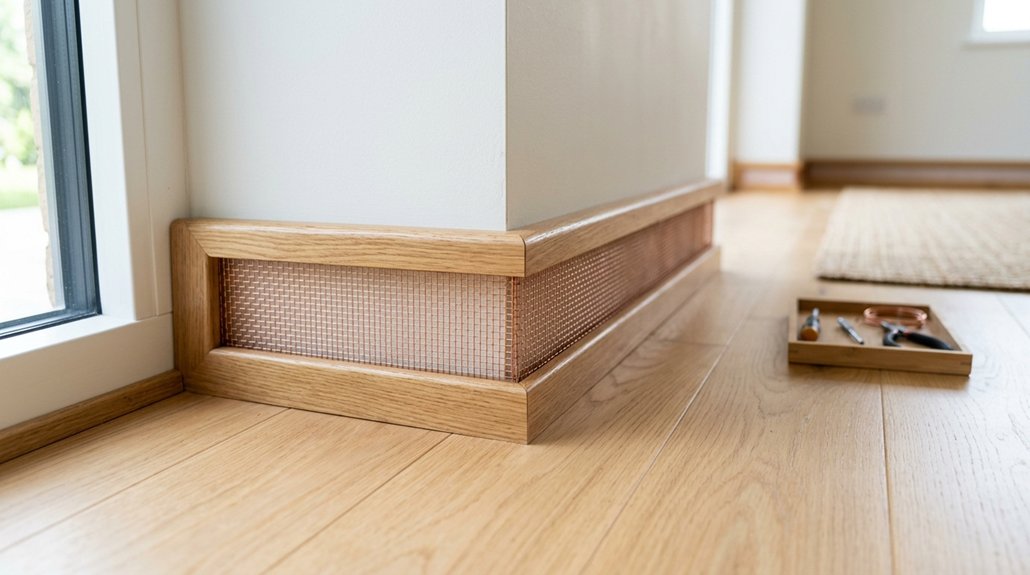
Jump into rabbit-proofing by first seeing your home through your bunny’s eyes, meticulously identifying hazards like electric cords and toxic plants. Understanding rabbit behavior is essential; they love to explore and chew, so redirect their gnawing instincts with safe chew toys like untreated pine wood and seagrass mats. These not only satisfy their need for chewing but also protect furniture and flooring. Block unsafe areas using sturdy barriers such as metal puppy pens or high baby gates to prevent your curious rabbit from accessing forbidden zones. Constant supervision is critical, allowing your rabbit to explore safely while you maintain a clean environment. By aligning your home’s setup with natural rabbit behavior, you’ll create a safe and enriching space for your bunny.
Keep Cords and Wires Safe: Simple Hacks
To keep your rabbit safe from electrical hazards, consider using cord protectors like split loom tubing or PVC pipes to encase exposed wires securely. Elevate loose cords where possible or secure them to walls, making them less inviting to curious nibblers. You can also creatively hide cables behind furniture or use DIY solutions, such as wrapping them in paper towel tubes, to prevent your bunny from chewing them.
Utilize Cord Protectors
When it comes to keeping curious rabbits safe from electrical hazards, utilizing cord protectors is a critical step. The benefits of using cord protectors are significant; they effectively prevent your bunnies from chewing through dangerous wires. Select split loom tubing, plastic covers, or PVC pipes to encase cords. These materials come in various sizes, allowing you fitting options that guarantee a secure fit around all types of wires. By placing these protectors, you’re not only securing your electrical appliances but also safeguarding your rabbit from potentially life-threatening hazards. It’s wise to regularly inspect the cords for any signs of damage and promptly replace compromised sections. Additionally, offer chew toys as distractions to keep your rabbits entertained and away from wires.
Elevate Loose Wires
Although rabbits are charming and delightful companions, their penchant for chewing can pose serious risks if not managed properly, particularly with wires in your home. For effective wire prevention, it’s crucial to elevate loose wires, minimizing access for curious nibblers. Focusing on cable organization guarantees your living space remains both safe and neat for your pet. Here are some practical tips:
- Use cord protectors: Wrap sensitive wires in split loom tubing or PVC pipes, making them inaccessible for your rabbit.
- Install cord clips: Elevate cords by securing them with adhesive hooks or clips to keep them out of reach.
- Strategically place furniture: Position furniture to block wires and outlets, keeping your rabbit safe from electrical hazards.
- Inspect wires regularly: Check for damage, bundle neatly, and fix dangling sections promptly.
Conceal Cables Creatively
Transforming your home into a safe haven for your rabbit doesn’t mean compromising on aesthetics. Creative concealment solutions can integrate seamlessly into your decor while safeguarding your furry friend. Opt for split loom tubing or PVC pipes to encase electrical cords, offering robust protection against curious chews and minimizing electrocution risks. For a budget-friendly cable camouflage, slide wires into paper towel tubes or cover them with cord protectors. Elevate and position cords high on walls to reduce rabbit access, preventing unwanted gnawing. Strategically place furniture to block access to cords and outlets, ensuring style isn’t sacrificed for safety. Regularly inspect and replace damaged cords, keeping your rabbit-proofing efforts effective. Maintain both beauty and peace of mind with these practical solutions.
Establish Safe Zones for Your Rabbit
To guarantee your rabbit’s safety, begin by creating a designated sanctuary using materials like plexiglass and x-pen panels, allowing for safe exploration. Clearly define boundaries with untreated pine boards and gates to block access to unsafe areas, and use portable baby gates or metal puppy pens to manage their movement. For added peace of mind, use web cameras to monitor their activities and guarantee they stay within designated safe zones.
Designated Rabbit Sanctuary
Creating a designated rabbit sanctuary in your home is crucial for your bunny’s safety and well-being, especially while acknowledging their curious nature and penchant for exploration. Utilize sanctuary materials like plexiglass or x-pen panels, which offer bunny visibility while protecting them from chewable hazards. Here are some steps to reflect on:
- Choose the Right Materials: Use materials such as plexiglass to guarantee visibility and safety, preventing access to dangerous zones.
- Add Enrichment Elements: Include tunnels and hideouts to cover outlets and cords—these provide mental stimulation and deter chewing.
- Guarantee Mental Growth: Supply chew toys, encouraging natural behaviors and reducing destructive tendencies.
- Install Monitoring Tools: Set up web cameras to keep an eye on activities and guarantee their continued safety, even when you’re away.
Secure Boundaries With Gates
As you establish a sanctuary for your rabbit, securing boundaries with gates is essential to keep them safe and prevent access to potentially dangerous areas. Choose metal puppy pens or robust baby gates made from chew-resistant gate materials to confine your rabbit to designated safe zones. Avoid plastic gates, as they can be easily damaged by curious teeth. When installing, guarantee gates are tall enough to deter jumping and have a secure locking mechanism to prevent accidental escapes.
Consider customized barriers using sturdy hardware cloth and wood for a more tailored approach. These solutions not only safeguard your rabbit but also blend nicely with home decor. Regularly inspect these installations for wear and tear to confirm they’re reliably protecting your rabbit’s environment.
Monitor With Web Cameras
Investing in web cameras provides an invaluable tool for ensuring your rabbit’s safety and well-being. By installing these devices, you can remotely monitor your rabbit’s activities, providing peace of mind when you’re not around. To effectively use web cameras for rabbit-proofing, consider the following:
- Camera Features: Opt for models with two-way audio, allowing for remote interaction. You can reassure your rabbit or stop unwanted behavior without being physically present.
- Environmental Assessment: Monitoring helps pinpoint hazards or problematic behaviors in their space.
- Safe Zone Supervision: Cameras let you supervise your rabbit’s designated play areas, ensuring they remain within safe boundaries.
- Adapt Strategies: Regularly review footage to tailor your rabbit-proofing to their habits, enhancing safety and quality of life.
Protecting Furniture With Rabbit-Proofing
When you’re aiming to safeguard your beloved furniture from the nibbling tendencies of rabbits, it’s critical to employ effective rabbit-proofing strategies. Start by using furniture covers on legs; cardboard or PVC options serve as sturdy barriers against sharp bunny teeth. To reinforce protection, plastic guards or decorative wood corner protectors on edges help maintain aesthetics while preventing gnawing. Consider applying chew deterrents like bitter apple spray; the effectiveness can vary depending on your rabbit’s tastes. Choose low-pile carpets since they’re less tempting to chew compared to plush fabrics. Remember, any protective materials should be securely fastened to prevent hazards like entrapment or choking. With these practical solutions, you’ll preserve the integrity of your cherished furnishings while keeping your furry friend safe.
Enrich Your Rabbit’s Environment for Safety
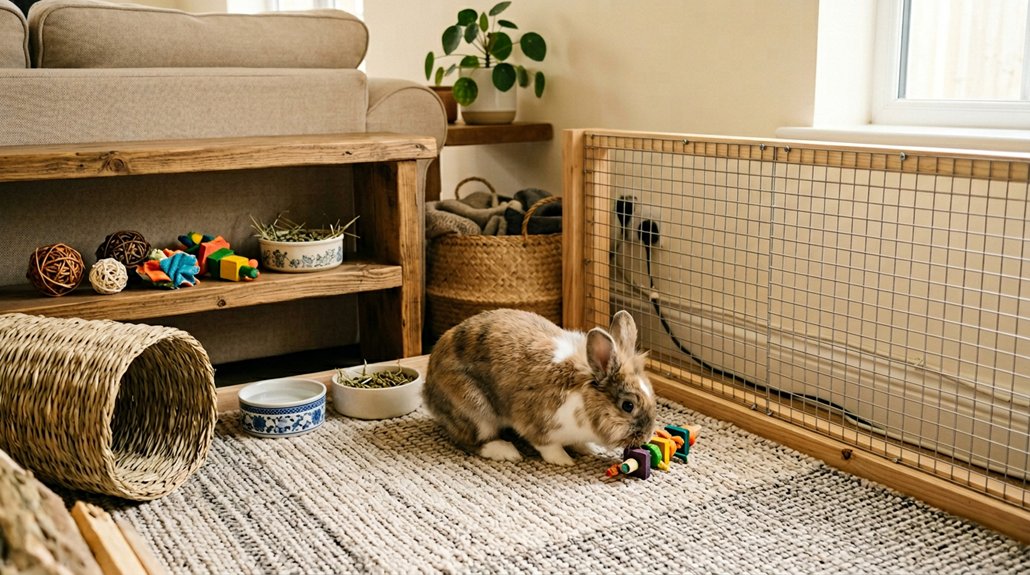
While safeguarding your furniture from an inquisitive rabbit’s teeth is important, enhancing that environment with enriching activities can keep your furry friend entertained, safe, and healthy. Providing a stimulating atmosphere involves offering a diverse toy variety and mental stimulation techniques.
- Chew Toys: Use untreated pine wood blocks and seagrass mats to satisfy your rabbit’s need to chew and protect household surfaces.
- Digging Options: Create a dig box with shredded newspaper and hay, allowing natural digging urges without damaging carpets.
- Interactive Toys: Incorporate snuffle mats or foraging toys stuffed with treats to engage your rabbit’s mind and body.
- Daily Routine: Establish playtime and exploration periods in rabbit-proofed areas, ensuring physical and mental health and strengthening your bond.
Monitor and Maintain Rabbit Safety
Although ensuring your rabbit’s freedom is essential to their well-being, diligent monitoring of their environment is equally important for their safety. Implement preventative safety measures by regularly supervising your rabbit during free-roaming sessions. This proactive approach allows you to swiftly spot and address hazards. Utilizing web cameras can help you monitor their activities when you’re away, keeping an eye on both safety and behavior in real time. Conduct routine inspections of your home to check for chewing damage—cords and furniture can pose significant risks. Keep your space organized, free of small objects, and potential choking hazards. Daily scans for toxic plants, chemicals, or new unsafe items are paramount to maintaining a secure environment for your bunnies.
Frequently Asked Questions
What Is the 3 3 3 Rule for Rabbits?
The 3 3 3 rule for rabbits highlights their behavior adjustment phases: three days to adapt, three weeks for comfort, and three months for bonding and trust. Verify home safety and consistency for a smooth change and lasting companionship.
How to Bunny Proof Your House?
To bunny-proof your house, first understand bunny behavior like chewing. Create safe spaces using barriers or pens, secure wires and toxic plants, provide chew toys, and supervise their exploration, ensuring all hazards are minimized.
How Do Rabbits Say “I’m Sorry”?
Do rabbits wear their hearts on their sleeves when they say “I’m sorry”? They sure do! Through binkies and grooming, rabbits express emotions and affection, demonstrating their understanding of mistakes and healing bonds through endearing bunny behaviors.
How Do You Say “I Love You” in Rabbit Language?
You can say “I love you” in rabbit language by understanding rabbit body language and vocalizations. Gently stroke their nose or respond with a slow blink. Mimic their friendly behaviors like nudging, grooming, or sitting closely to reinforce trust.
Conclusion
In crafting a safe haven for your rabbit, think of your home as a garden in need of a sturdy fence. You’ve woven protection around cables, established sanctuaries, shielded furniture, and enriched their world with opportunities for play and exploration. Like a diligent gardener tending to every need, regular monitoring keeps your beloved rabbit secure. By nurturing this environment, you guarantee your furry companion thrives, turning your shared home into a blooming paradise of safety and joy.