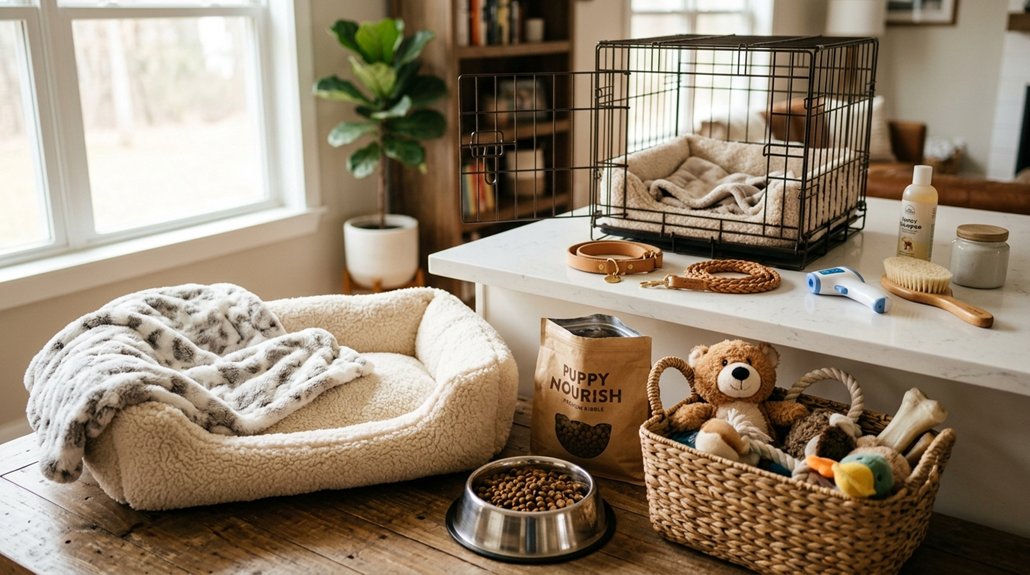
When you’re bringing a new puppy home, preparation is essential to guarantee its health and well-being. Start with quality feeding accessories and puppy-formulated food to support growth. Create a cozy resting space with a bed or crate, and gather safe toys for play and teething. Stock grooming supplies like brushes and puppy-safe shampoo. Implement house training aids and establish a potty schedule. Finally, focus on early training and socialization to build confidence. Discover additional tips and techniques.
Key Takeaways
- Get high-quality food and water bowls made of stainless steel or ceramic to ensure hygiene.
- Use puppy pads and establish a potty schedule for effective house training.
- Provide safe chew toys like KONG or Nylabone for teething puppies.
- Prepare a designated quiet sleep area with a cozy bed or crate.
- Start basic training early, using positive reinforcement with treats or praise.
Essential Supplies for New Puppies
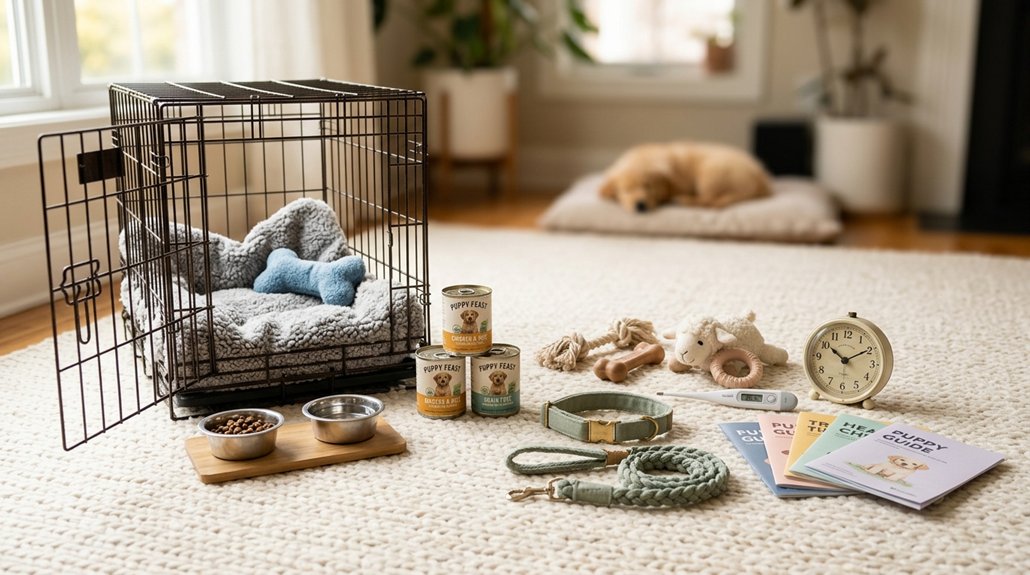
When welcoming a new puppy into your home, it’s essential to equip yourself with necessary supplies that prioritize both functionality and your pet’s well-being. High-quality food and water bowls, especially those made of stainless steel or ceramic, play a significant role in puppy health by ensuring cleanliness and preventing bacterial growth, aligning with veterinary care best practices. A properly fitting collar and leash are important for safe outdoor adventures, supporting both training sessions and regular exercise, which is critical for a puppy’s physical health. Additionally, puppy pads aid in house training, providing a convenient solution for indoor relief during adjustment periods, thereby minimizing accidents and stress. These supplies form the cornerstone of nurturing a healthy, happy puppy life.
Set Up a Safe and Comfortable Resting Area
To set up a safe and comfortable resting area for your new puppy, designate a specific sleep space with a cozy dog bed or crate to provide security. Incorporate familiar items like blankets with your scent to help them acclimate to their new surroundings. Use baby gates to prevent access to unsafe areas while ensuring the resting space remains quiet and free from distractions, facilitating a peaceful environment for your puppy.
Designate Puppy Sleep Space
A well-planned sleeping area is essential for your puppy’s health and comfort. Prioritizing puppy sleep importance means creating a cozy sleeping environment. Choose a quiet location away from the hustle and bustle, where your puppy won’t be disturbed. A crate or playpen offers security, promoting relaxation and mitigating anxiety. Inside this space, place a soft, supportive bed or blanket that entices restful slumber. Incorporating items with your scent, such as blankets or towels, fosters familiarity and reassurance as your puppy adjusts. Baby gates are beneficial, allowing you to set boundaries while still keeping your puppy near family activities. This secure yet inclusive approach guarantees your puppy’s designated sleep space contributes considerably to its overall well-being and adaptation to its new home.
Ensure Security and Comfort
Establishing a secure and comfortable resting area is essential for your puppy’s well-being and adaptation to their new environment. Start by using a crate or playpen, which helps with crate training and minimizes puppy anxiety by creating a safe haven. Choose a puppy-sized, comfortable bed, possibly with bolsters for active sleepers, to promote relaxation. Incorporate baby gates to limit access to unrestricted areas, further safeguarding your puppy.
Adding blankets or towels carrying your scent can soothe your puppy, easing their adjustment. Position the resting area in a clean, quiet spot away from household noise and foot traffic to encourage restful sleep. These steps not only provide safety but also aid in reducing puppy anxiety, fostering a secure and comfortable space.
Choose the Right Food and Feeding Accessories
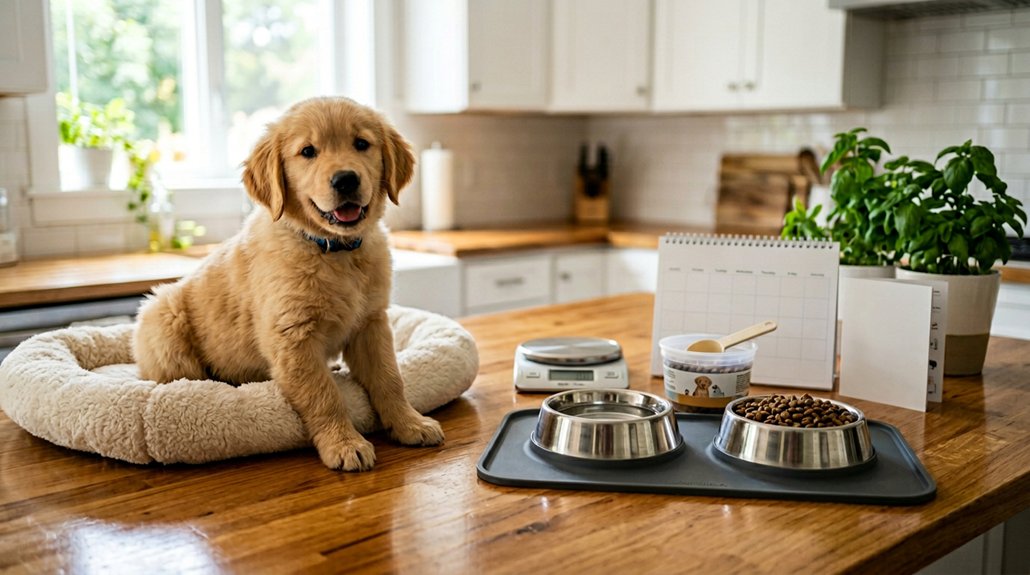
Choosing the right food and feeding accessories for your puppy involves several key considerations to support their health and development. Guarantee you select a high-quality food specifically formulated for puppies, and consult with professionals to tailor it to your pet’s needs. Investing in durable feeding equipment, like stainless steel bowls, and measuring portions can help monitor intake and manage their weight effectively.
Essential Puppy Nutrition
When it comes to ensuring the ideal growth and health of your new puppy, one critical factor is selecting the right nutrition. Start by choosing a high-quality, age-appropriate puppy food that aligns with established nutrition guidelines. Consulting a veterinarian or reputable breeder can provide brand recommendations tailored to your puppy’s specific needs. Here’s how you can effectively manage your puppy’s diet:
- Portion Control: Utilize a scoop for precise measurement, helping maintain a balanced diet and avoid overfeeding.
- Feeding Routine: Establish a consistent schedule, feeding your puppy three to four times a day until six months old, aiding digestion and behavioral training.
- Monitor Growth: Regularly check your puppy’s weight and adjust food portions to support healthy growth and development according to activity levels.
Durable Feeding Equipment
Though often overlooked, selecting the right feeding equipment is vital for maintaining your puppy’s health and hygiene. Opt for high-quality food and water bowls made from stainless steel or ceramic. These bowl materials are non-toxic and resist bacterial buildup, unlike their plastic counterparts. To guarantee your puppy’s eating area remains clean and safe, select bowls with non-slip features that prevent spills during feeding. For larger breeds, raised feeding bowls can promote better posture and aid digestion by allowing a more ergonomic eating position. Always prioritize equipment that’s easily cleanable to prevent bacterial accumulation and support your pet’s well-being. Remember, regular washing of your puppy’s bowls is essential to providing a safe eating environment, making sure your new companion stays healthy and happy.
Portion Control Tips
Guaranteeing your puppy’s best health requires diligent attention to portion control. Accurate portion sizes and a proper feeding schedule are essential. Here’s how to manage this effectively:
- Start with Guidelines: Follow feeding guidelines that suggest 20-30 grams of food per kilogram of body weight, divided into several meals each day. This helps maintain energy levels and prevents bloat.
- Utilize Tools: A measuring scoop guarantees consistency in portion sizes, preventing overfeeding. Overfeeding can lead to obesity and related health problems, so measure accurately.
- Regular Monitoring: Consistently monitor your puppy’s weight and adjust the food portions as needed, taking into account their activity level and growth stage. Collaborate with a veterinarian or breeder for breed-specific advice.
These practices set a foundation for your puppy’s lifelong health.
Gather Toys for Play and Teeth Care
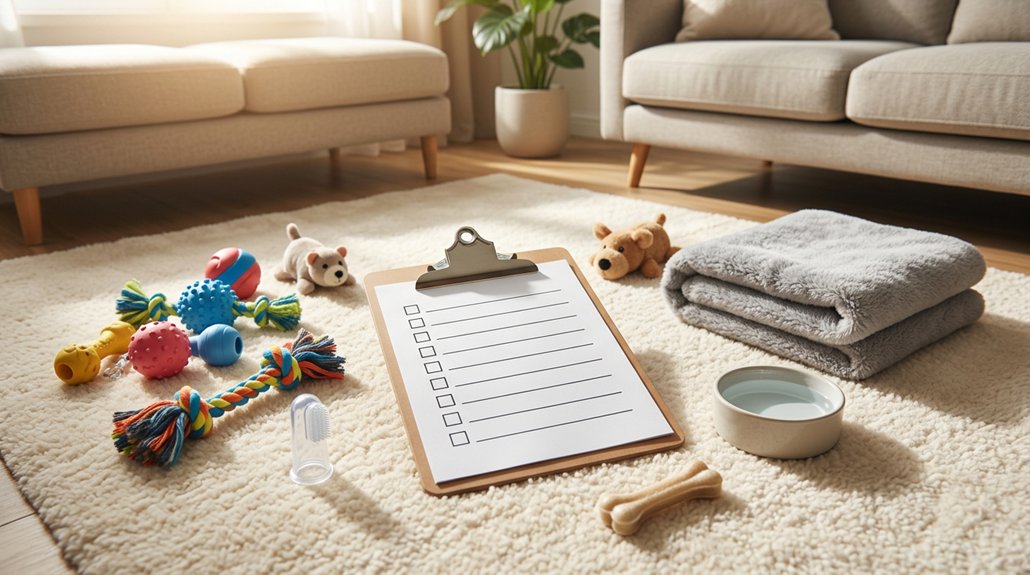
Puppy care involves thoughtful consideration, especially when it comes to selecting toys for play and teeth care. During the teething phase, offering a variety of safe chew toys is essential. Opt for puppy-specific teething toys and consider reputable brands like KONG and Nylabone to alleviate gum pain. Additionally, interactive puzzle toys are excellent for stimulating mental engagement, keeping your puppy entertained while encouraging healthy chewing habits.
While plush toys provide comfort, they should only be used under supervision to avoid choking risks from small parts. Regularly rotating the toy selection keeps playtime appealing and prevents boredom. Furthermore, incorporating fetch toys like balls and ropes not only aids physical exercise but also strengthens your bond with your puppy during play sessions.
Stock Up on Grooming Supplies for Hygiene
To maintain a puppy’s health and well-being, a thorough collection of grooming supplies is essential. Grooming tools cater to various needs and guarantee effective coat maintenance. Start with the essentials:
- Brushes and Combs: Choose the right brush or comb for your puppy’s coat type to promote healthy fur and manage shedding effectively.
- Nail Trimming: Regularly trim nails with the right tools, paying special attention to dew-claws, which can lead to injuries if untrimmed.
- Dental Care: Invest in a puppy toothbrush and toothpaste. Establishing a dental hygiene routine is vital for preventing oral health issues later in life.
Opt for puppy-safe shampoo to maintain cleanliness without irritating their skin. Including grooming scissors helps when trimming sensitive areas, rounding out your grooming kit.
Plan for Potty Training Success
Successful potty training hinges on consistency, patience, and positive reinforcement. Create a potty schedule by setting up a designated potty area outside, helping your puppy associate it with bathroom breaks. Utilize puppy training pads indoors only in emergencies. Gradually shift your puppy to exclusive outdoor use. Establish a routine, taking your puppy out after meals, naps, and playtime, when they’re likely to need relief. Be alert for indicators like sniffing, circling, or whining, and immediately guide them outside.
Use the following guide to enhance training:
| Time of Day | Action | Puppy Rewards |
|---|---|---|
| After Meals | Potty Break | Praise/Treats |
| Post-Naps | Potty Break | Praise/Treats |
| After Playtime | Potty Break | Praise/Treats |
| Showing Signs | Potty Break | Praise/Treats |
| Before Bedtime | Potty Break | Praise/Treats |
Reward successes promptly with praise or treats to bolster desired behavior.
Prepare for Early Training and Socialization
While commencing the journey of raising a well-adjusted dog, focusing on early training and socialization is essential. Start basic training as early as 8 weeks to establish a foundation for commands like sit, stay, and recall. This early start promotes lifelong good behavior. Utilize positive reinforcement techniques to encourage desired behaviors, fostering a strong bond between you and your puppy. Consider these strategies:
- Socialization: Expose your puppy to diverse environments and people between 3 to 14 weeks to curb fear-based behaviors.
- Positive Reinforcement: Use treats and praise during training to strengthen positive associations with basic commands.
- Training Classes: Enroll in classes for structured obedience training and controlled socialization with other dogs.
Always monitor your puppy’s comfort to guarantee confidence-building experiences.
Frequently Asked Questions
How Can I Help My Puppy Adjust to Their New Home Environment?
You can ease your puppy’s adjustment by creating a comfort zone with familiar scents and slowly exposing them to new areas. Mitigate puppy anxiety with consistent routines and positive reinforcement, encouraging exploration and rewarding calm behavior.
What Steps Should I Take to Puppy-Proof My House?
Make certain cord management by securing loose wires and remove hazardous materials like cleaning supplies from reachable areas. Cover electrical outlets and install safety gates to restrict access to unsafe spaces, protecting your curious puppy from potential dangers.
How Often Should I Schedule Veterinary Checkups for My New Puppy?
You should schedule vet services every 3-4 weeks for puppy health. Remarkably, over 80% of pet owners find regular checkups essential for detecting early health issues, ensuring your puppy’s well-being is maintained through vaccinations and thorough examinations.
Are There Any Specific Vaccinations My Puppy Needs Upon Arrival?
Yes, your puppy needs core vaccinations, such as DHPP and rabies, as part of their vaccination schedule. Consult a vet to establish timing for non-core vaccines like Bordetella, based on lifestyle and risk factors.
How Do I Manage My Puppy’s Energy Levels During the First Few Weeks?
Engage your puppy in structured playtime to effectively manage their energy levels. Incorporate interactive toys and activities as energy outlets, providing mental stimulation while helping to develop essential social skills during those vital early weeks.
Conclusion
Bringing a new puppy home is like preparing a spaceship for a journey to the stars. Your checklist is the blueprint, ensuring each integral piece is in place: safe quarters as the command center, nourishing food as fuel, toys and grooming supplies as maintenance tools, and potty training as navigation signals. With these essentials, you’re ready to set off on an adventure filled with discovery, where training and socialization light the path, guiding you and your puppy to a harmonious orbit.