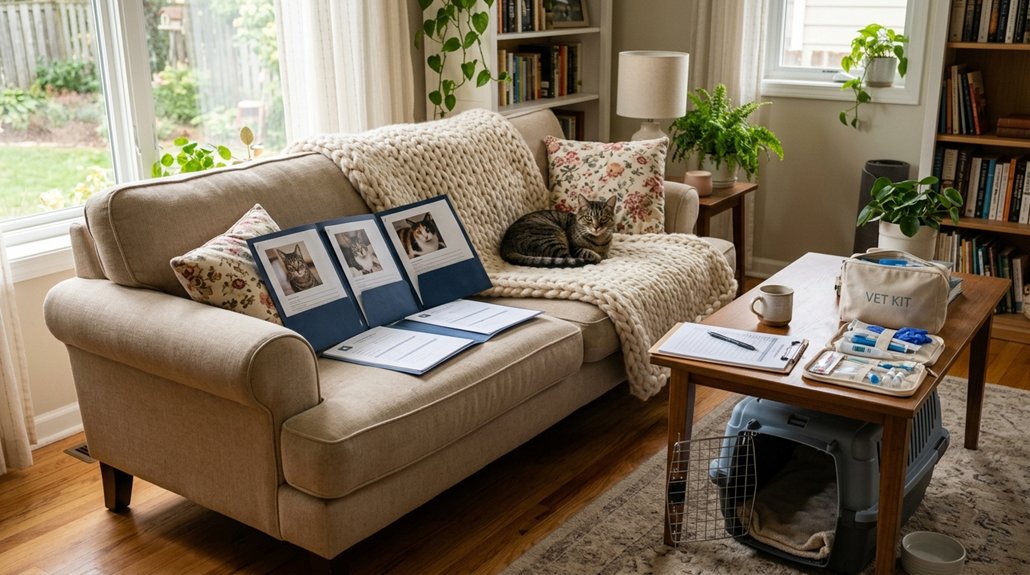
Before starting the cat adoption process, make certain your home is cat-proofed and safe, with hazards like chemicals and toxic plants secured. Gather essential supplies, including a litter box, scratching post, and quality food. Assess both your lifestyle and budget to confirm you’re ready for the financial and emotional commitment. Choose a cat that suits your living situation and involve family in planning and responsibilities. Discover how to make a perfect homecoming for your new feline friend.
Key Takeaways
- Create a quiet cat sanctuary with essentials: litter box, food, water, and bedding for initial adjustment.
- Gather necessary supplies like scratching posts, toys, grooming tools, and a durable pet carrier.
- Assess living situation and research compatible cat breeds or personalities for your household.
- Plan financially for adoption costs, annual expenses, and potential emergencies.
- Cat-proof the home by removing hazards and securing household cleaners, chemicals, and toxic plants.
Preparing Your Home for a New Cat

When adopting a new cat, it’s essential to prepare your home thoroughly, ensuring that the cat feels safe and welcome from day one. First, establish a cat sanctuary by dedicating a quiet room equipped with a litter box, food, water, and comfortable bedding. This space helps your cat acclimate without stress. Use acclimation techniques by gradually introducing your feline to the household and monitoring their behavior. Cat-proof your home by removing hazards like loose cords and toxic plants, and secure chemicals for a safe environment. Gather necessary supplies, including a scratching post, toys, and cozy bed. Additionally, involve family members in fostering discussions to prepare for the responsibilities of a new pet. Discuss introduction strategies to ease the adjustment with existing pets.
Finding the Perfect Cat for Your Lifestyle
When looking for a cat that fits perfectly into your lifestyle, you’ll want to assess your living situation by considering factors such as activity level, breed temperament, and household dynamics. Researching various breeds’ personality traits is essential, as certain types might adapt better to family environments or offer companionship if you’re adopting more than one. Make use of local shelters and platforms like petfinder.com, and seek advice from adoption counselors to guarantee the cat’s personality is compatible with your home and activity level.
Matching Cat Personality
Adopting a cat is much like finding the perfect puzzle piece for your home. Understanding cat behavior and personality traits can steer you toward the ideal companion. If you’re in an active household, a playful cat might blend seamlessly; they thrive on interaction and activity. Conversely, a laid-back feline suits a quieter environment where tranquility reigns. You might consider adopting two cats if your lifestyle can accommodate it; they engage in social play and offer companionship. Remember, certain breeds possess specific qualities: Long-haired, round-shaped cats are often more easygoing and family-friendly. Adoption counselors at shelters can provide invaluable insights by discussing household dynamics and individual cat behaviors.
| Cat Type | Personality Trait |
|---|---|
| Playful Cat | Thrives on activity |
| Laid-back Cat | Prefers tranquility |
| Long-haired Cat | Easygoing, family-friendly |
Lifestyle Compatibility Factors
Aligning a cat’s personality with your household’s rhythm is only part of the equation; lifestyle compatibility plays a significant role as well. Start by evaluating your household dynamics and daily schedule. A cat’s energy level should match your family’s activity level; active breeds like Bengals need engagement, while laid-back ones fit quieter homes. Allergy considerations are essential; Siberians or Balinese may suit households with allergies due to their lower allergen production. Space requirements can’t be overlooked—larger breeds thrive in roomy environments. Consider the ages of household members: kittens demand more attention and training, whereas adult cats may complement a busy lifestyle effortlessly. Breed characteristics, including social tolerance, could make breeds like Ragdolls ideal for families with young children or other pets.
Navigating the Cat Adoption Process

When you’re managing the cat adoption process, it’s crucial to assess the compatibility of potential shelters with your values and needs, ensuring they align with responsible pet practices. As you evaluate your adoption preparedness, reflect on the readiness of your home and family life, which includes considering the dynamics with any existing pets. Remember, a successful adoption is not just about finding the right cat but ensuring a harmonious and suitable match for everyone involved.
Assess Shelter Compatibility
Successfully maneuvering the cat adoption process often begins with evaluating shelter compatibility, a critical step for ensuring a smooth changeover for both you and your future feline friend. Understanding the available shelter types and adoption criteria can help in identifying the best match. Shelters vary from city-run facilities to private rescues, each with unique procedures. Adoption criteria might involve completing an application backed by identification and references. Interviews are sometimes conducted to align the cat’s needs with your household. Remember, some shelters may require home inspections.
Here’s a quick comparison:
| Shelter Type | Adoption Requirements | Inspection |
|---|---|---|
| City-run | Identification, application | Occasionally |
| Private Rescue | References, interview | More common in practice |
| No-Kill | Often extensive criteria | More thorough |
Align your choice with your lifestyle and be prepared for meaningful adjustments when inviting a new cat into your home.
Evaluate Adoption Preparedness
How prepared are you for the rewarding journey of cat adoption? Start by having a family discussion to assess everyone’s willingness regarding new responsibilities and shared adoption expectations. Make certain your budget covers not only the initial costs—adoption fees and vet visits—but also ongoing needs like food and emergency care.
- Involve your family: Discuss who will handle feeding, cleaning, and playtime.
- Financial readiness: Anticipate immediate expenses and long-term care.
- Environment safety: Create a cat-safe home by securing hazards and making sure adequate space.
Research available cats on platforms like petfinder.com to match them with your lifestyle. After adoption, schedule a vet visit to guarantee the new feline’s health and establish a care routine. Balancing preparedness and care sets a foundation for a successful adoption.
Essential Supplies for Your New Cat
Before welcoming your new feline friend into your home, it’s essential to gather the necessary supplies to create a comfortable and nurturing environment. Start by addressing their nutritional needs with high-quality cat food, preferably aligning with what the shelter has been providing to ease dietary changes. Equally important is cat grooming; invest in tools like a slicker brush and de-shedding tool to keep their coat healthy and tangle-free. Other must-haves include a litter box, food and water bowls, scratching posts, and a cozy bed, creating a welcoming space. A durable pet carrier, like the machine-washable SturdiBag Pro 3.0, guarantees safe travels to the vet. Finally, equip a collar with an ID tag and stock up on treats for positive reinforcement.
Financial Planning for Cat Adoption

While adopting a cat is a heartwarming experience, it’s important to understand the financial responsibilities involved to guarantee you can provide for your new companion throughout their life. Adoption costs include initial fees, often covering spaying/neutering and vaccinations. You’ll also face ongoing expenses such as food, litter, and medical care, amounting to around $500 to $1,000 annually. To manage these, consider effective budgeting strategies, keeping in mind the total lifetime cost of $15,000 to $20,000 over 15 years.
Prepare for unexpected emergencies:
- Emergency costs: Plan for $200 to $600 or more.
- Shelter resources: Use them to understand financial commitments.
- Budget incrementally: Regularly set aside funds for routine and unforeseen expenses.
Proper planning guarantees a secure and loving environment for your cat.
Helping Your Cat Settle In
Creating a welcoming environment for your new cat is essential for a smooth shift into your home. Start with a sanctuary setup by preparing a quiet room with necessities: a litter box, water, food, bedding, and toys, making sure your furry friend has everything to begin acclimating. Allow your cat to adjust at its own pace; hiding behavior is normal and may last from several days to a week. To build trust, hand-feed treats and spend serene periods in the room without pushing interactions. Provide multiple hiding spots, like cardboard boxes, to enhance security. Employ gentle acclimation techniques such as calm play and consistent feeding to guarantee each interaction during this period is positive, gradually fostering a sense of safety and trust.
Creating a Safe Environment: Cat-Proofing Tips
Once your new cat starts to settle in, ensuring its ongoing safety in your home becomes your next priority. Proper furniture arrangements and pet proofing essentials are essential. First, secure household cleaners and chemicals in locked cabinets or high shelves to prevent accidental ingestion. Watch out for dangling cords from blinds or electronics—these should be fastened to prevent entanglement and choking.
Prioritize your cat’s safety by locking away harmful substances and securing dangling cords to prevent accidents.
Additionally, remove toxic plants like lilies and azaleas, as these can be harmful or fatal. Store human foods like chocolate and onions safely out of reach. Examine your home for small items that could pose choking risks, such as coins or rubber bands.
- Secure dangerous substances and foods.
- Remove or fasten hazardous items like cords.
- Identify and eliminate toxic plants.
Tips for Cat Socialization and Play
When introducing a new cat to your home, it’s important to approach socialization and play with sensitivity and patience. Start in a quiet sanctuary room, and let your cat approach you at their pace. This builds trust and familiarity. Hand-feed treats to create positive associations and encourage interaction—perfect for trust building. Engage in bonding activities with interactive toys like feather wands or laser pointers to stimulate their instincts and strengthen your bond. Don’t overwhelm your feline by limiting new visitors until they’re comfortable.
| Step | Activity | Purpose |
|---|---|---|
| 1 | Quiet Sanctuary Time | Trust Building |
| 2 | Hand-feeding Treats | Positive Associations |
| 3 | Interactive Playtime | Bonding Activities |
| 4 | Monitor Behavior | Stress Reduction |
| 5 | Gradual Introductions | Enhance Comfort |
Monitor their behavior, remaining patient, as trust requires time.
Frequently Asked Questions
What Is the 3 3 3 Rule for Adopting a Cat?
The 3 3 3 rule guides cat adoption smoothness. First three days involve fear adjustments. Three weeks lead to socialization; three months reveal true personality. Follow these socialization tips for a stress-free, nurturing environment, easing change seamlessly.
What Should I Prepare Before Adopting a Cat?
Cat-proof your cozy corner, carefully clearing chemicals and vital clutter. Collect essential supplies: comfy bed, cat cuisine, and curious toys. Cunningly coordinate with a compassionate vet for important check-ups. Collaborate with companions to create commitment to care.
Can People With Autism Adopt?
Yes, you can definitely adopt a cat. With the right autism support and a focus on pet compatibility, individuals with autism can find immense joy and companionship in cat adoption, enhancing emotional well-being and fostering a nurturing relationship.
What Color Cat Is the Hardest to Adopt?
In the midnight shadows of adoption myths, black cats often linger, facing stigma in adoption circles. You might see them as harbingers of charm rather than bad luck, inviting you to dispel misconceptions and embrace a loving companion.
Conclusion
Starting on the journey of cat adoption is like setting sail on a heartwarming voyage. You’ve got the essentials ready, from preparing your home to understanding financial commitments. Guiding through the adoption process requires compassion and patience, akin to the gentle care you’ll offer your new feline friend. By cat-proofing your home and fostering socialization, you’re crafting a safe harbor. Your effort creates a bond that’s not just rewarding, but truly transformative—for both of you.