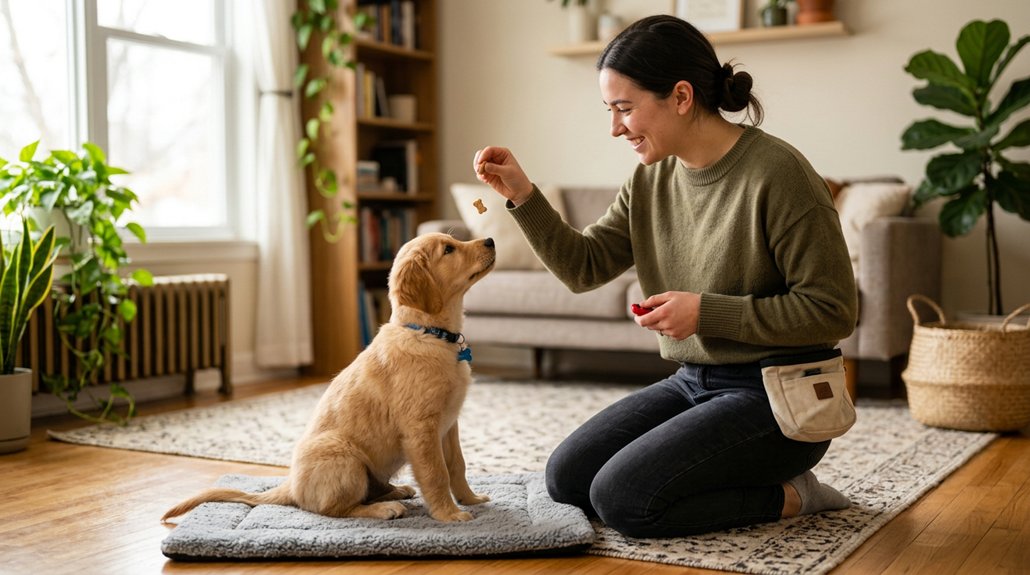
Training your first dog involves essential commands like “sit” and “stay.” Start early, aim for consistency, and integrate commands into daily routines. Utilize positive reinforcement with high-value treats while avoiding harsh methods that can instill fear. Socialize your young dog with diverse environments to bolster confidence. Patience and short, engaging sessions pay off over time. Professional trainers can address behavioral challenges, enhancing your pet’s growth. There’s more valuable insight waiting for those enthusiastic to learn.
Key Takeaways
- Start training around six weeks old using consistent commands like “sit,” “stay,” “come,” and “down.”
- Use positive reinforcement with treats and praise to encourage desirable behaviors and strengthen the bond.
- Avoid harsh training methods; focus on building trust and fostering a positive learning environment.
- Incorporate socialization in early weeks to expose your puppy to various environments, people, and other animals.
- Maintain patience and consistency; consider professional guidance for specific behavioral challenges or advanced training needs.
Essential First Commands for Your Dog
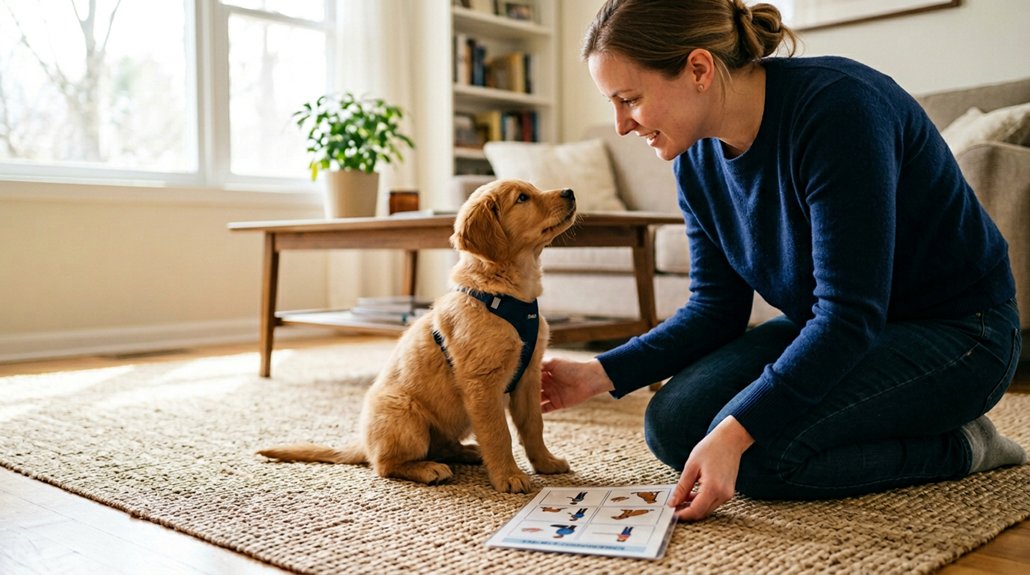
When you’re starting your journey as a first-time dog owner, one of the critical steps is introducing essential commands like “sit,” “stay,” “come,” and “down.” These foundational commands are crucial for establishing clear communication and control with your new furry friend. Begin training as soon as you bring your dog home, ideally when they’re around six weeks old. Integrating these commands into daily grooming basics and exercise routines can enhance your dog’s responsiveness and behavior management. Short, engaging sessions are key; aim for several throughout the week. Make sure everyone in your household uses the same commands to avoid confusion, fostering an environment of consistency. Creating a solid base with these commands will be instrumental in shaping your dog’s future behavior.
Using Positive Reinforcement: Essential Dog Training Tips
With the basic commands in place, it’s time to focus on utilizing positive reinforcement as a fundamental training technique. Positive reinforcement involves rewarding your dog’s desired behaviors with treats, praise, or play. Clicker training enhances this by letting you pinpoint precise actions. Importantly, reward timings matter greatly; give treats immediately to guarantee your dog associates the reward with the right behavior. Use high-value treats to boost motivation. Consistency is key; all family members must stick to the same commands to prevent confusion. Avoid punishment; it leads to fear and undermines trust.
| Method | Action | Purpose |
|---|---|---|
| Clicker Training | Use click for marking | Clarifies desired action |
| Timing | Reward immediately | Builds behavior association |
| Consistency | Use same commands | Prevents confusion |
| High-Value Treats | Offer after action | Increases engagement |
| Praise/Play | Use with treats | Further motivates dogs |
Steer Clear of Harmful Methods
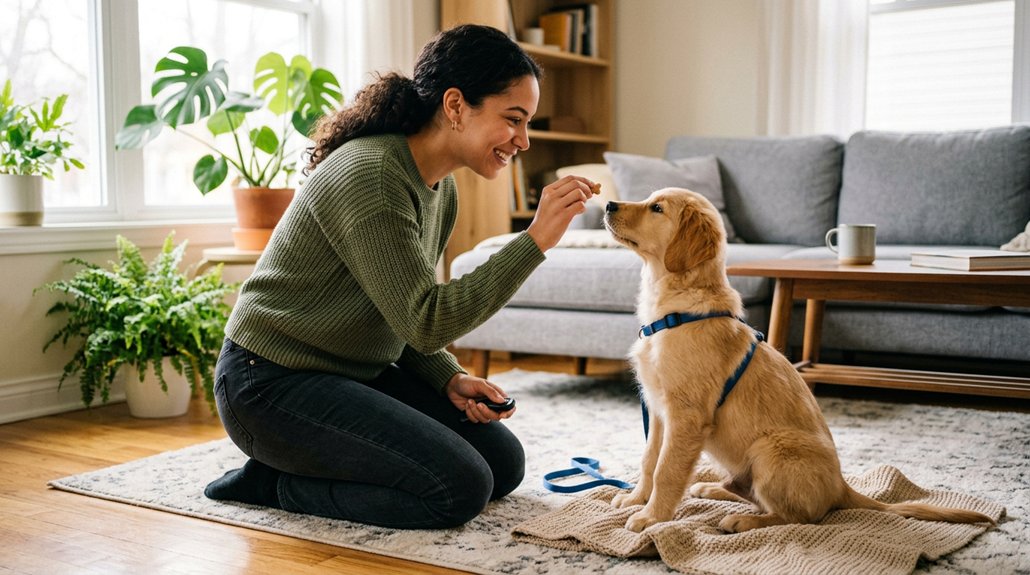
Although it might be tempting to try quick-fix solutions, steering clear of harmful training methods is essential for fostering a healthy relationship with your dog. Aversive tools like shock collars and prong collars can increase fear, anxiety, and aggression, damaging your bond. Instead, consider training alternatives that focus on positive reinforcement, proven to be more effective and beneficial. By rewarding desired behaviors, you help your dog understand expectations without causing confusion or distress. Humane organizations advise against harsh tactics, such as leash tugs and shake cans, as they often lead to negative outcomes. Avoiding harmful tools not only guarantees your dog’s mental health but also makes training more enjoyable and successful for both of you.
Build Your Dog’s Confidence Through Socialization
Socialization is a cornerstone of building your dog’s confidence, and it’s most effective when started early, ideally between 3 to 14 weeks. During this vital period, expose your pup to diverse environments, people, and animals to prevent fear and aggression, nurturing a balanced temperament. Engage in socialization activities such as puppy classes, which offer controlled settings for positive interactions, fostering your dog’s ability to calmly face new stimuli. Gradually introduce varied sounds and sights to instill resilience, ensuring your dog develops a confident disposition. By continuously providing socialization opportunities, you’ll reinforce their comfort in different situations, establishing adaptability and propriety. These confidence-building steps are essential for raising a well-adjusted, well-behaved companion who navigates life with ease.
Stick With It: Consistency and Patience Pay off
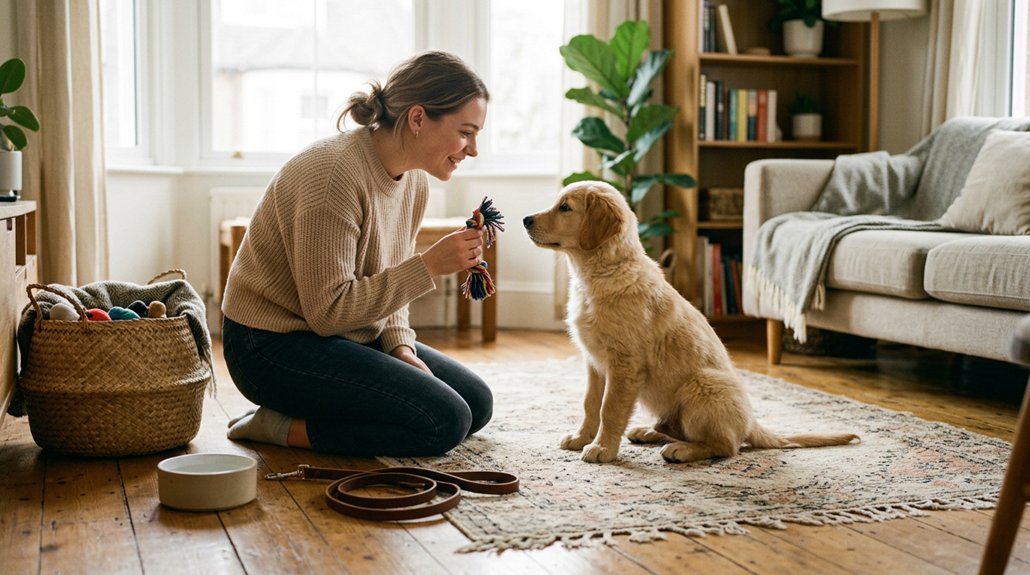
Consistency in your training approach and maintaining patience are essential components in building reliable habits for your dog. Make sure every family member uses the same commands and routines to foster steady progression and reduce confusion. By reinforcing a daily routine, you’ll create a predictable environment that supports your dog’s learning and reduces anxiety.
Build Reliable Training Habits
When beginning the journey of dog ownership, it’s vital to establish reliable training habits that are built on consistency and patience. A structured training environment and regular practice frequency can greatly influence your dog’s learning journey. Keep commands and routines consistent across family members to avoid confusion. Short, focused sessions are more effective than lengthy ones. Celebrate small victories to reinforce positive behavior, improving your dog’s confidence and enthusiasm.
| Key Factor | Benefit |
|---|---|
| Consistency | Reinforces desired behaviors |
| Patience | Allows progress at the dog’s own pace |
| Regular Sessions | Enhances engagement and learning |
| Predictable Routine | Provides security and sets expectations |
| Celebrating Success | Encourages ongoing participation |
Establishing firm training habits guarantees your dog understands expectations, creating a harmonious home.
Maintain Steady Progression
To achieve steady progression in dog training, you must remain committed to consistency and patience. It’s important to guarantee all family members use the same commands and rules to prevent confusion and build a stable environment for your dog. Short, focused training sessions multiple times a day are not only manageable but keep your dog engaged and receptive. Tracking progress is vital; monitor small improvements and recognize milestones regularly to maintain motivation—yours and your dog’s. Acknowledging these victories boosts confidence and reinforces positive behavior. Remember, patience is key. It often takes weeks for dogs to fully grasp new commands, yet with persistence, you’ll notice their growth.
- Avoid confusion by using consistent commands among all family members.
- Embrace short training sessions to enhance engagement.
- Regularly track progress and celebrate milestones.
Reinforce Daily Routine
Although it can be tempting to sometimes stray from a routine, sticking to a consistent daily schedule for feeding, training, and exercise is essential for your dog’s sense of security and well-being. By maintaining a regular feeding schedule and ensuring your dog gets daily exercise, you provide the predictability that helps reduce anxiety and encourages better behavior. Scheduling training sessions at the same time each day reinforces learning, making commands easier for your dog to grasp and retain. It’s vital that all family members use the same commands and rules to prevent confusion. Be patient; dogs need time to understand and respond. Celebrate those small victories and maintain a positive attitude to make training a fun, engaging experience for your dog.
Maximize Motivation With High-Value Treats
Ensuring your dog stays motivated during training is key to successful learning, and one of the most effective tools at your disposal is the use of high-value treats. Strategic treat selection involves knowing what your dog loves, like small pieces of cooked chicken or cheese, which are generally more inspiring than regular kibble. Implementing motivational strategies such as using a variety of treats can prevent boredom and keep sessions engaging. Remember to keep treats appropriately sized to avoid impeding training momentum or overfeeding.
- Select high-value treats your dog adores to maintain enthusiasm.
- Ensure treats are small for quick consumption during training.
- Rotate treat types to maintain interest and maximize motivation.
Always mind their caloric intake, keeping treats under 10% of their diet.
Explore Professional Training Options
How do you know when it’s time to seek professional training options for your new canine companion? If you’re facing behavioral challenges or need more structured learning, enrolling in classes with a qualified trainer can offer remarkable benefits. Positive reinforcement-based training classes provide a structured environment where you both learn essential skills. Trainers bring specialized knowledge and evidence-based techniques that enhance training effectiveness while ensuring methods are humane. Exploring different class formats is vital; group classes foster socialization and community support, allowing your dog to interact safely and encouraging connections with other owners. Tailored guidance from trainers can address specific issues, turning initial hurdles into triumphs. Remember, investing in professional training sets the foundation for a well-adjusted, confident pet.
Frequently Asked Questions
How Long Should Each Training Session Last for a Puppy?
Each puppy training session should last about 5-10 minutes. Puppies have short attention spans, so frequent, brief sessions optimize learning. Aim for several sessions daily to maintain progress and reinforce commands while respecting your puppy’s attention capabilities.
What Age Should I Start Training My Dog?
Start training your puppy when it’s aged 7-8 weeks—early bird gets the worm! At this stage, they’re at a vital point in their development, making it ideal to establish key training milestones and foundational behaviors.
How Can I Manage My Dog’s Behavior Around Children?
Utilize socialization strategies to familiarize your dog with children’s behavior early on. Always supervise interactions and use positive reinforcement to encourage calmness and obedience. Reward your dog consistently for good behavior, ensuring a safe environment.
What Is the Best Way to Prevent Bad Habits in Dogs?
Consistency’s essential—some think it’s hard, but don’t let challenges deter you. Engage in preventative techniques by consistently reinforcing desired behaviors. This helps prevent bad habits, ensuring a well-behaved dog. Start early and maintain unwavering commitment.
How Can I Make Training Enjoyable for Both Me and My Dog?
Incorporate positive reinforcement with treats and praise to boost your dog’s learning. Use interactive games that challenge their mind and body. Guarantee training sessions are short and fun, so you’re both engaged and enthusiastic throughout the process.
Conclusion
Training your dog is an exciting journey, and remember, over 90% of pet owners find positive reinforcement most effective. Embrace this opportunity to bond with your furry friend by consistently using these training tips. Avoid harmful methods and focus on building their confidence through socialization. Stick with the routine, and you’ll see impressive results. If you need a helping hand, don’t hesitate to explore professional options. Your persistence and commitment will shape a well-behaved companion.