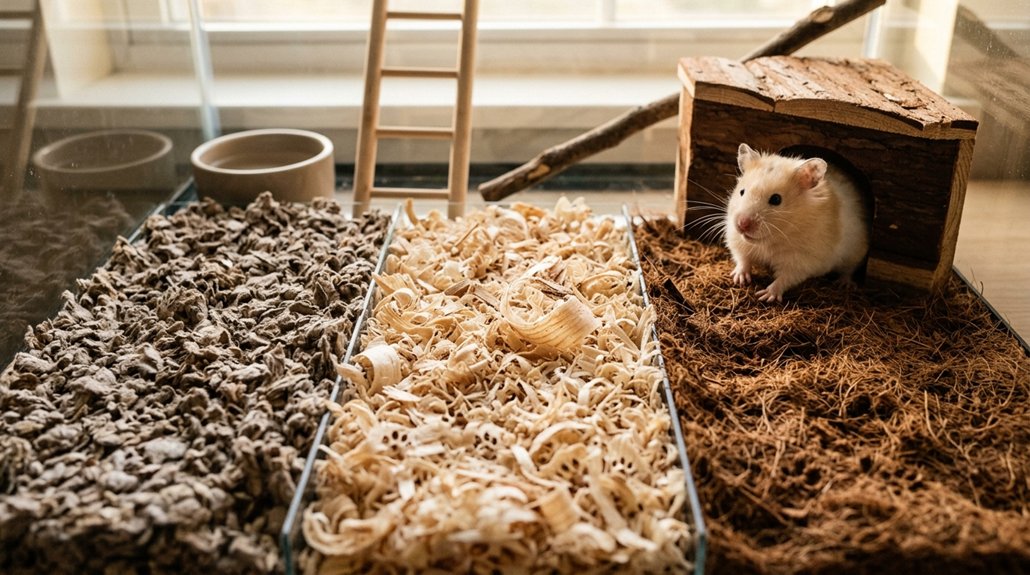
Choosing the best bedding for your hamster is essential for their comfort and health. Aim for paper-based options like Carefresh or Kaytee for their softness, absorbency, and eco-friendliness. Aspen shavings are another safe choice, providing low dust and excellent odor control. Avoid scented or aromatic wood beddings like cedar or pine that can harm your hamster’s respiratory system. Ensuring proper bedding lets your hamster thrive, and there’s so much more to explore.
Key Takeaways
- Paper-based beddings like Carefresh and Kaytee offer softness, absorbency, and are free from harmful chemicals.
- Aspen shavings are the safest wood-based option, providing odor control and a dust-free environment.
- Unscented bedding options reduce the risk of respiratory irritation and allergies in hamsters.
- Avoid aromatic wood beddings such as cedar and pine, which release harmful oils.
- Mixing paper-based with aspen shavings supports natural burrowing and improves habitat comfort.
Understanding Hamster Bedding Needs
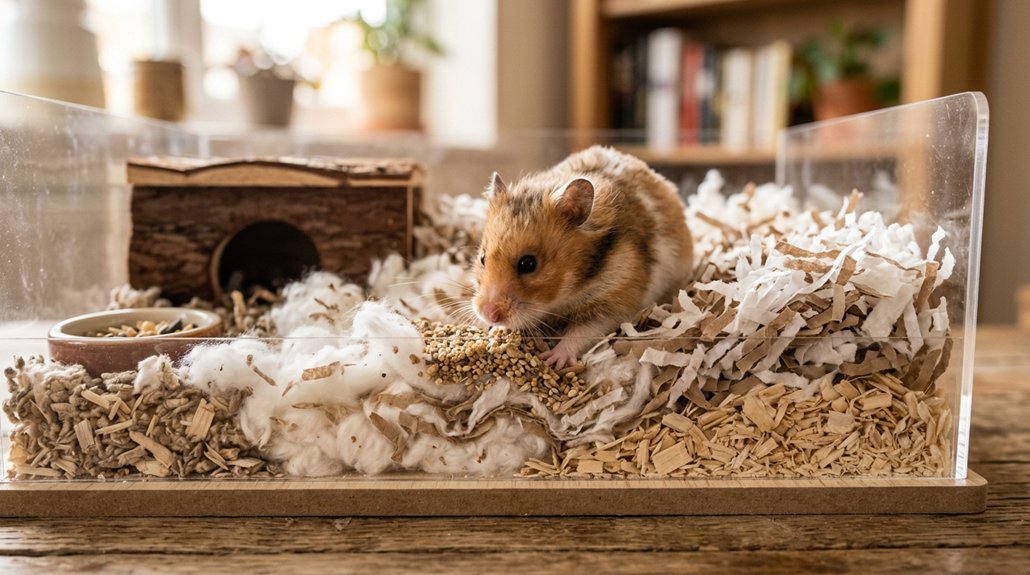
When it comes to ensuring your hamster’s happiness and health, understanding their bedding needs is essential. Your little friend’s environment should support their natural behaviors like burrowing, digging, and nesting. Opt for bedding that’s at least 6 inches deep; 10 inches is ideal for reducing stress. Consider paper-based options like Carefresh or Kaytee. These not only absorb moisture but also help maintain warmth and consistent bedding temperature, keeping your hamster cozy.
It’s vital that the bedding is low-dust and devoid of harmful chemicals to avoid respiratory issues. Aspen and hemp are excellent for absorbency and they’re hypoallergenic, reducing bedding odors and ensuring a fresh environment. Keep their habitat clean by changing the bedding weekly and performing daily spot cleanings.
How Much Bedding Do Hamsters Need?
Understanding your hamster’s bedding needs paves the way to determining exactly how much bedding they require for optimal well-being. A bedding depth of at least 6 inches is recommended, with 10 inches being ideal to support your hamster’s natural burrowing behavior. This allows them to dig and tunnel, activities that are critical for their mental and physical health. Adequate bedding depth reduces stress levels and mimics their natural habitat, providing a sense of security. If bedding is too shallow, your hamster might exhibit signs of stress and boredom since they can’t perform their instinctive behaviors. Regularly changing the bedding while maintaining this depth improves cleanliness and comfort, ensuring a happier, healthier pet. Encourage your hamster’s exploration and play by providing ample bedding.
What to Look for in Safe Hamster Bedding
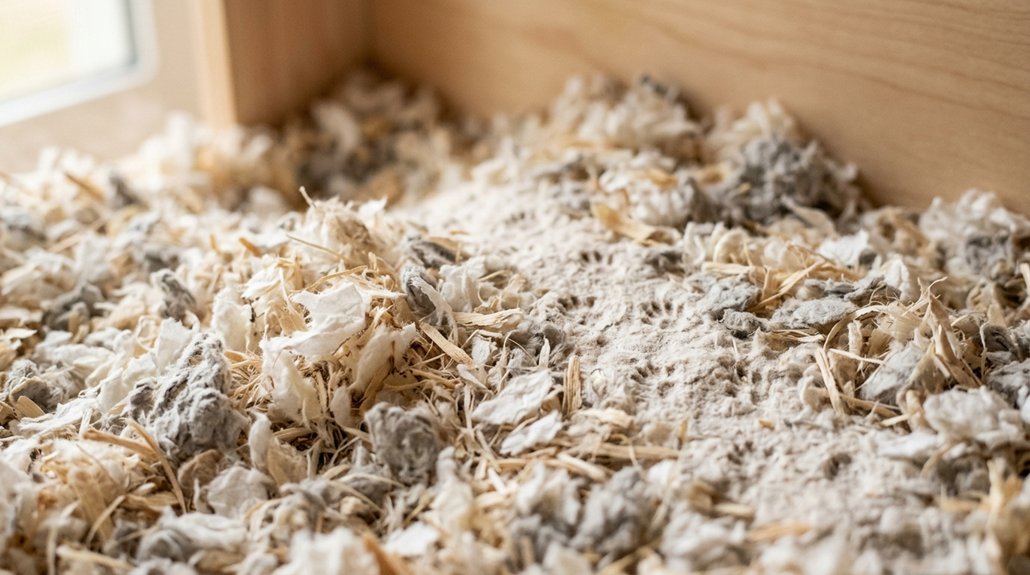
Choosing safe bedding for your hamster is essential for their health and happiness, especially considering their sensitive respiratory systems. In a bedding materials comparison, you’ll find that paper-based options like Carefresh and Kaytee stand out. They’re soft, absorbent, and perfect for facilitating nesting behaviors, providing warmth and excellent burrow-holding capacity. For a cleaner environment, kiln-dried aspen is another top pick due to its low dust and good odor control—just make sure you avoid pine and cedar shavings with harmful oils.
Consider your hamster’s natural instincts; a bedding depth of 6 to 10 inches encourages burrowing, promoting stress-free engagement. Always opt for unscented options to prevent respiratory irritation. By understanding these elements, you can create a cozy, safe home for your furry friend.
Top Safe Bedding Options for Hamsters
When selecting bedding for your hamster, consider paper-based options like Carefresh, Kaytee, and Fitch, as they’re great for holding burrow structures and keeping your pet warm. If you’re looking for wood-based bedding, aspen shavings are the only safe choice, offering good odor control and affordability, though they may cling to the fur of long-haired breeds. Keep in mind that each bedding has unique benefits, so choose one that best suits your hamster’s needs for comfort and safety.
Paper-Based Bedding Benefits
While selecting the best bedding for your hamster, you’ll find that paper-based options like Carefresh and Kaytee are top recommendations because of their multiple benefits. These beddings feature appealing bedding textures that encourage natural burrowing behavior, an essential activity for your hamster’s well-being. With color options available, you can personalize your hamster’s cage without worrying about respiratory irritants.
Their composition from recycled materials means they’re eco-friendly, ensuring a safe habitat free from harmful chemicals. Don’t forget to fluff the bedding upon unpacking; this prevents compaction and supports burrowing activities. Additionally, the soft, absorbent nature of paper-based beddings helps in mitigating the ammonia smell by absorbing urine effectively. This helps maintain a cleaner, healthier habitat for your furry friend.
Safe Wood Shavings Choices
If you’re considering wood shavings for your hamster’s bedding, prioritize safety by selecting aspen, the only wood-based option that’s consistently recognized as safe. Aspen shavings provide good odor control, a natural burrowing substrate, and have minimal dust, making them an excellent choice for your hamster’s health. Spruce shavings, with low phenol levels, can also be a safe option for many hamsters, but keep an eye out for allergies, especially in sensitive little ones.
Kiln-dried shavings reduce harmful oils and dust, ensuring a safer environment. Avoid pine and cedar entirely, as they contain dangerous aromatics. Enhancing aspen with paper-based layers can boost comfort and exploration. Here’s a comparison of popular bedding types:
| Type | Safety | Feature |
|---|---|---|
| Aspen | Safe | Odor control |
| Spruce | Conditionally Safe | Allergy cautious |
| Pine/Cedar | Unsafe | Avoid |
Deep Dive Into Paper-Based Bedding
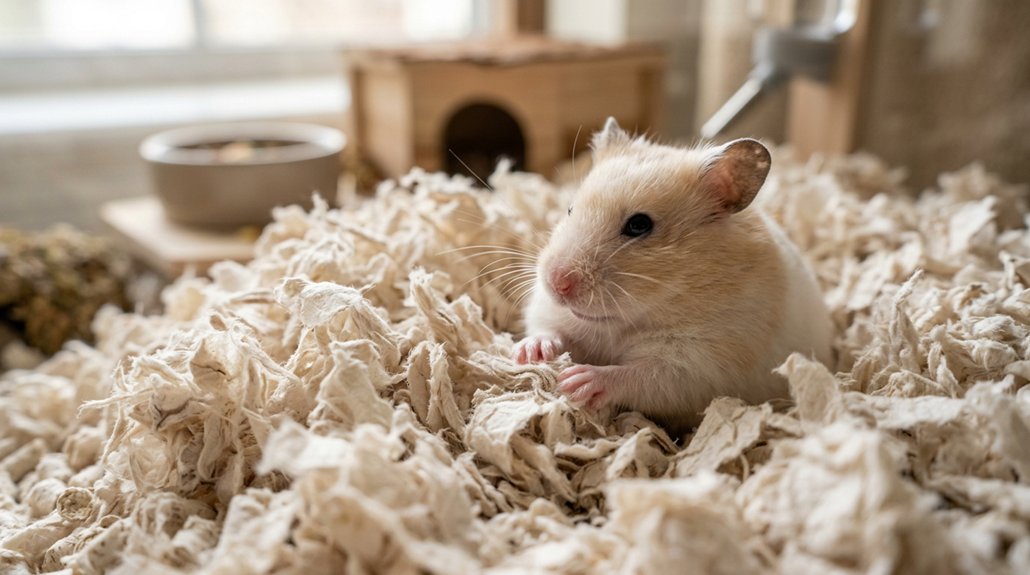
Exploring paper-based bedding options reveals a world of benefits for hamsters and enthusiasts alike, with choices such as Carefresh, Kaytee, and Megazorb leading the charge. These options are highly recommended due to their ability to support your pet’s natural burrowing behaviors. The advantages of paper bedding include excellent absorbency and effective ammonia odor control, ensuring a hygienic environment for your furry friend. The strong structure holds burrows well, providing both security and warmth, which can noticeably reduce stress levels. Remember to fluff the bedding after unpacking; this prevents compaction and makes tunneling a breeze. The variety of colors available lets you personalize your hamster’s habitat while ensuring safety, as all options are non-toxic. Your hamster’s comfort and health both benefit from this thoughtful choice.
Avoid These Dangerous Bedding Types for Your Hamster’s Health
When selecting bedding for your hamster, it’s essential to avoid options that could harm their health. Cedar and pine shavings might seem convenient, but they release aromatic oils that lead to respiratory problems and allergies. Additionally, steer clear of fluffy materials like cotton wool and scented options, as they pose severe risks of intestinal blockages and respiratory irritation.
Harmful Aromatic Wood Bedding
Though it might seem like a natural choice, using aromatic wood bedding like cedar and pine for your hamster can be quite harmful. These woods release aromatic oils such as Plicatic acid and Abietic acid, which can cause significant respiratory issues. Your hamster’s delicate respiratory system can become irritated, leading to infections and allergies. It’s essential to recognize that while these options are marketed as “natural” or “pleasant-smelling,” they pose substantial health risks.
Additionally, the fine particles in these types of bedding can exacerbate breathing difficulties. Conduct a simple “shake test” to check for dust visibility. If you see a dust cloud, it’s best avoided. Choosing safer, dust-free beddings will help preserve your little pet’s health and keep them breathing easy.
Risky Fluffy Nesting Materials
Avoiding fluffy nesting materials is essential to guarantee the safety and well-being of your hamster. Fluffy bedding dangers like cotton wool and bamboo fluff pose serious risks. These materials can wrap around your hamster’s legs, causing injuries, or worse, lead to gut blockages if swallowed. Reputable organizations strongly caution against such bedding due to potential respiratory problems caused by inhaling fine particles, endangering your pet’s health. Moreover, artificial fibers in these materials often result in intestinal blockages, a life-threatening concern.
For your hamster’s health and comfort, consider nesting material alternatives like paper-based or aspen bedding. These options not only avoid health hazards but also support your hamster’s natural burrowing instincts, contributing to their psychological well-being. Make a safer choice for your furry friend.
Hazardous Scented Bedding Options
Many pet owners are unaware that scented bedding, although seemingly pleasant, can pose significant health risks to hamsters. Scented bedding dangers are real; your hamster’s delicate respiratory health can suffer due to strong fragrances. These scents might mask odors, but they often lead to sneezing, coughing, and other respiratory ailments. Hamsters’ tiny noses are sensitive, and any exposure to harmful chemicals found in scented options can trigger severe allergic reactions or even cause long-term damage.
Manufacturers frequently don’t fully disclose harmful additives, making it essential for you to avoid these scented hazards. For the sake of your pet’s health, opt for unscented alternatives like paper-based bedding or kiln-dried aspen. These choices help guarantee your hamster thrives in a safe, healthy environment.
Signs Your Hamster Is Comfortable and Healthy
When it comes to ensuring your hamster feels comfortable and healthy, it’s important to pay attention to their behavior and environment. Observing hamster behavior is key; active signs like digging, burrowing, and exploring suggest your pet’s bedding preferences are well-suited, promoting natural instincts. A healthy hamster will sport a well-groomed coat and bright eyes, signifying that their bedding supports cleanliness and well-being.
Look for frequent wheel use and playful activities as indicators of contentment and security, reinforced by adequate bedding depth. Conversely, signs of stress such as excessive grooming or hiding might imply inadequate bedding. A good appetite and regular nesting indicate comfort, as absorbent, safe bedding supports health by providing warmth and reducing anxiety. Keep a watchful eye for these signs.
How to Transition to Safe Bedding
To guarantee your hamster remains comfortable and healthy, particularly in its bedding environment, it’s important to thoughtfully manage any changes you introduce. Employ gradual adjustment methods by mixing the new bedding with the old bedding over a week; this guarantees a smooth adaptation and maintains a comfortable environment. Monitor your hamster’s behavior closely for any signs of distress or dissatisfaction; it might signal an issue with the bedding type. Fluff up the new bedding to support your hamster’s natural burrowing instincts. Overlay a layer of safe, absorbent paper-based bedding on aspen shavings for coziness and security. Don’t forget to freeze the new bedding for 48 hours before introduction to eliminate pests and guarantee safety for your hamster’s comfort and wellbeing.
Frequently Asked Questions
What Type of Bedding Do Hamsters Prefer?
You’d want to focus on bedding materials that enhance hamster comfort. Opt for soft, absorbent, low-dust options like paper-based or hemp bedding. Avoid strong scents to guarantee their respiratory health and overall well-being isn’t compromised.
What Do I Put at the Bottom of My Hamster’s Cage?
You should use bedding materials like paper-based options or aspen shavings. To guarantee cage cleanliness, bedding maintenance is vital with regular spot cleans and weekly changes, keeping your hamster’s environment as pleasant as a summer’s breeze.
Can Hamsters Hear You?
Yes, hamsters can hear you. Their hearing’s incredibly sensitive to high-pitched sounds, allowing them to recognize familiar voices. Just remember, their sound sensitivity means loud noises may stress them out. Talk softly to comfort them.
What Should I Avoid for Hamster Bedding?
You should avoid using cedar and pine shavings, cotton wool, and any dusty or scented bedding. These materials contain harmful substances and aren’t safe for hamsters, causing respiratory issues or blockages. Opt for safer, non-toxic materials instead.
Conclusion
Choosing the right bedding for your hamster isn’t just a comfort matter—it’s essential for their health. Did you know that hamsters can spend up to 80% of their time burrowed in bedding? Opt for safe options like paper-based bedding that supports their natural burrowing instincts while keeping harmful chemicals at bay. Trust your furry friend’s signals; a happy, playful hamster is your best indicator you’ve got it right. Shift slowly, and they’ll thrive in their cozy, new habitat.