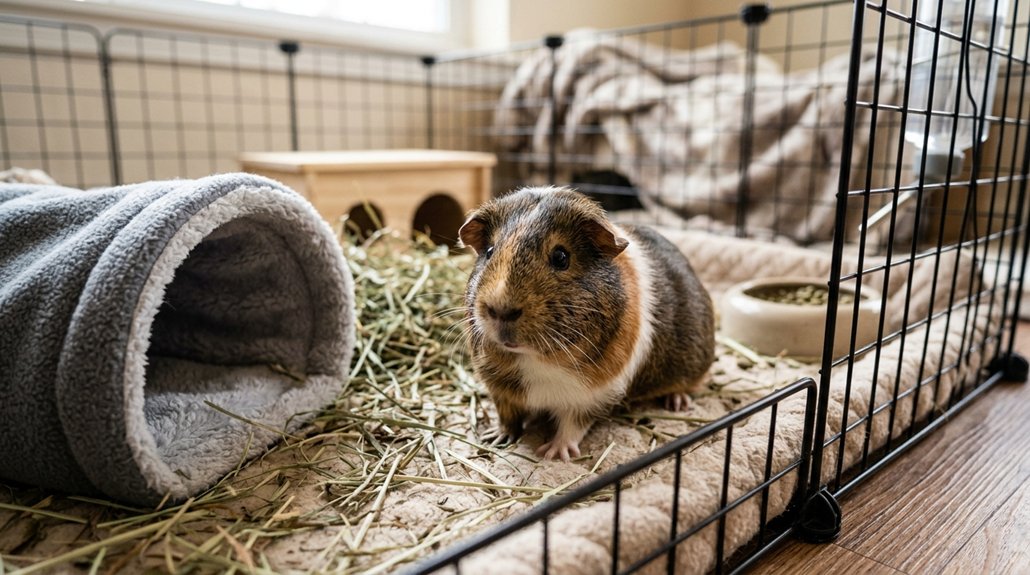
To guarantee your guinea pig’s health and happiness, start with a cage measuring at least 7.5 square feet for one guinea pig, and expand to 16 square feet for four. Larger spaces support exercise, reduce stress, and encourage social interaction, enhancing your pet’s well-being. Choose between single-level and multi-level designs, ensuring safe ramps, and add soft bedding for comfort. By exploring more, you’ll discover how thoughtful cage customization can further improve your guinea pig’s life.
Key Takeaways
- A single guinea pig requires at least 7.5 square feet, ideally 10.5 square feet for optimal comfort.
- Two guinea pigs need a minimum of 10.5 square feet, but 13 square feet is preferred.
- Three guinea pigs should have at least 13 square feet, with 16 square feet being ideal.
- Larger cages reduce obesity, heart disease risks, and enhance guinea pigs’ psychological well-being.
- Multi-level cages can provide mental stimulation, but safety features are essential due to poor guinea pig eyesight.
Minimum Cage Size Guidelines for Guinea Pigs
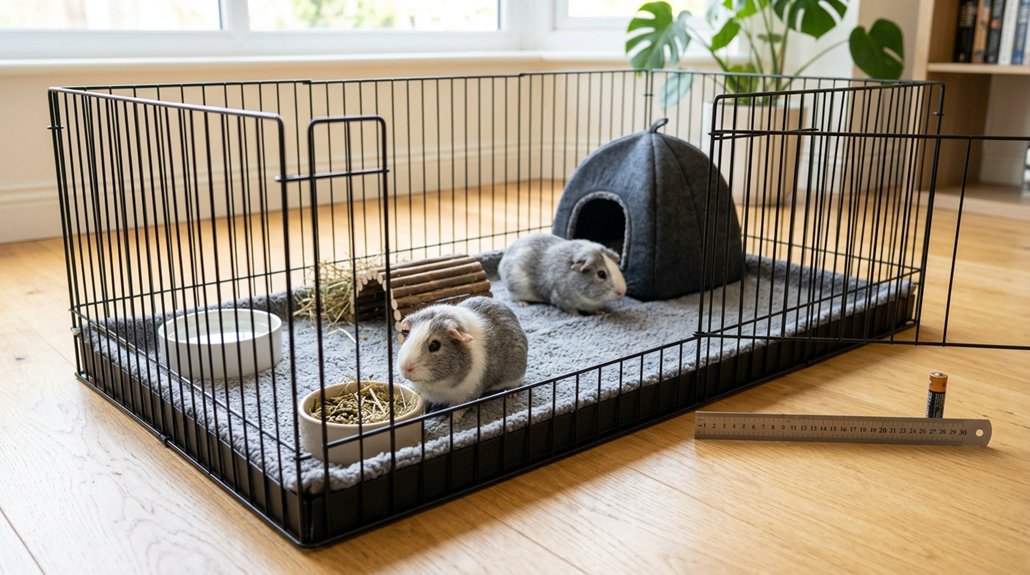
When considering the space requirements for guinea pigs, it is crucial to adhere to scientifically-backed guidelines that guarantee their well-being. For a single guinea pig, a minimum cage size of 7.5 square feet is advised, but maximizing guinea pig comfort means aiming for 10.5 square feet. Cage dimensions increase in complexity with more pigs. Two guinea pigs should share at least 10.5 square feet, while 13 square feet is ideal to foster social interaction. With three guinea pigs, a minimum of 13 square feet is necessary, and 16 square feet enhances comfort. Four guinea pigs benefit from a 16 square feet minimum, providing ample exercise space. Larger cage dimensions optimize guinea pig comfort, supporting active and social behavior seamlessly.
Why Cage Size Significantly Impacts Guinea Pig Health
Understanding the impact of cage size on guinea pig health is vital, as adequate space directly supports their natural behaviors and overall well-being. A properly sized cage isn’t just a luxury—it’s a necessity to avert significant health risks. Consider these points seriously:
- Behavioral Impact: Space encourages exercise and exploration, reducing destructive actions stemming from boredom.
- Health Risks: Larger areas lessen obesity and heart disease risks, common in restricted environments.
- Social Dynamics: Adequate space decreases stress and aggression, especially among males, by preventing overcrowding.
- Mental Well-being: More room facilitates social interaction, which is essential for their psychological health.
Increasing your guinea pig’s cage size directly enhances their happiness and longevity, providing a healthier, stress-free environment.
Advantages of Larger Cages for Guinea Pigs
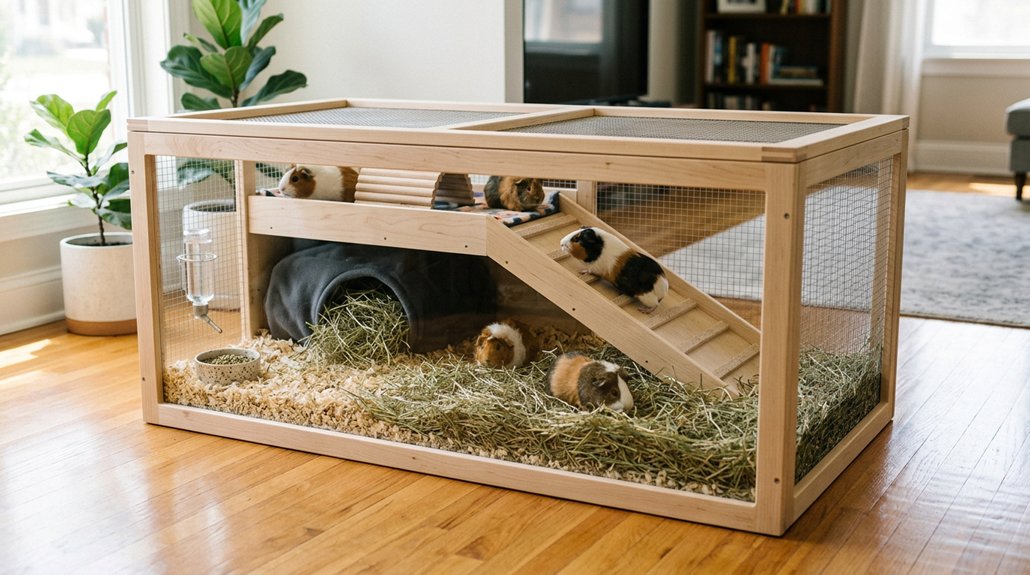
While choosing the right cage for your guinea pig, it’s crucial to take into account the numerous advantages larger enclosures provide. Larger cages greatly boost your pet’s physical activity and exercise levels, essential for health. With ample space, guinea pigs exhibit natural behaviors like exploring and foraging, thereby reducing stress and boredom. Additionally, a larger living area minimizes fighting by promoting more harmonious social interactions among your guinea pigs. Offering separate retreat areas aligns with their social nature, allowing them to interact when desired or enjoy solitude. This living arrangement improves health outcomes, lowering risks of obesity, heart disease, and associated issues. Ultimately, a larger cage leads to a happier, healthier environment for your furry friend.
Single-Level vs. Multi-Level Cages for Guinea Pigs
When choosing between single-level and multi-level cages for your guinea pigs, it’s essential to weigh safety, space, and stimulation. Single-level cages offer generous floor space ideal for exercise, while a well-designed multi-level cage can enhance mental and visual engagement if it includes covered ramps and secure edges. Make certain that your choice aligns with your guinea pig’s natural behaviors and safety needs to foster a healthy environment.
Safety Considerations for Levels
Though offering a multi-level cage for your guinea pigs might seem like an attractive option to enhance their habitat, it’s essential to take into account safety as a top priority. Guaranteeing ramp safety is critical since guinea pigs’ poor eyesight necessitates effective visibility features. For a secure multi-level setup, consider these fundamental points:
- Ramp Safety: Use gentle, covered ramps with non-slip surfaces to safeguard against falls and protect their delicate feet.
- Visibility Features: Design levels to guarantee guinea pigs can easily see all areas, aiding navigation despite their poor vision.
- Structural Integrity: Check for and eliminate any gaps or openings that could pose a risk for slips or falls.
- Regular Monitoring: Observe your guinea pigs’ usage of levels to guarantee their comfort and safety consistently.
Space Optimization Benefits
Evaluating cage types for guinea pigs, you’ll find that both single and multi-level setups offer distinct advantages when it comes to space optimization. Single-level cages excel in space utilization by providing ample floor space, which is fundamental for guinea pigs. This approach aids in maintaining peace among companions and simplifies floor planning, ensuring easier maintenance and enhanced hygiene. In contrast, multi-level cages make use of vertical space, encouraging exploration and physical activity, which is important for your pet’s well-being. However, their design must prioritize safety and visibility due to guinea pigs’ limited eyesight. Regardless of design, it’s critical that your cage surpasses the minimum floor space—10.5 square feet for two pigs—guaranteeing sufficient room for free movement and enrichment.
Visual and Mental Stimulation
Providing visual and mental stimulation is key to a guinea pig’s well-being, whether you choose a single-level or multi-level cage. Single-level cages offer ample floor space, promoting natural exploratory activities and minimizing confusion. Multi-level cages, if designed safely with covered ramps and secure structures, can provide diverse environments enhancing sensory enrichment. The important thing is to guarantee there’s:
- Visible roaming space: Single-level cages enhance guinea pigs’ natural exploration.
- Secure environments: Multi-level setups need precautions to prevent falls.
- Activity areas: Adequate multi-level space allows for foraging and resting, boosting mental stimulation.
- Social engagement: Multi-level cages afford varying perspectives, supporting social interactions.
Safety, visibility, and comfort in cage design are paramount, with both configurations enhancing guinea pigs’ happiness.
Optimizing Cage Comfort With Bedding and Accessories
To optimize your guinea pig’s cage comfort, consider using soft fleece liners that wick moisture away, minimizing the risk of infections and making cleaning easier. Prioritizing health through appropriate bedding is essential; aim for 2 to 3 inches of absorbent paper-based materials to protect their delicate feet. Incorporate engaging accessories like a designated hay-filled “kitchen” area to promote hygiene and enrich their environment while regular cleaning keeps the space fresh and healthy.
Enhance Comfort With Fleece
- Select High-Quality Fleece: Products like the GuineaDad Premium Liner, featuring AirCell™ technology, provide ideal cushioning.
- Create Layered Systems: Combine fleece with absorbent underpads to enhance moisture control.
- Ensure Regular Cleaning: Washing fleece liners frequently prevents odor and maintains hygiene.
- Monitor Bedding Wear: Regular checks for wear and tear will prolong your liner’s life and prevent discomfort.
Prioritize Health Through Bedding
When considering your guinea pig’s well-being, bedding selection is vital, as it directly influences their health by maintaining a dry and odor-free environment. Choose bedding materials wisely to enhance moisture management and comfort. Fleece liners excel in wicking moisture away effectively, offering a soft, gentle surface for guinea pigs’ feet. Avoid bedding with toxic chemicals such as cedar and pine; instead, select safe alternatives like kiln-dried pine or aspen shavings. Guarantee at least 2 to 3 inches of absorbent bedding for ideal moisture absorption, promoting cleanliness and health. Regular maintenance is essential—perform daily spot cleaning and full weekly changes to maintain hygiene, directly supporting your guinea pig’s overall well-being. A well-managed environment means a healthier pet.
Include Engaging Cage Accessories
Choosing engaging cage accessories plays an essential role in enhancing your guinea pig’s living space, guaranteeing both comfort and enrichment. Prioritize soft fleece liners for comfort, preventing infections and irritation. Create a versatile environment by incorporating a range of accessories that blend interactive toys with creative layouts. These enhancements cater to your guinea pig’s instinctual needs, boosting mental stimulation and curbing boredom. Consider these scientifically-supported ideas:
- Tunnel Systems: Encourage exploration and hideout opportunities.
- Hideouts: Stimulate natural behaviors, enhancing mental well-being.
- Designated Kitchen Areas: Facilitate cleanliness and organized living spaces.
- Absorbent Bedding: Promote ideal hygiene by absorbing moisture and odors effectively.
Rotate and update accessories regularly to promote exercise and prevent obesity, maintaining a healthy, lively environment.
Finding the Perfect Spot for Your Guinea Pig Cage
Locating the perfect spot for your guinea pig cage is essential for their comfort and well-being. The cage location should be in a quiet area of your home, avoiding places with direct sunlight, drafts, and loud noises. This placement reduces stress and enhances your guinea pig’s happiness. Pay attention to the ambient temperature; make sure it stays between 65 and 75 degrees Fahrenheit. Avoid heat sources and unheated spots, like garages, to maintain a stable climate. Position the cage in a well-visited area to encourage social interaction, but make sure there are quiet retreat options available. Keep the cage away from hazards such as other pets and power cords. Regularly monitor for environmental changes that might create distractions or disturbances.
Customizing Cages for Growing Guinea Pig Families
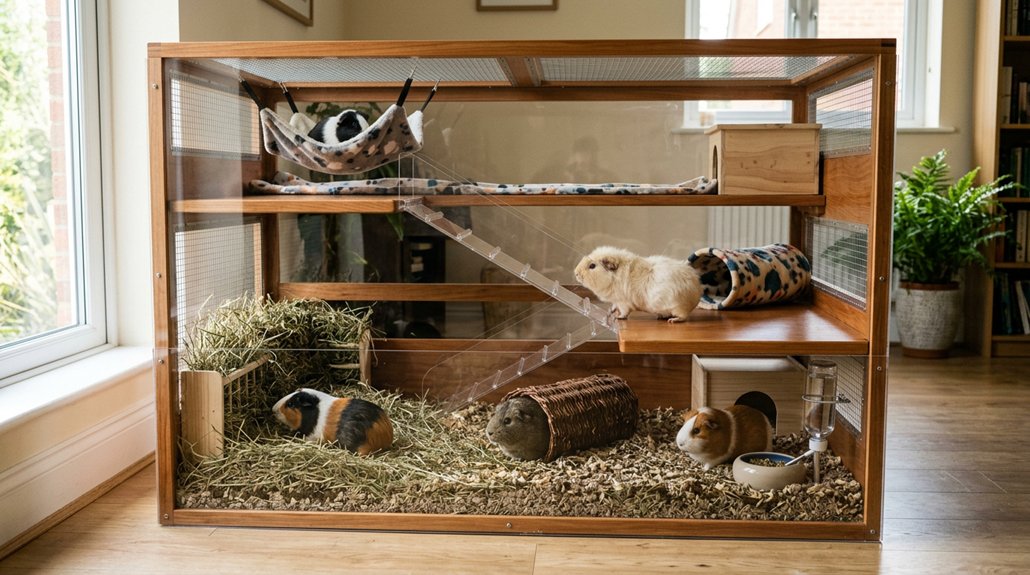
After finding the perfect spot to place your guinea pig cage, it’s also important to reflect on the specific needs of expanding guinea pig families. As the family dynamics evolve, custom layouts become essential. Here are key points to take into account:
- Space Requirements: For two guinea pigs, guarantee at least 10.5 square feet; for three, 13 square feet is minimal.
- Flexibility with C&C Cages: These allow you to modify and expand the enclosure, accommodating growing families.
- Social Dynamics: Creating separate areas, like hideouts and sleeping zones, reduces conflict and respects guinea pigs’ social behaviors.
- Health and Well-being: Regularly reassess and resize the cage, promoting exercise, exploration, and natural behaviors.
Frequently Asked Questions
What Is the Ideal Size for a Guinea Pig Cage?
You’ll want a guinea pig cage with dimensions providing at least 10.5 square feet of living space per pig for ideal health. If you’ve more pigs, expand accordingly, ensuring they’re comfortable to promote their well-being and social behavior.
What Is the Main Cause of Death in Guinea Pigs?
You might think lack of proper space is a big concern, but respiratory disease remains the main cause of death in guinea pigs. Poor ventilation and insufficient cage hygiene exacerbate common illnesses, severely affecting guinea pig health.
Is a 2×4 Cage Big Enough for 2 Guinea Pigs?
Yes, a 2×4 cage meets the minimum cage dimensions for two guinea pigs, offering 8 square feet. However, larger spaces enhance guinea pig comfort by promoting healthy behaviors like foraging, exercising, and reducing stress for better well-being.
Is 10 Square Feet Enough for 2 Guinea Pigs?
10 square feet isn’t enough for two guinea pigs. Think of them like marathoners needing space. Quality cage materials are essential too; without enough room, they might become stressed and underactive, increasing space requirements for a healthier lifestyle.
Conclusion
Coincidentally, your guinea pig’s well-being coincides with the size and setup of its cage. The larger the cage, the healthier and happier your pet becomes; it’s backed by science. Opt for a single or multi-level cage, but don’t skimp on comfort. Add soft bedding and enriching accessories. Place the cage in an ideal spot for ventilation and interaction. As your guinea pig family grows, customize their living space accordingly. Your dedication directly impacts their health and joy.