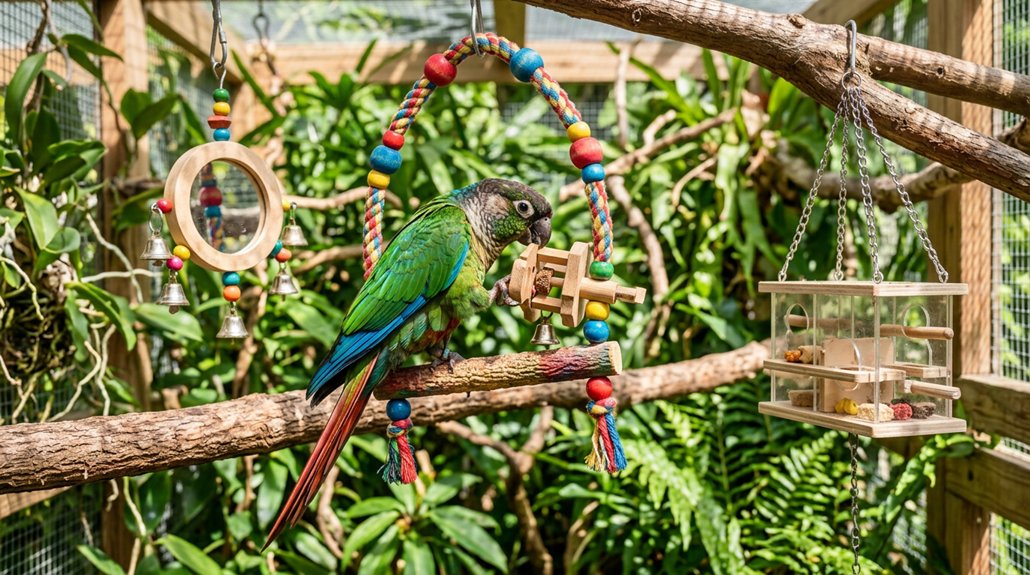
Keep your bird mentally stimulated by giving daily foraging tasks, rotating toys every 7–14 days, and turning at least one meal into a puzzle or scatter-feed. Offer short training sessions, supervised out-of-cage time, and regular social interaction to keep their brain engaged. Rearrange perches, bowls, and fixtures to encourage exploration. Watch for boredom signs like screaming, pacing, feather-plucking, or withdrawal, and adjust enrichment if your bird seems stressed or loses interest. There’s more to fine-tune next.
Key Takeaways
- Rotate foraging toys and puzzle feeders weekly so your bird must search, manipulate, and solve new challenges.
- Turn at least one daily meal into a foraging task to encourage natural food-finding behavior and movement.
- Change toys, perches, and cage layout every 7–14 days to prevent boredom and promote exploration.
- Offer safe shredding and chewing materials like untreated cardboard, paper, wood, or natural fibers.
- Use short daily training and supervised out-of-cage interaction to provide social, mental, and cognitive stimulation.
Why Birds Get Bored Indoors
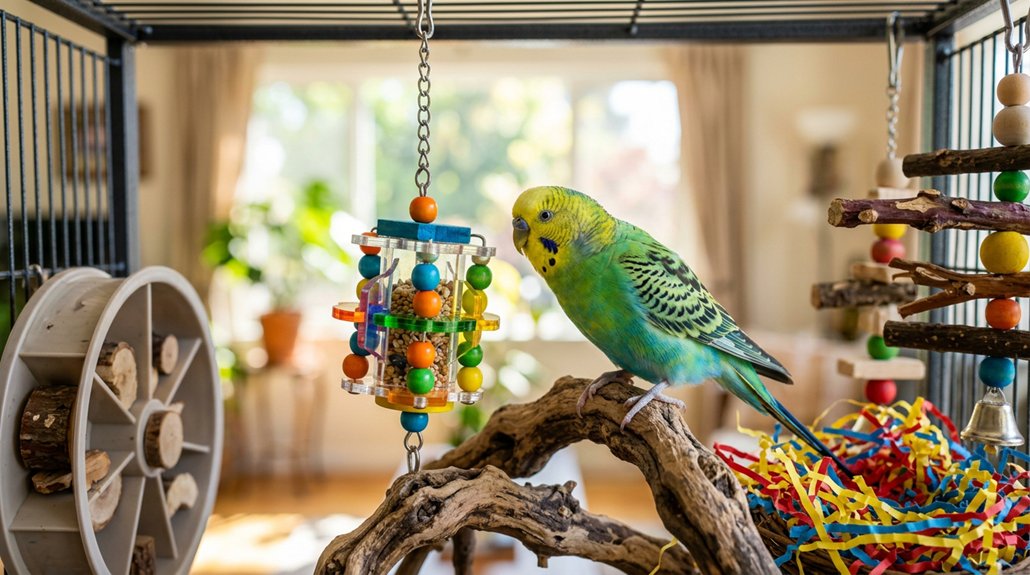
Birds often become bored indoors because captivity removes many of the daily demands that keep them engaged in the wild, such as long-distance flight, wide-ranging foraging, and frequent social contact with other birds. When you keep a bird in a small, unchanging space, you reduce exploration, problem-solving, and exercise. Without foraging tasks, your bird doesn’t get the search-and-retrieve work that wild birds perform constantly. Repeated toys and routines can be familiar within days, so stimulation drops quickly. Limited contact with conspecifics or varied companions can add social stress. Indoor conditions may also soften seasonal cues, and urban lighting can further disrupt normal rhythms. This doesn’t mean your bird is failing; it means the environment needs more variety, challenge, and predictable opportunities for safe engagement.
Signs Your Bird Needs More Stimulation
You may notice boredom warning signs such as feather plucking, bald patches, excessive preening, or destructive chewing, and these can indicate that your bird needs more mental stimulation. Restlessness, persistent screaming, repetitive vocalizations, pacing, circling, or swaying may also reflect chronic under-stimulation. If your bird becomes withdrawn, loses interest in toys or people, or shows sudden aggression, it’s a sign to increase enrichment and review daily activities.
Boredom Warning Signs
When a bird isn’t getting enough mental stimulation, the signs often show up in behavior before they become obvious in health. You may notice feather plucking or excessive preening cues beyond normal grooming, which can be painful and often means your bird needs more enrichment. Persistent screaming, repetitive calls, or nighttime vocalizing may reflect frustration and insufficient activity. Pacing, route-stepping, or circling the cage are stereotypic patterns linked to under-stimulation. Destructive chewing of toys, perches, or cage accessories, especially when interest in varied toys drops, can signal boredom-driven searching for input. Withdrawal, increased aggression, or refusing training and interaction may show cognitive understimulation. These changes don’t confirm a diagnosis on their own, but they’re important warning signs. If you see them, review your bird’s daily enrichment and routines promptly.
Stress and Restlessness
Restlessness often shows up as repetitive pacing, route tracing, or prolonged wing-flapping, and these behaviors usually mean your bird needs more mental stimulation. Watch for these signs:
- Feather-plucking or over-preening, especially on the chest or flank.
- Loud, persistent screaming or repetitive vocalizations beyond species-typical calls.
- Withdrawal, reduced play, or loss of interest in toys and mimicry.
- Weight loss, fluffed posture, lethargy, aggression, or self-mutilation.
These changes can reflect stress, boredom, or unmet cognitive needs. Check environmental cues, such as changes in light, noise, or social contact, and review nocturnal habits that may be disrupting sleep. You can usually improve comfort with enrichment, but chronic signs, or any physical decline, warrant prompt veterinary evaluation.
Keep Your Bird Mentally Stimulated
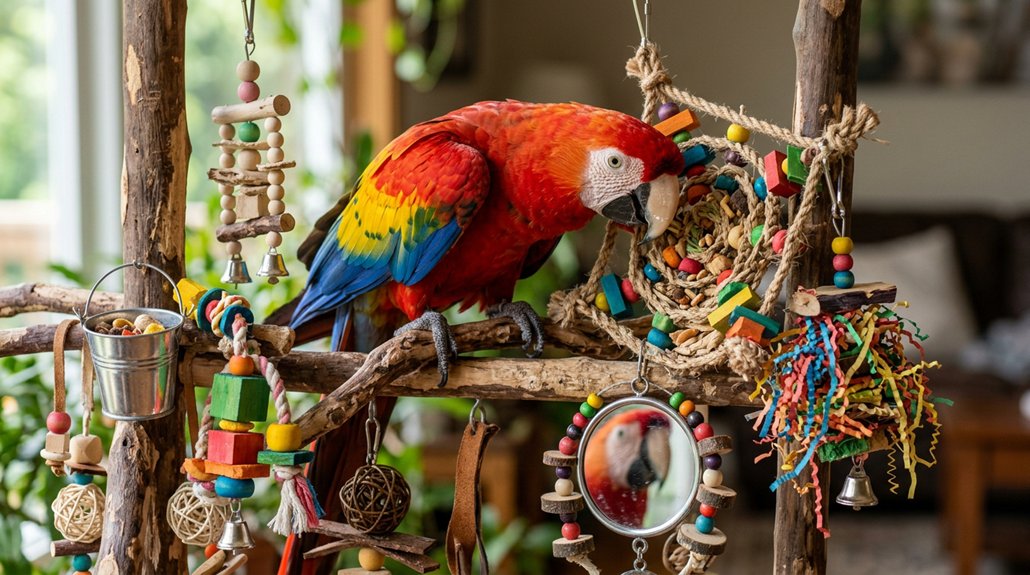
You can keep your bird mentally engaged by rotating foraging toys and puzzle feeders each week, which helps preserve novelty and supports natural food-seeking behavior. Short daily training sessions of 5–10 minutes, using positive reinforcement, can strengthen learning and provide focused cognitive stimulation. These routines are practical, well tolerated, and can be adjusted to your bird’s individual activity level and response.
Engaging Foraging Toys
Foraging toys are a practical way to mimic natural feeding and keep your bird mentally engaged by hiding treats in puzzles, tubes, or shreddable nests that require problem-solving and dexterity to reach food. This sensory enrichment can reduce boredom and stereotypies while supporting healthy activity. Rotate devices weekly and vary treats to preserve novelty. 1. Start with simple cups or treat balls for cockatiels. 2. Use lock-and-key or sliding DIY puzzles for African greys and macaws. 3. Place toys on perches or around the room to encourage movement. 4. Supervise new items, especially homemade ones made from paper rolls, sisal, leather, or untreated wood. Choose stainless steel or safe plastics, avoid long strings, and offer several short sessions each day.
Daily Training Sessions
Daily training sessions can keep your bird mentally sharp when they’re brief, structured, and rewarding. Use 5–15 minutes daily to teach one new cue with positive reinforcement, such as clicker conditioning for target touching or a word. Repeat each cue 10–20 times with small fruit or pellet rewards to strengthen memory.
| Focus | Example |
|---|---|
| Cognitive | Shape or switch puzzles |
| Motor | Step-up, target touch |
| Vocal | Word practice, mirror play |
Rotate the emphasis each day to engage different brain areas and limit boredom. Keep sessions predictable, but vary location, props, or treats every 1–2 weeks to refresh motivation. End with a mastered cue and reward so your bird finishes calmly, confident, and more bonded to you.
Use Foraging Toys to Challenge Your Bird
Toys that require birds to work for food can help channel natural foraging instincts into healthy mental exercise. You’ll reduce boredom by using interactive puzzles and scent enrichment cues that invite problem-solving without stress.
Foraging toys channel natural instincts into healthy mental exercise, reducing boredom through interactive, stress-free problem-solving.
- Offer treat-dispensing balls, puzzle feeders, or shredded-paper boxes.
- Use small fruit pieces, unsalted nuts, or pellets, and limit easy access to food.
- Match difficulty to your bird: African Greys may need multi-step tasks, while cockatiels often prefer pull-and-tear designs.
- Choose bird-safe materials, such as stainless steel, untreated wood, sisal, or leather, and inspect them regularly.
As skills improve, you can increase complexity gradually. This keeps foraging meaningful, supports healthy daily activity, and helps prevent harmful, boredom-related behaviors.
Rotate Toys for Mental Stimulation
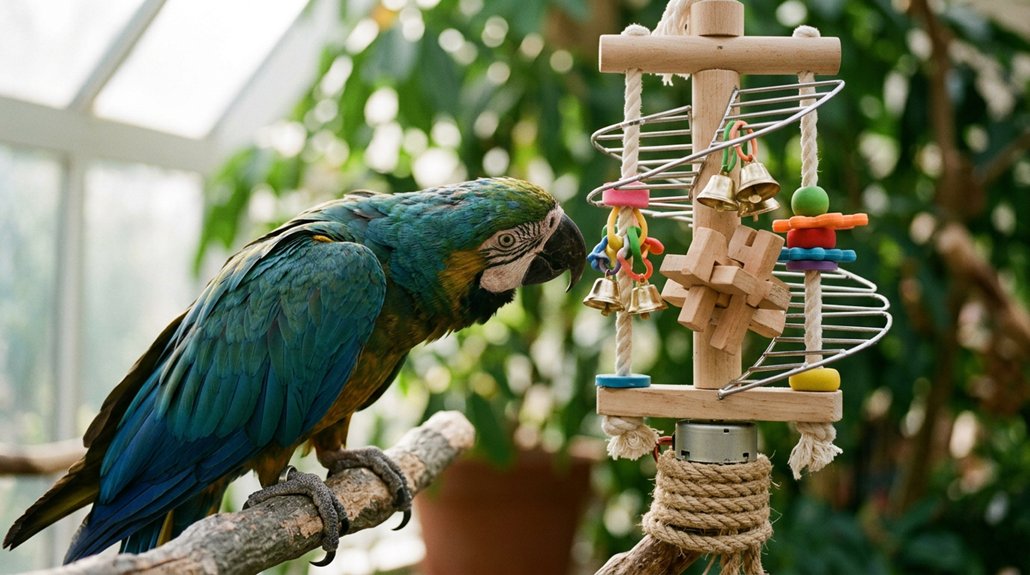
You should rotate your bird’s toys every 7–14 days to maintain novelty and reduce habituation, with weekly or biweekly changes often working well. Keep 6–10 safe toys on hand and swap 2–3 at a time, so the cage feels new without becoming overwhelming. Rearranging perches and toy positions can further increase exploration, and you should inspect each item for wear, secure fittings, and other safety issues before reuse.
Weekly Toy Rotation
Every 7–14 days, rotate your bird’s toys to preserve novelty and reduce habituation, which helps mimic the changing stimulation birds encounter in the wild. Keep seasonal themes and sensory variation in mind so each cycle feels different yet safe. Maintain a balanced set of foraging puzzles, shreddables, chewable wood, and mechanical toys.
- Remove toys that’ve lost appeal.
- Store them out of sight for 1–2 weeks.
- Clean, inspect, and discard worn or unsafe parts.
- Reintroduce toys that still support active play.
Track engagement by timing interaction; if a toy gets less than 10–15 minutes of active use daily, replace or rotate it sooner. Using stainless steel, sisal, or safe plastics helps keep the rotation both stimulating and reassuring.
Novel Cage Arrangements
A weekly shift in cage layout can refresh your bird’s environment and reduce habituation just as effectively as rotating toys alone. You should alter perch placement, food bowls, ladders, and other fixtures every 7–14 days to prompt exploration and prevent routine from becoming predictable. This change can create the same interest spike as a new toy, especially when paired with sensory lighting that varies the visual field without causing stress. Keep a rotation stash of cleaned, inspected items, and add one unfamiliar or modified object each cycle. Match foraging puzzles to your bird’s current skill, moving from easy to multi-step tasks. Use varied textures, including wood, leather, stainless steel, sisal, and paper, because preference affects engagement and manipulation.
Add Safe Shredding and Chewing Options
Offer a rotating mix of bird-safe shredding and chewing materials to keep your bird engaged and prevent boredom. You can alternate untreated cardboard, clean paper towel tubes, coconut fiber, and phone books, then refresh them weekly to reduce habituation.
Rotate bird-safe shredding materials weekly to keep your bird engaged and prevent boredom.
- Offer natural fibers, woven palm, or seagrass toys to support varied chewing styles.
- Provide untreated hardwood blocks, such as apple or beech, plus softer woods for shredding.
- Use stainless-steel or nylon hardware only, and check every fastening for firmness.
- Replace frayed ropes, loose threads, or detached pieces immediately.
Occasional edible sticks, dried corn cobs, millet sprays, or whole-grain bread twists can add controlled foraging value. Monitor chewing sessions closely so you can remove any item that becomes a choking risk or could be swallowed safely.
Make Mealtime a Mental Workout
Turn at least one daily meal into a foraging task by hiding pellets or chopped fruit in a puzzle toy or paper-wrapped bundle so your bird has to work for 10–20 minutes to reach the food. You can scatter the rest of the ration across several foraging stations or perches to promote movement and up to an hour of active searching. Timed dispensers, such as food puzzles, support repeated manipulation and divide feeding into brief problem-solving sessions. Offer whole, manipulable items, including unshelled nuts or whole corn cobs, to engage the beak and mind. Rotate puzzle types, hide locations, and sensory textures every 7–14 days. Vary flavors, too. This keeps mealtime novel, reduces habituation, and helps you maintain steady mental stimulation without increasing stress.
Give Your Bird More Social Interaction
Social stimulation matters just as much as food-based enrichment, because most birds are built to learn, communicate, and bond within a flock. You should give at least one hour of supervised out-of-cage interaction daily, then add brief training blocks to keep cognition active and reduce isolation.
- Use 5–15 minute sessions for words, cues, or tricks.
- Rotate caregivers to support multi caregiver bonding.
- Offer paired playdates only with calm, compatible birds.
- Build routines around talking, music, and shared foraging.
Watch feather posture, pupil changes, and vocal tone; they’ll tell you when interaction’s helpful or becoming too much. If your bird seems tense, shorten the session. If it stays engaged, continue calmly. Consistent social contact usually improves confidence, trust, and mental steadiness.
Create a Better Cage Environment
A stimulating cage environment should give your bird constant, low-stress opportunities to explore, forage, and move. You can improve this by rotating toys and perches weekly, so items feel new again after 7–14 days. Offer multiple foraging stations with puzzle feeders, hidden treats, or shredded paper and cardboard mazes to support daily searching. Use varied naturalistic perches, including natural wood branches, rope, and textured surfaces, spaced to encourage hopping and short flights. Place the cage near a window for daylight and safe outdoor views, but keep it out of direct midday sun. Add destructible toys and species-appropriate chewables, replacing worn items promptly. Soft ambient sounds can further enrich the setting without overstimulating your bird.
Adjust Enrichment Based on Response
Once the cage is set up, watch how your bird actually responds to each enrichment. Observe interest for 5–15 minutes; if it fades quickly, rotate or modify the item. Use behavior adjusted timers to compare sessions and note changes in screaming, pacing, or feather plucking over 1–2 weeks.
- If a foraging puzzle is solved in under 2 minutes, increase difficulty with smaller openings or more compartments.
- Watch for stress signs like fluffed feathers, avoidance, or frantic biting; then simplify or remove the enrichment immediately.
- Make preference based swaps in textures, sounds, and colors, since macaws may prefer shreddable wood and cockatiels plastic.
- Reintroduce gentler options after recovery, then reassess.
This measured approach keeps enrichment effective, safe, and appropriately challenging.
Frequently Asked Questions
How to Mentally Stimulate a Bird?
You can mentally stimulate your bird with foraging puzzles, scent enrichment, short training sessions, and regular toy rotation. Give supervised out-of-cage exercise, varied textures, and social interaction to keep it engaged, calm, and thriving.
What Is the 3 3 3 Rule for Birds?
You’re using the 3-3-3 rule: offer three enrichment types daily, rotate three toys or activities every three days, and give three interactive sessions each day. Like a balanced toolkit, it supports social bonding, habitat enrichment, and health.
How Do You Say “I Love You to Your Bird”?
You say it with soft words and a gentle tone, while offering calm eye contact, slow blinks, and a favorite treat or light petting. Repeat it daily in brief sessions so your bird learns affection and trust.
How to Cheer up a Depressed Bird?
You can cheer up your bird by offering foraging puzzles, rotating toys weekly, and providing daily supervised out-of-cage time. Use short, positive training sessions and watch for persistent signs; if needed, consult your avian veterinarian.
Conclusion
By keeping your bird mentally stimulated, you help prevent boredom from settling in like a shadow. You can do this by offering foraging toys, rotating enrichment, making mealtime more engaging, and increasing social interaction. Watch how your bird responds, then adjust the environment to match its needs. When you provide consistent, thoughtful stimulation, you’re supporting both your bird’s well-being and its natural curiosity, day after day.