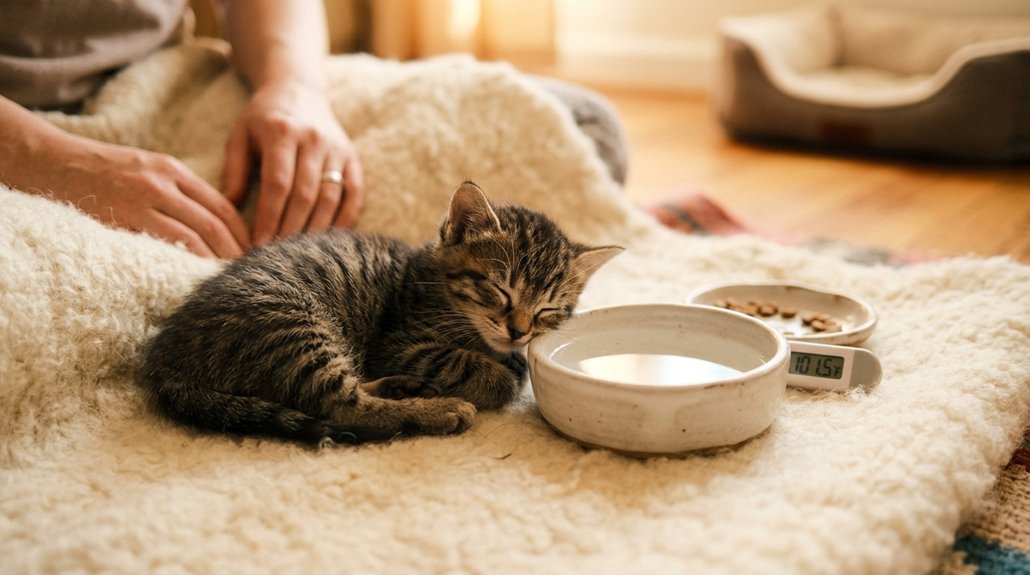
To keep your kitten healthy early on, secure your home environment by removing hazards and providing safe toys. Schedule regular vet visits for vaccinations, health assessments, and parasite prevention. Feed a specialized kitten diet with structured meals to meet their nutritional needs. Monitor their behavior and weight to detect health issues promptly. Promote physical and social skills through interactive play and exposure to new experiences. By addressing these key areas, you’ll guarantee your kitten’s robust development. Furthermore, there’s much more to uncover.
Key Takeaways
- Secure home hazards, including electrical cords and toxic plants, to prevent accidents and ingestion risks.
- Schedule regular vet visits for vaccinations, health assessments, and parasite prevention.
- Provide a balanced diet with specially formulated kitten food and limit treats to prevent obesity.
- Monitor daily behavior and weight for early detection of health issues or developmental concerns.
- Encourage play and socialization to support physical and emotional development.
Creating a Safe Home Environment
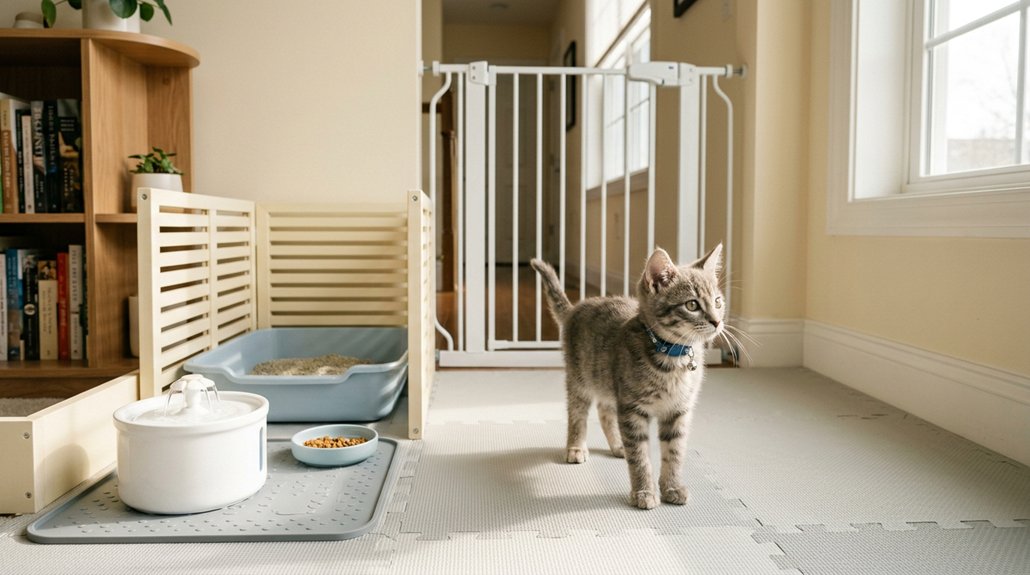
Creating a safe home environment for your kitten starts with attention to detail and a proactive approach to potential hazards. Begin by securing electrical cords and removing small objects that pose swallowing risks. Cover trash cans to limit access to harmful materials. One crucial kitten proofing tip is to assess your home for toxic plants. Many common houseplants are dangerous, so consult the ASPCA’s guide to identify and eliminate any potential threats. Create a cozy yet stimulating space complete with safe toys and a designated kitten zone. Regularly inspect high surfaces for hidden dangers and ascertain fragile items are secure. Also, provide a clean, unscented clumping litter box in a quiet area, guaranteeing easy access for your kitten’s needs.
Regular Vet Visits: Why They Matter
While guaranteeing a secure and stimulating environment at home forms the foundation of your kitten’s health, regular veterinary visits play an equally significant role. These visits are vital for staying on top of vaccine schedules, beginning at 6 to 8 weeks with vaccinations like FVRCP and Rabies to combat serious diseases. Regular health assessments by your veterinarian help configure a personalized care plan, including early detection of developmental concerns and validation of maternal immunity.
- Vaccination Timing: Begin core vaccinations between 6-8 weeks to provide robust protection.
- Parasite Prevention: Regular vet checks confirm necessary treatments are in place.
- Growth Monitoring: Measure and evaluate developmental milestones essential for long-term health.
Kitten Nutrition Best Practices
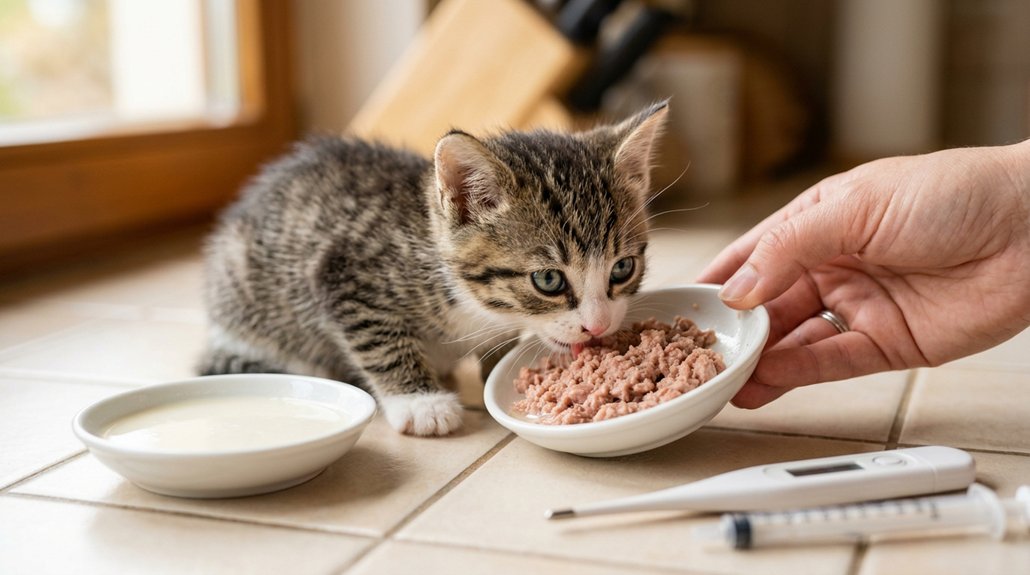
When considering kitten nutrition best practices, you should prioritize early diet essentials by selecting specifically formulated kitten food to meet their higher protein and calorie demands for growth. Shift them to solid food around 6 weeks of age, gradually replacing milk replacer with a semi-solid gruel, and guarantee to structure a balanced meal plan by feeding them 3 to 4 times daily. Consistently monitor their weight to gauge proper development, avoiding free-feeding to reduce the risk of obesity, and limit treats to no more than 10% of their daily calorie intake.
Early Diet Essentials
Providing a robust nutritional foundation is paramount during the early stages of a kitten’s life. Kittens exhibit unique dietary requirements essential for their development. Implementing a structured feeding schedule guarantees they receive the right nutrients consistently. Begin shifting them to solid food between 4-7 weeks with a semi-solid gruel. This method, crafted from kitten chow and milk replacer, supports nutritional development.
Monitoring their weight and growth is critical to adjust feeding as needed. Ensure they always have access to fresh, shallow water, fostering hydration habits. Avoid using cow’s or goat’s milk, which can cause digestive issues.
Key considerations include:
- Shift food around 4-7 weeks.
- Stick with kitten-specific milk replacers.
- Monitor growth and adjust feeding accordingly.
Balanced Meal Plans
For ideal growth and development, kittens require carefully balanced meal plans that address their higher protein and calorie needs. It’s essential to adhere to AAFCO standards for kitten feeding, ensuring they receive all necessary nutrients for robust muscle and organ function. Start shifting your kitten to solid food around six weeks with semi-solid gruel made from kitten chow and milk replacer, facilitating weaning. Implement strategic meal scheduling rather than free-feeding, curbing overindulgence and preventing obesity. Monitoring your kitten’s weight and health regularly is pivotal, adjusting portions to maintain an ideal body condition rather than focusing solely on scale numbers. Additionally, treats should be strictly limited to 10% of their daily caloric intake to sustain a balanced nutritional regimen.
Monitoring Health and Recognizing Issues
How can you guarantee that your kitten stays healthy and strong during those essential early weeks? Closely monitor their health and recognize potential issues promptly. Keep an eye out for illness symptoms like weakness, hypothermia, and diarrhea. These red flags require immediate veterinary attention to prevent severe complications. To confirm proper growth tracking, conduct regular weight checks since kittens grow rapidly during this stage. If you notice any deviations, consult with a vet.
Additionally, be mindful of “fading kitten syndrome,” which can affect kittens without obvious signs, often due to underlying congenital defects or nutritional deficiencies. A vigilant approach can make a significant difference in catching these issues early. Remember to provide a warm and secure environment to support the kittens’ overall health.
Vigilance for “fading kitten syndrome” is vital; early detection ensures better health by addressing congenital or nutritional issues.
- Monitor daily behavior
- Perform frequent weight checks
- Watch for early illness signs
Encouraging Activity and Socialization
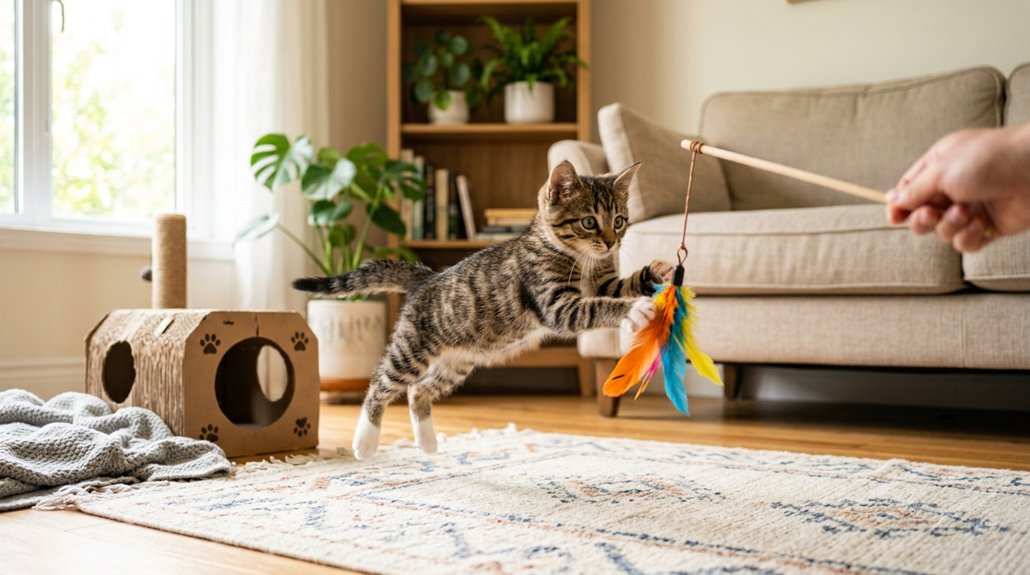
Although it might seem that kittens need ample rest, it’s equally vital to encourage regular activity and socialization to guarantee their holistic development. Interactive play is essential for developing their physical skills and fostering natural hunting behaviors. Focus on the critical socialization period between two and seven weeks—exposing them to various people and environments assures positive interaction skills. Utilize toys like feather dancers and balls to engage them mentally, preventing boredom and undesirable habits. Regular playtime also strengthens your bond, enhancing emotional well-being. Here’s a quick guide to help:
| Activity Type | Purpose |
|---|---|
| Feather dancer | Stimulates hunting instincts and physical skills |
| Balls | Encourages agility and problem-solving |
| Play with owner | Builds trust and emotional connection |
| New environments | Enhances adaptability and confidence |
| Meeting people | Develops social skills and reduces anxiety |
Essential Grooming for Health
Why is establishing a grooming routine vital for your kitten’s health? Grooming techniques help familiarize your kitten with handling, important for future vet visits and care. Implementing a consistent grooming frequency, particularly for medium- and long-haired kittens, can prevent matting and minimize shedding—keeping your home cleaner. Early introduction to dental care using a finger brush and pet-specific toothpaste fosters oral health, reducing the risk of future dental issues.
Incorporate these practices:
- Brush Regularly: Keeps fur tangle-free and manages shedding.
- Dental Care: Introduce brushing early to guarantee oral hygiene.
- Ear Cleaning: Gently remove wax buildup without inserting objects.
Use positive reinforcement, like treats and praise, during grooming sessions to create a positive experience, facilitating smoother future grooming processes.
Frequently Asked Questions
What Is the 3-3-3 Rule for Kittens?
The 3-3-3 rule guides you through your kitten’s adjustment: three days hiding, three weeks exploring, three months bonding. Focus on socialization tips and guarantee early health care to support your kitten’s smooth shift into your home.
What Is “I Love You” in Cat Language?
“I love you” in feline communication involves slow blinking, a soft purr, or gentle kneading. These cat expressions, along with an upright tail or grooming behaviors, reveal deep affection and trust, signifying a special human-cat bond.
What Is the Hardest Age for a Kitten?
You’ll find the hardest age for a kitten is between two and seven weeks. During these growth stages, they face common issues like socialization challenges and changing from nursing, needing careful monitoring and support to thrive.
Where Should a Kitten Sleep the First Night?
So, where should a kitten sleep that vital first night? You’ll need an ideal sleeping spot. It’s important—a draft-free nesting box in a quiet area with warm bedding guarantees comfort and stability for your new friend.
Conclusion
In the whirlwind world of kitten care, your vigilance can make the difference between a hiccup and a health miracle. By creating a secure environment, scheduling regular vet visits, ensuring nutritional excellence, and keeping a keen eye on any health changes, you’re setting the stage for a thriving life. Additionally, fostering social interactions and maintaining grooming routines are essential steps. Your kitten’s well-being is a reflection of your dedication, making you the superhero in their tiny universe.