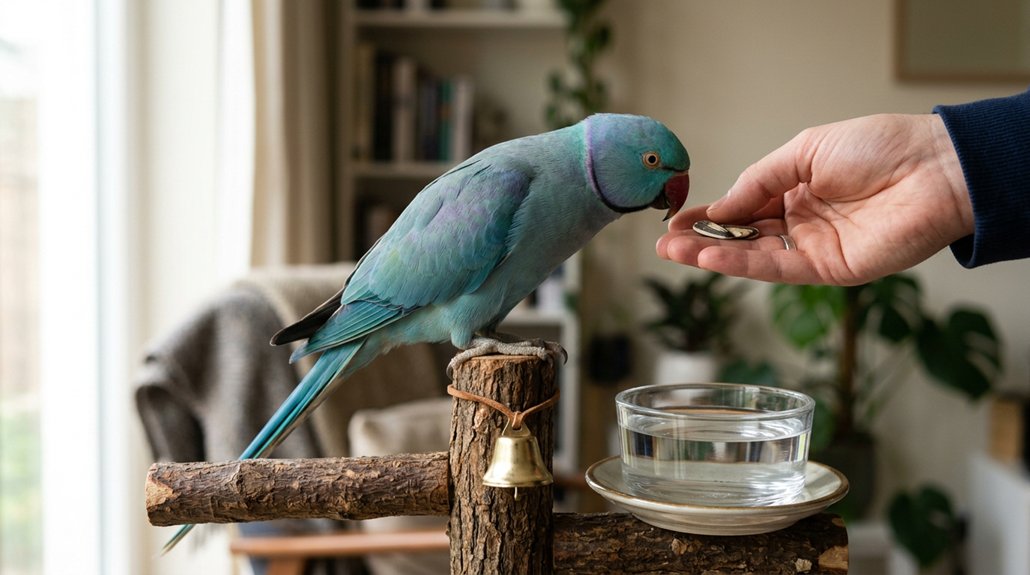
You can manage a noisy pet bird by making sure it gets 10–12 uninterrupted dark hours, keeping a predictable daily routine, and not rewarding screams with attention. Ignore loud outbursts, then praise or treat quiet behavior right away so your bird learns what works. Add foraging toys, supervised training, and calm interaction periods to reduce boredom. If the screaming started suddenly, or you notice fluffed feathers, appetite loss, or breathing changes, see an avian vet.
Key Takeaways
- Provide 10–12 uninterrupted dark hours nightly with a consistent lights-out routine and a quiet, dim sleeping area.
- Ignore screaming and reward quiet behavior immediately, using the same response from everyone in the household.
- Keep the bird mentally busy with foraging toys, training, and supervised play to reduce boredom-driven noise.
- Maintain predictable daily interactions and reduce triggers like TV noise, drafts, and overstimulation.
- If screaming starts suddenly or comes with appetite, droppings, breathing, or feather changes, see an avian vet.
Why Birds Get Loud
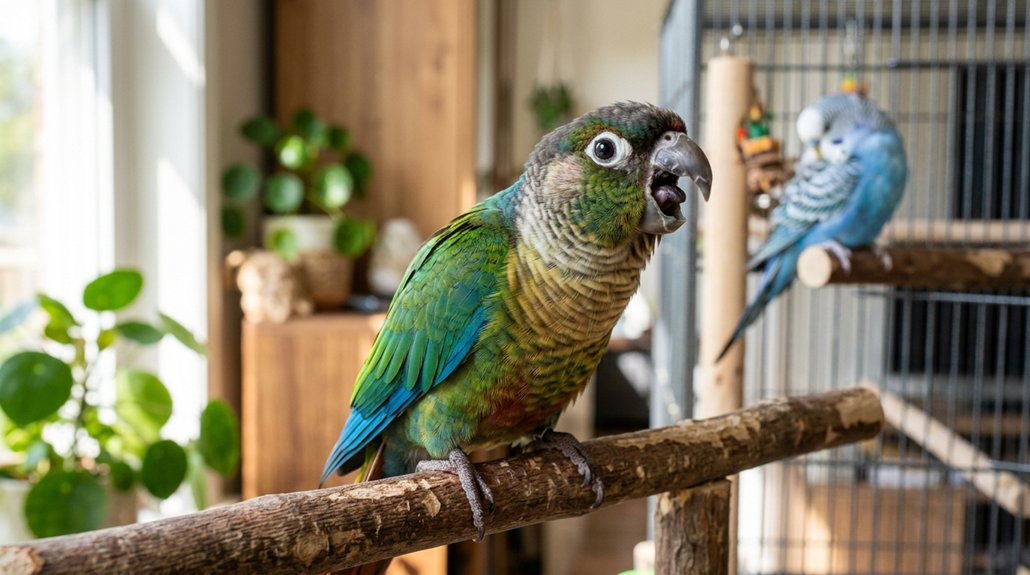
Birds get loud for predictable reasons, and most of them are normal. Your parrot’s calls often reflect instinctive flock contact, so you may hear louder vocalizing at dawn and dusk. Species also vary: cockatoos and macaws can reach 100–135 dB, while budgerigars and cockatiels are usually quieter. Some screams function as attention-seeking or escape-motivated behavior, and if you respond right away, you can accidentally reinforce them. Breeding hormones, boredom, and limited enrichment can increase vocal output, especially in understimulated birds. Environmental acoustics and territorial signaling can also shape how forcefully your bird sounds in the home. Sudden loudness is rarely illness-related; sick birds often become quieter. If the pattern changes persistently, review routine, housing, and, if needed, consult your veterinarian.
Improve Your Bird’s Sleep
A consistent sleep routine often reduces nighttime restlessness and early-morning contact calls. You should target 10–12 uninterrupted dark hours nightly; smaller parrots often need about 10, while large cockatoos or macaws may need 12+. Use breathable, dark covers, blackout curtains, and keep the room dim at night. Remove the cover only when your bird’s quiet on waking.
| Sleep factor | What you do | Effect |
|---|---|---|
| Light | Reduce daytime light | Stable circadian rhythm |
| Noise | Use a quiet room | Fewer calls |
| Temperature | Avoid drafts | Better rest |
| Schedule | Keep lights-out consistent | Less vocal spikes |
| Bedding | Choose quiet sleepwear | Calmer nights |
Place the cage away from televisions and HVAC noise, and keep temperatures stable. With regular timing, your bird’s sleep becomes predictably restorative.
Set a Calmer Daily Routine
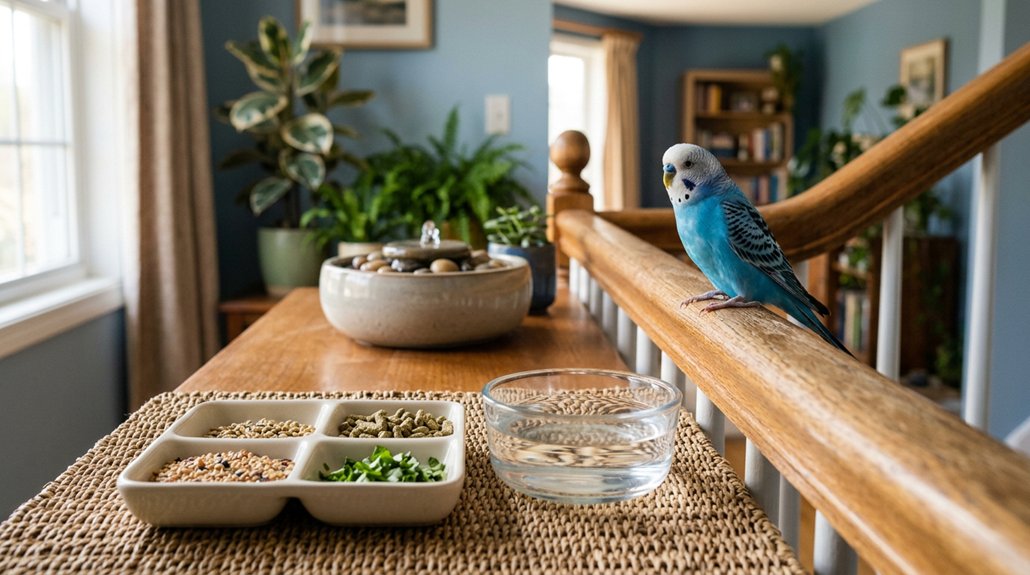
Once sleep is steady, the next step is to make the rest of the day predictable too. You should keep consistent lighting with about 10–12 hours of daylight and 12–14 hours of darkness, covering the cage overnight. Set fixed predictable interactions: a morning greeting, mid-afternoon play or exercise, and an evening wind-down. Build in a quiet early-afternoon period by dimming lights and offering foraging toys before rest. Place the cage where your bird can observe household activity without constant stimulation, and move it to a quieter room in the evening if needed. Use the same pre-bed cues each night: lower your voice, stop play 20–30 minutes before lights-out, and cover the cage with a breathable dark sheet. Over time, your bird should learn the routine and vocalize less.
Stop Rewarding Screaming
Breaking the screaming-to-attention cycle is essential, because parrots learn quickly that any immediate response can reinforce the behavior. You need timing consistency and clear visual cues so your response is predictable:
- Turn away or leave the room when screaming starts.
- Return only after 5–10 seconds of quiet.
- Increase the quiet window gradually.
- Give praise or a treat within one second of calm.
- Record each episode in a diary.
Stay consistent, even if the bird’s volume briefly worsens; that extinction burst can last days or weeks. Don’t talk, touch, or offer treats during screaming, because those actions can reward it. Make sure everyone in the household follows the same ignore-and-reward-for-quiet protocol, since mixed responses can undo progress. With steady non-response, you’re teaching silence to work.
Train Quieter Bird Behaviors
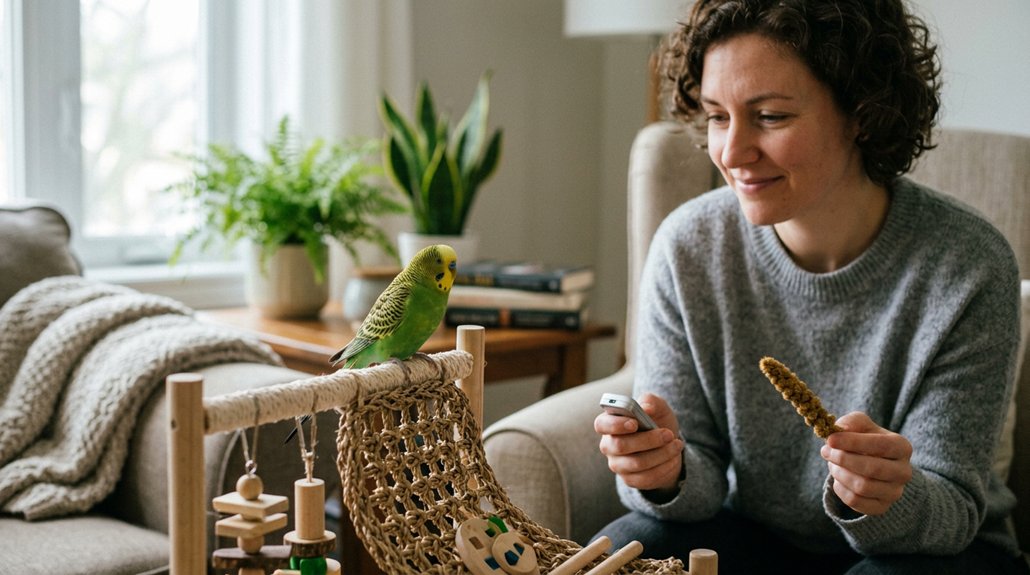
You can shape quieter behavior by rewarding brief moments of silence with a click or calm cue, then a high-value treat, starting with just 2–3 seconds. When your bird gets loud, you’ll need to ignore the calls consistently until you get at least 10 seconds of quiet before giving attention again. You can also praise and reinforce soft vocalizing so your bird learns that calm sounds, not squawking, earn the response you want.
Reward Quiet Moments
When your bird is quiet, reward it immediately with a high-value treat, such as millet spray or a favorite nut, plus soft, enthusiastic praise to make the link between silence and a positive outcome clear. Use quiet cues and treat pairing to strengthen learning.
- Mark 5–10 seconds of silence with a clicker or distinct sound.
- Deliver the treat within one second.
- Increase the quiet requirement by 1–2 seconds after success.
- Reward an incompatible behavior, like target touch or step-up, on cue.
- Keep every household member consistent with the same routine.
This timing-based approach helps your bird learn that calm behavior earns attention, while longer quiet periods are shaped gradually and reliably.
Ignore Loud Calls
Ignore loud, attention-seeking calls by withholding all response—no eye contact, no verbal reply, and no physical interaction—because even negative attention can reinforce the behavior. If your bird calls out, wait 5–10 seconds of quiet before you return; then extend that interval gradually. You’ll likely see an extinction burst, so stay consistent with everyone in the home. Use soundproofing strategies to reduce triggers, and ask visitors to ignore loud calls calmly.
| Step | Action | Result |
|---|---|---|
| 1 | Ignore the call | No reinforcement |
| 2 | Wait for quiet | Longer silent periods |
| 3 | Reward an alternative cue | Quieter behavior grows |
Reinforce a whistle, bell, or trained trick instead of the scream, so your bird learns a reliable, calmer way to get attention.
Praise Soft Vocalizing
Quiet, low-volume vocalizations should be rewarded immediately—ideally within 1–2 seconds—with a tiny high-value treat or calm praise so your bird learns that softer sounds bring attention. Use positive reinforcement with exact timing precision: mark the quieter call with a clicker or brief cue word, then deliver the treat. Keep sessions short and repeat often.
- Reward 2–3 seconds of silence first.
- Extend the quiet interval gradually to 10+ seconds.
- Reinforce a soft whistle, hello, or trained trick.
- Ignore loud screeches and don’t respond inconsistently.
- Make sure everyone in the home follows the same plan.
This approach reduces accidental reinforcement, supports extinction of loud calls, and helps your bird choose quieter, reliable ways to seek attention.
Add More Toys and Enrichment
Adding more toys and enrichment can help channel your bird’s energy into safer, quieter behaviors. You should rotate toys every 1–3 weeks so novelty stays high and boredom drops. Offer at least 2–3 foraging toys daily, such as puzzle feeders, shredded paper, or hidden-food blocks, to keep your bird engaged for 30–90 minutes and reduce idle screaming. Use a mix of destructible, puzzle, manipulative, and chewable toys to meet physical and mental needs. Make sure toys and perches fit your bird’s species and size, so they’re safe and useful. During supervised playtime, brief daily toy-training sessions can teach your bird to use a specific foraging toy. This extra practice often strengthens quiet, focused behavior and supports calmer routines.
Rule Out Health Problems
If your bird’s screaming suddenly increases or its vocal pattern changes, you should arrange an avian veterinary exam, since illness, pain, or respiratory disease can alter behavior. You’ll also want to monitor appetite, droppings, breathing, feather condition, and any lethargy or balance issues so you can report specific signs accurately. Make sure fresh food and water are always available, because hunger, dehydration, or contaminated water can also trigger distress calls.
Check For Illness
A sudden increase in screaming can be a sign of illness, so it’s important to rule out medical causes first. You should seek avian diagnostics and a veterinary referral if you notice changes in behavior or body condition.
- Fluffed feathers
- Decreased appetite
- Lethargy or weight loss
- Abnormal droppings
- Labored breathing, open-mouth breathing, or tail-bobbing
Check for discharge, swelling, bleeding, or ruffled plumage, and listen for a resting respiratory rate far outside the normal 20–40 breaths per minute. If your bird’s screaming started with moulting or breeding behavior, don’t assume it’s behavioral until a bird-savvy vet excludes disease. Illness can alter vocal patterns, and early assessment is reassuring, practical, and often decisive.
Monitor Food And Water
Make sure your bird’s food and clean water are available and fresh twice daily, and note any refusal to eat or drink, because a sudden rise in screaming can signal illness rather than behavior. Use portion control to measure intake, and do hydration tracking by recording daily water use. | Observation | Action |
| — | — |
|---|---|
| Reduced appetite | Weigh portions or cups eaten |
| Lower water intake | Record milliliters daily |
| Watery droppings | Contact your avian vet |
| Weight loss | Check scale trends closely |
Inspect droppings for color, consistency, and volume changes, and weigh your bird on schedule: daily for small species, weekly for larger parrots. A loss of more than 5–10% in a week is an emergency. If noise changes come with lethargy, fluffed feathers, respiratory noise, discharge, or balance issues, seek veterinary care promptly.
Frequently Asked Questions
What Is the 3 3 3 Rule for Birds?
The 3-3-3 rule’s a behavioral training method: you ignore loud calling for 3 minutes, reward 3 seconds of quiet, then gradually extend calm periods. You’ll use environmental enrichment and consistency to support progress.
How to Keep a Pet Bird Quiet?
You can keep your bird quieter by using environment enrichment, a predictable schedule, and not rewarding screaming. Give 10–14 hours’ sleep, then reinforce calm calls immediately. Keep responses consistent, and you’ll reduce noise over time.
How to Stop a Pet Bird From Squawking?
You can stop squawking by identifying environmental triggers, ignoring the behavior, and reinforcing quiet alternatives with training techniques. You’ll also need consistent rules, adequate sleep, exercise, and enrichment; expect brief extinction bursts before improvement.
How Do You Say “Hi” in Bird Language?
You say “hi” in bird language with a soft whistle, brief chatter, or mimicked “hello”; that’s bird greetings. If you respond calmly, you’ll reinforce vocal mimicry and teach your bird quieter, friendlier contact calls.
Conclusion
In the end, managing a noisy pet bird is less about silencing a voice and more about tuning the whole flock’s harmony. When you protect sleep, keep routines steady, avoid rewarding screaming, and strengthen quiet behaviors, you help your bird settle into calmer rhythms. Add enrichment, and you give those busy wings and bright instincts a better outlet. If the noise changes suddenly or seems unusual, don’t hesitate to rule out health problems with your vet.