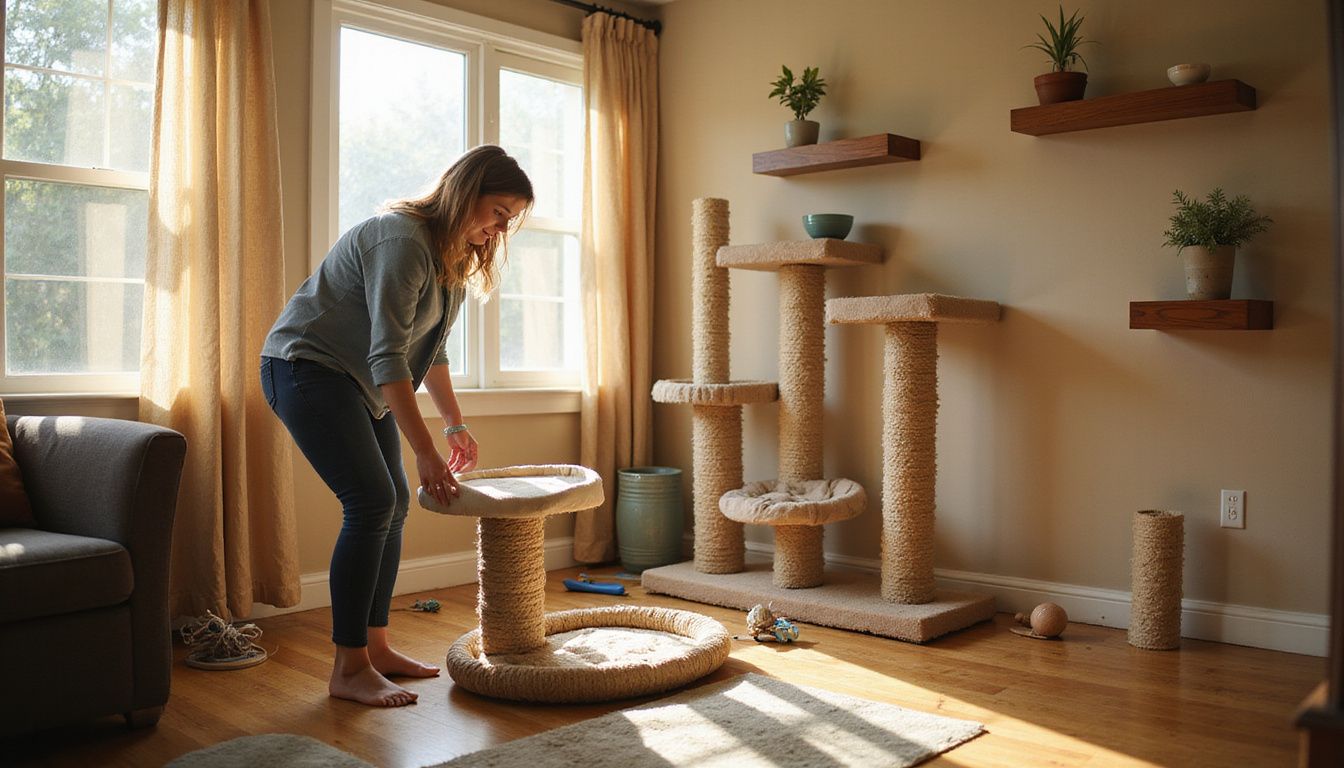
Ever imagine the moment your rescue cat walks through your front door for the very first time?
It’s exciting. It can also feel a little nerve-wracking if you’re still finishing up the pet adoption process and aren’t sure what to expect next.
Here’s the good news.
A little prep work before she arrives turns that first scary day into a calm, smooth start for you both. Whether you found her through a local shelter, a foster home, or one of the many cat rescue UK groups doing great work, the cat care basics stay the same. Let’s walk through exactly what your home needs before your feline friend shows up, so you can skip the guesswork and get straight to bonding.
How do I create a safe, confined space for my rescue cat?
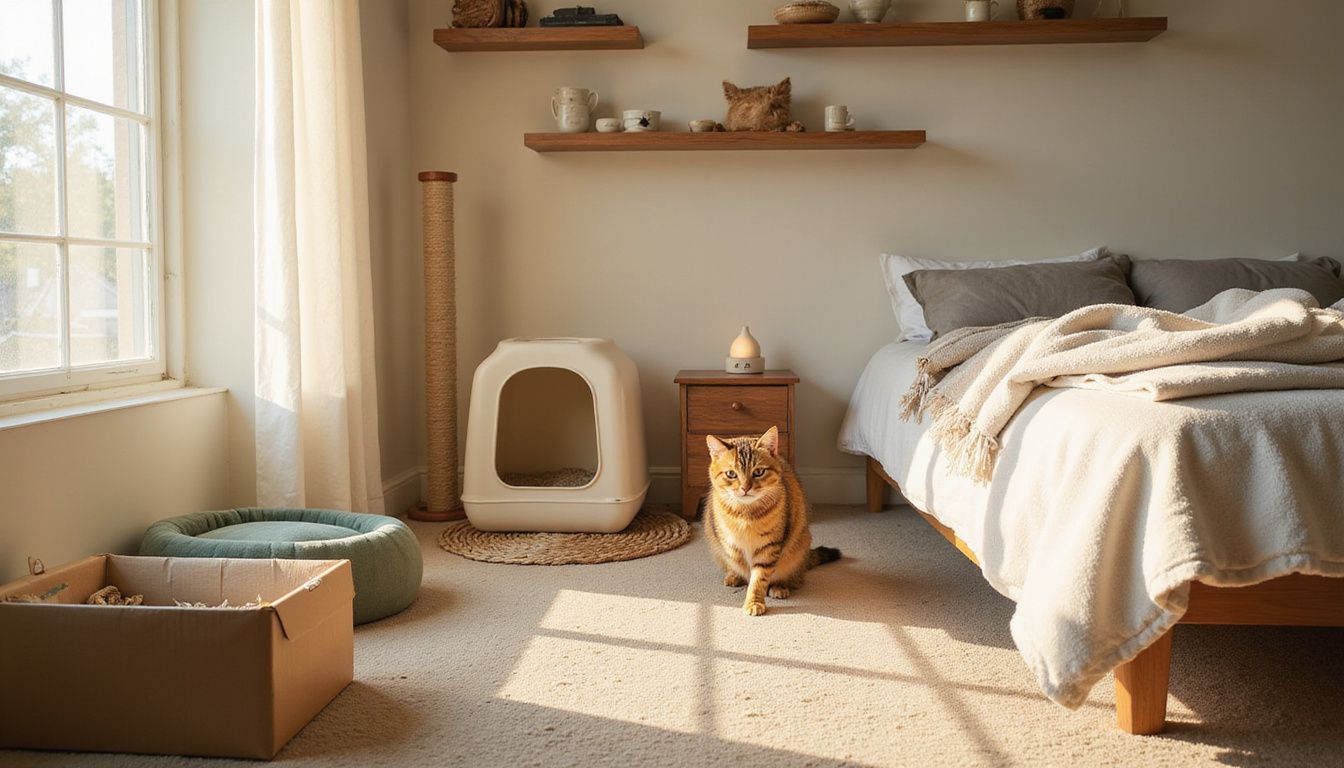
Start small with a single room, like your bedroom or a quiet living room, to help your rescue cat adjust without feeling overwhelmed. This safe room becomes her sanctuary during those critical first days.
Stock it with soft blankets, food and water bowls, toys, and a litter box set far away from the eating area. Include a few hiding spots too, like a cardboard box with holes cut in it and a blanket inside for a low hideaway, or a shelf and tall cat bed for a high escape route.
Covered spaces work best because cats feel safer in enclosed areas. This isn’t just about comfort, either. According to a 2025 study published in the Journal of Shelter Medicine and Community Animal Health, giving a shelter cat her own hiding den lowers her risk of a stress-related upper respiratory infection by 33.7%. That’s a real cat health benefit, not just a nice-to-have.
Before your cat arrives, walk through the room and check off these safety steps:
- Secure loose electrical cords and wires out of reach of curious paws.
- Store any open food safely and check nearby appliances for hazards.
- Add a scratching post or cat scratcher so she has a place to mark territory and release stress.
- Include wand toys and a food-dispensing toy to keep her mind busy while she settles in.
- Set up a pheromone diffuser like Feliway to calm the room before she even steps inside.
This designated space gives your rescue cat control over her environment. That sense of control builds confidence and trust from day one.
What essential supplies do I need before bringing my cat home?
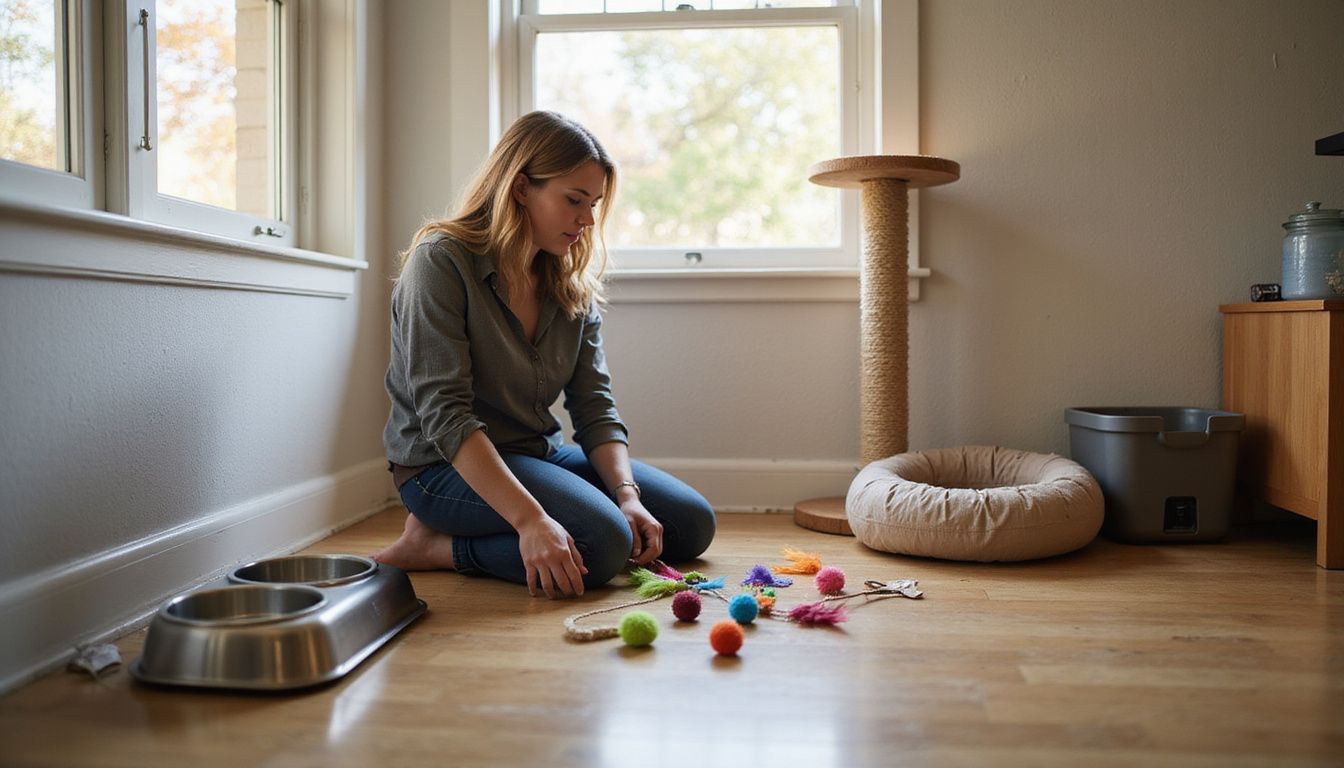
You’ll want to gather supplies before your rescue cat walks through the door. Having everything ready makes the first days smoother and less stressful for both of you.
- Food and water bowls made from stainless steel, glass, or ceramic work best. Stainless steel tops the list for keeping germs away, and wide, shallow bowls stop whisker fatigue.
- Cat food that matches what your rescue ate at the shelter or in foster care helps prevent stomach upset during the move. Ask the adoption team for the exact brand and type.
- A litter box measuring at least 1.5 times your cat’s length gives plenty of room for digging and turning around. The American Association of Feline Practitioners and the ASPCA both recommend the “N+1 rule”: one litter box per cat, plus one extra. So even with a single cat, plan on two boxes if you have the space.
- A tall, sturdy scratching post satisfies your cat’s natural urges and protects your furniture. Place it somewhere visible, where she already likes to spend time.
- Cat toys, especially wand toys, help you bond and give your cat mental exercise. Rotate toys every few days to keep her interest up.
- A comfortable cat bed, like the Maya Donut Cat Bed, gives her a cozy retreat where she feels safe. Soft, enclosed shapes appeal to rescue cats looking for security.
Here’s a trick that works well: pair that enclosed bed with a pheromone diffuser. Many owners find their cat settles into the bed within the first day when both items sit in the safe room together. The enclosed shape taps into her instinct to hide, while the diffuser keeps the whole room feeling calm, giving your rescue cat a real shot at resting right from arrival.
- A pet water fountain encourages your cat to drink more throughout the day, since cats often prefer moving water over a still bowl.
- A collar with an ID tag, a cat brush, and treats round out your starter kit. These support grooming, identification, and positive interactions during week one.
- Store cleaning products, medications, and toxic houseplants in locked drawers or high closets, away from curious paws. Baby locks add extra protection for cabinet doors.
Your adoption counselor is also a great pet care resource here, and you can find more first-week tips like these on the One Love blog.
The First 24 Hours: Helping Your Cat Settle
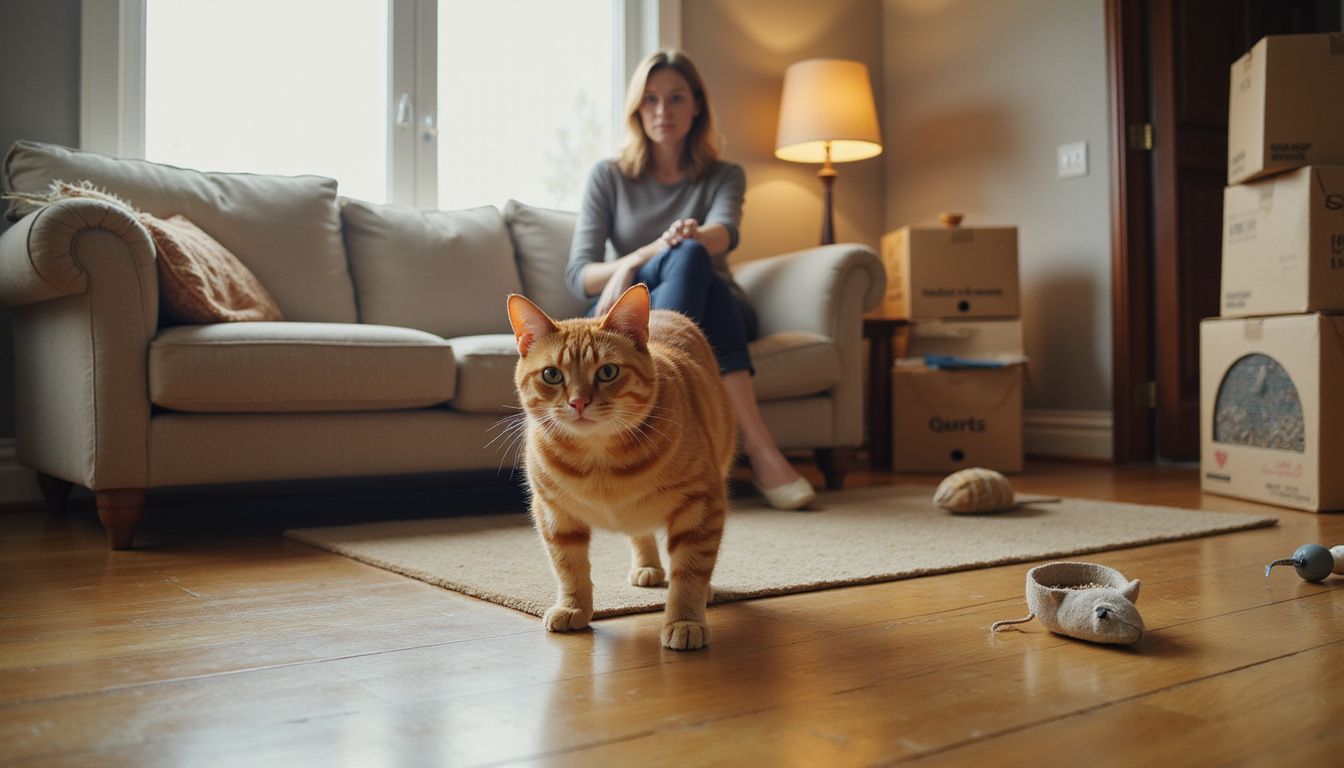
Your rescue cat’s first 24 hours at home set the tone for everything that follows.
Let’s walk through what happens when your new furry friend arrives, and how you can make those hours count.
How can I help my cat explore their new space safely?
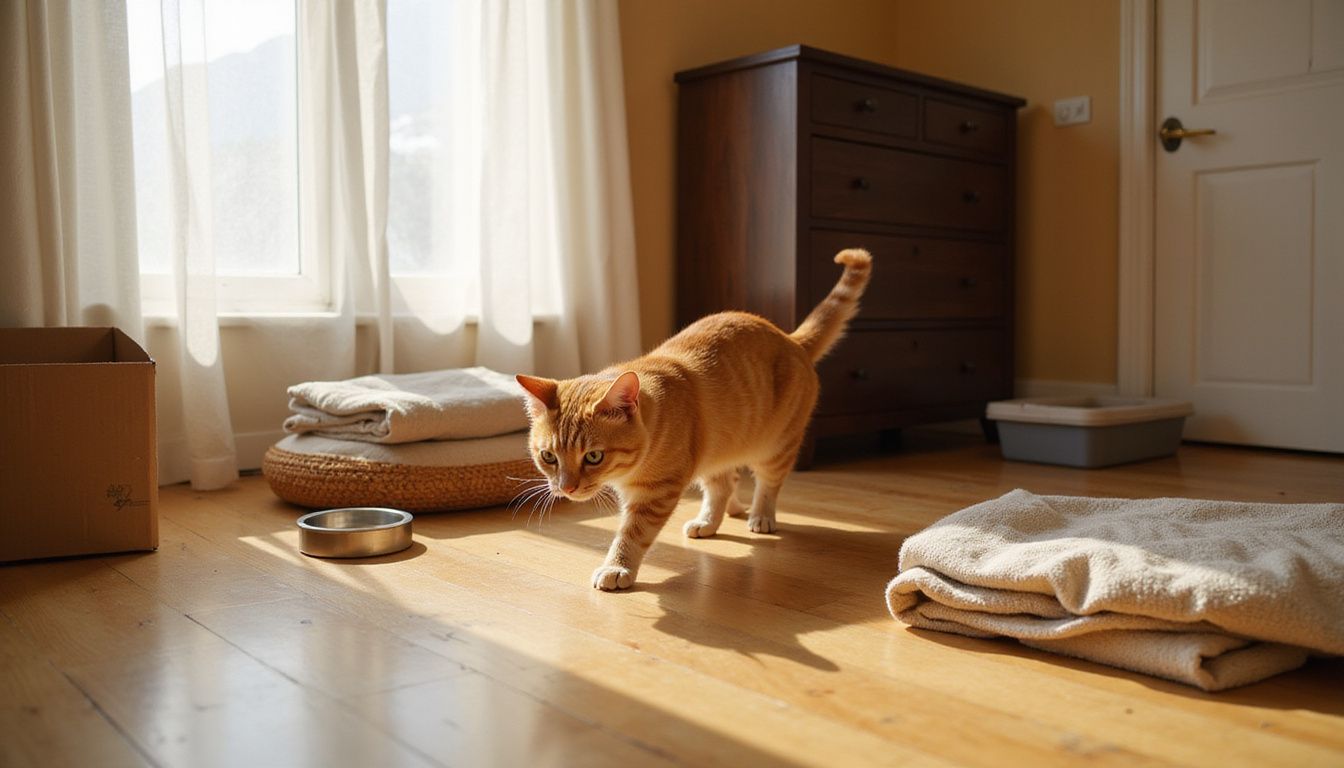
Your rescue cat needs room to explore without feeling trapped or overwhelmed. These steps help her gain confidence while staying safe during those first critical days.
First, set up the room right:
- Start with one small room, like a bedroom or bathroom, so she doesn’t feel lost in a huge space.
- Place the litter box, food bowl, and water dish in different corners to match her natural instinct to keep these areas separate.
- Leave hiding spots, like cardboard boxes or a cat bed, so she can retreat when anxious.
- Remove hazards like toxic plants, electrical cords, and small objects she might swallow while exploring.
Then, give her space to adjust at her own pace:
- Keep noise low and activity minimal around her area for the first 24 hours. Loud sounds and busy environments spike stress in rescue animals.
- Check hiding spots before closing cabinet doors, since frightened cats squeeze into tight places.
- Introduce toys or sit near the food bowl to encourage her to approach, without forcing contact.
- After a few days, once she seems comfortable, open the door and let her explore the rest of the home.
Watch for signs of stress like hiding a lot, skipping meals, or avoiding the litter box during this exploration phase. Some cats hide or eat less for the first days or even weeks in a new home, and that’s normal.
Why should I minimize noise and activity around my cat’s area?
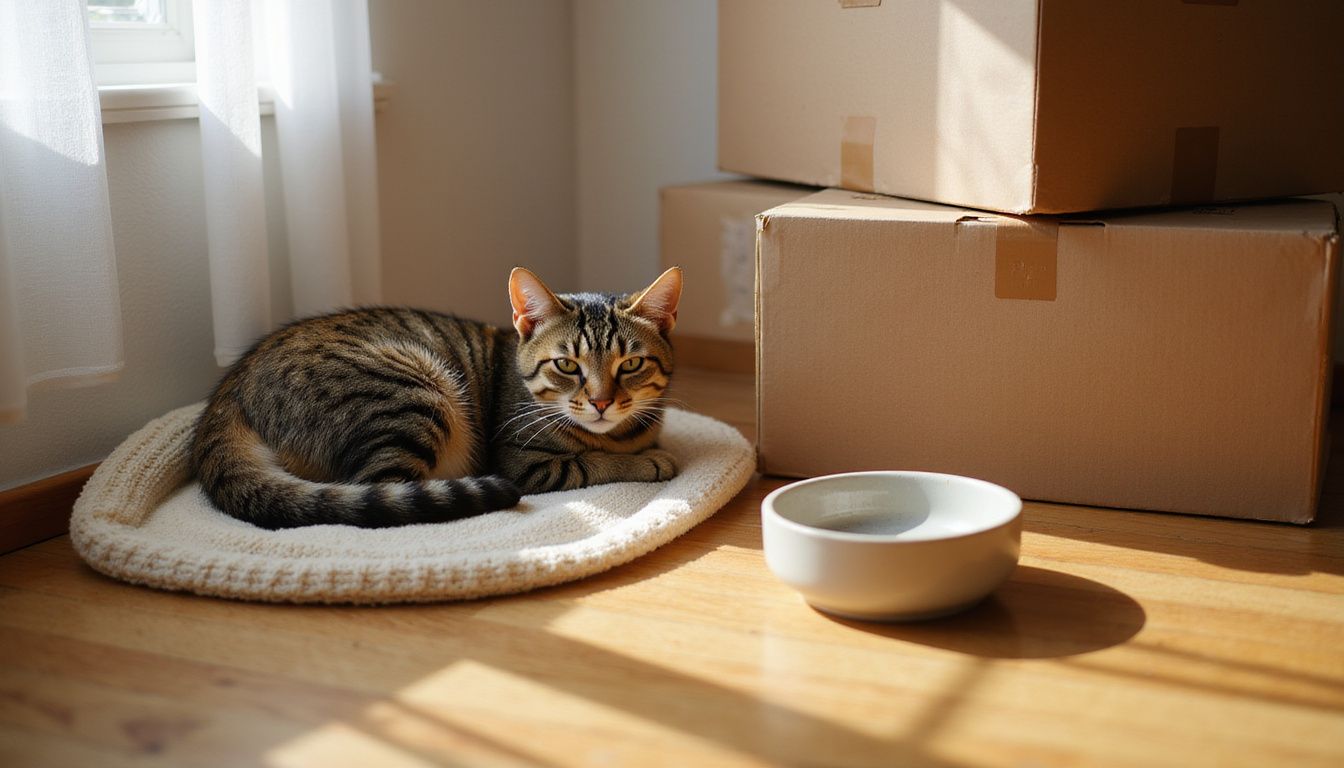
Loud noises and constant activity stress your rescue cat out, plain and simple.
You might have heard of the “3-3-3 rule” that animal rescues across the US use to set expectations. It goes like this: your cat needs about 3 days to decompress, 3 weeks to learn her new routine, and 3 months to feel fully settled. Those first 3 days are exactly why noise control matters so much right now.
Cats adopted from shelters have often moved through multiple homes already, and your place might be their third transition or more. That repeated upheaval leaves them anxious and on edge.
When you keep the safe room quiet and low-traffic, her nervous system finally gets the chance to settle down. Too much commotion triggers stress responses like a smaller appetite, less grooming, hiding in corners, avoiding interaction, and sleeping in odd spots.
Other household members should avoid the safe room as much as possible during the first week. Heavy foot traffic and loud voices make your new companion feel like the chaos never stopped.
Pet vaccination clinics and vet visits will come later. Right now, your cat needs peace and quiet to heal emotionally. Set boundaries with family members and guests, since a few days of minimal disturbance means a cat who bonds with you faster.
This quiet period isn’t punishment. It’s medicine for a frightened animal learning that safety exists.
When and how should I offer food, water, and a litter box?

Your cat needs food, water, and a clean litter box from day one to feel secure in her new space. Setting these up right helps her adjust faster and builds confidence during those first hours.
- Place food and water bowls in the confined room before your cat arrives, positioned away from the litter box to match her natural instincts.
- Offer the same food the shelter provided during the first week. This helps prevent digestive upset, which can cause vomiting or diarrhea.
- Start a gradual diet change on day one: 25% new food mixed with 75% shelter food for days one and two.
- Move to 50% new food and 50% shelter food on days three and four.
- Switch to 75% new food and 25% shelter food on days five and six.
- Complete the full switch to your chosen food on day seven, giving her digestive system time to adjust safely.
- Set up an uncovered Maya cat litter box in the room, and scoop it at least once daily.
Here’s a small detail that makes a real difference: put the litter box in a separate corner, opposite the food and water, not right beside it. Cats who get this setup typically start using the box within the first 12 hours of arrival, since it respects their natural instinct to keep eating and elimination spaces apart.
- Do a full litter box cleaning every two weeks using mild soap to keep things fresh and comfortable.
- Call your veterinarian right away if your cat shows decreased appetite, vomiting, or diarrhea during the food transition.
- Give her fresh water daily, refreshing the bowl to keep it clean and encourage her to drink.
Building Trust During Week One
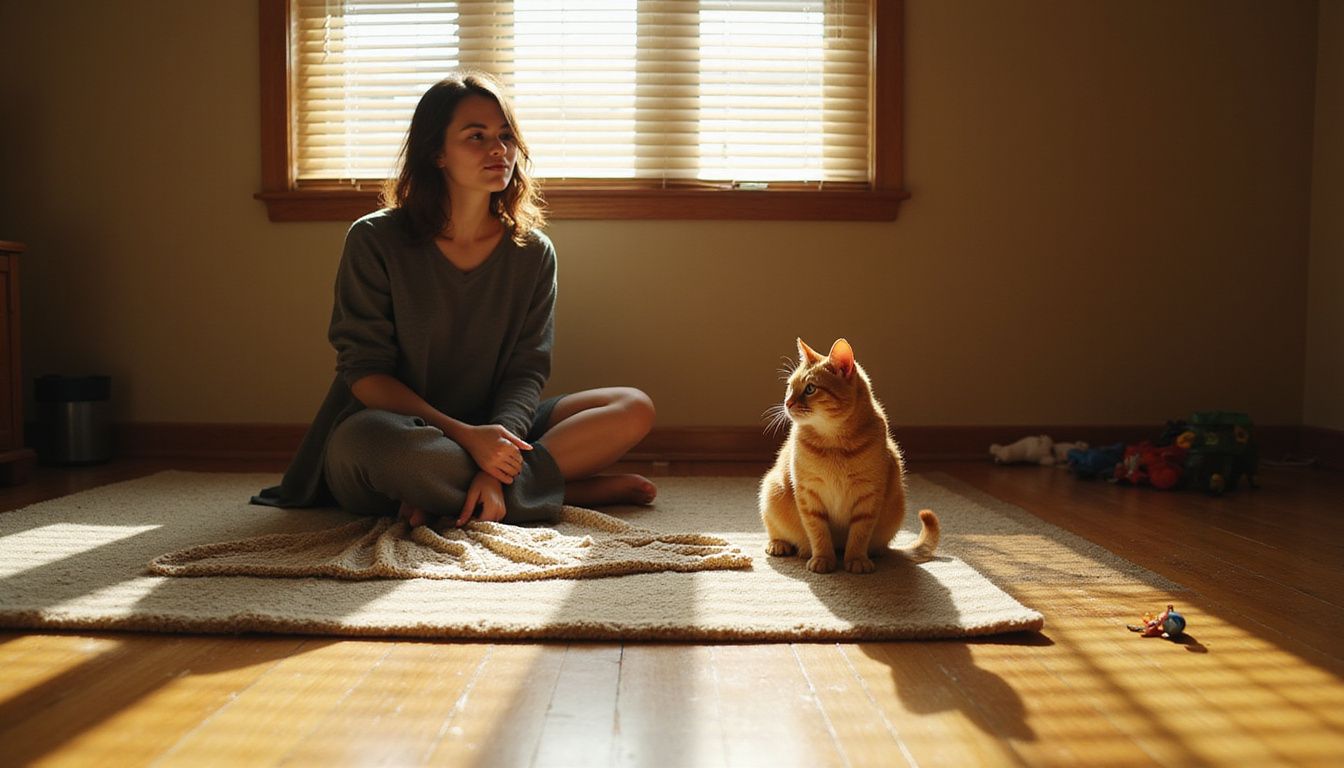
Your rescue cat needs quiet moments with you to build the bond that makes her feel safe.
Let her set the pace, approach you when she’s ready, and watch her body language to see what she needs.
How do I spend quiet time with my cat to build trust?

Quiet time forms the foundation of trust with your new rescue cat. Sit at her level in the safe room, and move slowly and predictably so you don’t startle her.
Spend time in the room with her so she doesn’t feel alone. Use gentle tones or treats to encourage her closer, but let her set the pace. If she walks away, don’t chase her. She’ll come back when ready.
Avoid petting sensitive spots like the belly until trust builds, since most cats dislike this early on. This approach works whether you adopted from One Love Animal Rescue, Marin Humane, or any other shelter across the country.
A few simple habits make quiet time count:
- Set up a cozy corner with a scratching post where she feels secure.
- Sit nearby without demanding attention. Just exist in the same space.
- Bring a book or your laptop and stay calm and quiet beside her.
- Let her approach on her own, even if it takes several sessions.
You’re not trying to entertain her. You’re showing her the world feels safe. Many rescue cats need this low-pressure environment to decompress from shelter life, and your calm presence speaks volumes to an anxious cat.
Here’s a trick backed by real science, not just guesswork. A well-known study in Scientific Reports from the University of Sussex found that narrowing your eyes and blinking slowly at a cat makes her far more likely to relax and approach you. Cat people call this the “slow blink,” basically the cat version of a smile. Try it next time she glances your way.
Over the days that follow, she’ll gradually move closer, sniff your hand, or even rub against you. Those small signals tell you she’s ready for a deeper connection.
What is the best way to let my cat approach me?
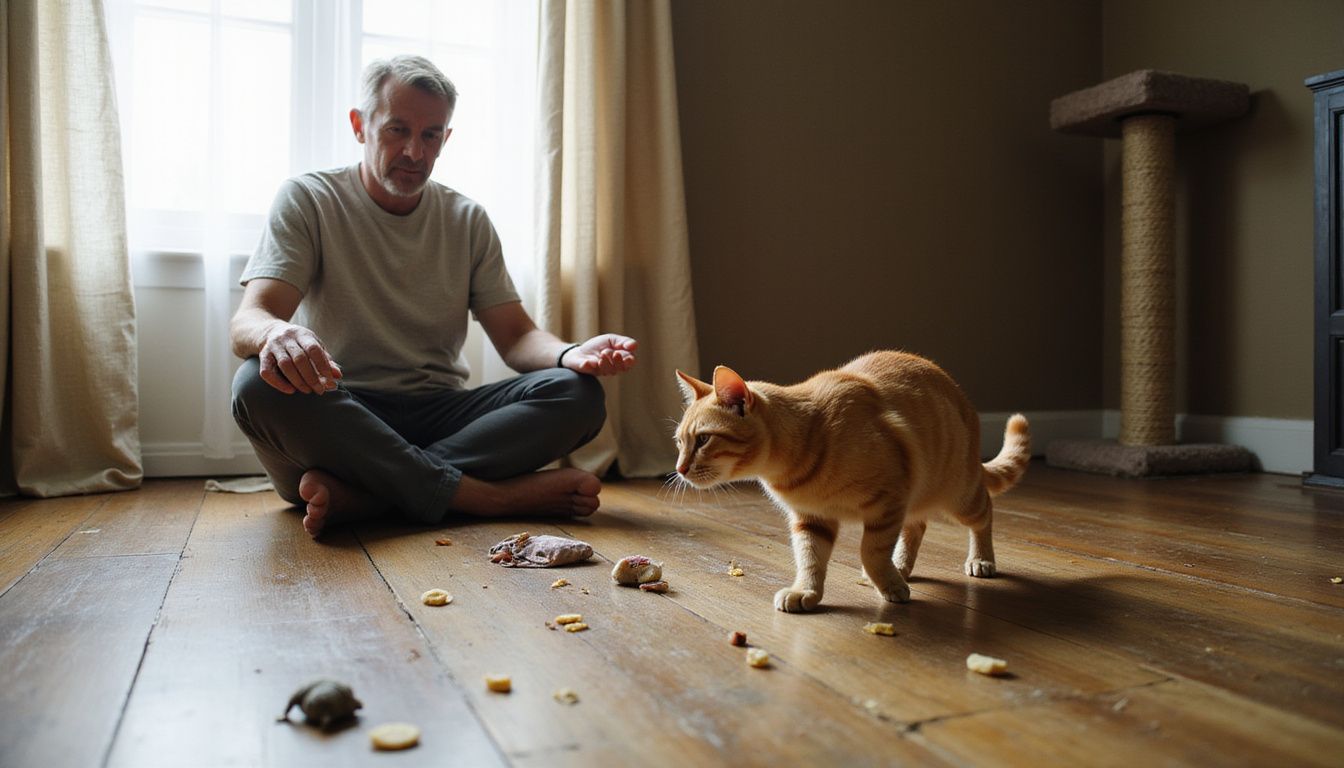
Your rescue cat sets the pace here, and that’s the golden rule. Offer your hand for sniffing first. This lets her gather information about you without any pressure.
If she seems interested, gently pet her head or cheeks. Let her rub against your hand or body. That means she’s comfortable and ready for more contact.
Forcing interaction backfires and creates fear instead of connection. Interactive toys or treats work well to coax her closer without demanding physical touch. You’re essentially saying, “I’m here, and good things happen around me.”
A couple of quick rules keep things on track:
- Never use your hands as toys during play, so biting or scratching habits don’t develop.
- Offer a scratching post, like the switch cat scratcher, so she has a proper outlet for her instincts instead of your furniture (or hands).
- Let her come to you rather than reaching for her first.
Some cats warm up in hours. Others need days or weeks, and that’s completely normal for a rescue animal who’s been through a lot of change. Your patience pays off the moment she finally chooses to sit on your lap or rub her face on your arm.
Which calming techniques work best for a new rescue cat?
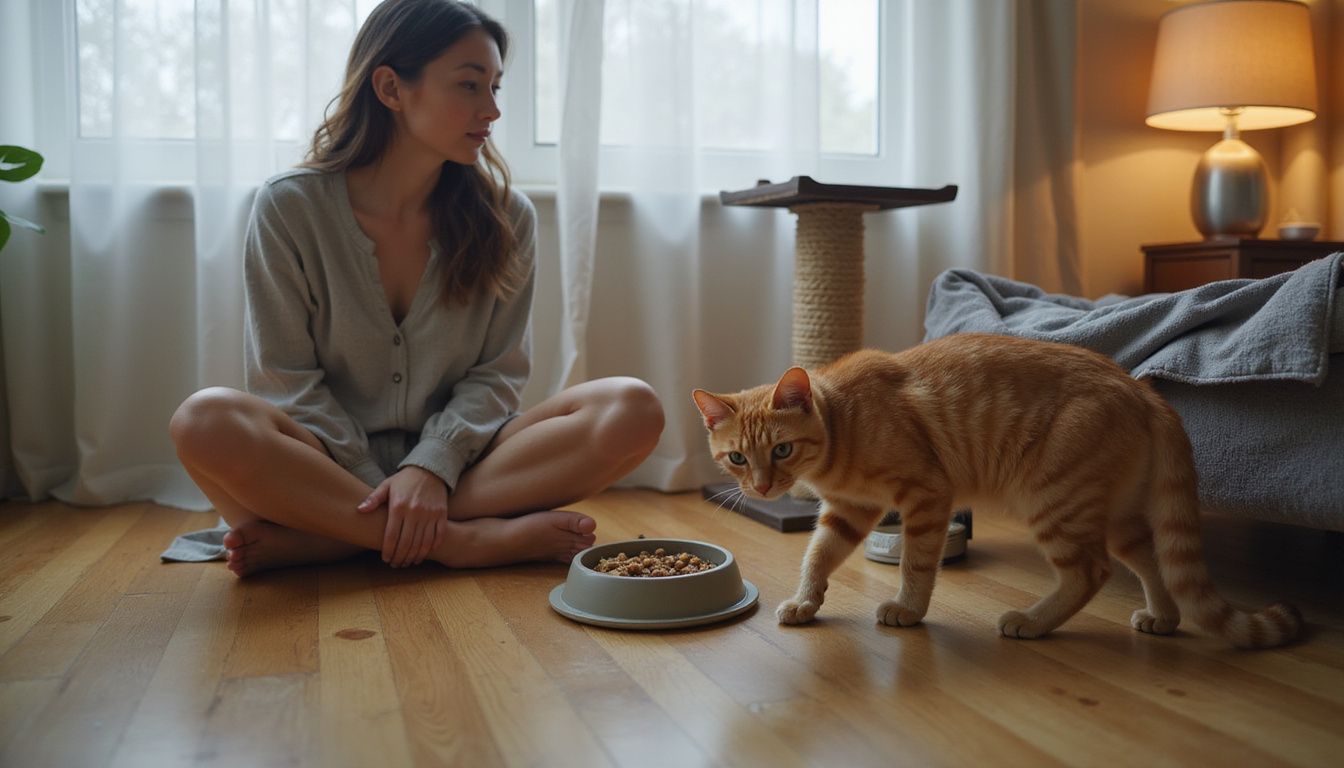
Your rescue cat needs calm, steady support during those first fragile days at home. These proven techniques help her feel safe and secure in unfamiliar surroundings.
Start with the environment:
- Create a quiet sanctuary with a small, confined room and minimal foot traffic, so she has a safe retreat to decompress at her own pace.
- Use pheromone diffusers or sprays like Feliway to mimic natural calming scents. A 2023 triple-blind study published in PLOS One found that Feliway Classic diffusers cut undesirable stress behaviors, like scratching vertical surfaces, in 83.5% of cats over a 28-day period. That’s a strong track record for a product that just plugs into the wall.
- Play soft music or white noise at a low volume to mask startling sounds, so she doesn’t jump at every door slam or vacuum cleaner.
- Transfer her scent onto a scratching post by rubbing a towel on her cheeks first, then placing it in her space. Familiar smells bring comfort and encourage natural scratching.
Then focus on your approach:
- Offer treats and play sessions to build positive memories in her new environment.
- Keep handling to a minimum the first week, and let her approach you on her own terms.
- Watch food intake closely. Stressed cats sometimes eat less or stop eating, so try mixing in canned food or a bit of baby food to encourage her to eat.
- Talk to a cat behaviorist or veterinarian if stress lingers past the first week. Services like Kittysitty or your local animal services office can offer strategies suited to your cat.
These techniques work best when you pair them with patience and close observation. As the days pass, a consistent routine helps your cat feel even more secure in her new home.
Gradually Expanding Their Territory

Your rescue cat needs time to adjust to one room before you open the rest of your home to her.
Slow expansion builds her confidence and avoids the overwhelming stress that comes from too much space too fast.
How do I slowly introduce my cat to other areas of the home?
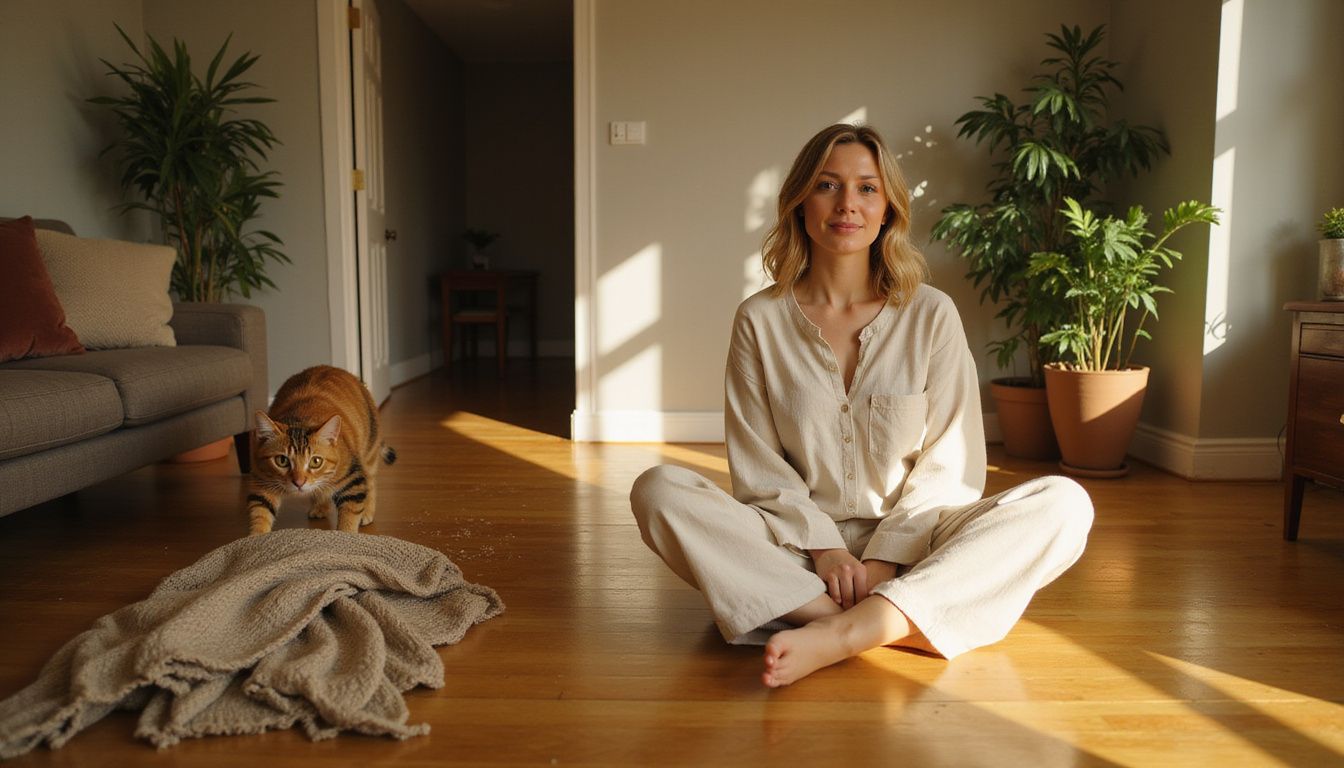
Expanding your rescue cat’s world takes patience and close observation. Start this process after several days, once she feels comfortable in her confined space.
Follow these steps as you open up new areas:
- Keep her first room as a safe base she can retreat to whenever needed.
- Open one new door at a time, and let curiosity guide the exploring instead of pushing her forward.
- Spend time in each new area so she connects the space with safety and your presence.
- Watch for stress signs like flattened ears, a tucked tail, or excessive hiding. These tell you to slow down.
- Expand room by room over several weeks, since some cats move faster than others.
Once she’s confident indoors, you can think about giving her more of the outside world too:
- Add a windowsill perch for sunbathing and watching birds outside.
- Consider an outdoor enclosure, like an Omlet outdoor cat run or Omlet balcony run, for safe fresh air without the risks of roaming free.
- Try supervised, leash-trained walks once she’s confident indoors, for a controlled taste of the outdoors.
- Place familiar bedding or toys in new areas, since her own scent helps a space feel less foreign.
Don’t rush any of this. Each cat adjusts at her own pace during this critical bonding time, and patience pays off with a confident, trusting companion.
What are signs of stress or fear I should watch for?
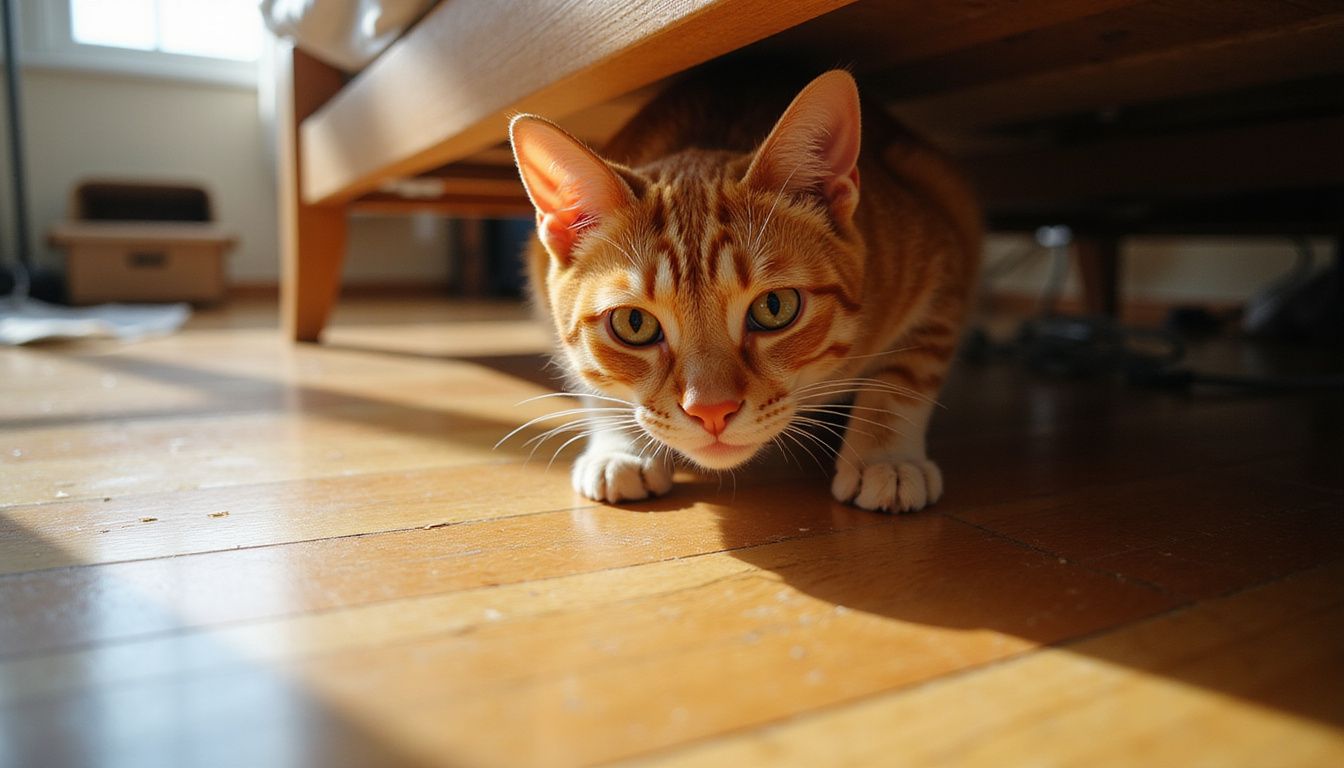
Your rescue cat will show stress in different ways. Learning to spot these signals early makes a huge difference in helping her feel safe and secure.
| Stress Signal | What It Looks Like | What This Means |
|---|---|---|
| Hiding Away | Cat spends most of the day under the bed, in closets, or behind furniture | Your cat feels scared and needs time to decompress in a quiet spot |
| Appetite Loss | Decreased appetite or refusing food and water for extended periods | Stress disrupts normal eating patterns; monitor intake closely |
| Litter Box Refusal | Cat avoids the litter box or eliminates outside of it | Litter box issues rank among the most common reasons cats end up back in shelters; this signals serious distress |
| Excessive Grooming | Cat licks or grooms itself far more than normal, sometimes until skin appears raw | Overgrooming acts as a self-soothing mechanism when anxiety runs high |
| Reduced Grooming | Coat looks matted, oily, or generally unkempt; cat neglects personal hygiene | Lack of grooming indicates your cat feels too anxious to care for itself properly |
| Digestive Trouble | Vomiting, diarrhea, or constipation appears shortly after arrival | Gastrointestinal upset stems from stress or dietary changes; watch for patterns |
| Sleep Pattern Changes | Cat sleeps in unusual locations, such as high shelves or tight corners instead of normal spots | Strange sleeping positions reveal your cat’s attempt to find safety and security |
| Social Withdrawal | Cat shows zero interest in interaction, play, or human contact for days | Lack of engagement is normal at first but should gradually improve as trust builds |
| Behavioral Changes | Cat stops engaging in natural behaviors like scratching, playing, or exploring | Loss of normal activity suggests your cat remains in survival mode rather than settling in |
Pay close attention during the first week, since this window tells you the most about how your cat is adapting. Many of these signals overlap, so track patterns instead of single incidents. A cat who hides for a few hours is very different from one who refuses food for two days straight.
Call your veterinarian if you see no signs of settling in after a reasonable amount of time, or if stress symptoms get worse instead of better. Your vet can rule out any medical issues and give you guidance suited to your cat’s specific needs.
Establishing a Routine

Your rescue cat thrives when you feed her at the same times each day, play with her in predictable ways, and keep her world calm and steady.
A solid routine turns your anxious new pet into a confident companion who knows what to expect from you and her home.
Why is it important to stick to consistent feeding and play times?

Sticking to consistent feeding times builds trust with your rescue cat fast. Feed her twice a day at the same hours, and you’ll cut down on food-related anxiety fast.
Cats thrive on predictability. Knowing meals show up at, say, 8 a.m. and 6 p.m. calms her nervous system. Wet food during these meals tends to satisfy more than dry kibble alone, so she feels truly fed.
Free-choice feeding, where food sits out all day, often leads to overeating and obesity, which brings its own health problems down the road. A structured feeding routine shifts your rescue cat’s mindset from worried to relaxed.
Playtime matters just as much as mealtime. Dedicate at least 20 minutes a day to interactive play with toys that spark her hunting instincts. This steady engagement burns off pent-up energy and gives her something to look forward to.
A sample day might look like this:
- 8:00 a.m.: Breakfast
- Mid-morning: 20 minutes of wand toy play
- 6:00 p.m.: Dinner
- Evening: Quiet bonding time
This kind of predictable routine makes a real difference in how quickly a rescue cat’s hiding behavior drops off. Cats who switch from free-feeding to twice-daily meals, paired with daily play, tend to spend more time exploring and interacting by the second week, rather than staying tucked under furniture.
Products like the Freestyle – The Top Cat Kit or an Omlet Maya indoor cat house support this routine by giving your cat her own dedicated spaces for activity and rest. Predictability turns anxiety into confidence, and that’s how your rescue cat settles into her forever home.
How can I avoid overwhelming my cat with too much change?
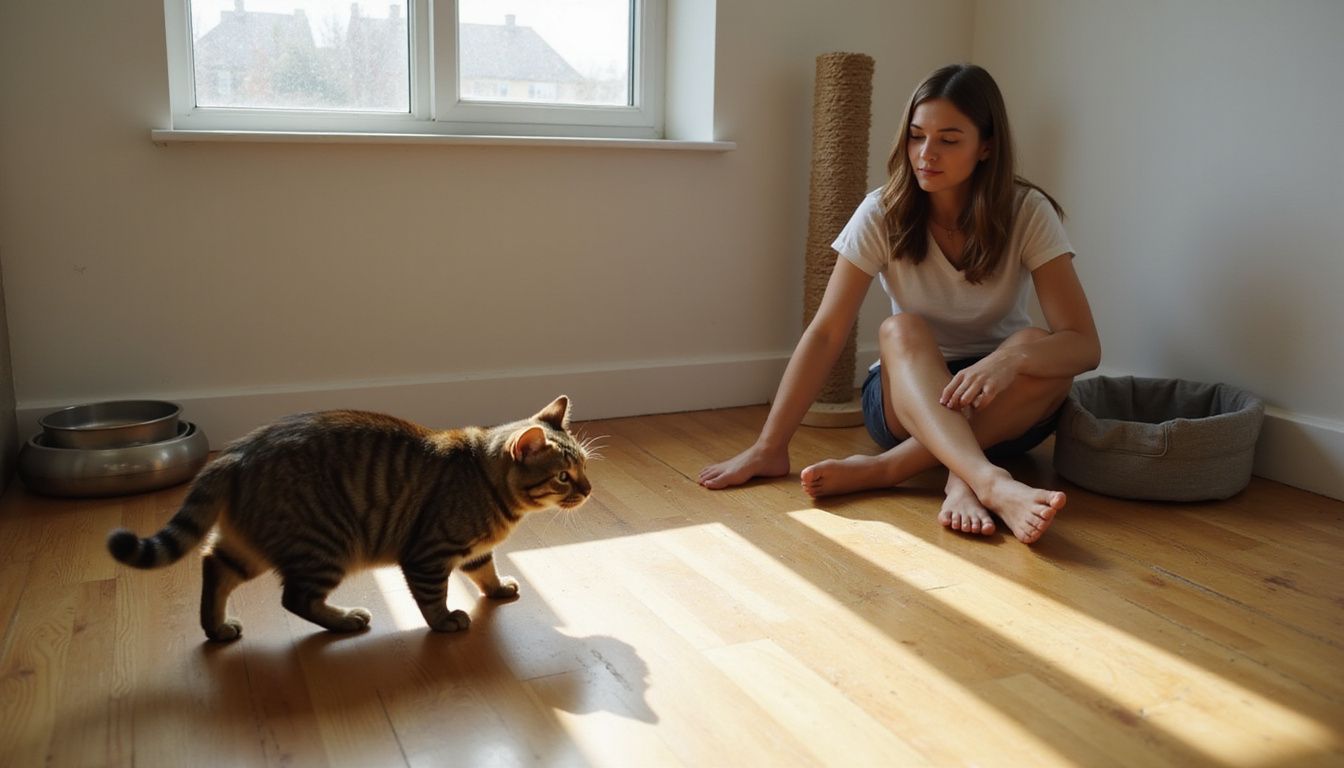
Consistency with feeding and playtime builds a foundation of security for your rescue cat, and that same idea applies to everything else in her new world. Too many changes at once sends her into stress overload, so pace yourself.
Give your cat roughly two to three weeks before adding new enrichment items, like food-dispensing toys or a second cat scratching post, to her space. Start with the basics: a litter box, food and water bowls, and a quiet resting spot. Let her master these essentials first.
Think of it like learning a new language. You don’t memorize every word on day one, and your cat shouldn’t have to adjust to everything at once either.
A few ground rules keep the pace gentle:
- Mix old and new cat food over several days instead of switching overnight.
- Introduce new rooms one at a time, letting her explore at her own pace.
- Keep daily markers, like wake-up time, meals, playtime, and bedtime, consistent even if life gets a little messy.
- Wait until she’s fully settled in one stage before adding the next new thing.
This steady approach turns your home into a manageable adventure for your new companion, rather than a chaotic carnival.
Conclusion
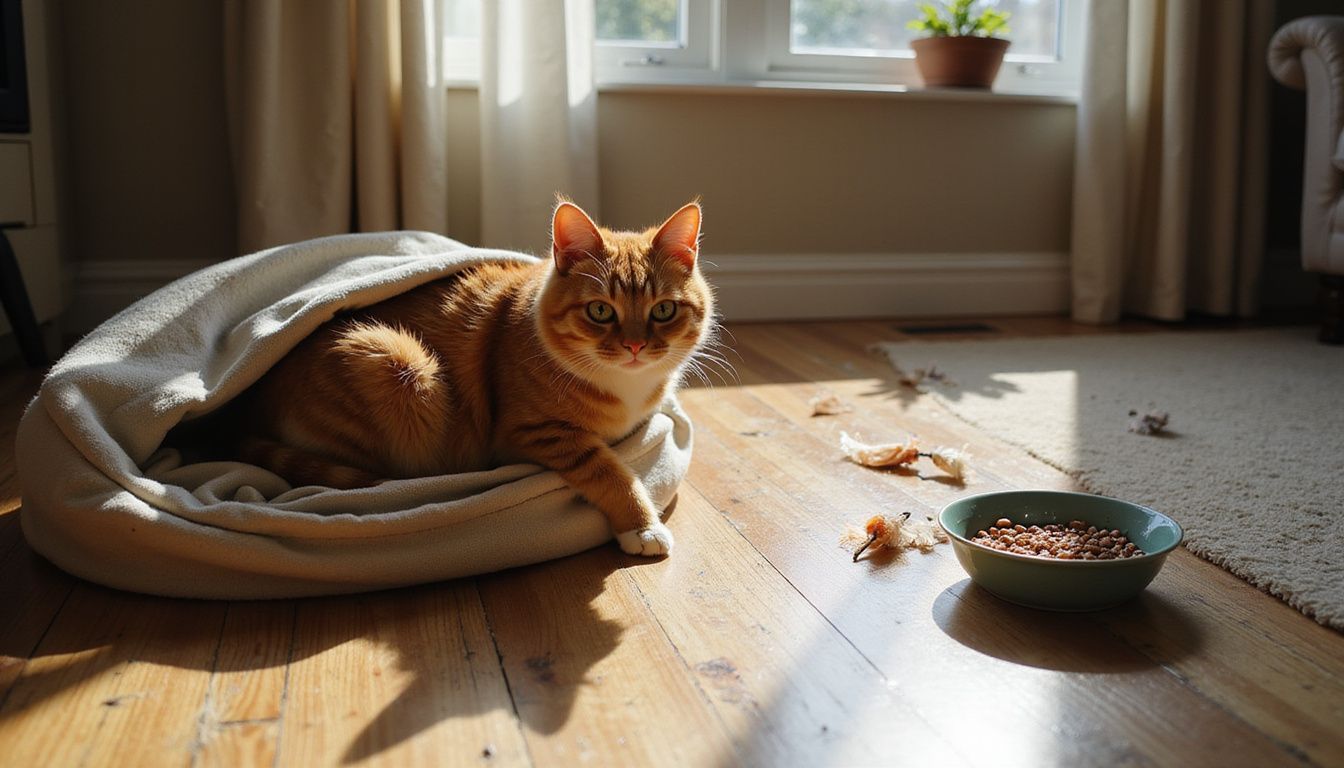
You now know how to turn your home into a welcoming space for your new rescue cat.
A safe, confined room. The right supplies. A calm environment during those critical first hours. These pieces build the foundation for a smooth start.
Trust grows gradually. Let her approach you at her own pace, use wand toys to bond, and stick to a feeding schedule twice a day.
Watching for stress signals, like hiding, less grooming, or a smaller appetite, helps you adjust your approach along the way.
Organizations like Best Friends Animal Society and local rescues such as Slough Cats and Kittens Rescue work hard every day to help cats find loving homes. Whether you’re adopting in Petaluma or anywhere else, your commitment to cat adoption honors that mission.
Your patience during week one pays off for years to come. A frightened shelter cat becomes a confident, bonded rescue cat who trusts you completely.
FAQs
1. What should I do in the first 24 hours after cat adoption?
Set up a quiet room with food, water, and a litter box, then let your cat explore at their own pace. According to the ASPCA, most cats hide for 24 to 48 hours after arriving home, and that’s completely normal. Don’t force interaction, your new friend will come to you when they’re ready.
2. How do I find good pet care resources for a rescue cat?
Groups like Slough Cats&Kittens Rescue offer fantastic advice for new cat parents, and you can check the One Love Blog for tips on cat health and behavior. A kittysitty cat behaviorist can be a game changer if your rescue seems extra nervous or scared.
3. Should I set up an outdoor space for my rescue cat right away?
Not right away, wait at least 2 to 3 weeks until your cat feels truly settled indoors first. Once they’re comfortable and know where home is, an Omlet outdoor cat run or Omlet balcony run can give them safe outdoor time.
4. What if my rescue cat came from foster care?
Cats from foster care often adjust faster because they’re used to home routines like using a litter box and eating on schedule. Still, expect a few days of shyness, every home feels new even to a well-cared-for cat.
5. What supplies help make the first week easier?
A cozy bed, scratching post, and toys like the Freestyle, the Top Cat Kit make a huge difference in helping your cat feel safe and entertained. Having food and litter ready before you even leave Petaluma or wherever you’re adopting from means you can focus on your new friend, not last-minute shopping.