Common cleaning mistakes bird owners make include using scented sprays, “natural” oils, or aerosol cleaners near the cage, skipping daily spot-cleaning, and leaving food and water dishes dirty overnight. You can also expose your bird to residue by not rinsing well or by using the wrong disinfectant dilution. Wash dishes daily, replace liners every day, and let everything dry fully. If you keep going, you’ll see how to build a safer routine step by step.
Key Takeaways
- Using scented, aerosol, or “natural” cleaners can expose birds to harmful fumes and toxic residues.
- Skipping daily spot-cleaning lets droppings, wet bedding, and food debris build up bacteria, mold, and ammonia.
- Failing to wash food and water dishes daily allows biofilm and rapid microbial growth.
- Using the wrong disinfectants or incorrect bleach dilutions can leave dangerous residues or damage porous cage parts.
- Not cleaning toys, perches, trays, and grates regularly increases fungal, bacterial, and dermatitis risks.
Why Scented Cleaners Are Dangerous for Birds
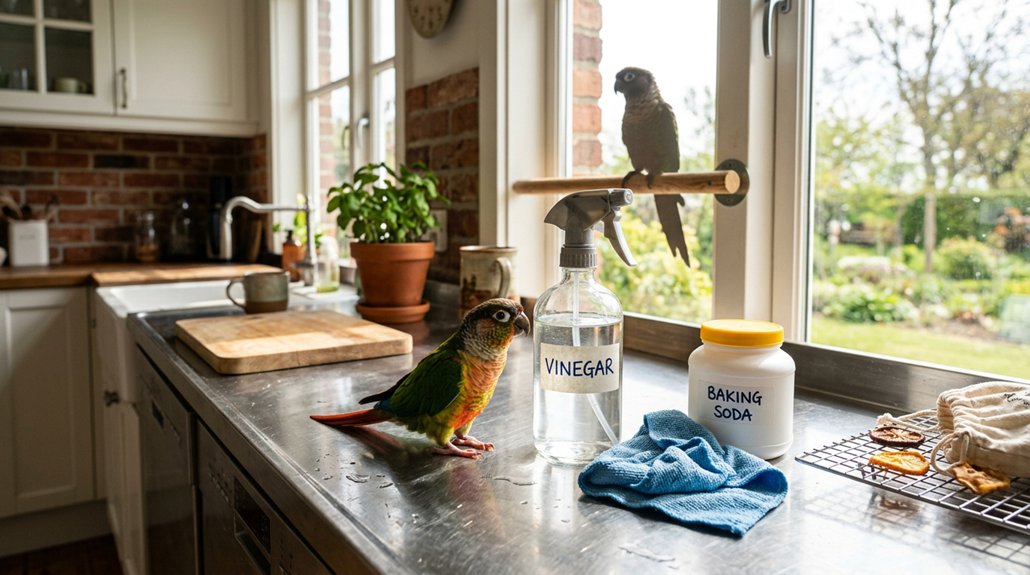
Scented cleaners can be dangerous for birds because even products that seem mild to you may release volatile organic compounds, aerosolized fragrances, and, in some “natural” formulas, toxic ingredients such as phenols and essential oils. Your bird’s lungs are highly efficient, so fumes that feel light to you can trigger respiratory distress within minutes in an enclosed room. Even low levels of tea tree, eucalyptus, or citrus oils may damage the liver or cause sudden death. Scented sprays, candles, and air fresheners can also leave residues on feathers and perches, which your bird may ingest while preening. You can reduce risk by choosing bird-safe, unscented cleaners, ventilating well, and keeping your bird out until the air is clear.
Daily Cage Cleaning Mistakes to Avoid
You shouldn’t skip daily spot-cleaning, because droppings and food debris can let bacteria and mold build up quickly. Reusing a dirty cage liner or leaving seed hulls in place can attract pests and keep your bird exposed to contaminated surfaces. You’ll also want to wash food dishes every day, since leftover residue can support microbial growth and increase illness risk.
Missing Daily Spot Cleaning
Missing a quick daily spot clean can let small messes turn into real health risks fast. When you leave food scraps, wet droppings, or damp substrate in place, bacteria and yeast multiply, raising the risk of crop infections, respiratory disease, and mold exposure. If water bowls aren’t wiped or refreshed each day, daily biofilm can form and bacteria can grow quickly. Soiled perches and toys also trap fecal matter and oils, which may cause pododermatitis and a noticeable perch odor. Spilled seed hulls and wet spots under perches shouldn’t sit overnight, since they can support mold. A fast wipe of doors, feeding ports, and perch ends helps reduce germ transfer and keeps weekly cleaning effective.
Reusing Dirty Cage Liners
Even a single day of reusing a dirty cage liner can let feces and food waste sit long enough for bacteria and yeast to multiply, increasing the risk of respiratory and gastrointestinal infection in parrots. You shouldn’t just fold, shake off, or flip a soiled liner, because wet material can support mold and bacterial growth within hours. Letting droppings and seed hulls accumulate also raises cross contamination risks, attracts mites and ants, and can release ammonia fumes that irritate airways. During out-of-cage time, the same liner can contribute to pathogen transfer onto perches and toys, making stool monitoring harder. Replace disposable liners daily, or use dishwasher-safe tray covers washed with hot water and bird-safe disinfectant so you keep the cage hygienic and your bird safer.
Skipping Food Dish Washing
Skipping food and water dish washing is one of the fastest ways to undermine cage hygiene, because bacteria and mold can build up on moist surfaces within 24 to 48 hours. When you leave seed hulls or wet food behind, you encourage biofilm formation and raise the risk of fungal growth, salmonella-like bacteria, gastrointestinal illness, and aspergillosis. A quick rinse usually isn’t enough; use hot, soapy water or a dishwasher cycle safe for pet items to remove oily residue. Don’t reuse the same sponge or cloth unless you disinfect it first, since it can transfer contaminants back to clean dishes. Also check for scratches or porous plastic, which hide microbes and support spore transmission. Replace worn bowls regularly; smooth stainless steel or tempered glass is best.
How to Wash Food and Water Dishes
You should wash your bird’s food and water dishes daily with hot water and a bird-safe dish soap or detergent, then scrub all surfaces and crevices to remove residue and biofilm. Rinse them thoroughly until no soap remains, since leftover detergent can irritate your bird’s mouth and digestive tract. After washing, let the dishes air-dry completely before refilling to help reduce bacterial growth and contamination.
Safe Cleaning Supplies
To keep food and water dishes safe, wash them daily with hot, soapy water or run them through a dishwasher on a high-heat cycle to remove biofilm and limit bacterial growth. Use unscented dish soap, not antibacterial products with strong fragrances or harsh chemicals. If you prefer natural cleaners, a 1:10 white vinegar-to-water soak can help sanitize; some plant based disinfectants are marketed as alternatives, but they still must be bird-safe. Rinse until no soap or vinegar odor remains, because residue can irritate your bird’s respiratory system or be ingested. Replace scratched or cloudy plastic dishes every few months, and choose stainless steel or ceramic when you can. Once a week, sanitize metal or ceramic dishes by boiling them 5–10 minutes or using a sanitizing dishwasher cycle.
Scrub And Rinse
Scrub bird dishes daily with hot, soapy water, or place dishwasher-safe items in the dishwasher, to remove food residue and bacteria that can make your bird sick. After washing, use hot rinsing under running water until every trace of soap is gone, because film left behind can irritate the digestive tract and may make your bird avoid drinking. If you need extra friction, use soap free scrubbing with a clean brush reserved for pet dishes. Once a week, sanitize dishes by soaking them for 10 minutes in 1 tablespoon unscented household bleach per gallon of water, then rinse well. Avoid scented or antibacterial soaps with perfumes or essential oils. Replace scratched or pitted dishes promptly, since worn surfaces harbor bacteria that washing can’t fully remove.
Dry Before Refilling
Drying thoroughly is just as important as washing when it comes to bird dishes. After you rinse with hot water and mild, unscented soap, set each dish upside down in a clean, ventilated spot. This air drying importance supports moisture prevention and helps stop bacterial growth in seams and corners.
- A clean rack catching droplets
- Sunlight or airflow moving past bowls
- Water beading off smooth rims
- A fully dry surface before refilling
Don’t towel-dry with a shared cloth, since it can reintroduce microbes. If you disinfect, use a 1:32 bleach solution, rinse well, and dry completely. Check for scratches, chips, or worn plastic, and replace damaged dishes so they can be cleaned safely every day.
How to Disinfect Trays and Grates Safely
After removing the grates and trays, scrape off droppings and food debris while wearing gloves so feces don’t dry and harden on the surface, which can make pathogens harder to remove. For metal parts, soak them in 1 part household bleach to 32 parts water for 10 minutes, then scrub, rinse thoroughly with hot water, and air-dry completely. If your trays or grates are painted or porous, choose bird-safe bleach alternatives labeled for avian use, such as quaternary ammonium compounds or veterinary antiseptics, and follow the manufacturer’s disinfectant contact times. Don’t use bleach on porous surfaces, since residue can be trapped. Use a dedicated utility sink or disinfectable tub, not a kitchen sink or dishwasher. Replace parts only when dry, then wash your hands and change clothes.
Why Toys and Perches Need Washing
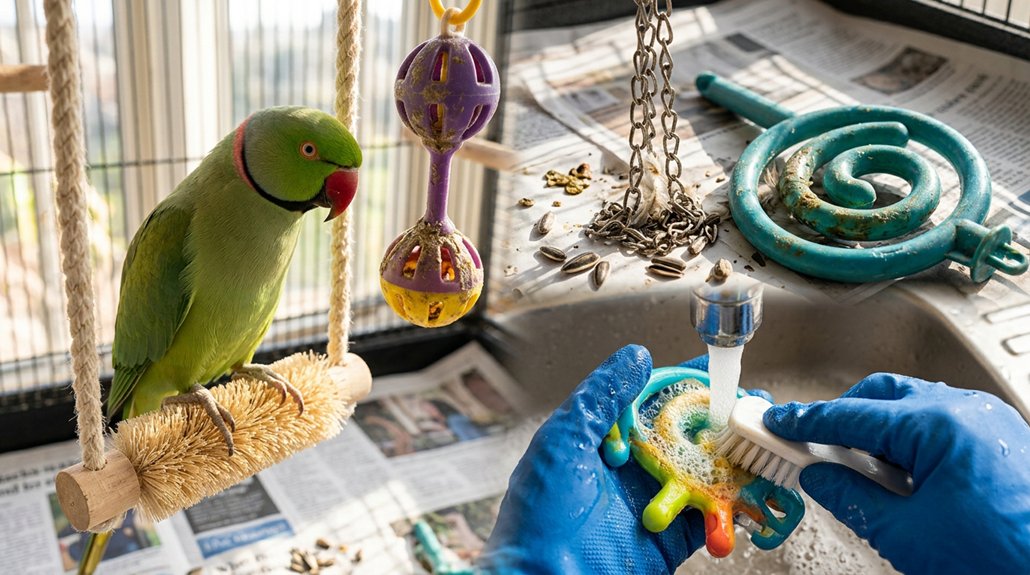
Once the trays and grates are clean, don’t overlook the items your bird touches every day: toys and perches. Droppings, food residue, and oils can build up quickly, letting bacteria and yeast persist. Wash perches weekly, and messier toys more often, to lower the risk of Candida or bacterial dermatitis.
- Microfiber perches should be washed, rinsed, and dried fully.
- Wooden perches and toys need soaking, scrubbing, and sunlight drying.
- Cotton or rope toys should be laundered or replaced often.
- Metal and hard plastic toys benefit from hot soapy water or UV sterilization toys.
Inspect for loose strands, biofilm, and mineral buildup. Clean items also help reduce foot strain and respiratory irritation. Rotate them back only when completely dry.
Cleaning Habits That Leave Toxic Residue
Even when a cage looks spotless, the wrong cleaning products can leave behind residues that are hazardous to birds. You shouldn’t use phenol cleaners, pine oil, bleach, ammonia, citrus products, tea-tree oils, or diffuser oils, because birds absorb toxins quickly through their air sacs. Avoid aerosols such as air fresheners, disinfectant sprays, and carpet deodorizers near cages; fine droplets can be inhaled deeply. If you disinfect with bleach, use only a 1:32 solution, rinse until no scent remains, and let items air-dry completely. Skip wipes or multipurpose cleaners with “fragrance” or “natural oils.” Choose plain soap, hot water, or vet-approved bird-safe disinfectants. A residue testing check and a clear ventilation strategy can help keep the area safe and calm.
How to Keep Liners and Bedding Sanitary
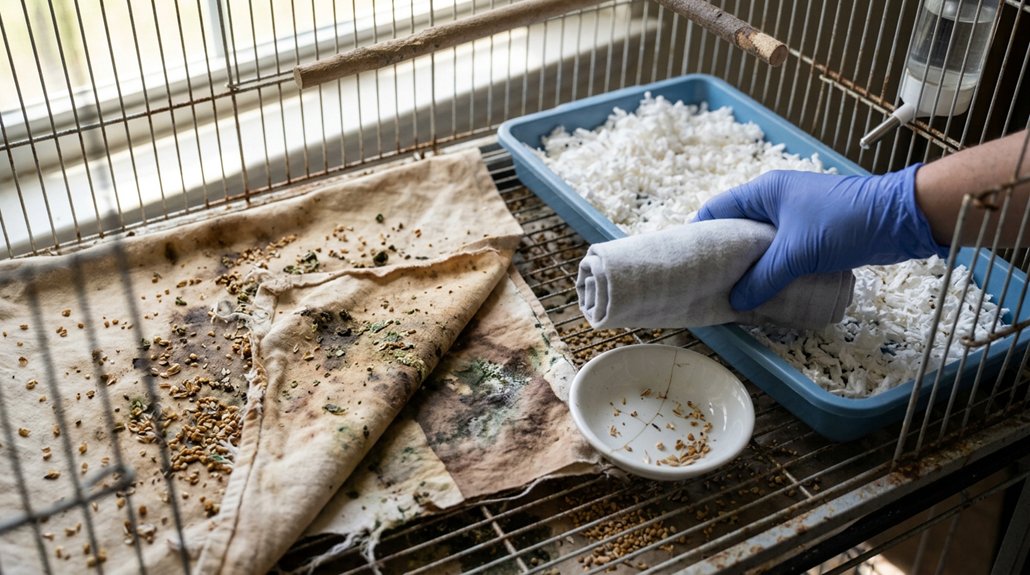
A clean cage can still become unsafe if liners and bedding aren’t managed daily. Replace paper liners every day, and remove wet or soiled bedding at once; droppings can harbor bacteria within 24 hours. Use plain, non-glossy paper or washable fabric, not scented sheets, oily products, or loose shavings. In high-use spots, spot-clean several times daily to limit ammonia and respiratory irritation. Your linen rotation should include hot laundering of reusable liners and nest pads at 140°F or hotter with fragrance-free detergent, then full drying.
Refresh liners daily, lift wet bedding immediately, and hot-wash reusable fabrics to keep the cage safe.
- Fresh paper under bright perch light
- Damp bedding lifted before it spreads
- Clean dish zone beside the tray
- Dry, folded liners ready for reuse
For humidity control, keep bedding dry and wash the tray weekly with bird-safe disinfectant.
A Bird-Safe Cage Cleaning Routine
To keep your bird’s cage truly safe, spot-clean droppings and food debris every day, then do a full cage clean once a week. Use a pre clean checklist: remove food and water dishes, bedding, toys, and porous items. Wash dishes daily with hot soapy water, or sanitize weekly with a 1:10 bleach solution. Scrub bars and tray, replace substrate, and rinse all surfaces well. Choose a bird-safe disinfectant, then air-dry everything completely to avoid residue ingestion. Don’t use aerosol cleaners, ammonia, or air fresheners near the cage; ventilate the room after cleaning. Inspect frayed ropes, damaged toys, and worn perches, and replace them promptly. During a seasonal deep clean, repeat this process more thoroughly to reduce bacterial and fungal buildup.
Frequently Asked Questions
What Is the 3 3 3 Rule for Birds?
The 3-3-3 rule means you watch for three signs in three hours, then reassess over three days and three months; in avian etiquette and cage rotation, it helps you monitor adjustment, stress, and illness.
What Is the Filthiest Bird?
Cockatoos and large parrots are usually the filthiest. You’ll notice heavy molt, oily residue, feather dander, and food scatter, plus possible parasite hotspots if hygiene slips. Still, regular cleaning keeps them healthy and manageable.
Can I Use Dawn Dish Soap to Clean Bird Feeders?
Yes, you can use diluted Dawn to clean bird feeders. It’s a gentle workhorse. Rinse thoroughly to avoid Soap residue, and avoid scented soaps. Dawn alternatives include mild, unscented dish soap or vinegar solutions.
What Are the Common Mistakes When Building a Birdhouse?
You’ll often choose treated wood, poor ventilation design, oversized entrance holes, smooth interiors, and sealed roofs. Skip predator protection, drainage, and perch access at your own risk; use untreated hardwood, screened vents, and removable panels.
Conclusion
By avoiding common cleaning mistakes, you help keep your bird’s environment safe, sanitary, and low-stress. You don’t need harsh products to do a thorough job; in fact, why risk toxic fumes or residue when simple bird-safe habits work so well? Clean food dishes, wash toys and perches, and let trays and liners dry fully before reuse. With a consistent routine, you can protect your bird’s health and make daily care easier.