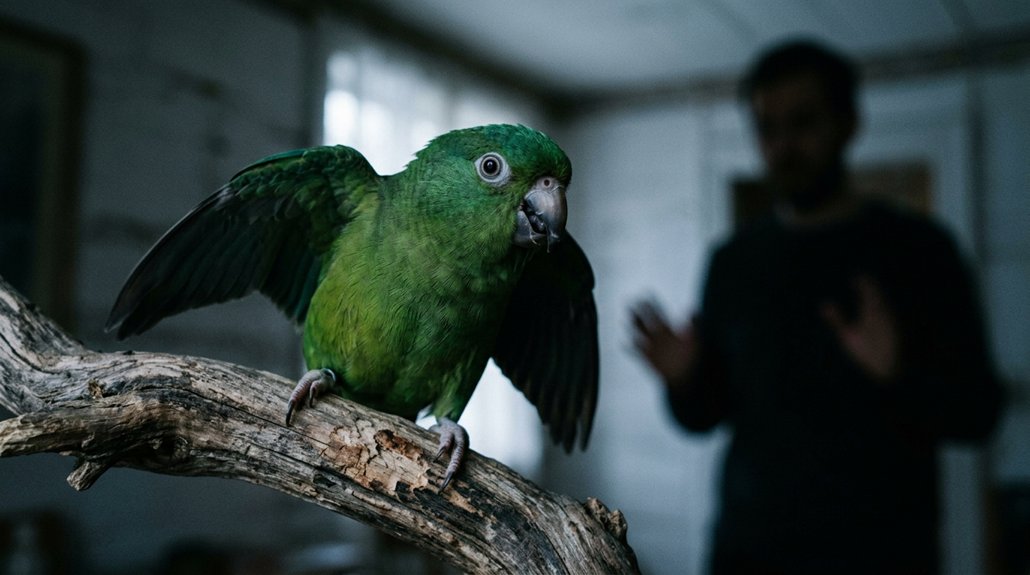
Your bird is afraid of you because your hands, speed, and direct approach can feel like a predator threat. Fast movements, reaching from behind, staring, or forcing restraint can trigger flight, freezing, or biting. If you miss early warning signs like leaning away, crouching, feather compression, or eye pinning, you teach your bird that its signals don’t matter. Calm, slow, choice-based contact builds trust, and there’s more to learn about what those signals mean.
Key Takeaways
- Birds see sudden grabbing, fast approaches, and restraint as predator-like threats, triggering fear and escape behaviors.
- Loud noises, direct staring, and inconsistent handling can make your presence feel unsafe.
- Early warning signs like leaning away, crouching, feather compression, or stepping aside mean the bird wants more space.
- Ignoring these signals or forcing handling teaches birds that humans do not respect their boundaries.
- Trust improves when you move slowly, reward calm behavior, and let the bird choose contact.
Why Your Bird Is Afraid of You
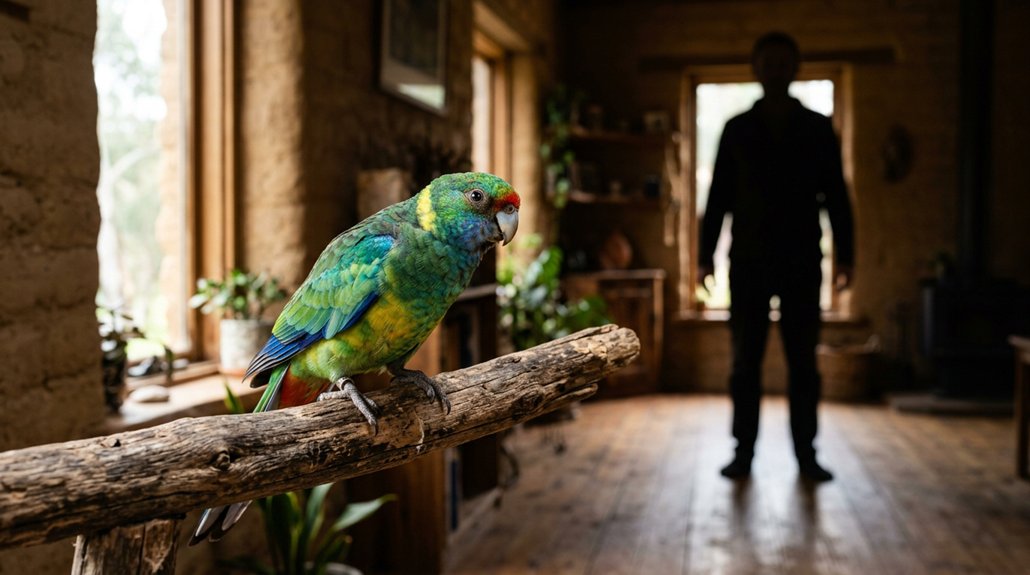
Because birds are prey animals, they’re wired to see sudden closeness, grabbing, and restraint as danger, not care. When you reach in, especially fast or toward the back, your bird’s predator perception can trigger flight initiation, freezing, or biting. If you ignore early discomfort—leaning away, crouching, stepping aside, feather compression—you’re teaching that your hands don’t stop at “no.” Repeated forced handling can make you feel unsafe to your bird, even when you’re trying to help. Loud sounds, direct staring, and inconsistent comfort can also link your face or presence with stress. Trust returns when you give control: pause at the first sign of worry, step back, and reward calm with treats. Slow, predictable approach helps your bird learn you’re not a threat, and that choice is safe.
Bird Body Language: Fear vs. Calm Signals
When you learn to read your bird’s body, fear usually shows up before escape does: rapid weight-shifting away from the perch edge, leaning back, or stepping a foot aside often means your bird is preparing to move away or fly. | Signal | Meaning |
| — | — |
|---|---|
| Sleeked feathers | Tension |
| Crouch | Readiness |
| Fluff + relaxed stance | Calm |
| Eye pinning + stiff body | Risk |
| No movement when you back off | Relief |
You’ll notice flight initiation in the crouch and edge-avoidance, while perch preference can shift toward safer spots. Hissing, growling, or low chattering with wing-raising or tail-fanning means stop. Calm looks different: your bird returns to normal posture, feathers soften, and it stays put as you turn away. That’s useful feedback. When you remove pressure at that moment, you’re not “giving in”; you’re teaching that stillness lowers threat and reduces flight distance.
Why Forced Handling Backfires
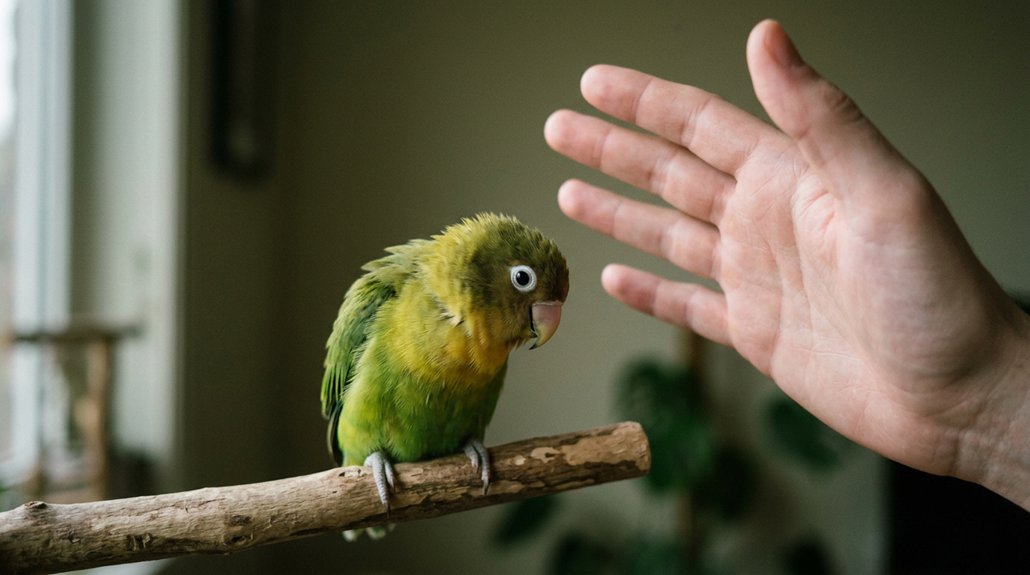
Forced handling usually backfires because a bird doesn’t experience it as “help” or “training”; it experiences being grabbed, restrained, or groomed against its will as a predator-like event. For prey species like budgies, that can wire fear to your hands, your cage, and even the room. When you block flight, you’re removing its main defense, so stress hormones rise and restraint trauma can show up as freezing, shaking, or sudden bites. Repeated forced grooming teaches your bird that escape attempts don’t work, so avoidance gets stronger. Flooding rarely helps because it erases choice and control. You’ll usually get better results by respecting early discomfort, easing pressure when it calms, and letting voluntary approach build trust instead of fear.
How to Tame a Scared Bird Step by Step
You can start by watching your bird’s body language closely, because leaning back, crouching, stepping aside, or compressing feathers usually means you’re too close and should stop. Then you’ll build trust with short, calm sessions: approach, pause at the first sign of discomfort, wait for the bird to relax, and back away so calm behavior gets rewarded. As your bird tolerates each step, you can gradually shorten the distance, then repeat the same careful method with your hand, treats, and eventually step-up training.
Reading Bird Body Language
Reading a scared bird’s body language starts with noticing its flight distance—the point at which your approach makes it retreat—and then respecting the earliest signs of discomfort, such as leaning back, crouching, stepping aside, or compressing its feathers. You’re watching for subtle shifts: eye tightening, beak clacking, feather slicking, hissing.
- Stop before the retreat.
- Wait for normal posture.
- Note slight fluffing.
- Observe weight shifts.
- Withdraw calmly.
That pause teaches you where stress begins and where calm returns. If warning displays stack together, like pinned eyes with wing tension, don’t advance. Forced handling can’t help; it removes the bird’s escape option and raises fear. Instead, you’re reading a moving threshold, then honoring it, so your presence becomes predictable, not threatening.
Slow Trust-Building Steps
Once you’ve learned where your bird’s stress begins, the next step is to build trust in very small, repeatable increments. Use a slow approach: move toward the cage until you notice the first discomfort cue—leaning back, crouching, stepping aside, or feather compression—then hold still. When posture relaxes, give quiet rewards by walking away, which teaches your bird that calmness lowers pressure. Repeat this approach–stop–reward loop, shortening distance by tiny steps over days. After close contact is tolerated, introduce your hand at the same pace, first dropping treats into the bowl, then offering millet only after repeated calm acceptance. Speak softly from afar after scares, and let your bird choose contact. Don’t force handling or grooming; minimize stress and protect trust.
When Fear Leads to Biting
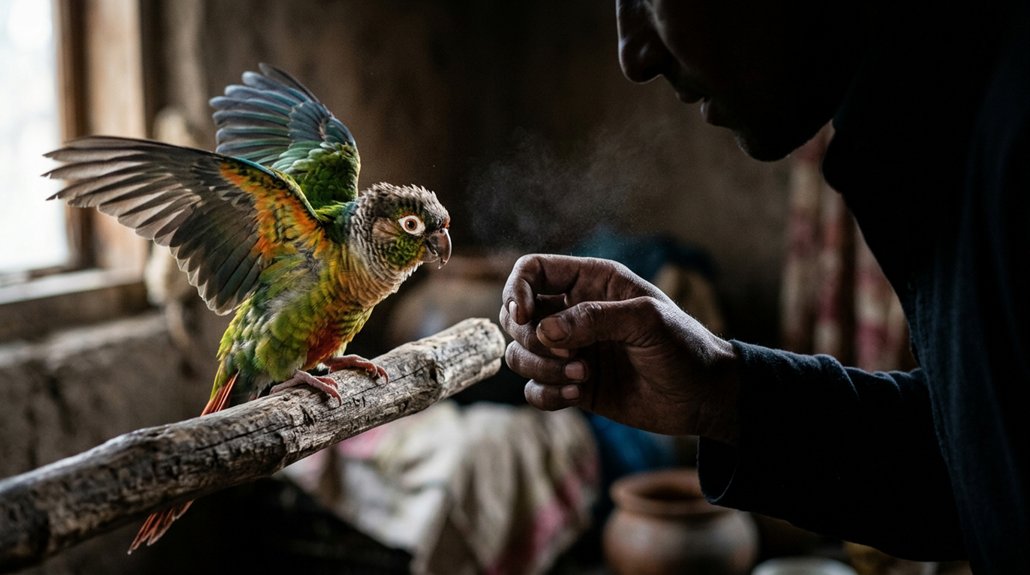
You can often see a bite coming when your bird starts tail fanning, wing flicking, hissing, or eye pinning, and those signals mean you should back off right away. If you keep reaching in when it’s cornered or already stressed, fear can escalate fast because escape feels blocked and biting becomes its last defense. When you notice these warning signs early, you give your bird a chance to calm down and learn that you’re not forcing contact.
Warning Signs Before Biting
Before a bird bites out of fear, it usually shows a brief sequence of warning signals that signal rising stress. You can often read the pattern in its eye pinning patterns and tail fanning timing, especially when the body stiffens.
- Rapid eye pinning and tail fanning or wing-flashing
- Hissing, growling, or low chattering
- Leaning back, crouching, or stepping a foot aside
- Freezing, hiding, or staying immobile when you reach in
- Fluffed feathers, quick movement shifts, and sharp vocalizations
If you notice these cues, your bird isn’t being “bad”; it’s asking for space. Repeated approaches that ignore them raise arousal and make a defensive bite more likely. Slow down, pause, and let your bird choose distance.
How Fear Escalates
When fear is repeated and unavoidable, a bird stops treating handling as neutral and starts reading it as a threat. If you keep grabbing or restraining it for nail trims or other care, it learns that your hands predict predator-like attacks. That’s how fear escalates: first it freezes, crouches, leans back, or steps aside; then, if you keep coming, it may lunge, flee, or bite. Tail fanning, wing raising, hissing, and growling are warning signals, and eye pinning with a stiff body is especially risky. When you ignore those cues, arousal climbs. Forcible handling or flooding can create learned helplessness, but it usually increases bite frequency because escape disappears. Watch contextual triggers, respect distance, and let retreat reduce threat.
How to Rebuild Trust After Nail Trimming
After a nail trim, a bird may briefly treat your face, hands, and even your voice as part of the threat, so give it space and keep out of sight for a few days rather than trying to reassure it. Use post event isolation to let stress fade. Don’t reach in, stare, or speak loudly. If possible, let a professional handle future trims; skilled restraint lowers risk and limits lasting fear. Then rebuild trust with a reward based approach:
- talk softly from across the room
- offer millet only when it comes to you
- turn away after calm behavior
- wait for normal posture and slight fluffing
- touch only the front of the neck, never from behind
When you move slowly, your bird learns it controls contact, and fear can shrink into curiosity.
Frequently Asked Questions
What to Do if Your Bird Is Scared of You?
You should stop approaching when your bird shows fear, then wait, turn away, and try again later. Use gentle handling, predictable routines, and quiet trust building; reward calm, and progress slowly over days or weeks.
What Is the 3 3 3 Rule for Birds?
It’s a gentle ladder: 3 minutes of calm contact, up to 3 times daily, for 3 days. You’ll use this behavioral reset for gradual desensitization, watching body language and stopping if your bird’s uneasy.
How to Tell if a Bird Hates You?
You’ll notice body language cues like freezing, backing away, crouching, hissing, or biting, plus food withholding behaviors—refusing treats or stepping up. If it acts tense only around you, it’s likely fearful, not hateful.
Why Is My Bird Avoiding Me?
You’re probably seeing fear, not rejection: your bird reads your body language as threatening. Even small advances can feel risky. Trust building works best with slower movements, consistent routines, and respecting its warning signals.
Conclusion
So, when your bird flinches, freezes, or flies, you’re seeing fear, not defiance. If you slow your steps, study subtle signals, and respect small boundaries, you help those feathers relax. Gentle, consistent contact can rebuild confidence after bites, trims, or stress. Trust grows through patient patterns, not pressure. Watch closely, move carefully, and your bird can shift from scared and skittish to steady and secure, one calm moment at a time.