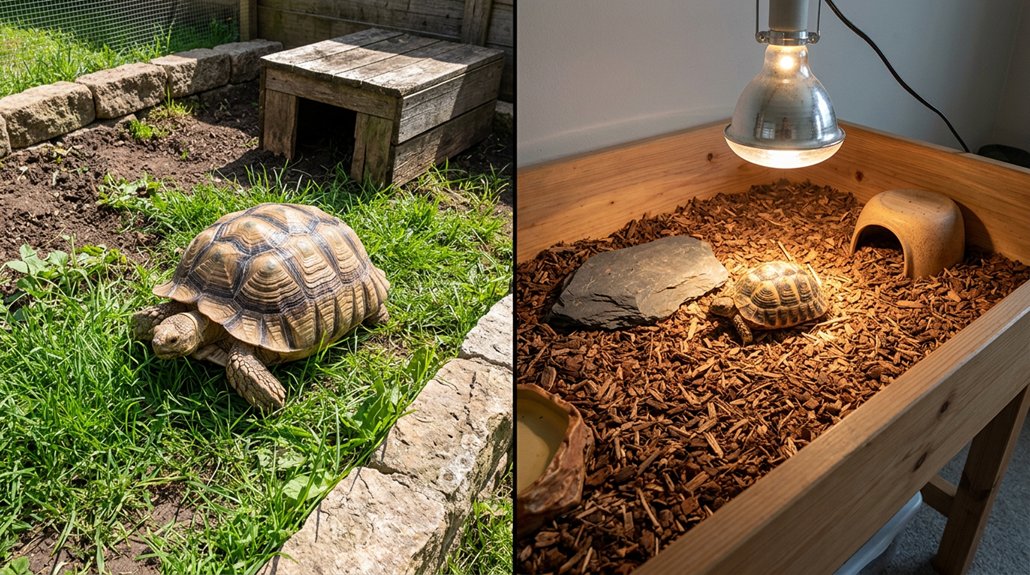
To care for a tortoise, balance indoor stability with outdoor natural benefits. Indoors, maintain stable temperatures and UVB lighting for calcium absorption, essential for cooler climates and predator protection. Outdoors, offer sunlight and space for natural behaviors, ensuring secure enclosures against predators and weather extremes. Monitor humidity and temperature closely in both settings to replicate natural conditions. By combining indoor and outdoor setups, you can provide thorough care, ensuring your tortoise thrives in all seasons. Discover more about optimizing their environment.
Key Takeaways
- Indoor setups provide controlled environments to protect tortoises from extreme weather, predators, and parasites.
- Outdoor enclosures offer natural sunlight and ample space for exercise, crucial for tortoise health and well-being.
- Consistent temperature and humidity control are vital in both indoor and outdoor setups for maintaining tortoise health.
- Seasonal adjustments, like switching between indoor and outdoor spaces, ensure optimal living conditions year-round.
- Secure outdoor enclosures with solid walls and buried fencing prevent escapes and protect from predators.
How to Meet Your Tortoise’s Indoor and Outdoor Needs
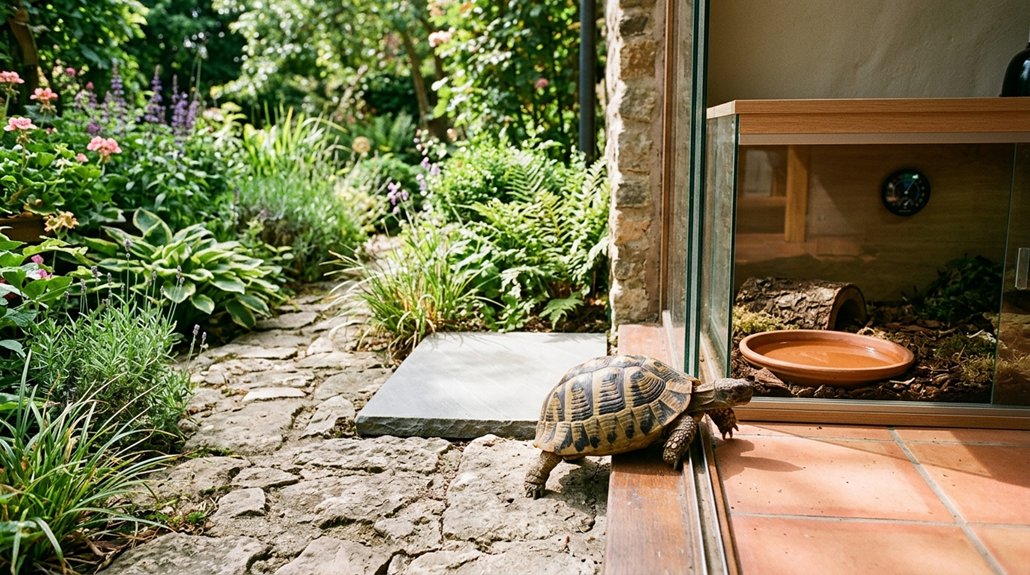
Meeting your tortoise’s indoor and outdoor needs involves creating environments that closely mimic their natural habitats. Temperature regulation is critical; maintain consistent indoor temperatures with 12 hours of light and warmth daily using high-quality UVB bulbs to support calcium absorption. Outdoor enclosures should allow natural behaviors with ample grazing space, shade, and predator protection. Humidity control varies—arid species need 45%-55%, while tropical ones require up to 80%. Achieve this through misting and adding foliage. Regular bathing hydrates indoor tortoises, while outdoor habitats should supply constant fresh water for drinking and soaking. Seasonal management is essential; relocate tortoises indoors during extreme cold, ensuring their setups always encourage natural activities during warmer periods.
Indoor Housing: Benefits and Drawbacks for Tortoise Health
Although indoor housing presents several advantages for tortoise health, it’s essential to balance these with potential drawbacks. The indoor environment allows for controlled temperature and humidity, important for tortoises, especially in cooler climates where outdoor conditions might be detrimental. The enclosed space guarantees protection from predators and parasites, safeguarding vulnerable hatchlings or delicate species. Additionally, it facilitates close health monitoring so you can quickly identify any health or behavioral changes. However, this setup presents challenges:
Controlled environments offer protection and health monitoring but can limit natural activity for tortoises.
- Waste management is crucial since limited space leads to quicker waste accumulation, affecting health.
- Indoor setups may lack natural foraging opportunities, reducing physical activity and mental stimulation.
- Safeguarding diverse stimuli is necessary for overall well-being.
Manage these factors carefully to optimize an indoor setup.
Outdoor Enclosures: Exploring Benefits and Drawbacks
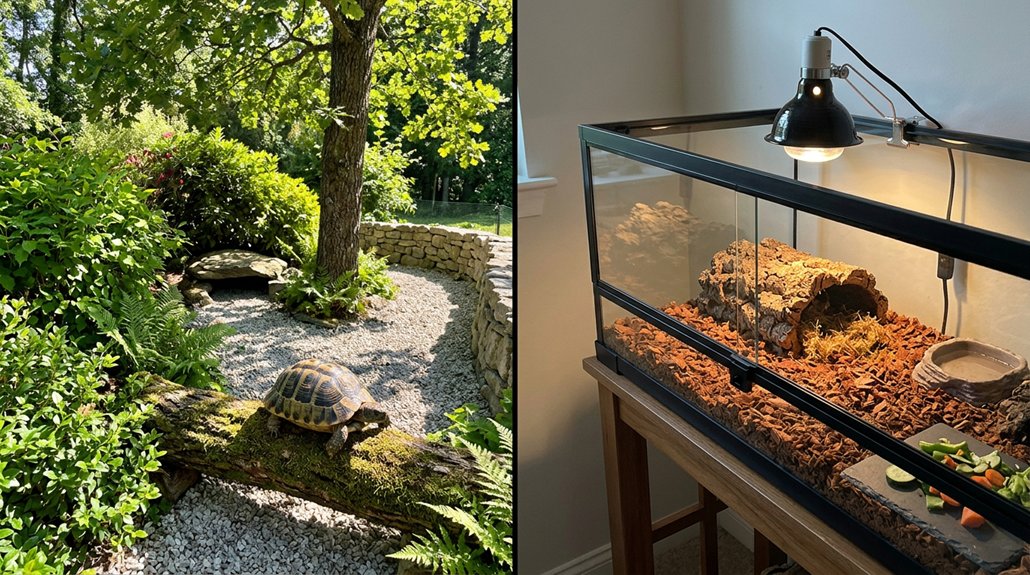
Outdoor enclosures offer numerous benefits that are fundamental for maintaining a tortoise’s health, yet they also come with certain drawbacks that must be managed judiciously. To optimize health, ample space allows tortoises to exhibit natural behaviors and exercise, aiding development and well-being. Natural sunlight in outdoor setups exposes them to UVB rays essential for calcium absorption, preventing metabolic bone disease. However, predator protection necessitates a carefully planned enclosure design to thwart threats from foxes and birds, alongside secure barriers thwarting escapes. Extreme weather poses another challenge, demanding shelters for cold conditions and shade to counteract summer heat. A well-designed enclosure encourages foraging, providing a varied diet and bolstering energy, akin to their natural ecosystem, while mitigating risks inherent to outdoor exposure.
How to Combine Indoor and Outdoor Spaces for Tortoise Wellness
To maximize a tortoise’s health, integrating indoor and outdoor environments allows you to leverage the benefits of natural conditions while safeguarding against climatic extremes and potential threats. Outdoor spaces provide natural sunlight and outdoor grazing, enriching a tortoise’s diet and supplementing their vitamin D needs. Indoors, replicating natural habitat conditions with the correct substrate and humidity is essential for well-being. Consistent temperature monitoring guarantees ideal living conditions.
Leveraging indoor and outdoor environments enriches diet and health, ensuring balanced conditions for tortoise well-being.
- Security Measures: Secure outdoor pens with solid perimeter walls and buried fencing to prevent escapes.
- Dietary Routine: Maintain consistent diets in both environments, guaranteeing freshness and availability.
- Environmental Acclimatization: Gradually acclimate tortoises during seasonal shifts to minimize temperature shocks, closely monitoring their adaptation and reaction to environmental changes.
These strategies enhance tortoise wellness considerably.
Managing Your Tortoise’s Enclosure Through the Seasons
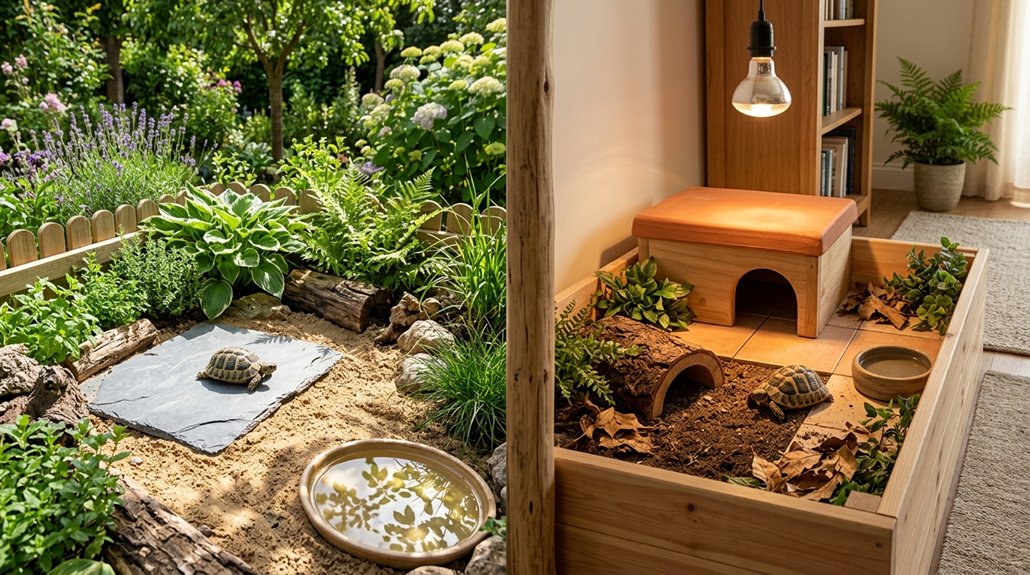
When managing your tortoise’s enclosure through the seasons, understanding the distinct needs that arise from seasonal changes is crucial for their health and comfort. Seasonal adjustments are key. In warmer months, outdoor enclosures provide ample sunlight and space, promoting natural grazing and exercise. However, extreme heat requires shelter options for protection. Regular enclosure maintenance is necessary, with constant monitoring of temperature to guarantee a balance between basking exposure and adequate shade. In winter, it’s important to switch to an indoor setup. Maintain controlled temperatures and humidity levels to mimic their natural habitat, securing comfort. Adopting a seasonal switch between indoor and outdoor enclosures offers the best of both environments for year-round tortoise well-being, effectively addressing temperature fluctuations.
Frequently Asked Questions
Should Tortoises Be Kept Inside or Outside?
Tortoises should have both indoor and outdoor setups. Indoor advantages include controlled temperature and humidity, while outdoor benefits encompass natural sunlight and spacious grazing areas. Consider species-specific needs and climate to determine the best balance for your tortoise.
Will My Tortoise Be Ok Without a Heat Lamp?
An ounce of prevention is worth a pound of cure. Without a heat lamp, your tortoise’s heat regulation might suffer, particularly indoors. While natural sunlight provides warmth outdoors, guarantee additional heat sources during colder months to prevent health issues.
What Are Common Tortoise Enclosure Mistakes?
You might make mistakes like providing insufficient space and an incorrect substrate, allowing temperature fluctuations, lacking proper lighting, ignoring humidity needs, not ensuring proper ventilation, and overcrowding. These oversights can greatly affect your tortoise’s well-being.
What Makes a Tortoise Happy?
A tortoise’s happiness stems from a varied diet and engaging enrichment activities. Guarantee they have ample space, UVB exposure, hiding spots, basking areas, and regular interaction to mimic natural environments, fostering both physical and emotional well-being.
Conclusion
Caring for a tortoise is like nurturing a living gemstone—requiring balance between indoor and outdoor environments. One owner observed their tortoise thrive, resembling a clock, as it harmonized with natural and artificial settings. With indoor setups offering controlled climates and outdoor spaces providing sunlight’s crucial warmth, it’s important to calibrate both for best health. By understanding these needs, you guarantee your tortoise’s vitality through the seasons, much like a precisely tuned watch keeps perfect time.