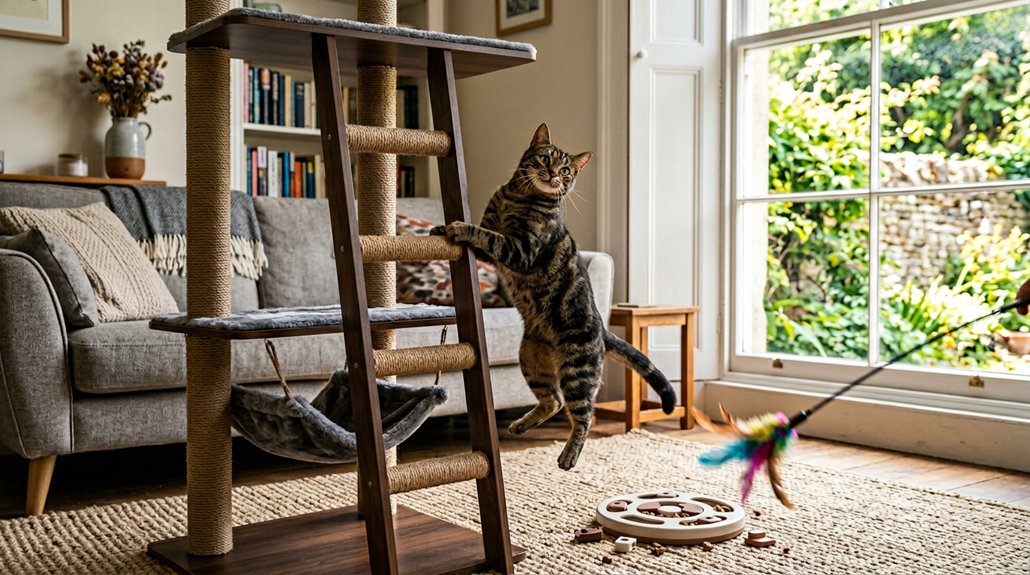
To keep your cat mentally stimulated, use puzzle feeders and interactive toys that promote cognitive challenges. Schedule short play sessions around peak activity times, utilizing wand toys and scent-based games. Enhance their environment with window perches for nature observation and vertical climbing spaces. Rotate toys regularly to maintain novelty and engage them in hide-and-seek games. You can also encourage safe outdoor exploration with a harness. Explore how these strategies can elevate your cat’s mental well-being further.
Key Takeaways
- Use puzzle feeders to encourage problem-solving and slow down eating habits.
- Schedule short, regular play sessions with a variety of toys for cognitive stimulation.
- Rotate toys periodically to maintain novelty and prevent boredom.
- Provide window perches and cat trees for observation and climbing activities.
- Engage in hide-and-seek games with treats to enhance mental engagement.
Utilize Puzzle Feeders and Interactive Toys
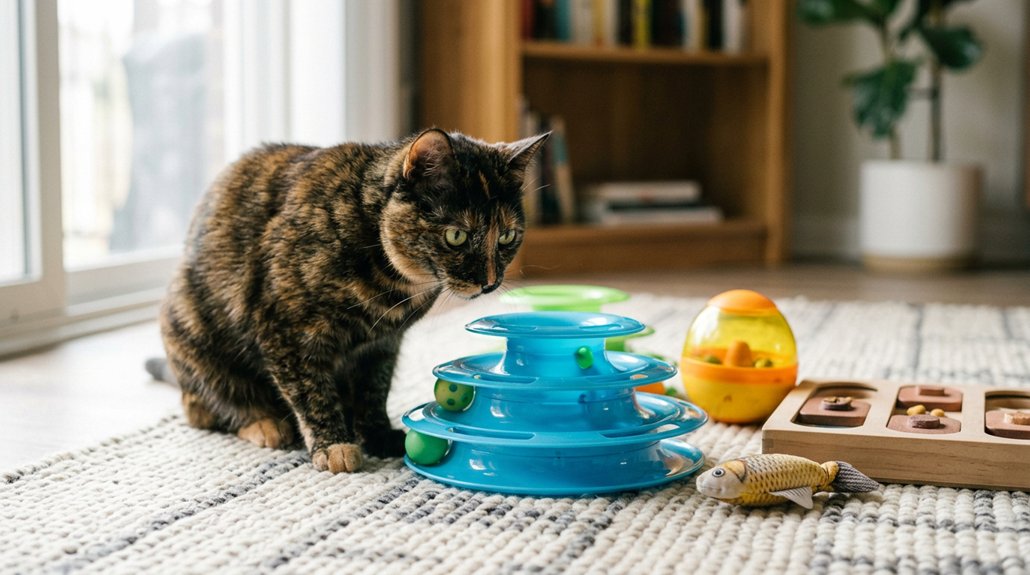
Puzzle feeders and interactive toys are effective tools in promoting mental stimulation in cats. By incorporating enrichment activities like food puzzles, you’re enabling your cat to engage in problem-solving tasks that simulate natural hunting behaviors. These devices require cats to think critically and exert effort to access their food, promoting cognitive engagement while fulfilling their innate instincts.
Interactive toys often dispense treats, combining physical activity with mental challenges, thereby enhancing their overall play experience. Rotating different types of food puzzles is essential for maintaining their interest and keeping their minds sharp. Furthermore, these tools slow down fast eaters, preventing obesity and fostering healthy eating habits. Regular use bolsters problem-solving skills and strengthens the bond between you and your pet through rewarding interactions.
Schedule Short Play Sessions for Mental Stimulation
Scheduling short play sessions is essential for maintaining your cat’s mental stimulation. Aim for 10-15 minutes of playtime duration with activities around dawn and dusk, aligning with your cat’s natural activity peaks. Using varied engagement strategies, such as wand toys and puzzle feeders, maximizes mental challenges, keeping your cat intrigued and energetic.
Observe your cat closely to adjust session frequency and type based on signs of disinterest or fatigue. For kittens, short bursts may total up to 10 daily sessions, promoting both mental and physical health. Always prioritize diverse activities to prevent boredom and frustration.
Consistent, brief play sessions create an enriched environment, fostering mental agility and enhancing your cat’s overall well-being, ensuring they remain a happy, healthy companion.
Set Up Window Perches for Scenic Views
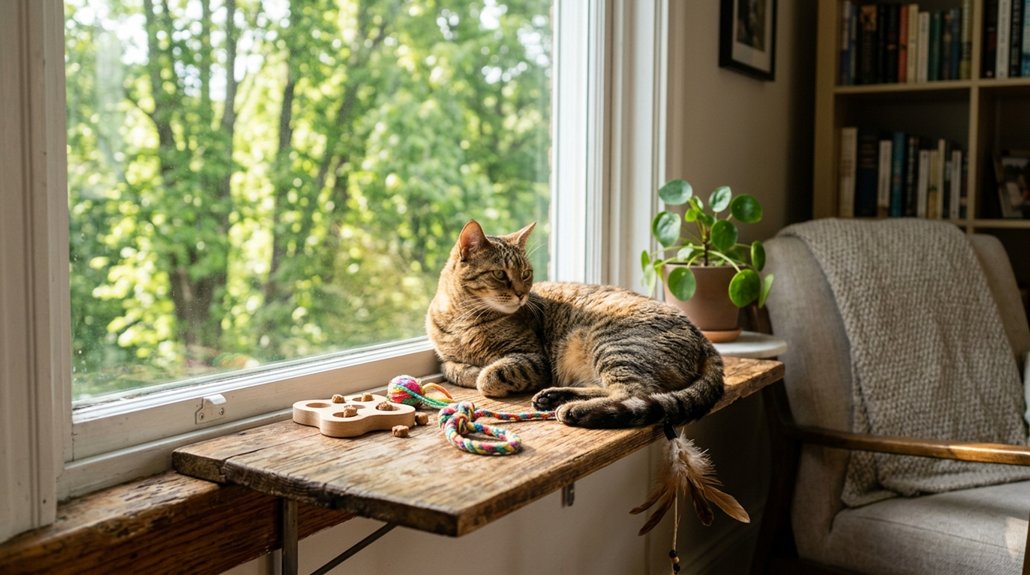
Positioning window perches can greatly enhance your cat’s engagement with the outdoor environment, providing cognitive stimulation. Cats can benefit from observing birds and other wildlife, which can effectively stimulate their natural predatory instincts. By strategically using sturdy, carpeted shelves or purpose-built perches, you can create a comfortable and secure platform for your feline’s curiosity.
Enhance Outdoor Observation
Creating a conducive environment for feline mental engagement is essential, and window perches serve as an excellent solution for encouraging outdoor observation. This setup satisfies your cat’s natural curiosity and hunting instincts, allowing them to watch birds and wildlife. Cat behavior experts note that hearing outdoor sounds, like rustling leaves and chirping birds, stimulates mental activity. Positioning sturdy shelves maximizes vertical space, enabling your cat to observe from an elevated vantage point, bolstering their security and confidence. Make certain your window areas are routinely cleaned for unobstructed views. This provides a continuous source of entertainment, reducing boredom and enhancing mental health. Integrating window views into their daily routine can alleviate stress, offering solace especially during times they’re home alone.
Stimulate Cat Curiosity
While it’s often overlooked, enhancing a cat’s environment with window perches is scientifically proven to stimulate their natural curiosity. By observing outdoor activity, such as birds and squirrels, cats engage their innate hunting instincts. These elevated vantage points also offer a sense of safety and can reduce stress, promoting confidence. Incorporating elements of scent exploration and DIY puzzles near the windows can further enrich their experiences. Regularly altering perch locations keeps your cat’s interest piqued, maintaining engagement with the ever-changing world outside.
Consider setting up your cat’s window perch with these features:
- Comfortable cushions to encourage extended observation periods.
- Access to natural ambient noises to enhance sensory engagement.
- Changeable puzzle toys for added mental challenge.
- Scents from the outdoors for a richer experience.
Create Vertical Climbing Spaces
To truly cater to a feline’s instinctual behavior, vertical climbing spaces are essential. Cat tree designs and wall shelves are particularly beneficial, offering your cat elevated vantage points to satisfy their natural urges to climb and observe. Ensuring these spaces are sturdy and carpeted provides safe and comfortable perch options for your cat. Beyond comfort, such installations promote both physical exercise and mental enrichment as they navigate higher altitudes. Broadening the terrain with ramps and tunnels enhances exploratory activities, preventing boredom. It’s vital to regularly reassess and refresh these vertical areas, keeping them engaging and challenging. By doing so, you foster a stimulating, enriched environment that aligns with your cat’s inherent need for vertical exploration.
Engage Cats With Wand and Teaser Toys
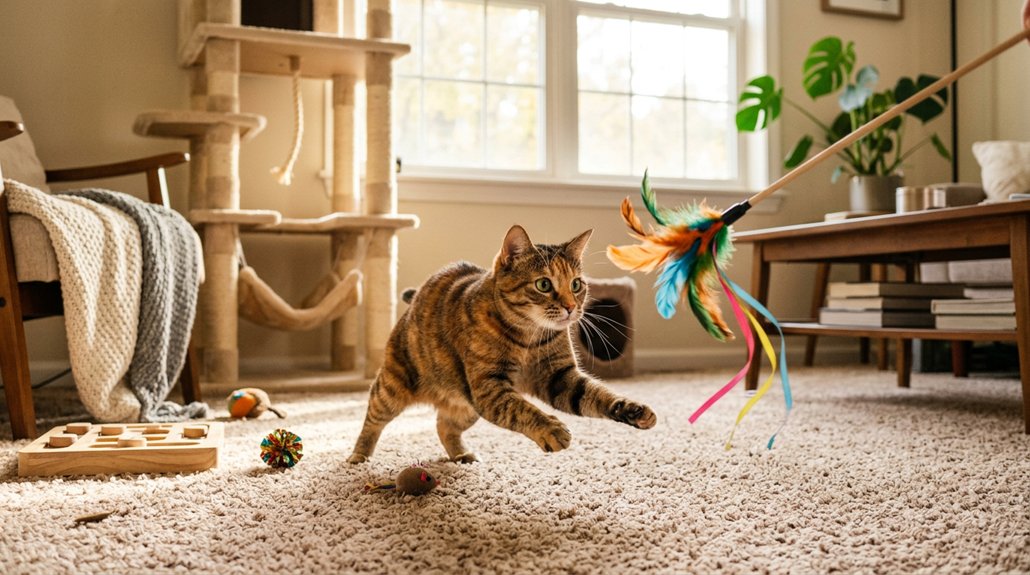
Engaging your cat’s natural hunting instincts through wand and teaser toys can provide essential mental and physical stimulation. These toys not only mimic prey movements that encourage chasing and pouncing but also offer safe interactive play by keeping your hands at a distance from their teeth. Implementing short sessions of play, typically 10-15 minutes, maintains your cat’s interest and fosters a stimulating environment essential for behavioral well-being.
Simulate Natural Hunting Instincts
Even if your feline friend spends its days indoors, keeping it mentally stimulated by mimicking the thrill of the hunt is crucial for its well-being. Wand and teaser toys are excellent tools for replicating natural hunting behavior through prey mimicry. These toys should emulate unpredictable prey movements, encouraging your cat’s instinct to stalk and capture. Engaging them in 10-15 minute sessions prevents boredom, maintaining both mental and physical vigor.
Consider these tips:
- Vary toy presentation: Change speeds and heights to enhance allure.
- Supervise playtime: Prevent ingestion of strings or small parts.
- Maintain regular sessions: Consistent play guarantees sustained engagement.
- Optimize toy choice: Favor those replicating prey erraticism.
Ensure Safe Interactive Play
While ensuring your cat’s well-being, incorporating safe interactive play with wand and teaser toys is essential. These toys simulate a cat’s natural hunting behavior, fostering physical exercise and engagement. Use feathered or string attachments to imitate prey movements, sparking excitement and encouraging chasing, pouncing, and jumping. Always supervise sessions to prevent ingestion of strings or parts, maximizing safety. Choose toys with strong, durable attachments to withstand energetic play and store them securely to prevent unsupervised access. Adding wand and teaser toys to their routine boosts mental stimulation, promoting focus and interaction with you.
| Safety Tips | Attachment Durability |
|---|---|
| Supervise play sessions | Use strong, durable materials |
| Prevent ingestion risks | Feathered or string attachments |
| Store toys when not in use | Select toys designed for longevity |
Introduce Hide-And-Seek Games With Treats
Kick-starting your cat’s mental engagement can be effectively achieved through strategic hide-and-seek games with treats. Treat hiding mimics natural hunting behavior, activating their instincts and maintaining mental stimulation. Starting with visible spots aids in developing problem-solving skills; gradually opt for complex hiding locations to increase cognitive challenges. Utilize enticing treats or beloved toys, encouraging scent exploration and investigation. Regularly change hiding places to prevent disinterest and boost exploratory behaviors. It’s vital to monitor your cat’s involvement, tailoring the difficulty to keep their interest piqued. Consistent adaptation enhances mental engagement, promoting overall well-being.
Engage your cat’s mind with hide-and-seek games, using treats to mimic natural hunting and stimulate curiosity.
- Start with easy treats: Place treats in visible locations initially.
- Increase complexity: Progress to harder hiding spots over time.
- Use small treats or toys: Enhance search motivation.
- Regular adaptations: Avoid predictable hiding patterns.
Keep Play Fresh by Rotating Toys
Building on the engagement sparked by hide-and-seek games, you can further enrich your cat’s environment by regularly rotating toys. This practice prevents boredom by maintaining novelty in their play environment, enhancing mental stimulation. By introducing new toys and temporarily removing old ones, you keep your cat excited and mentally engaged.
Guarantee a variety of toys is available, incorporating different textures, such as crinkle materials, plush mice, and interactive puzzles. These diverse options cater to your cat’s innate play preferences and natural hunting instincts. Mimicking foraging behaviors through regular toy swaps can boost cognitive engagement. Maintaining engaging play sessions of at least 10-15 minutes daily, supported by diverse toy textures, guarantees effective mental stimulation and sustained enjoyment for your feline companion.
Encourage Outdoor Exploration With a Secure Harness
To address your cat’s natural curiosity and provide essential mental stimulation, consider utilizing a secure harness for supervised outdoor exploration. This practice enhances outdoor safety, allowing your cat to explore without the risk of wandering or encountering environmental dangers. Begin harness training indoors to guarantee your cat feels comfortable and secure, reducing stress during subsequent outdoor excursions. Additionally, verify that your cat’s microchip and ID tags are up-to-date, adding an extra safety layer.
- Test the harness indoors first: Confirm comfort and security.
- Keep identification current: Update microchip and ID tags.
- Supervise outdoor time: Maintain vigilance to prevent dangers.
- Create a catio: Offers fresh air inside a secure enclosure.
Outdoor experiences satisfy a cat’s explorative instincts, minimizing boredom and improving mental engagement.
Frequently Asked Questions
How to Keep Cats Mentally and Physically Stimulated?
To keep your cat mentally and physically stimulated, use interactive toys, puzzle feeders, and DIY cat games. Integrate scent trails in outdoor adventures, and conduct training sessions for engagement. Consistent enrichment supports their cognitive and physical well-being.
What Is the 3-3-3 Rule for Cats?
The 3-3-3 rule is a miraculous transformation of cat behavior! In three weeks, observe your feline’s journey from timid to sociable. Gradual feline enrichment through interactive play guarantees a seamless, harmonious adjustment to their new home.
What Is “I Love You” in Cat Language?
In cat language, “I love you” manifests through feline communication like purring patterns, slow blinking, or gentle head butting. These subtle actions indicate affection and trust, demonstrating your cat’s emotional bond and security with you.
How Do I Say “Hi” in Cat Language?
To say “hi” in cat language, use feline greetings by offering a slow blink, allowing nose touches, or presenting an upright tail. These cat communication methods establish trust and signify a friendly interaction between you and your cat.
Conclusion
In your quest to keep your feline friend mentally stimulated, remember that “variety is the spice of life.” By incorporating puzzle feeders, interactive toys, and regular play sessions, you’re engaging their mind and supporting their well-being. Window perches and climbing spaces provide a dynamic environment, while hide-and-seek games emphasize exploration and discovery. Rotating toys keeps things fresh, and supervised outdoor exploration with a harness broadens their horizons. Together, these strategies guarantee a balanced, enriching home environment.