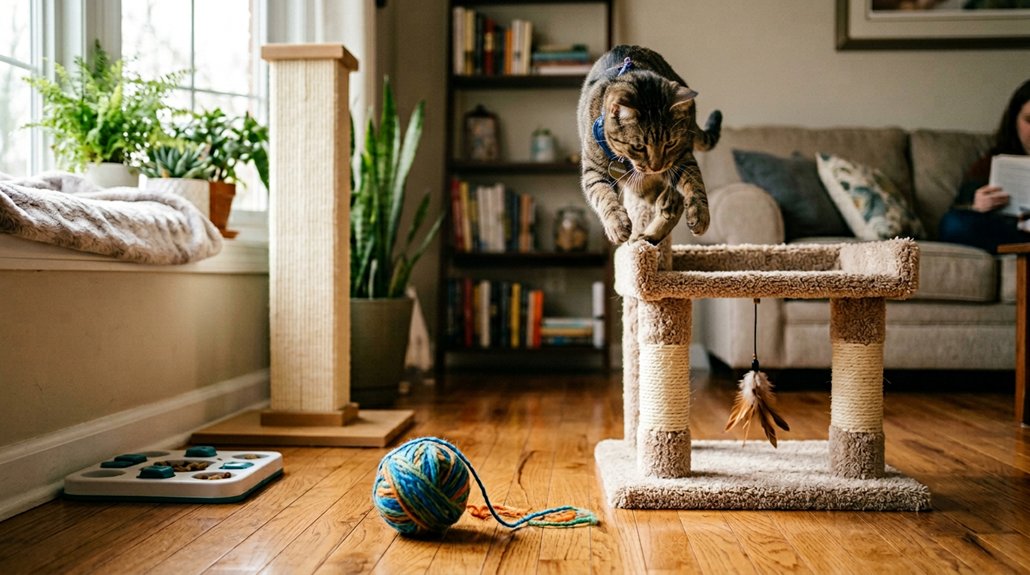
To keep your cat active indoors, use puzzle feeders to make mealtime engaging and install cat trees or wall shelves for climbing. Regular play sessions with varied toys guarantee mental and physical stimulation, while DIY toy ideas keep things fresh. Supervised activities on a catio or harness allow for safe outdoor exploration. By incorporating these strategies, you’ll address your cat’s hunting instincts and prevent boredom. Discover more ways to enrich your feline friend’s life.
Key Takeaways
- Use puzzle feeders to slow eating and simulate hunting, providing mental stimulation and physical activity.
- Set up cat trees and wall shelves to promote climbing and satisfy natural instincts.
- Engage in daily play sessions with a variety of interactive toys to prevent boredom.
- Regularly rotate and refresh toys to maintain interest and encourage continuous play.
- Incorporate DIY toys like crumpled paper balls and catnip socks for cost-effective, engaging playtime.
Make Mealtime Fun With Puzzle Feeders
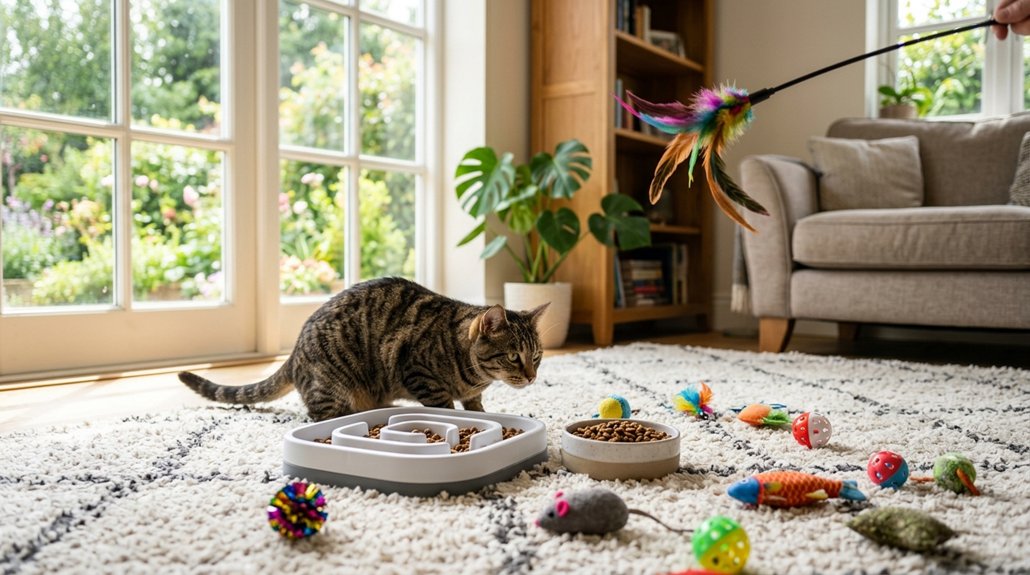
Many cat owners might notice that their feline friends sometimes lack stimulation indoors, but incorporating puzzle feeders into your cat’s mealtime routine can offer a scientific and compassionate solution. Interactive feeding encourages your cat to engage their mind by solving challenges to access food, mimicking their instinctual hunting behaviors. This method not only makes mealtime more entertaining but can also help prevent obesity by slowing eating and promoting active engagement. Offering various puzzle feeders guarantees your cat remains interested, as each design provides unique challenge rewards. Additionally, many of these feeders are adjustable, letting you tailor the difficulty to your cat’s skills. By incorporating puzzle feeders, you turn eating into a fun, enriching experience, boosting your cat’s overall well-being.
Install Cat Trees and Wall Shelves
Providing your indoor cat with access to elevated spaces through the installation of cat trees and wall shelves can greatly enrich their environment. These structures cater to a cat’s instinctive need for interactive climbing and allow for the integration of pet-friendly furniture that complements your home. Cat trees feature multi-level platforms where your feline can climb, scratch, and lounge—activities essential for vertical exploration and exercise. Wall-mounted shelves expand their territory, promoting physical activity and mental stimulation by offering safe, elevated vantage points. Positioning carpeted perches near windows enhances their interaction with the outdoors. Encouraging jumping and climbing helps maintain healthy weight and muscle tone, ensuring your cat’s well-being. This thoughtful environmental enhancement provides comfort and security.
Set Up Bird-Watching Perches
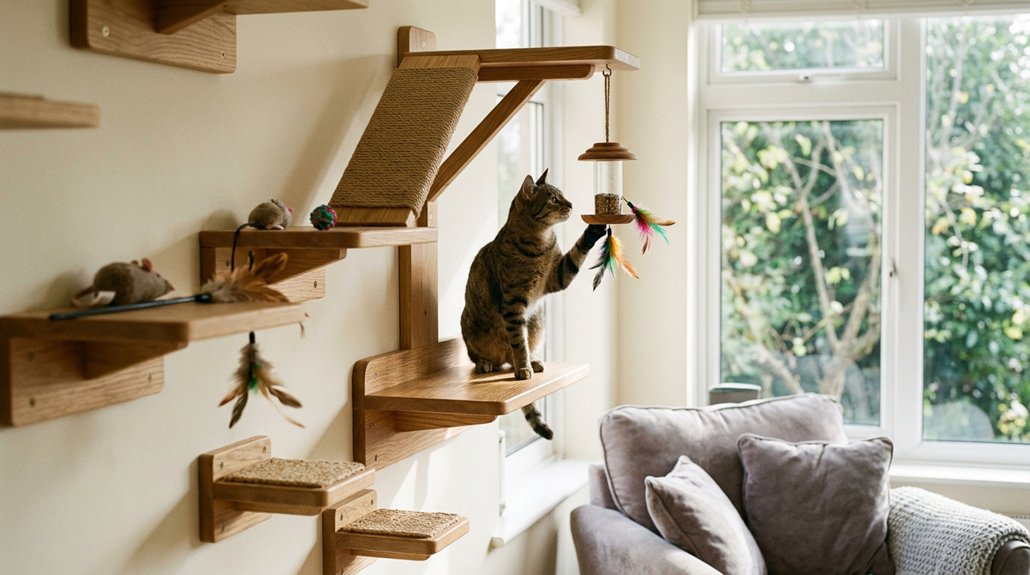
To enhance your cat’s window view experience, consider setting up bird-watching perches that cater to their instinctual curiosity. By installing sturdy, carpeted shelves or window boxes near windows, you can encourage your cat to observe wildlife and indulge in the mental stimulation it brings. These setups provide a safe and comfortable vantage point for your feline friend, offering unobstructed vistas that effectively satisfy their natural hunting instincts.
Enhance Window View Experience
Creating a stimulating indoor environment for your cat starts with enhancing their view of the outside world. Setting up secure perches near windows can greatly reduce boredom and encourage mental stimulation. Cats love bird-watching, and offering them this safe vantage point indulges their climbing instincts.
Here’s how to create an engaging window view:
- Install Sturdy Perches: Make sure they’re secure, allowing your cat to enjoy watching birds without worry.
- Add Outdoor Attractions: Place bird feeders or birdhouses in your yard to captivate their attention.
- Maximize Sunlight Exposure: Position the perches where natural light abounds, boosting their well-being.
Combine this with indoor gardening and scent enrichment to create a holistic and stimulating environment that nurtures your cat’s happiness and curiosity.
Encourage Wildlife Observation
Amidst the comforts of indoor living, offering your feline friend the opportunity to observe wildlife can bring excitement and mental stimulation to their day. By setting up bird-watching perches near windows, you create observation zones that cater to your cat’s natural instincts. Make sure these perches are at a safe height and securely installed, providing an unobstructed view of passing birds and other wildlife. This setup encourages your cat to satisfy their natural curiosity and engage in mental and physical activity. To further enhance the experience, regularly clean the windows for crystal-clear visibility. Adding a bird feeder in view of these perches can attract diverse bird species, offering ongoing entertainment and promoting a serene indoor environment for your cat.
Stimulate Natural Curiosity
Enhancing your cat’s wildlife observation doesn’t stop at bird-watching. Set up bird-watching perches as part of your cat’s enrichment activities to stimulate natural curiosity. Comfortable window perches, like shelves or padded platforms, offer mental stimulation through outdoor scenery. Here’s how to get started with indoor exploration:
- Vary Perch Heights: Position perches at different levels to cater to your cat’s climbing instincts and offer diverse vantage points.
- Use Bird Feeders: Place feeders or birdhouses within view of the perches to attract wildlife, creating an engaging visual experience.
- Maintain Cleanliness and Safety: Regularly clean windows to keep views clear, and guarantee all perches are secure to prevent accidents or escapes.
These steps keep curiosity alive and boredom at bay.
Host Fun Play Sessions Daily
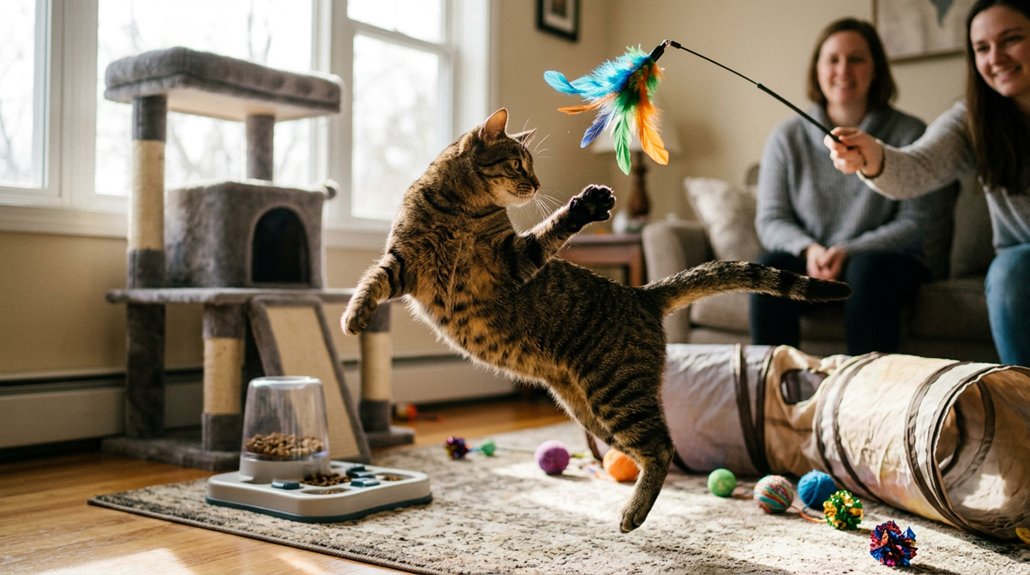
To keep your cat mentally and physically stimulated, it’s crucial to schedule regular playtime tailored to their energy levels. Engaging your cat with a variety of toys like wand toys and laser pointers not only satisfies their natural hunting instincts but also prevents boredom. By rotating toys and aligning play sessions with your cat’s natural activity patterns, you’ll enhance their overall well-being and happiness.
Schedule Regular Playtime
Keeping your cat active indoors involves more than just tossing a toy in their direction; it requires thoughtful scheduling and variety. To effectively engage your cat’s hunting instincts and maintain their energy levels, incorporate regular interactive games into their routine. Here’s how you can make the most of playtime:
- Timing: Schedule daily sessions of 10–15 minutes for older cats and up to 10 sessions for kittens, aligning these with natural active times at dawn and dusk.
- Diversity: Use a range of toys, like wand toys and interactive puzzles. Change them periodically to keep things exciting.
- Play Partners: Use your presence to be an engaging play partner, monitoring their body language for signs of fatigue or boredom to guarantee an enjoyable experience.
Incorporate Engaging Toys
While indoor environments may seem limited, you have the power to transform your home into a playground for your cat with the right engaging toys. Utilize interactive play tools like wand toys, feather teasers, and laser pointers to mimic prey movements, enticing your cat’s natural hunting instincts. Scheduling regular 10-15 minute sessions for older cats, and up to 10 sessions for kittens, guarantees they stay active and mentally stimulated. Puzzle feeders and treat-dispensing toys go a step further by challenging their intellect and curbing fast eating habits. Regular toy rotation is essential; switching between different toys keeps curiosity high and prevents boredom. Even DIY toys made from household items can encourage exploration and enhance your cat’s play experience.
Create a Catio or Use Harnesses for Safe Outdoor Fun
Imagine transforming your indoor space and the world outside into a feline paradise by exploring the concept of a catio or the use of harnesses for safe outdoor fun. A well-thought-out catio design offers your cat outdoor enrichment by providing a secure area with perches and climbing structures. This setup satisfies your cat’s natural instincts and keeps them safe from predators and traffic.
Harness training is another great option for outdoor adventures. With a snug yet comfortable fit, your cat can explore new environments under your supervision, boosting their mental and physical well-being. Starting young helps them adjust smoothly.
To maximize safety and enjoyment, consider these tips:
- Prioritize regular supervision.
- Select durable, secure materials.
- Guarantee your cat’s comfort and safety always.
Keep Cat Toys Fresh With DIY Ideas
Beyond the excitement of outdoor adventures, indoor play is pivotal in keeping your cat physically active and mentally stimulated. DIY toys are a cost-effective way to create interactive toys and homemade puzzles that ignite your cat’s curiosity. Use household items like crumpled paper balls or empty toilet paper rolls for engaging play options. You can fill old socks with catnip, tying them securely to cater to your cat’s hunting instincts. Enhance interactive play further with a fishing rod toy by attaching feathers to a stick. For an engaging twist, hide treats or toys around your home, creating a treasure hunt. Keep your cat engaged by rotating these DIY creations regularly, ensuring they remain intrigued and prevent boredom.
Frequently Asked Questions
What Is the 3-3-3 Rule for Cats?
The 3-3-3 rule helps you understand cat behavior phases: three days for acclimation, three weeks for routine adjustment, and three months for personality emergence. Use indoor enrichment to support their adjustment with interactive toys and safe spaces.
How Do I Keep My Indoor Cat Active?
Enliven your cat’s world by igniting their inner explorer with interactive toys and climbing structures. These tools mimic the excitement of the hunt, ensuring they’re mentally engaged while satisfying their crepuscular instincts. Your cat’s happiness will soar.
What Is the #1 Cause of Death in Cats?
The #1 cause of death in cats is chronic kidney disease (CKD). It greatly impacts cat health and feline lifespan. CKD affects up to 40% of older cats. Regular vet check-ups are essential for early detection and management.
What Is “I Love You” in Cat Language?
In cat language, “I love you” is expressed through slow blinks, gentle purring, and affectionate head rubs. Feline behavior like kneading and an upright, slightly curved tail further communicate love and trust in cat communication.
Conclusion
Keeping your cat active indoors isn’t just fun—it’s essential for their health. Studies show that indoor cats live two to three times longer than their outdoor counterparts due to reduced risks, but they still require regular stimulation to stay healthy. By incorporating activities like puzzle feeders and cat trees, you’re enhancing both their physical and mental well-being. Remember, a content and engaged cat is a healthier cat, and your extra efforts can truly make a difference in their quality of life.