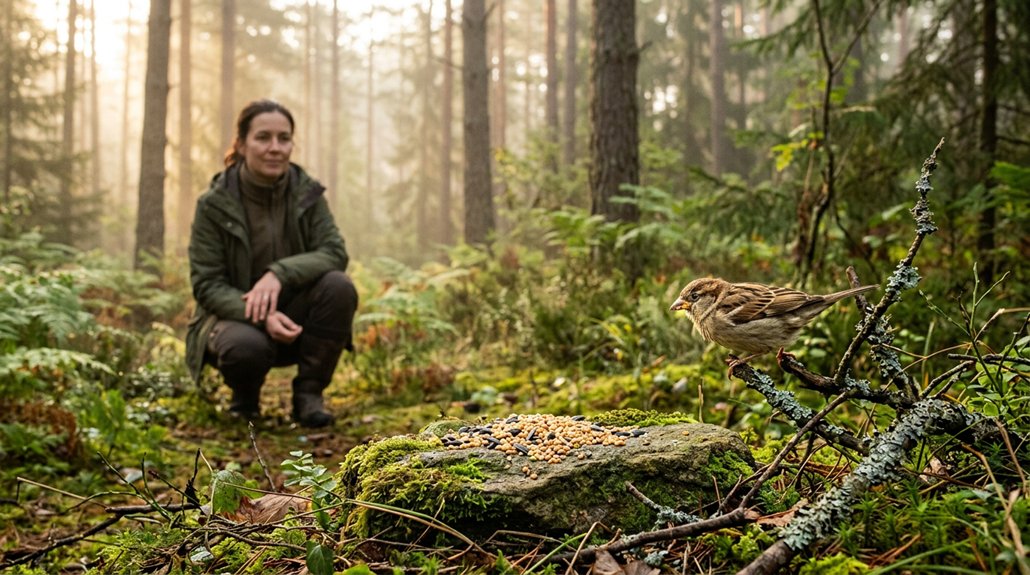
You gain a bird’s trust over time by moving slowly and letting it set the pace. Watch for comfort cues like a lowered head, relaxed body, soft sounds, or preening, and pause when you see hissing, puffed feathers, wing flicking, or backing away. Spend calm time nearby, speak softly, and offer tiny treats after calm behavior. Keep routines predictable, use gentle step-up training, and never force contact. With patience, trust grows in quiet, steady ways, and there’s more to learn.
Key Takeaways
- Approach slowly, speak softly, and let the bird come closer at its own pace.
- Watch for calm signals like relaxed posture, lowered head, preening, or taking food from your hand.
- Stop immediately and give space if you see hissing, puffing up, wing flicking, or backing away.
- Use consistent routines, gentle greetings, and short positive training sessions with tiny treats.
- Avoid grabbing, yelling, or punishment, since force can damage trust and set progress back.
Learn Your Bird’s Trust Signals First
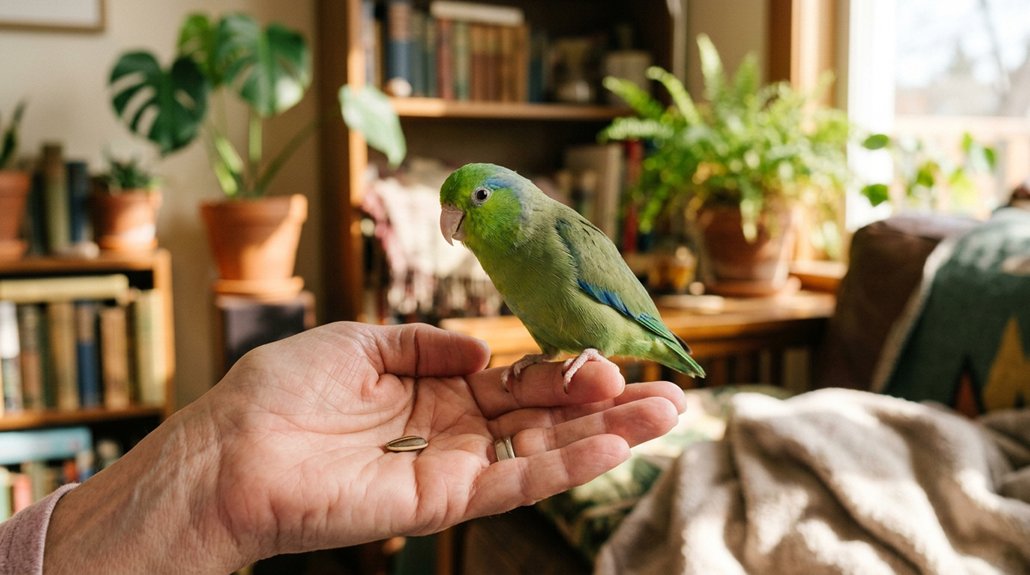
Before you move in closer, learn to read what your bird is already telling you. Look for comfort signals: a lowered head for scratches, a relaxed body, soft vocalizations, or preening. Those signs mean you’re being welcomed. When you notice hissing, tail fanning, wing flicking, loud shrieks, puffed feathers, backing into corners, or avoiding eye contact, pause right away; your bird needs space. Use consistency tracking to see patterns across days, not just one good moment. If it keeps dipping its head or leaning in, trust is becoming steady. Hand-feeding can be a clear, measurable step too. Keep fledgling differences in mind: a recently separated young bird may seem wary, while a long-term pet may show routine-seeking behaviors.
Let Your Bird Set the Pace
Once you’ve learned your bird’s comfort cues, the next step is to let those signals guide the pace. You don’t need to rush a bond; a slow approach shows respect and helps your bird feel safe. Let your bird come to you first, and keep your personal space invitation open without pressure. Sit nearby, read softly, or simply be present each day so your bird can get used to your calm routine. If it accepts a treat from your hand, that’s progress. Match your expectations to age and background, since some birds warm up quickly while others need much longer. If you notice stress, back off right away. Giving room now can protect trust later, and patience often speaks louder than any gesture.
Read Bird Body Language
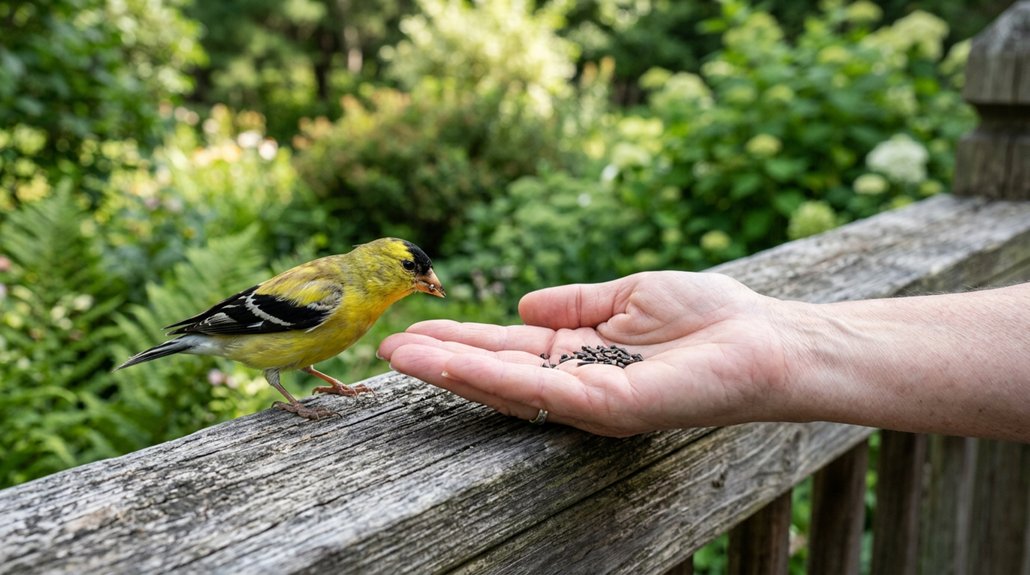
You can tell a lot by how your bird holds its body: a relaxed posture, lowered head, or gentle approach often means it feels safe and may welcome soft contact. On the other hand, hissing, puffed feathers, wing-flapping, pacing, or a flattened crest are signs that you should pause and give it space. Watch for these cues patiently, and let calm signals guide when you continue and when you stop.
Spotting Calm Signals
A relaxed bird often gives small, quiet clues that it’s feeling safe, and learning them helps you move at its pace. You may notice a lowered head and a tucked posture, which can invite head scratches and show comfort. Soft, puffed feathers can also signal contentment when its breathing stays easy. If it avoids direct eye contact or gives you a slow blink, it’s trying to feel less threatened. When it calmly takes food from your hand, steps forward to inspect you, or preens nearby, trust is growing. A relaxed posture matters more than any single gesture, so watch the full picture. Keep your movements gentle, and let the bird set the pace.
Noticing Stress Signs
Sometimes a bird’s stress shows up in small shifts before it escalates, so watch closely and pause when you see rapid body swaying, puffed feathers, hissing, or a flattened crest.
| Sign | Meaning | Your move |
|---|---|---|
| Backing away | Discomfort | Give space |
| Crouching low | Unease | Stop reaching |
| Open-mouth breathing | Stress | Rest now |
| Soft head tuck | Calm | Offer gentle attention |
If you notice repeated biting, an intense stare, or sudden alarm calls, stop training and return the bird to a safe spot. Tail bobbing at rest, prolonged fluffed posture, and harsh breathing mean it needs quiet recovery. Stay observant of environmental cues and seasonal changes, because they can shift comfort fast. When you respond patiently, you’re showing the bird that its signals matter and that trust won’t be rushed.
Spend Calm Time Near the Cage
You can help your bird feel safer by sitting quietly near the cage for 10–20 minutes at a time, twice a day, while you read or do other calm tasks. Speak softly now and then, keep your body relaxed, and avoid staring so your presence feels gentle rather than threatening. A brief morning or evening visit with a few favorite treats can slowly build trust through calm, steady routine.
Quiet Presence Near Cage
Spend 15–30 minutes each day sitting quietly near the cage, about 1–2 meters away, while you read or work so the bird can get used to your presence without feeling pressured. Your ambient presence should feel ordinary, and your soft shadowing should stay calm and still.
- Speak softly every few minutes, keeping your voice brief and gentle.
- Sit at cage level or slightly below, and avoid staring directly at the bird.
- Place treats just inside the open door, then wait; let the bird choose to approach.
Over time, you can slowly stay closer and longer. Watch for relaxed signs like preening or head tucking. These cues show your quiet presence is becoming safe, familiar company.
Gentle Daily Interaction
Twice a day, sit quietly within a meter of the cage for 15–30 minutes while you read or work, letting the bird adjust to your calm, ordinary presence. Speak softly now and then, using slow greetings or the same brief phrase so your voice becomes familiar. Keep your hand presence relaxed and still; don’t reach suddenly or crowd the cage. Once per session, offer a tiny safe treat through the bars, then withdraw gently so the bird links you with good things. Over days, change where you sit in the room so trust grows from different angles, not just one safe spot. Watch for small signs: the bird stays quiet, watches you, or takes the treat. Note each gain, and let progress build slowly.
Use Treats to Build Bird Trust
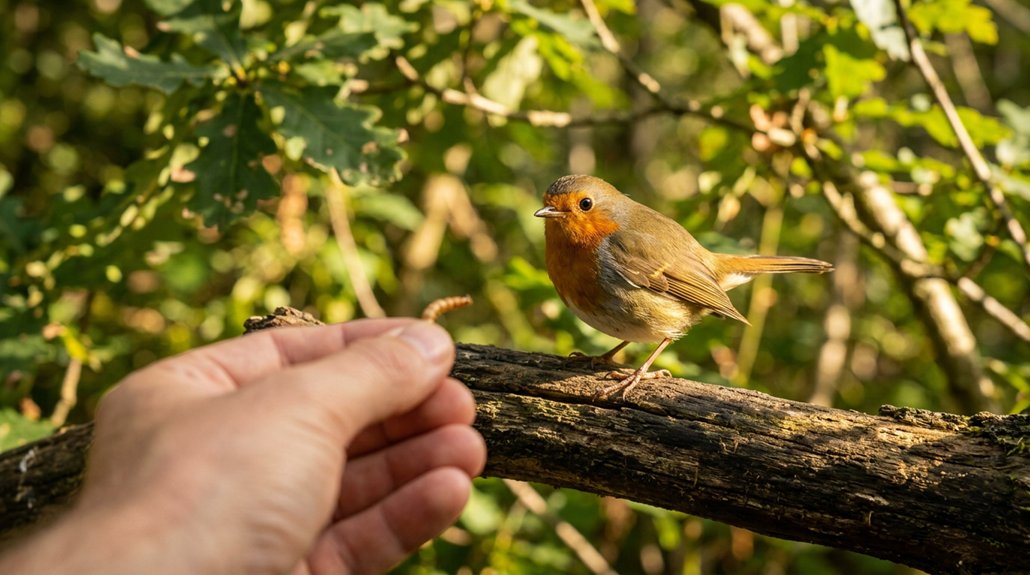
Treats can be a simple way to help a bird feel safe around you, especially when they’re chosen with care. You can use positive reinforcement by offering fresh fruit, cooked sweet potato, or favorite seeds, always paying attention to food safety. Present the treat on a flat palm and let the bird come to you.
- Offer tiny, preferred treats.
- Give them right after the calm behavior you want.
- Keep sessions short and gentle.
Many parrots respond well to sweet fruit or small nut pieces, but you should rotate treats and keep them to under 10% of daily calories. If the bird backs away, don’t push. Step back, stay quiet, and try again later. That patience helps trust grow without fear, one small choice at a time.
Teach the Step-Up Command
When your bird seems calm and a little food-motivated, you can begin teaching “step up” by offering a favored treat right after a successful try. Keep your hand flat, level with the bird’s legs, and use a clear one-word cue. Gentle hand signals help, and perch targeting can be a useful bridge if your bird isn’t ready for skin contact. Lightly touch the lower chest so it can transfer weight onto your hand, but never push. If it hesitates, bites, or backs away, withdraw calmly and try again later. Short sessions of 3–5 minutes, two to four times daily, work best. Reward each correct response, then slowly make treats intermittent as the command becomes reliable. Use a soft voice, relaxed posture, and a quiet space.
Make Trust Part of Daily Care
Build trust into your everyday routine by greeting your bird calmly, changing its water, and offering food at the same times each day so your presence feels predictable and safe. A consistent schedule helps your bird relax because it learns you’ll appear for care, not surprises. Spend a few quiet minutes nearby each day, reading or speaking softly, so your bird can watch and listen without pressure. Use positive reinforcement when it stays calm or steps closer.
- Keep water changes and feeding steady.
- Sit nearby without reaching in.
- Offer preferred treats right after calm responses.
If your bird seems uneasy, back off and give it space. Over time, these small, gentle moments build familiarity, and daily care becomes part of trust.
Avoid Mistakes That Break Trust
Trust grows fastest when your bird feels safe, and it can unravel quickly if you move too fast or act unpredictably. Don’t use forceful handling, grabbing, chasing, or prying your bird from its cage or nest. Sudden restraint can feel predatory and may set trust back for weeks. Skip yelling, hitting, or any physical punishment; those reactions usually deepen fear instead of teaching. Keep your cues steady, too. Inconsistent rewards and changing commands confuse learning, so step-up and recall won’t stick. When your bird hisses, puffs up, or backs away, stop and give space. Don’t loom over it or hold eye contact too long. Gentle routines, predictable greetings, feeding, and water changes help your bird relax and learn that you’re reliable.
Frequently Asked Questions
What Is the 3 3 3 Rule for Birds?
The 3-3-3 rule means you give your bird 3 days to decompress, 3 weeks to settle in, and 3 months to build trust. Use positive reinforcement, a slow approach, and patient observation.
How Long Does It Take to Gain a Bird’s Trust?
It depends on the bird, but you’ll often see progress in weeks to months. With slow bonding and consistent handling, you may need years for deep trust, especially with adult or wild birds.
What Is the 60/40 Rule for Birds?
The 60/40 rule means you spend about 60% of your time on calm, consistent presence and 40% on training. You’ll use positive reinforcement and a slow approach, so your bird feels safe, steady, and more trusting.
How to Gain Your Bird’s Trust Back?
You’ll rebuild trust by pausing pressure and using positive reinforcement. About 10–30 quiet minutes daily can matter: sit nearby, offer treats, and use gradual desensitization. Watch body language, move slowly, and let your bird choose contact.
Conclusion
In time, your bird will tell you more with a tilt of the head, a soft chirp, or a relaxed perch than any grand gesture ever could. You earn trust by moving at your bird’s pace, staying calm, and showing up day after day. Be patient, gentle, and consistent, and you’ll see small wins grow into real connection. Like a well-tuned radio, trust takes a little adjustment—but once it’s clear, it sings.