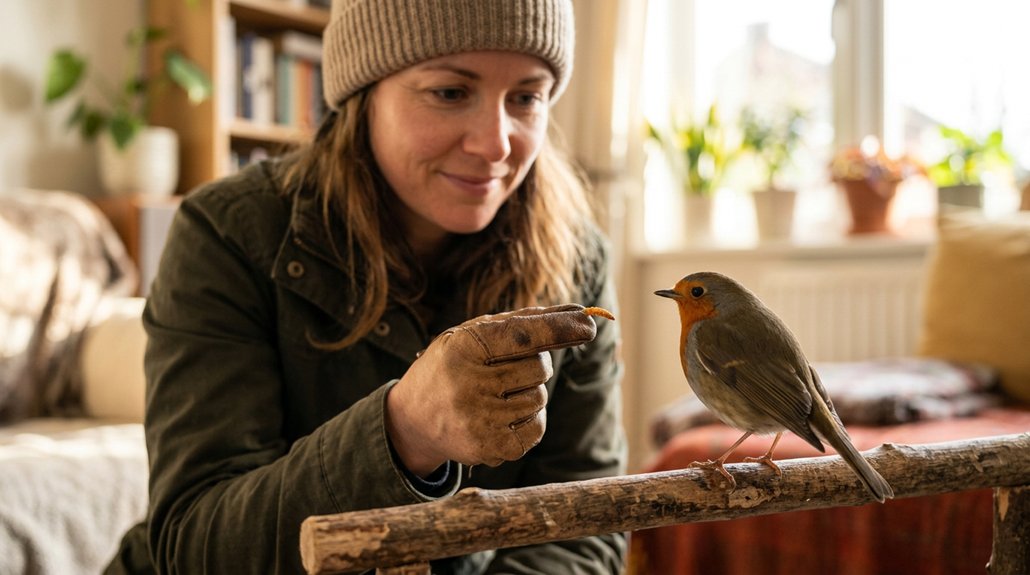
You can train your bird to be quieter by rewarding 1–2 seconds of silence with a click or short marker, then giving a tiny high-value treat right away. Stay consistent, and slowly ask for longer quiet periods as your bird succeeds. Keep sleep regular, reduce TV, ringtones, and other triggers, and ignore attention-seeking screams so they don’t pay off. Watch for stress, boredom, or illness too. If you keep going, you’ll learn a few more useful ways to shape calm behavior.
Key Takeaways
- Reward brief quiet moments immediately with a click or treat, then slowly increase the silence required.
- Ignore attention-seeking screaming so it is not reinforced, but reward soft chirps, whispers, or pauses.
- Use one consistent marker signal and deliver tiny high-value treats within one second of quiet behavior.
- Keep a regular sleep and light schedule, reduce noise and visual triggers, and provide enrichment to prevent boredom.
- If screaming increases suddenly, consult an avian veterinarian and track triggers in a daily behavior diary.
Stop Loud Parrot Screaming Fast
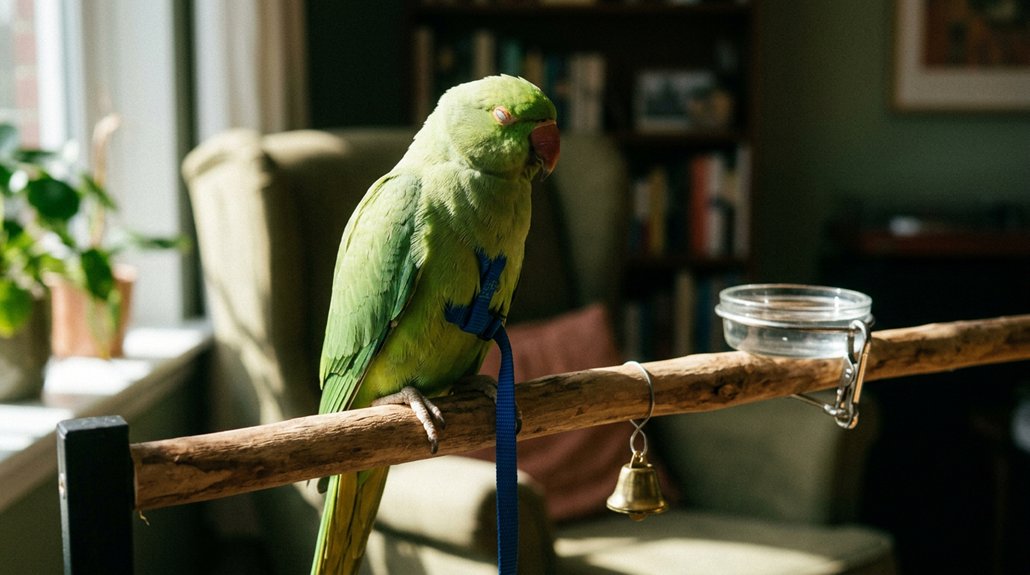
To quiet a screaming parrot fast, you need to catch and reward the briefest calm moments before the noise ramps up again. You’re shaping behavioral thresholds, so start with just 1–2 seconds of silence, then mark it with a click or high-value treat. If the screaming seeks attention, leave the room, avoid eye contact, and return only after at least 10 seconds of quiet. Lower triggers by giving 10–12 hours of dark sleep, keeping TV and household noise down, and covering the cage during noisy periods. Offer soft vocal models, like whispers or gentle whistles, and reward any lower-volume mimicry. Add environmental enrichment with a bath, wrapped foraging treats, or engaging toys so your bird can shift from arousal to focused, quiet activity.
Reward Quiet Behavior Consistently
You’ll get the best results when you mark quiet moments immediately, because your bird can connect the silence with a click, soft praise, and a small treat. Start by rewarding even brief pauses and any low-volume sounds you want repeated, like whispers or soft whistles. Keep the timing consistent every time, and your bird’ll learn that quieter behavior is the one that pays off.
Mark Quiet Moments
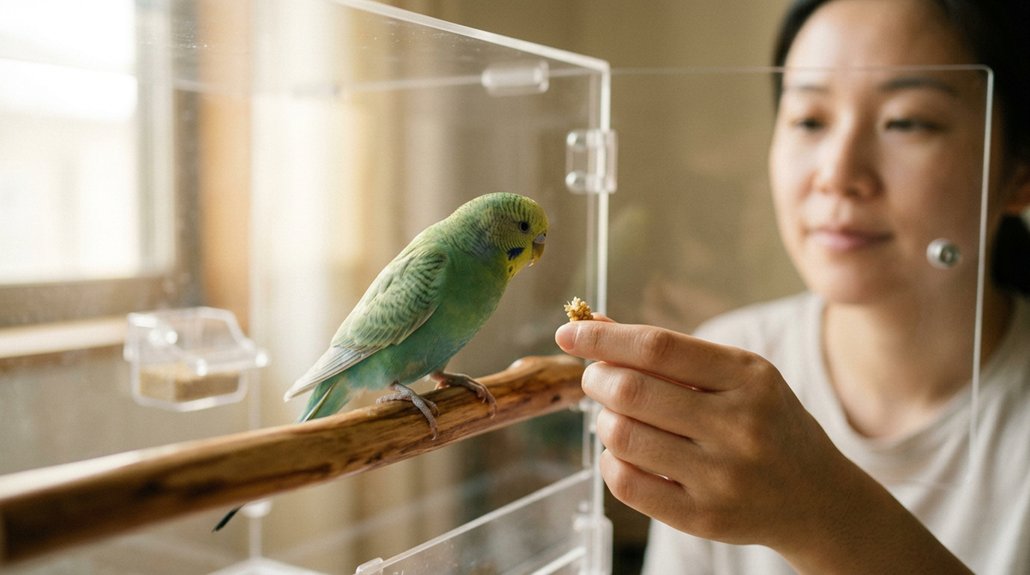
Mark quiet moments with a clicker or a distinct quiet-tone word, then follow it immediately with a tiny high-value treat so your bird learns that calm sounds and brief silence pay off. You’ll want to watch body language cues closely: relaxed feathers, steady posture, and softer calls often signal the right instant. Mark every soft chirp, whisper, or 1–2 seconds of silence within one second, so the association stays clear. Use special treats only for this purpose; that exclusivity sharpens learning. Then, gradually ask for longer quiet stretches before you click. Keep the same rule across the household, and ignore screaming so it doesn’t earn attention. Pair this process with environmental enrichment, because a bird that’s engaged and comfortable is usually easier to reinforce for calm, measured vocal behavior.
Reinforce Soft Voices
Reward soft voices immediately with a clicker or a distinct quiet marker word, then give a tiny, high-value treat so your bird learns that quieter vocalizations predict something good. You’ll get the strongest learning when the reward follows within a second, every time, for the exact softer sound you want. Start by reinforcing just 1–2 seconds of reduced volume, or the first brief pause after a scream, then slowly ask for longer intervals. Use tiny exclusive treats, such as a Nutri-Berry crumb, so each repetition stays valuable. If you model soft tones, whisper imitation, or soft singing, reward the bird as soon as it copies you. Consistent, precise reinforcement shapes quiet behavior; delayed or uneven rewards can preserve loud calling.
Use Clicks to Mark Quiet
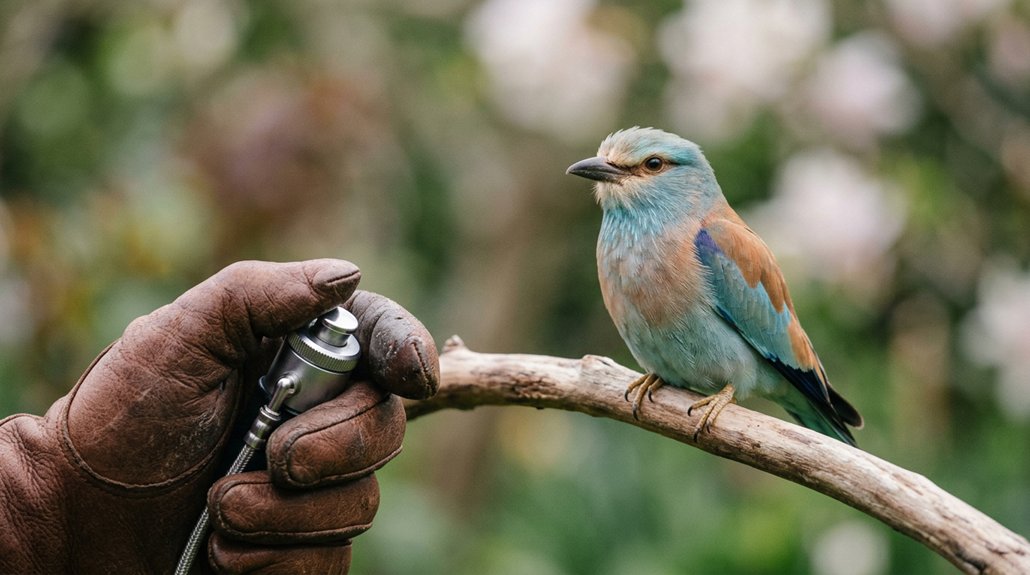
Start by pairing a distinct click—whether from a clicker or a quick tongue click—with a tiny, high-value treat until your bird consistently expects food after hearing it. This builds timing precision: the click becomes a brief, reliable bridge between quiet and reward. You can use alternative markers if a clicker isn’t handy, but keep the signal identical each time. Click the exact instant your bird offers a soft vocalization or a moment of silence, not before or after. Deliver the treat within one second, using small pieces that disappear quickly. Then lengthen the quiet you mark, from 1–2 seconds to 3–5, only when your bird succeeds. Everyone in the household should use the same cue and reward fast, while ignoring attention-seeking screams so quiet stays the clearest pattern.
Fix Light, Cage, and Sleep
If your bird’s routine is getting enough rest, quieter days often follow: give your parrot 10–12 hours of uninterrupted sleep each night by covering the cage with a breathable, preferably dark cloth and closing curtains so excess light doesn’t keep hormones active. You’ll want to limit total light to about 10–12 hours daily, because longer exposure can nudge vocalization upward. Use blackout curtains or a partial cover in late afternoon to soften bright periods, and remove the cover in the morning so natural waking calls still happen. Choose a fabric that lets air move freely to optimize ventilation; avoid heat-trapping polyester. Keep the room dim and calm, since bright rooms can amplify arousal. Watch the pattern patiently, then adjust light and sleep cues until the bird settles.
Cut Out Common Noise Triggers
A quieter home usually begins with fewer cues to copy, so keep TVs, radios, and other media low, and skip bird-heavy or nature programs that can set off matching calls. You should also limit daytime light to 10–12 hours, then close curtains or partially cover the cage late in the afternoon. During known high-vocal periods, remove audio triggers such as phone ringtones, pet birds on screen, or neighborhood calls by moving your bird or using white noise. Watch for visual triggers too: sudden movement, new hats, eyewear, and shiny surfaces can all spark alarm. To reduce reflections, keep lighting steady and household traffic predictable. Good visitor management matters, because unfamiliar people and fast gestures can escalate noise. Offer morning meals on schedule and rotate foraging toys and treat training to head off attention-seeking screams.
Check Health, Stress, and Boredom
When a bird’s screaming changes suddenly or becomes more frequent, health problems, stress, or boredom are often involved, so an avian veterinarian should rule out pain, illness, or injuries such as broken or bleeding pin feathers. During the veterinary exam, you can ask about infections, diet, cage size, and nail length, since discomfort often shows up as noise. Keep a diary for 2–4 weeks, noting timing, duration, and triggers; patterns often reveal hunger, sleep loss, or predictable stressors. Protect a consistent sleep routine with 10–12 dark, quiet hours each night, because extra light can raise hormones and worsen vocalizing. You should also provide daily play, foraging puzzles, and rotating toys, since boredom-driven screaming usually drops when your bird’s mind stays busy and its needs stay met.
Frequently Asked Questions
Can You Teach a Bird to Be Quiet?
Yes, you can reduce your bird’s noise, but you can’t make it silent. Use patient training schedules, reward quiet moments, and manage noise triggers. Ignore screaming, reinforce alternatives, and check with an avian vet.
What Is the 3 3 3 Rule for Birds?
The 3-3-3 rule means you reward your bird for just 3 seconds of quiet, then 6, then 9, using precise behavior timing and social enrichment. You’re shaping silence patiently, like a tiny Pavlovian overture.
How to Get a Bird to Quiet Down?
You can quiet your bird by rewarding soft sounds, ignoring screams, and keeping consistent daily routines. Add environment enrichment, limit light, model calm vocalizing, and wait patiently through brief loud bursts before quieter behavior appears.
How to Get a Bird to Stop Squawking?
You can stop squawking by treating your bird like a lookout in a busy harbor: note triggers, remove rewards for noise, reinforce quiet, use signal training, and add environment enrichment to curb boredom and stress.
Conclusion
When you stay observant and patient, your bird often starts quieting down at the same moments you do—just as the room settles, the cage calms, and your attention shifts. That coincidence is useful. You can reward those brief, silent pauses, mark them with a click, and keep removing triggers little by little. If your bird’s still loud, don’t rush; check sleep, light, stress, and health. Quiet usually grows where consistency lives.