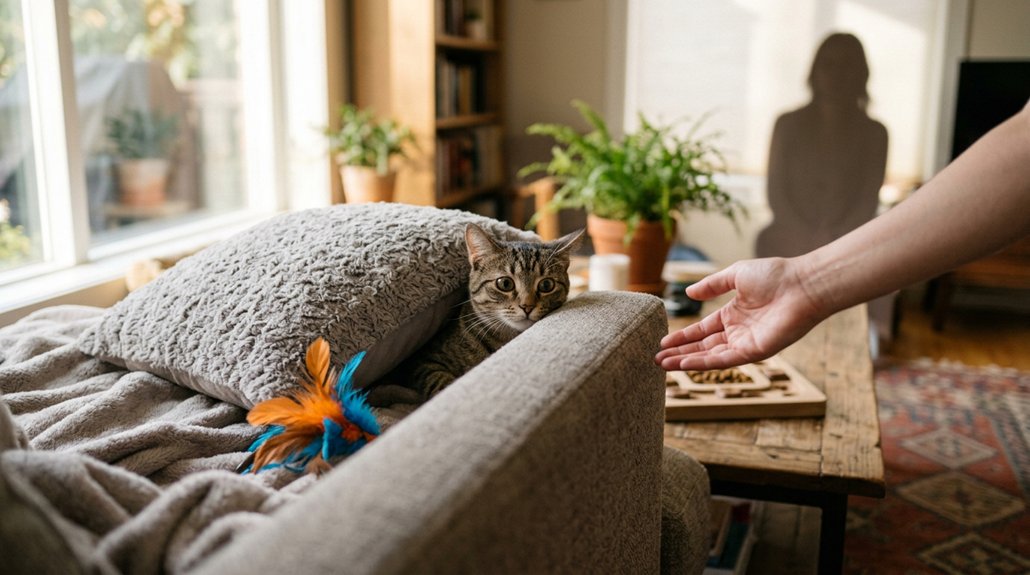
To help a shy or fearful cat gain confidence, first identify their stress triggers, such as loud noises or unfamiliar objects, and observe their body language for signs of fear. Create a secure environment with designated safe zones, vertical spaces, and cozy hiding spots. Use positive reinforcement to reward brave behaviors, and engage with gentle, low-pressure interactions. Explore resources like virtual training and specialized advice. Gain deeper insights to further aid your feline friend in boosting confidence.
Key Takeaways
- Designate safe zones with essentials to provide a retreat and reduce stress for shy or fearful cats.
- Utilize positive reinforcement to encourage exploration and reward brave behaviors with treats or praise.
- Allow the cat to initiate interaction, providing control over engagement and minimizing stress.
- Incorporate vertical spaces like cat trees to boost confidence through safe vantage points for observation.
- Consult feline behavior resources or professionals to tailor strategies for building confidence gradually.
Identify Stress Triggers and Signals
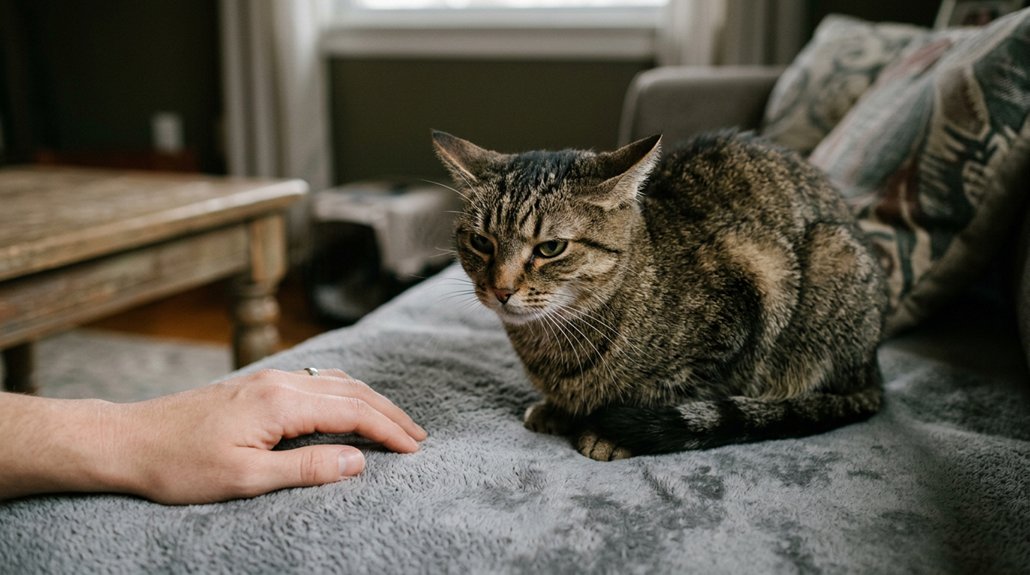
Understanding your cat’s stress triggers and signals is essential for creating a nurturing environment that encourages confidence. Start with stress observation: pay close attention to your cat’s reactions to specific stimuli, like loud noises or unfamiliar objects. Watch for common stress signals, such as hiding, excessive grooming, or changes in eating habits, which all require prompt behavior analysis. You’ll notice discomfort through their body language—flattened ears, an arched back, or a twitching tail are key indicators of anxiety or fear.
Be aware of trigger stacking, when multiple stressors accumulate, intensifying your cat’s reactivity. Regularly assess their behavior and stress signals to catch these early. This proactive monitoring helps you understand their needs better and address potential issues before they escalate.
Create a Safe and Calming Environment
Once you’ve identified what causes stress in your cat, focusing on creating a safe and calming environment becomes vital. Designate quiet corners as safe zones in your home, complete with essential resources like food, water, and a litter box. Make certain these areas remain undisturbed, offering your cat a retreat from potential stressors. Incorporate multiple hiding spots, such as covered carriers or cozy blankets, to provide a sanctuary during overwhelming moments.
Additionally, offering vertical spaces like cat trees or shelves can give your cat the comfort of observing its surroundings from a safe vantage point. Clear any hazards such as harmful plants or sharp objects to guarantee a secure atmosphere. Keeping exits clear in these safe zones is essential, enabling your cat to feel at ease and explore confidently.
Build Confidence Through Positive Reinforcement
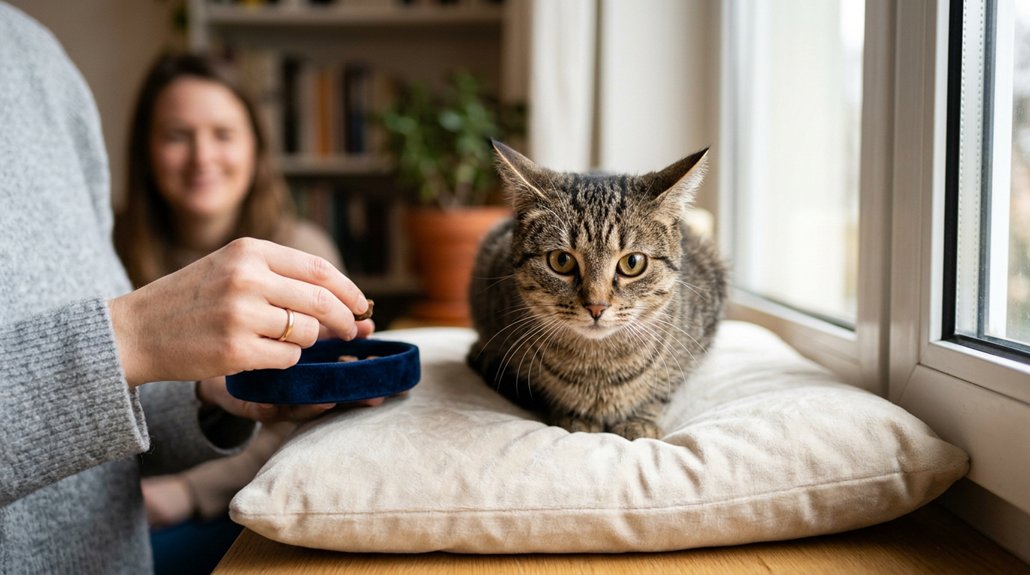
When aiming to build a shy cat’s confidence, positive reinforcement stands out as an effective strategy. By rewarding brave behaviors with treat motivation or praise, you create positive associations with new experiences. Techniques such as the Treat Drop and Treat Retreat are excellent for encouraging exploration at your cat’s comfort level. These methods help them feel safe while interacting with their environment.
Ensure training sessions are brief, about 5-10 minutes, to allow your cat to focus without becoming overwhelmed. Offering consistent rewards supports effective learning and gently builds their confidence. Avoid punishment, as a trusting relationship flourishes in a low-pressure, respectful setting. By gradually introducing new stimuli and reinforcing calm behavior, you nurture your cat’s ease in unfamiliar surroundings.
Engage With Gentle Interaction Techniques
After establishing a foundation of confidence through positive reinforcement, engage your shy cat with gentle interaction techniques. Allow them to initiate playful engagement at their own pace, as this minimizes stress and builds trust. Sit quietly at their level, avoiding sudden movements or loud noises. This calm setting encourages your cat to approach you willingly.
Use soothing sounds, such as a soft, reassuring voice, combined with positive reinforcement like treats or toys, to associate you with positive experiences. Begin with brief, gentle petting in areas they favor, carefully observing their body language for comfort signs. Educate guests to let the cat come to them, reducing potential stress. Through these approaches, you’ll help your shy cat gradually gain confidence and ease.
Access Resources for Ongoing Support
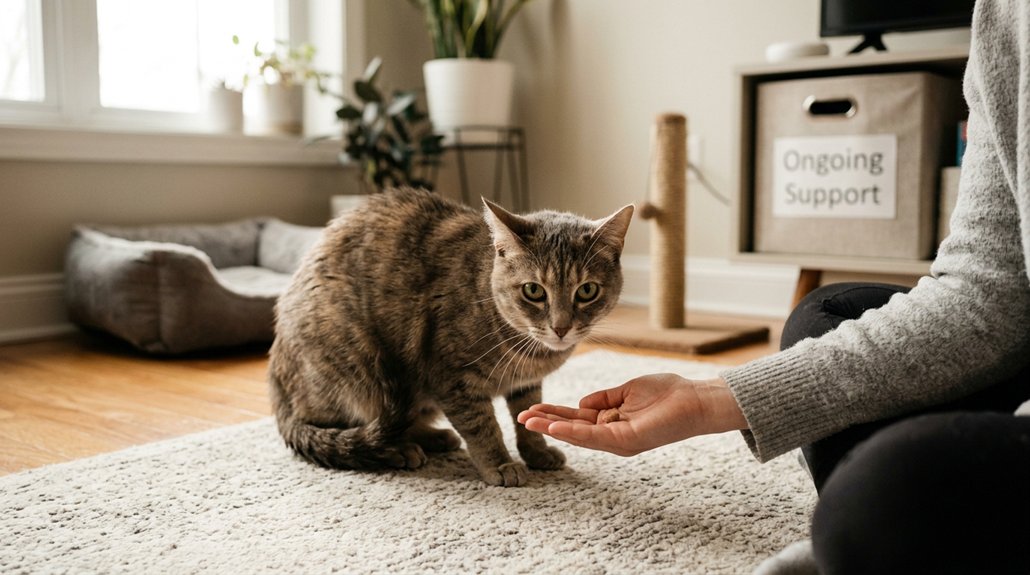
While building confidence in a shy cat is a rewarding journey, accessing the right resources for ongoing support can greatly enhance the process. Virtual training, such as the San Diego Humane Society’s class, provides you with tailored strategies aimed at fostering a supportive environment for your fearful feline. Books like “Cat Sense” and “Total Cat Mojo” offer valuable insights into feline behavior and techniques to boost confidence. Engaging in private consultations with trainers who specialize in fearful cats guarantees personalized guidance and effective in-home assessments. Additionally, products like the Wallflower Bundle help create a welcoming, secure environment that eases acclimatization. Exploring articles on feline anxiety, such as “How To Make a Shy Cat Confident,” can further equip you with essential strategies.
Frequently Asked Questions
How to Make a Shy Cat More Confident?
Start by using positive reinforcement. Offer treats and praise during calm interactions to foster trust. Create safe spaces with cozy hiding spots and exploring perches. Gradually encourage play with toys, ensuring the cat feels secure in its environment.
What Is the 3-3-3 Rule for Cats?
The 3-3-3 rule’s the ultimate feline magic trick! In three days, you’ll witness secretive cat behavior emerge. Three weeks reveal vibrant feline body language. By three months, your once-shy kitty becomes the cuddly ruler of routines.
What Is “I Love You” in Cat Language?
In cat communication, “I love you” often manifests through feline behaviors such as slow blinking, head-butting, rubbing against you, purring while close, kneading, or consistently seeking your company—subtle actions showing trust, contentment, and affection.
How to Make a Scared Cat Be Less Afraid of You?
Start with a gentle approach; observe fearful behavior quietly, use positive reinforcement with treats, create a safe space. Gradual exposure to your presence through interactive play will slowly turn apprehension into trust and reduce fear.
Conclusion
With your newfound mastery in feline psychology, you’re poised to transform your shy, skittish cat into a confident, curious companion. By recognizing stress triggers, crafting a serene sanctuary, and employing positive reinforcement, you’re not just helping your cat; you’re revolutionizing their world! Gentle interactions cement your bond, turning fear into trust. Harness the collective wisdom of expert resources and watch in awe as your once-timid feline blossoms into an adventurous explorer, brimming with boundless bravery.