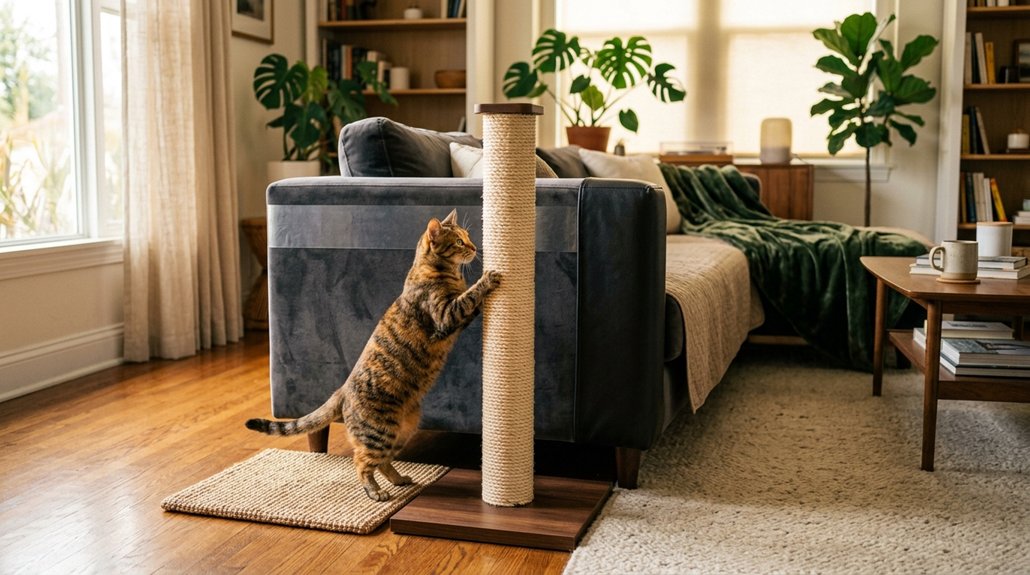
To protect your furniture from cat scratching, cover surfaces with soft throws or adhesive plastic sheets. Use double-sided sticky tapes or Clawguard Furniture Shields to deter scratching. Place scratching posts nearby and reward your cat’s use of them. Understand that scratching fulfills natural instincts like marking and nail care. Regularly trim nails and try claw caps for added protection. Explore more techniques that respect your cat’s natural behaviors while safeguarding your home’s decor.
Key Takeaways
- Cover furniture with soft throws or adhesive plastic sheets to prevent scratching.
- Place scratching posts near favorite scratching spots to redirect scratching behavior effectively.
- Use double-sided sticky tape or plastic runners with spikes to deter furniture scratching.
- Trim cats’ nails regularly and consider using claw caps to minimize damage.
- Engage in interactive play and reward use of scratching posts to encourage proper behavior.
Immediate Fixes for Cat Scratching Furniture
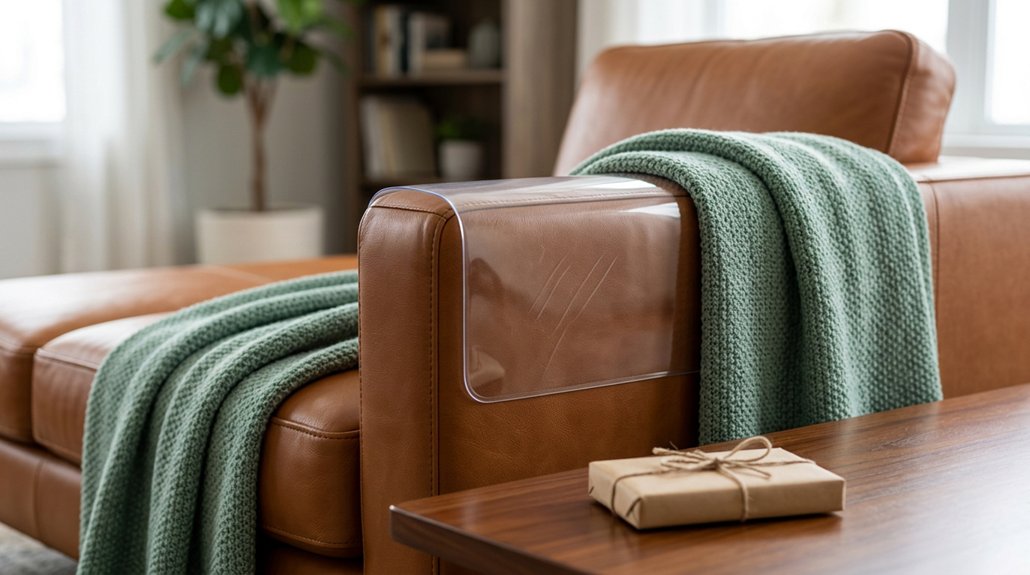
When you’re tackling the frustrating issue of cat scratching, several immediate fixes can deter your feline friend from damaging your furniture. First, cover surfaces with soft throws or blankets, offering a protective barrier that also complements your home’s aesthetic. Cat behavior is driven by innate needs, so when the tactile satisfaction of scratching can’t be met, they’ll seek alternatives. Adhesive plastic sheets or double-sided sticky tapes create discomfort, discouraging their scratching desires. By placing clear plastic runners with spikes facing up, you make access less appealing. To redirect those energetic claws, position scratching posts or pads nearby, enhancing engagement through rewards like treats or praises. These solutions provide effective scratching alternatives that align with your cat’s natural behaviors—protecting your cherished furniture.
Effective Methods to Prevent Cat-Induced Scratching Damage
To effectively prevent cat-induced scratching damage, consider the scientific understanding of feline behavior and incorporate strategies that cater to their natural instincts. Cats scratch to mark territory, stretch muscles, and shed nail sheaths. Acknowledging these needs, you can protect furniture safety and aesthetics. Cover furniture with blankets or throws to act as a barrier against unwanted scratching behavior. Introduce attractive scratching posts or cat trees that fit your decor, directing your cat’s attention away from furniture. Using adhesive plastic sheets or double-sided tape is effective on new upholstery to prevent scratching by breaking habitual associations. Don’t overlook varied scratching surfaces like cardboard scratchers or sisal loungers. Positive reinforcement by redirecting scratching behavior assures adherence to designated areas, reinforcing consistent use.
Top Scratching Deterrents to Protect Furniture
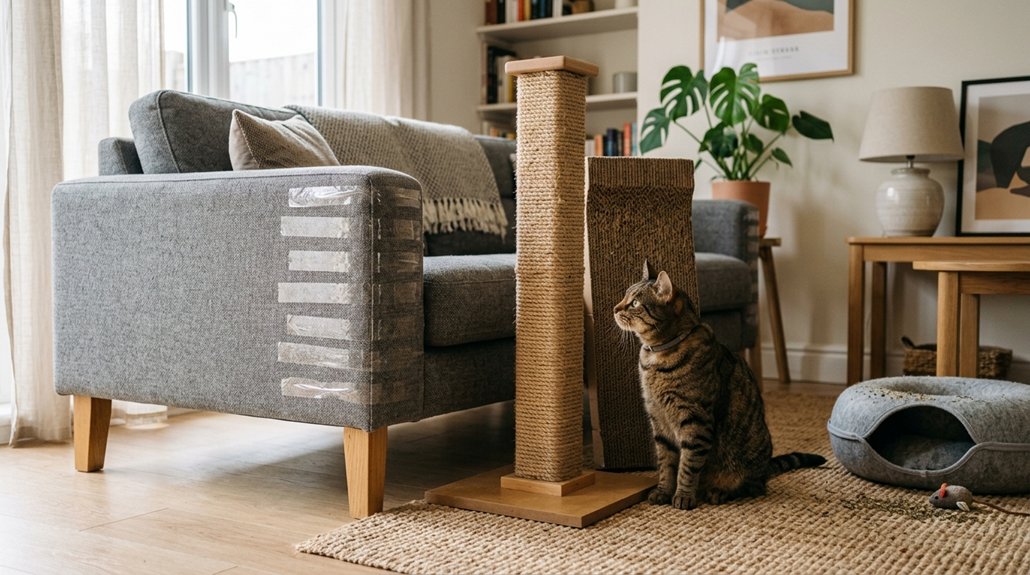
Many effective scratching deterrents can protect your furniture while accommodating your cat’s natural behavior. Clawguard Furniture Shields offer a transparent and durable protective covering that can be cut to size, ensuring a tailored fit to safeguard specific areas. Its twist pins provide semi-permanent installation, combining protection with the flexibility to remove when needed. Double-sided sticky tape, specifically designed for this purpose, like Pioneer Pet Sticky Paws, serves as a scratching alternative, creating a sticky surface that cats instinctively avoid. It won’t leave residue, preserving your furniture’s aesthetic. For new upholstery, adhesive plastic sheets break the association with scratching. Such strategic interventions leverage cat behavior science, emphasizing deterrents that align with natural instincts while offering robust defense. Utilizing such solutions maintains harmony between cats and furniture.
Training Cats to Prefer Scratching Posts
Enhancing furniture protection doesn’t solely rely on barriers; it involves guiding your cat towards preferred scratching options. Explore different scratching post types, placing various posts throughout your home to cater to your cat’s preferences. Whether vertical or horizontal, each cat will have unique likes. Posts that mimic natural structures, like trees, often engage cats more effectively.
Employ positive reinforcement strategies to reinforce good habits. Reward your cat with treats or affection whenever they use the designated posts instead of your furniture. Immediate redirection to a scratching post when caught in the act guarantees they associate the post with positive outcomes. Constantly observe and adjust post placement based on their scratching habits to maximize usage and minimize furniture damage.
Keeping Cats Happy and Your Furniture Scratch-Free
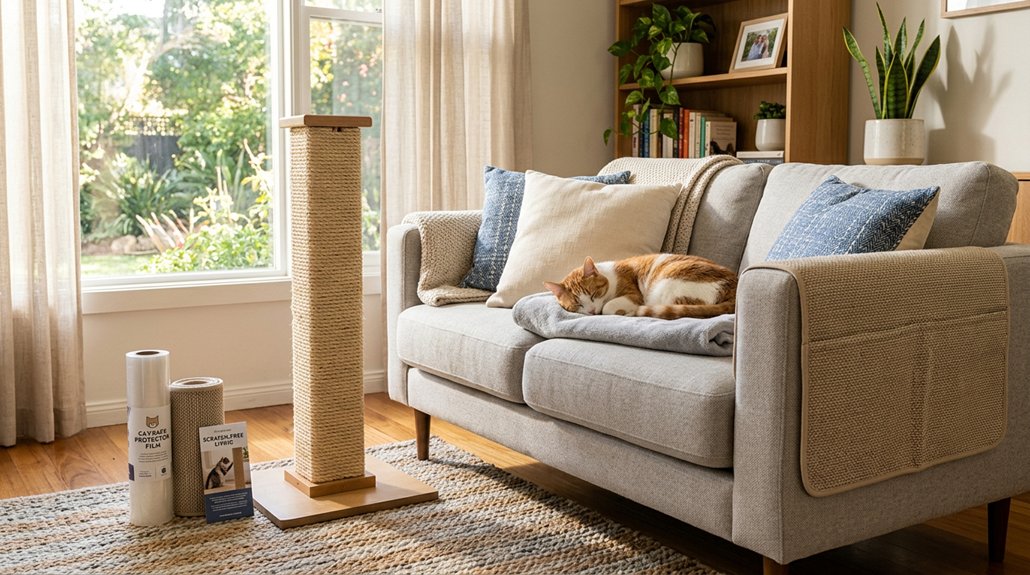
While safeguarding your furniture from cat scratches may seem challenging, understanding the science behind feline behavior offers valuable solutions. Cats possess inherent scratching instincts, a behavior essential for claw maintenance and territorial marking. To satisfy these instincts, provide multiple scratching posts and pads in various materials like sisal, cardboard, and wood, strategically placed throughout your home. Protective coverings, such as blankets or adhesive plastic sheets on beloved upholstery, can deter initial interest in forbidden surfaces.
Engage your cat in interactive play sessions to redirect energy toward acceptable outlets, strengthening your bond. Additionally, select aesthetically pleasing scratching structures and cat trees that blend seamlessly with your décor, ensuring both a happy cat and a scratch-free environment. Regular nail trimming and claw caps can also minimize furniture damage.
Frequently Asked Questions
What Can I Put on My Furniture to Keep My Cat From Scratching It?
You can use furniture covers and cat deterrents like adhesive plastic sheets or double-sided sticky tape. These create a behavioral solution by breaking the scratching habit, while providing cat-friendly alternatives to redirect their natural instincts scientifically.
What Kind of Furniture Will Cats Not Scratch?
Imagine your friend buys a microfiber couch; its scratch-resistant fabric and sturdy construction deter claw marks. Choose cat-proof materials like tightly woven upholstery or coated woods; these offer a scientific, behavior-focused solution to minimize scratching.
Does Aluminum Foil Stop Cats Scratching?
Aluminum foil can deter cats from scratching due to its texture and noise, but it’s not a long-term solution. Consider cat scratching alternatives like scratching posts, alongside positive reinforcement, for a thorough behavioral solution.
Is Furniture Scratching a Behavioral Issue?
Furniture scratching isn’t necessarily a behavioral issue; 83% of cats scratch as natural behavior. To manage this, understand cat behavior, and offer scratching alternatives like diverse posts, which align with feline instincts, ensuring furniture remains unscathed.
Conclusion
You’ve learned valuable strategies to protect your furniture from your cat’s scratching habits. Did you know that 80% of cats will use a scratching post if trained properly? It’s essential to understand that cats scratch not only to sharpen their claws but also to mark territory and relieve stress. By implementing these expert tips, using deterrents, and ensuring your cat has appealing alternatives, you can maintain a harmonious home where both your feline friend and furniture thrive.