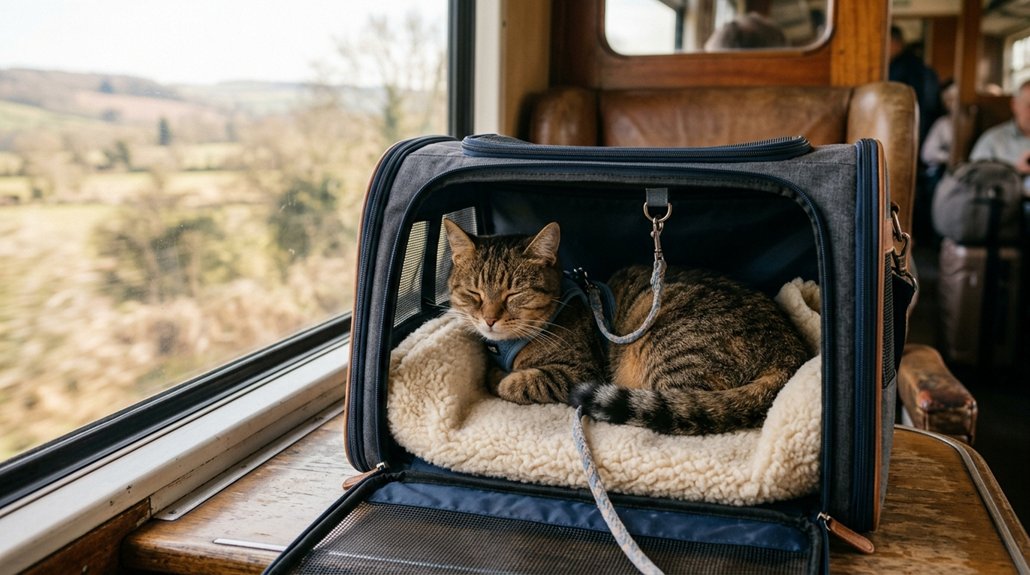
Traveling with your cat stress-free involves recognizing their stress triggers and preparing accordingly. Gradual crate training, familiar bedding, and securing them in a sturdy carrier help ease anxiety. Always maintain a calm environment with proper ventilation and monitor signs of distress. Consider pre-travel vet checks and packing essentials like water bowls and toys. If travel isn’t feasible, look into pet-sitting or boarding. With careful preparation, you’ll discover many ways to guarantee a peaceful journey for your feline friend.
Key Takeaways
- Introduce the cat gradually to travel routines using crate training and short drives for familiarity and comfort.
- Ensure the cat carrier is securely fastened in the car with familiar bedding for reassurance.
- Provide regular hydration and comfort items like toys during the journey to minimize stress.
- Schedule a vet visit pre-travel for vaccinations and verify health to reduce stress and ensure safety.
- Consider alternatives like pet sitting or boarding to keep the cat in familiar surroundings if stress is too high.
Why Cats Get Stressed During Travel: and How to Help
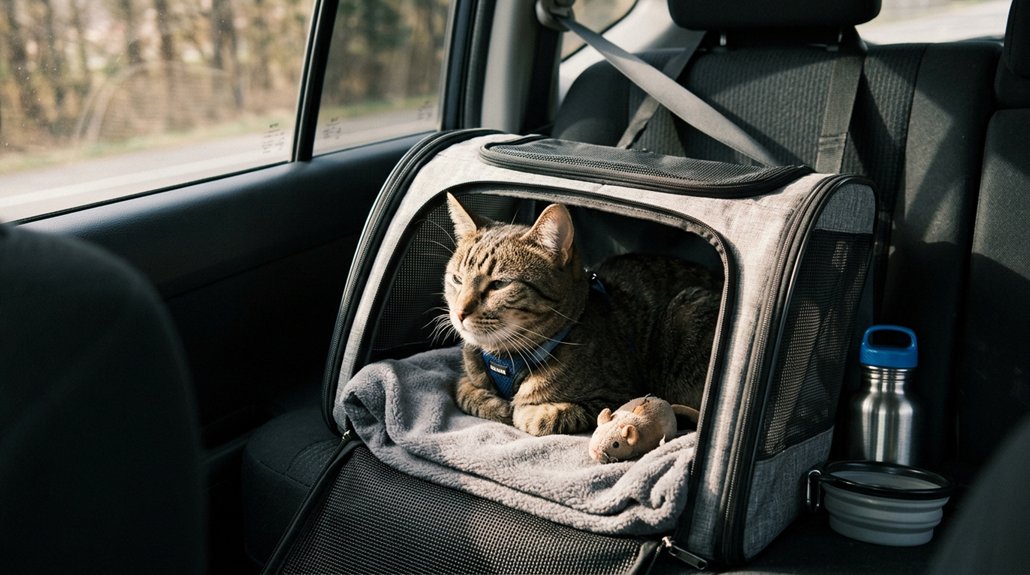
When it comes to traveling, cats can experience significant stress due to the disruption of their familiar routines, making it vital to understand their needs to help ease their discomfort. Cat anxiety often stems from sudden changes, like unfamiliar sights and sounds, which are travel triggers. You might notice signs such as hiding, crying, or excessive grooming. It’s important to recognize these stress indicators and address the environment that’s causing them. To help your cat adapt, introduce them to travel conditions gradually. Incorporate familiar items—like their bedding or toys—into the travel setup. These can provide a comforting sense of territory amidst chaos. By reducing uncertainties and ensuring a calming travel space, you can effectively alleviate your feline friend’s travel anxiety.
Prepare Your Cat for Travel: Essentials and Safety
Understanding how to manage a cat’s anxiety is important, but equally essential is preparing them adequately for travel. It’s crucial to gather all travel essentials and guarantee your feline friend’s safety with certain measures. Before hitting the road, schedule a vet appointment to confirm up-to-date vaccinations and parasite prevention. Also, familiarize your cat with traveling through short trips to reduce stress.
For a smooth journey, consider these essentials:
- Comfort items: Pack familiar bedding and a travel litter setup.
- Safety measures: Secure your cat in a sturdy carrier, applying a seatbelt for added safety.
- Hydration needs: Bring a portable water bowl to keep them hydrated.
These steps help guarantee your journey is safe and stress-free for both you and your cat.
Crate Train to Ensure Comfort on the Road
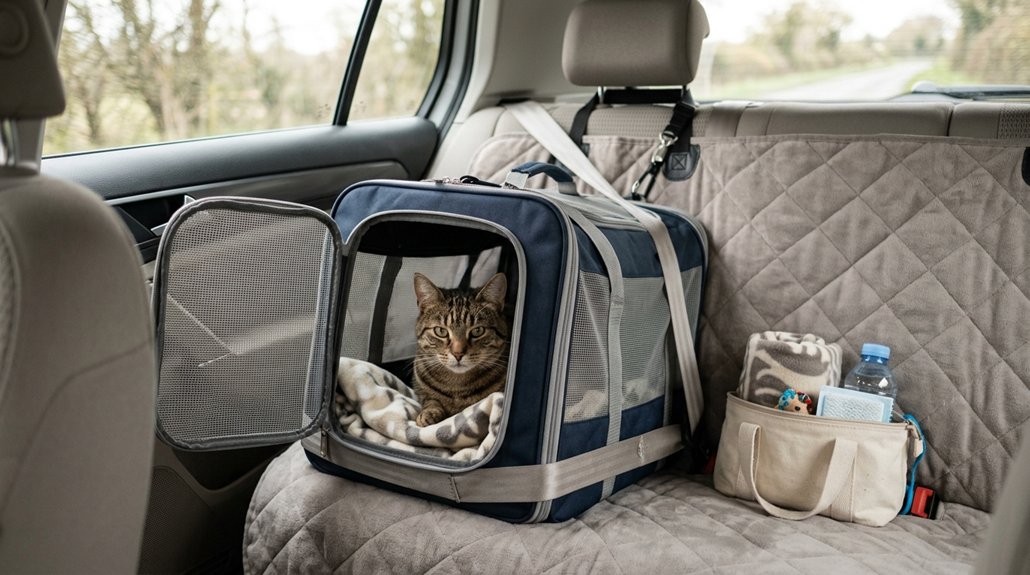
To guarantee your cat feels secure during travel, it’s important to make the crate a positive space with familiar bedding and toys. Start by letting your cat explore the crate on its own terms, gradually closing the door for short periods to get them used to the experience. Incorporating regular short car rides can also help your cat adjust to the motion and surroundings, making longer trips less stressful.
Positive Crate Association
Creating a positive association with the crate is the foundation of ensuring your cat’s comfort on the road. Start by introducing crate treats and positive reinforcement to help make the crate an inviting space. Here’s a few tips to enhance this association:
- Leave the crate open in a familiar area, allowing your cat to freely explore it, so it feels less intimidating.
- Place familiar items inside, like bedding and favorite toys, creating a cozy, reassuring environment.
- Engage your cat with short car rides. These experiences will gradually build your cat’s travel confidence and lessen anxiety.
Gradual Acclimation Process
Once your cat has started associating the crate with positive experiences, the next step is to gradually acclimate them to spending time inside it. Begin with short intervals, making sure the crate feels safe rather than confining. Place familiar bedding, treats, and toys inside to encourage exploration and comfort. When closing the crate door, do so briefly, allowing your cat to slowly adjust to this enclosed space. This gradual exposure is essential for aligning cat behavior with comfort and calmness.
Monitor your cat’s reactions closely. If they seem stressed, reduce the exposure time or add more positive reinforcements. As they adapt, incrementally increase the duration they spend inside the crate. This patient approach guarantees your feline friend’s shift to travel readiness is as smooth as possible.
Regular Travel Practice
When shifting to regular travel practice, establishing a routine of crate training is essential to guarantee comfort on the road. Start crate training 1-2 weeks before your trip to help your cat build confinement tolerance, reducing travel anxiety. Use treats and favorite toys to make the crate a positive space. Gradually introduce short car rides, allowing them to get used to travel sensations in a stress-free manner.
To create a smooth and comforting experience:
- Stock the crate with familiar bedding and toys, providing reassurance.
- Close the crate door gradually during training to ease confinement.
- Reward curiosity and calm behavior with treats and pats.
These steps assure your feline friend is relaxed, making journeys smoother and more enjoyable for both of you.
Secure Your Car for Relaxed Journeys
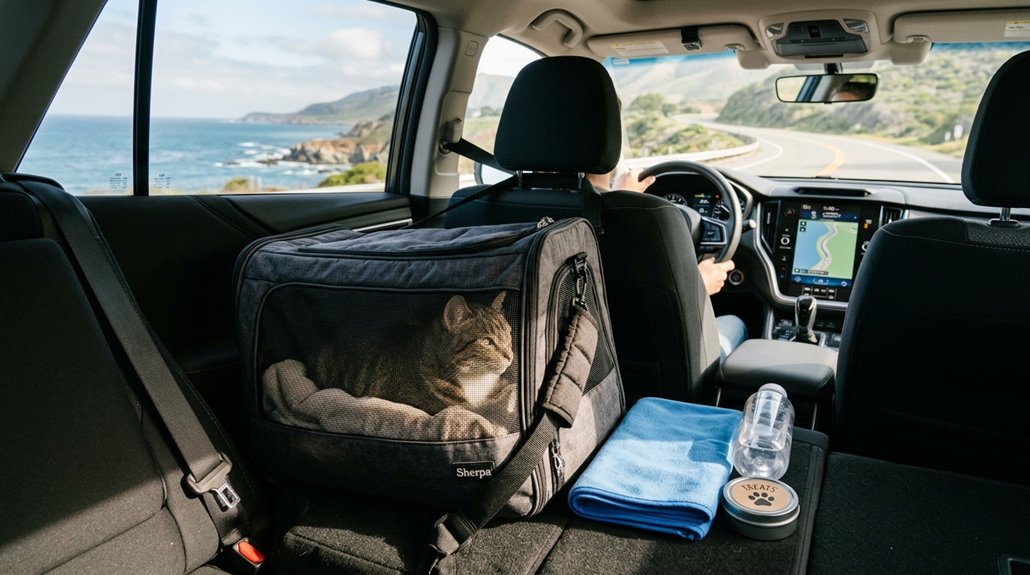
A essential step in ensuring smooth car journeys with your feline companion is to properly secure their cat carrier. Using a seat belt, you can prevent the carrier from sliding or tipping, keeping your cat safe and steady throughout the journey. To create an ideal travel environment, keep the car’s windows closed or only slightly open to prevent escape attempts while allowing ventilation. It’s important to maintain a comfortable temperature using the car’s air conditioning or climate control, as cats can become anxious in extreme temperatures. Add familiar bedding or toys inside the carrier to provide comfort and familiarity. Finally, if possible, have a passenger keep an eye on your cat to offer reassurance and maintain a calm atmosphere.
Practical Tips for Stress-Free Air Travel With Cats
Traveling by air with your cat can seem intimidating, but with the right preparation, it can be a smoother experience for both of you. Start by crate training your cat at least 1-2 weeks before your flight using treats and positive reinforcement to enhance feline comfort. Verify the airline’s pet policies and reserve a spot for your pet right away—fees hover around $125 each way.
Pack essential items like:
- A familiar blanket and treats for comfort,
- A collapsible water bowl to keep your cat hydrated,
- Required paperwork for a hassle-free journey.
Monitor your cat for signs of stress and maintain calmness by speaking softly, keeping them in the carrier. This keeps the traveling tips effective and guarantees both you and your cat stay stress-free.
Stress-Free Travel Tips for Your Cat’s Journey
It’s natural to feel apprehensive about your cat’s journey, but prioritizing their comfort can greatly ease their experience. Crate training ahead of time using treats and positive associations can greatly improve cat behavior during travel. Create a cozy atmosphere inside the carrier with familiar bedding and toys. When planning travel experiences, remember to provide easy access to water and a portable litter box for longer trips. Your calm demeanor plays an essential role; speak softly to avoid amplifying stress levels. Stay alert to signs of anxiety like excessive meowing or hiding, and be ready to adapt comfort measures as needed.
| Essentials | Comfort Tips | Behavioral Insights |
|---|---|---|
| Crate Training | Familiar Items | Monitor Anxiety |
| Water Access | Calm Speaking Voice | Adjust Comfort |
| Portable Litter | Treat Associations | Positive Travel |
Helping Your Cat Adjust to New Places Post-Arrival
Upon arriving at a new place, it’s crucial to create a calming introduction that eases your cat into the unfamiliar environment. Managing cat anxiety starts with setting up a quiet room where your cat can find its bearings. Make sure to include a litter box, food, water, and a cozy hiding spot. Familiarize your cat with the new environment using effective adjustment strategies:
- Use their bedding or comfort items, as familiar scents mitigate stress.
- Gradually introduce them to new areas, allowing exploration at their own pace.
- Maintain a consistent routine with feeding and playtime, offering a sense of normalcy.
Keep an eye on your cat’s behavior for stress signs like hiding or vocalizing. Respond with reassurance and maintain a peaceful atmosphere to promote adjustment.
Know When Travel Isn’t Right: Recognize and Consider Alternatives
After helping your cat adjust to new environments, it’s important to recognize when traveling might not be the best option for your furry friend. Some cats have travel habits that cause high stress, with symptoms like crying or panting. Consider their cat personality—if they exhibit excessive anxiety simply from seeing a suitcase, reconsider your plans. A compassionate choice could be hiring a pet sitter or using boarding services, especially if your cat has health issues or behavioral challenges. Long-distance trips, more so by air, bear risks such as oxygen deprivation or heatstroke, making familiar surroundings more comforting. Assess whether your cat’s past experiences hint at adaptability, and remember that staying home might be the best solution for their well-being.
Frequently Asked Questions
What Is the 3-3-3 Rule With Cats?
The 3-3-3 Rule helps you understand feline behavior during moves: three days for initial adjustment, three weeks for building confidence, three months for comfort. These cat travel tips guarantee your cat shifts smoothly, feeling safe and supported.
How to Travel With a Very Anxious Cat?
To travel with a very anxious cat, use cat travel tips like gradual crate training and including familiar items. Prioritize anxiety reduction by keeping calm, avoiding noise, and consulting your vet for calming solutions if necessary.
Can I Leave a Cat Alone for 4 Days?
You shouldn’t leave a cat alone for 4 days due to stress akin to a buggy computer program. Prioritize cat care by arranging daily visits during travel and providing comforting items, ensuring stability and companionship.
What Is the #1 Cause of Death in Cats?
Chronic kidney disease is the #1 cause of death in cats. To prioritize cat safety and feline health, guarantee regular check-ups with your vet. Early detection and proper care can greatly improve their quality of life.
Conclusion
Traveling with your cat doesn’t have to be a nerve-racking adventure. By understanding your feline friend’s needs, you’re creating a safety net of love and security. Imagine your journey as a gentle symphony, where each step is a note of comfort and reassurance. Your mindful preparation is the compass guiding you both to new horizons, making memories as vast as the sky. With patience and care, both you and your cat can embrace the world beyond your doorstep.