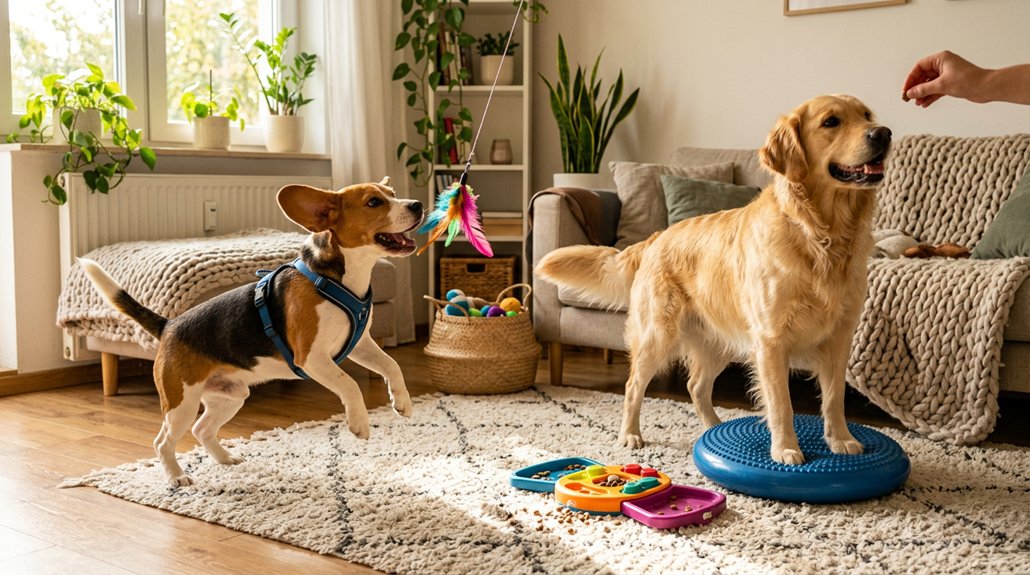
Keep your dog engaged at home by incorporating short training sessions to bond and teach tricks like “shake” for mental stimulation. Use puzzle toys and Kongs to challenge their minds during mealtime. Set up indoor agility courses with household items, and introduce sensory activities like hide-and-seek. Create DIY food puzzles to ignite their foraging instincts. Establish a comfortable window spot to satisfy natural curiosity. Explore these strategies to enhance your dog’s well-being and uncover more engaging methods.
Key Takeaways
- Engage dogs with short training sessions to teach tricks, enhance cognitive skills, and strengthen bonds using positive reinforcement.
- Use puzzle toys and DIY food puzzles to transform mealtime into engaging cognitive challenges that stimulate the dog’s mind.
- Set up indoor agility courses with household items to improve physical dexterity and provide entertaining, varied challenges.
- Encourage natural foraging instincts with food puzzles and snuffle mats that stimulate sniffing abilities and reduce boredom.
- Create cozy window spots for safe observation, stimulating curiosity with views of outside activity.
Start With Short Training for Bonding
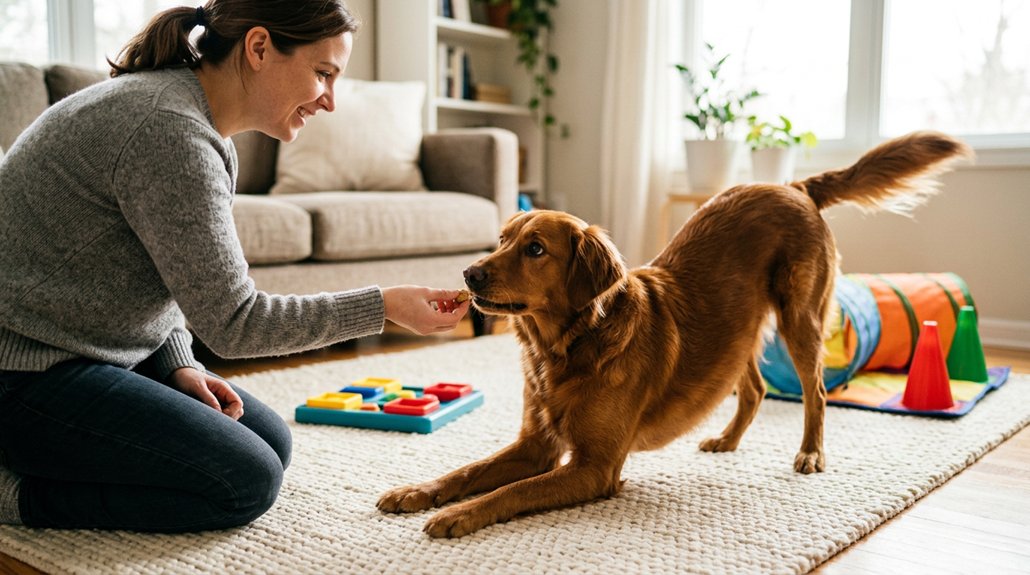
To effectively engage your dog while fostering a strong bond, start with short, focused training sessions. These brief periods, lasting 5 to 15 minutes, mirror ideal human learning spans, enhancing your pet’s learning and retention. By making training a regular part of your day, you’re not just teaching commands but also participating in bonding activities that strengthen your relationship. Use positive reinforcement to encourage good behavior and help your dog feel secure and confident in your presence.
Short sessions seamlessly fit into daily routines and provide essential mental stimulation. This can decrease undesirable behaviors by giving your dog a sense of purpose. Consistency is key; frequent, enjoyable interactions improve obedience and transform training into an exciting, rewarding experience for both of you.
Teach Tricks Like Shake and Roll Over for Mental Growth
Teaching your dog tricks like “shake” and “roll over” isn’t just fun; it’s an essential part of their mental growth. By using positive reinforcement methods, you’ll not only strengthen your bond but also enhance their cognitive skills and confidence. Keep sessions to 5-15 minutes to guarantee they remain effective and enjoyable for both you and your pup.
Enhance Cognitive Skills
As you explore enhancing your dog’s cognitive skills, focusing on tricks like “shake” and “roll over” serves as a rewarding approach to mental growth. Short, focused training sessions can mimic memory games, pushing your dog toward important training milestones. To maximize effectiveness, consider these tips:
- Consistency: Practice new tricks regularly to improve retention.
- Variety: Introduce different tricks to keep your dog mentally agile and prevent boredom.
- Positive Reinforcement: Use treats and praise to build confidence, making your dog enthusiastic to learn.
- Gradual Challenges: Start with simple commands and gradually increase difficulty to develop problem-solving skills.
This structured method not only enhances cognitive skills but also guarantees your dog remains a curious and engaged learner.
Strengthen Owner-Dog Bond
Although engaging in trick training might seem like just a fun activity, it goes far beyond simple entertainment in strengthening the bond between you and your dog. By teaching tricks like “shake” and “roll over,” you’re not only introducing mental growth through training challenges but also creating meaningful bonding exercises. Keep sessions short, around 5-15 minutes, to hold your dog’s attention without overwhelming them. This approach encourages a sense of accomplishment and bolsters their confidence, helping with skill progression. Trick variations provide mental stimulation, setting the stage for more complex future tasks. As you teach and practice together, you’ll find these interactions deepen your emotional connection, fostering a harmonious relationship and a happy, engaged canine companion.
Utilize Positive Reinforcement
Plunge into the world of positive reinforcement to access your dog’s mental potential while teaching entertaining tricks like “shake” and “roll over.” This training method hinges on rewarding desired behaviors, which reinforces learning and builds your dog’s confidence. Short, engaging training sessions (5-15 minutes) using clicker training effectively capture your dog’s attention. To maximize impact, consider the following:
- Reward Variety: Use high-value treats to motivate and keep training exciting.
- Consistency: Practice tricks regularly to strengthen the bond and foster trust.
- Incremental Complexity: Introduce new tricks periodically to sustain interest and challenge your dog.
- Positive Experiences: guarantee training remains a pleasurable activity for both you and your dog.
Engage With Puzzle Toys and Kongs
Keeping your dog mentally and physically stimulated is essential, and one excellent way to achieve this is by introducing puzzle toys and Kongs into their playtime routine. These tools offer interactive feeding opportunities, turning mealtime into engaging cognitive challenges. By stuffing Kongs with treats like peanut butter or yogurt, dogs can enjoy prolonged satisfaction as they work to retrieve their tasty rewards.
Puzzle toys also help in slowing down fast eaters, encouraging them to think strategically and enhancing their eating experience. Rotate different interactive toys to prevent boredom, ensuring your dog’s interest remains piqued. By engaging your dog with these mentally stimulating activities, you not only keep them entertained but also strengthen your bond during interactive play sessions.
Set Up Indoor Agility Courses
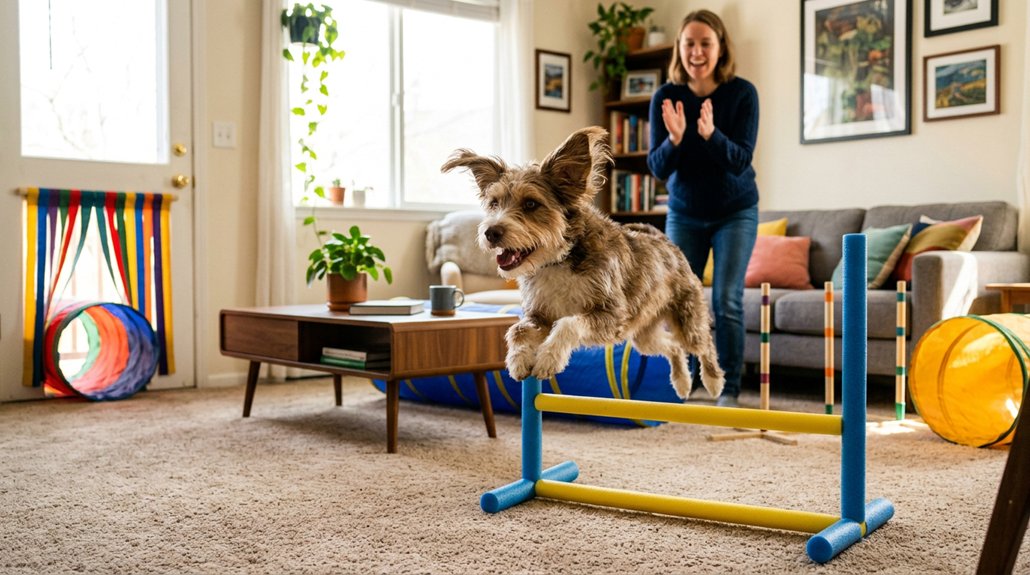
Transform your living space into a playful arena by setting up indoor agility courses for your dog. With a little obstacle creativity, you can use everyday items like chairs, broomsticks, and blankets to craft an engaging course. This not only encourages your furry friend to jump, crawl, and navigate through exciting hurdles but also nurtures both physical and mental dexterity.
To keep the experience stimulating and enjoyable, try these steps:
Follow these fun steps to create stimulating challenges that enhance your dog’s agility and strengthen your bond.
- Course Variety: Regularly change the layout to maintain your dog’s interest.
- Challenge Levels: Incorporate different challenges to test their skills and keep it fun.
- Teamwork: Use these sessions to strengthen communication and the bond with your dog.
- Treat Motivation: Place rewards at checkpoints to boost motivation and enjoyment.
These courses guarantee endless fun and learning.
Make Hide-and-Seek a Sensory Adventure
Ever wondered how you can turn a simple game of hide-and-seek into a sensory adventure for your dog? Start with easy scent exploration using visible treats to guide them in being a treat scavenger. As your pup gains confidence, hide treats in trickier spots. This engages their nose and sharpens their critical thinking skills, keeping your dog mentally stimulated. Use commands like “stay” to maintain focus and “find it” to encourage exploration, reinforcing obedience while deepening your bond. By varying difficulty levels, you keep your dog motivated and entertained. Regular hide-and-seek sessions stave off boredom and potential behavioral issues, tapping into natural instincts. It’s a fun, interactive way to engage your four-legged friend at home.
Rotate Toys to Keep Playtime Fresh
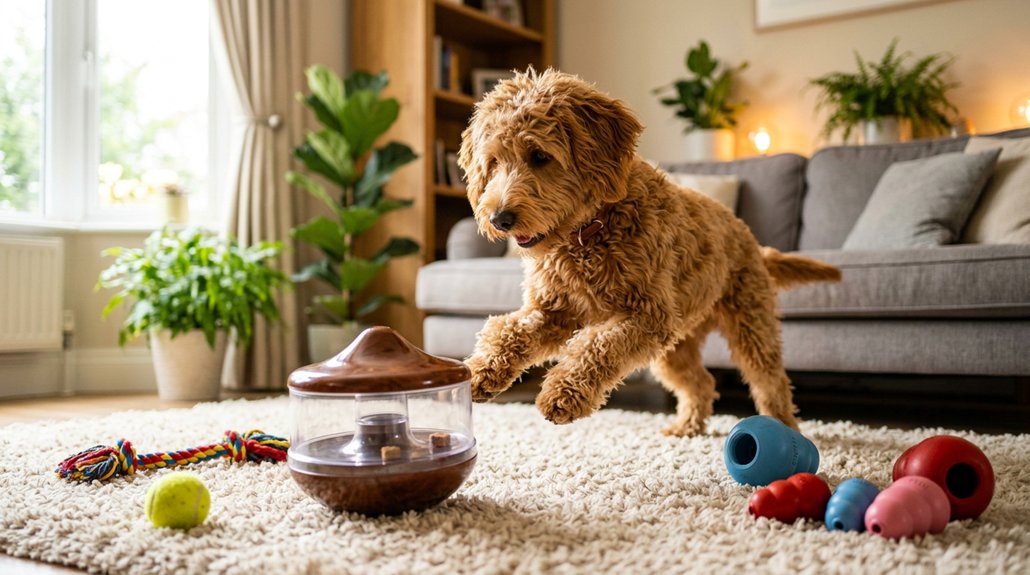
Although your dog might seem content with their favorite toys, it’s important to rotate them to maintain a sense of novelty and prevent boredom. This practice of toy rotation introduces play variety, which is crucial for keeping your dog mentally stimulated and engaged. Follow these steps to implement an effective toy rotation:
Regularly rotating your dog’s toys ensures novelty and prevents boredom, enhancing mental stimulation and engagement.
- Swap Toys Regularly: Change toys every few weeks to keep the learning and excitement alive.
- Mix Toy Types: Incorporate a blend of chew, puzzle, and plush toys to cater to different play styles.
- Observe Preferences: Note which toys your dog gravitates towards or ignores, adjusting the rotation accordingly.
- Hide and Rediscover: Store some toys away occasionally, allowing your dog to uncover them later, boosting their anticipation.
Use Household Games for Scent Work
Rotating toys can keep your dog’s playtime exciting, but engaging them in household scent games adds another layer to their mental stimulation. Start with the “Which Hand Game”, hiding a treat in one hand and allowing your dog to use their nose work to find the treat. Next, try the Muffin Tin Puzzle by placing treat scents in muffin cups, covering them with tennis balls. Your dog will love uncovering these tasty rewards. The Shell Game is another fun option; hide a treat under one of several cups and let your dog solve the puzzle. Finally, set up a Box Search with treats in various boxes. Always provide positive reinforcement to enrich your bond and boost their enthusiasm for these activities.
Create DIY Food Puzzles for Mealtime Challenge
Transform mealtime into an enriching experience by introducing DIY food puzzles that enhance mental stimulation and encourage your dog’s natural foraging instincts. Construct simple challenges like muffin tin puzzles or snuffle mats to add an element of fun and complexity, making them work for their food while thwarting boredom. Integrating these puzzles into daily routine not only slows down fast eaters but also fosters essential cognitive development, keeping your dog engaged and happy.
Enhance Mealtime With Puzzles
As you incorporate food puzzles into your dog’s mealtime routine, you’ll find their meals becoming a thrilling adventure that engages their minds and bodies. Transform ordinary kibble into a sought-after kibble treasure by applying clever puzzle strategies.
Here are four DIY food puzzle ideas:
- Muffin Tin Puzzle: Place kibble in muffin tin cups, covering them with tennis balls to create a fun hunt for their food.
- Box Puzzle: Nest boxes with high-value treats inside, encouraging exploration and problem-solving skills.
- Paper Roll Puzzle: Hide treats inside folded paper rolls, promoting an interactive feeding experience.
- Work-to-Eat Toys: These toys slow down fast eaters, making mealtime an enriching game that prolongs engagement and satisfaction.
These methods can greatly enhance mealtime enjoyment and well-being.
Encourage Natural Foraging Instincts
To nurture your dog’s natural foraging instincts, it’s essential to create engaging food puzzles that challenge their minds during mealtime. Use muffin tins or cardboard boxes to craft DIY puzzles that require your furry friend to employ foraging techniques to retrieve food. Hide treats within paper rolls to further encourage critical thinking and sniffing abilities. Snuffle mats are perfect for scattering kibble, letting your dog indulge in feeding enrichment through scavenging behavior.
Boost Mental Stimulation Daily
Elevate your dog’s mealtime experience by crafting engaging DIY food puzzles that boost their mental stimulation while satisfying their natural instincts. Transform mealtime into an enriching sensory game by incorporating creative challenges that provide food enrichment and reduce anxiety. Here’s how you can do it:
- Muffin Tin Puzzle: Place treats in a muffin tin, cover each with a tennis ball. This slows eating and promotes problem-solving.
- Paper Roll Forage: Use folded paper rolls with hidden treats to spark your dog’s natural foraging instincts, keeping them mentally engaged.
- Vary the Challenge: Change hiding spots and puzzle types to maintain interest and prevent destructive boredom.
- Interactive Meals: Serve daily rations through puzzles to extend mealtime, enhance satisfaction, and reinforce positive behaviors.
These puzzles are your key to a happier, mentally stimulated pup!
Create a Window Spot for Natural Viewing
A well-thought-out window spot can be a delightful way to harness your dog’s natural curiosity by giving them a glimpse into the bustling world outside. Ensuring window safety is essential; install a secure barrier, like a sturdy screen, to keep your dog safe while they enjoy visual stimulation from the moving scenes. Choose a spot with a comfortable, cushioned surface that allows your dog to sit or lie down as they watch the world go by—people, animals, and passing vehicles can provide rich entertainment.
Position the window area where they have a clear view of exterior activity. To keep the experience fresh, consider rotating their viewing spot or rearranging nearby items occasionally. This variety keeps your dog mentally stimulated and engaged for longer periods.
Incorporate Snuffle Mats for Foraging Play
When exploring ways to keep your dog engaged, incorporating snuffle mats into their playtime can be remarkably effective. These mats harness your dog’s natural foraging instincts, providing both mental and physical engagement. They’re an excellent choice for their foraging benefits, particularly in reducing boredom and curbing destructive behaviors. By using snuffle mats, you can extend meal times, helping fast eaters develop healthier habits.
Incorporate snuffle mats into playtime to engage your dog’s natural instincts and reduce boredom.
Here’s how to make the most of snuffle mats:
- DIY Construction: Create one using fabric strips and household items.
- Cognitive Boost: Encourage problem-solving and scent work.
- Routine Enhancement: Incorporate it into daily feeding rituals.
- Regular Mat Maintenance: Clean mats frequently to guarantee hygiene and longevity.
Engage your dog’s mind and instincts with this simple yet effective tool.
Frequently Asked Questions
How Can I Include My Dog in Household Chores?
Train your dog using chore motivation techniques. Teach them to fetch the mail or collect laundry with positive reinforcement. Use dog training sessions as bonding time, encouraging your pup’s participation in chores that align with their skills.
What Are Some Safe Outdoor Activities in a Small Yard?
Did you know dogs need at least 30-60 minutes of daily exercise? In a small yard, try fetch games to boost their energy or agility drills to enhance their mental and physical abilities. Keep them entertained!
How Do I Introduce My Dog to Virtual Playdates?
Start with virtual game ideas like treat hunting or obedience challenges, ensuring familiarity with devices. Remote interaction tips include using video calls, maintaining the screen at your dog’s eye level, and offering praise for engagement.
What Music Is Calming for Dogs During Downtime?
You won’t believe how effective calming melodies can be for your furry friend. Soothing sounds like classical music or soft instrumental tunes work wonders to relax them during downtime. Try it; you might just see a different dog.
How Can I Maintain My Dog’s Engagement When I’m Busy?
When you’re busy, maintain your dog’s engagement by providing interactive toys that offer mental stimulation. Puzzle feeders and treat-dispensing toys can keep them occupied, mentally challenge them, and guarantee they stay entertained even when you’re not directly involved.
Conclusion
By using these strategies, you’ll turn your home into a doggy wonderland, bursting with opportunities for your furry friend to thrive mentally and physically. Remember, a well-engaged dog is as happy as a child in a candy store. Your guidance in exploring training, puzzles, and games will strengthen the bond you share and create a fulfilling environment. Make every day an adventure, and watch your dog’s spirits soar to extraordinary heights much like a balloon released into the sky.