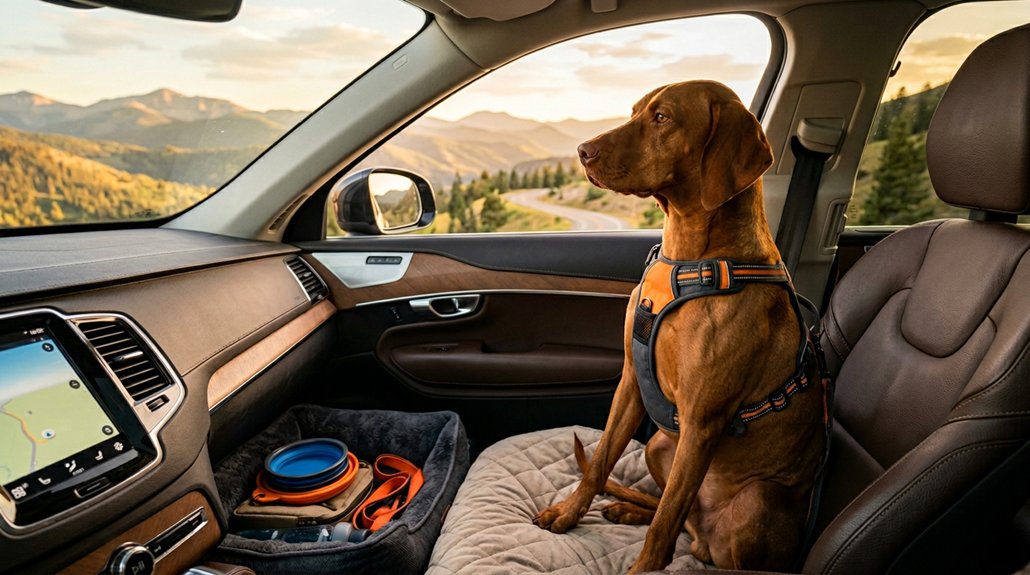
To guarantee a stress-free trip with your dog, focus on their comfort and well-being. Schedule a vet check-up to address health and travel anxiety. Choose a well-ventilated travel crate that meets airline standards. Pack essentials like food, water, and toys. Plan regular breaks for exercise and hydration, and manage motion sickness with light meals and soothing remedies. Don’t forget to update their ID tags and book pet-friendly accommodations. Dive deeper to uncover more tips for a smooth journey.
Key Takeaways
- Schedule a vet check-up to address travel anxiety and obtain necessary health documentation like a health certificate.
- Acclimate your dog to the travel carrier with positive reinforcement and practice crate techniques.
- Choose a sturdy, well-ventilated travel crate that complies with airline regulations for comfort and safety.
- Plan regular breaks every 2 to 3 hours during road trips for exercise, hydration, and stress reduction.
- Book pet-friendly accommodations in advance to ensure comfort and verify any restrictions or fees.
Overview of Stress-Free Dog Travel
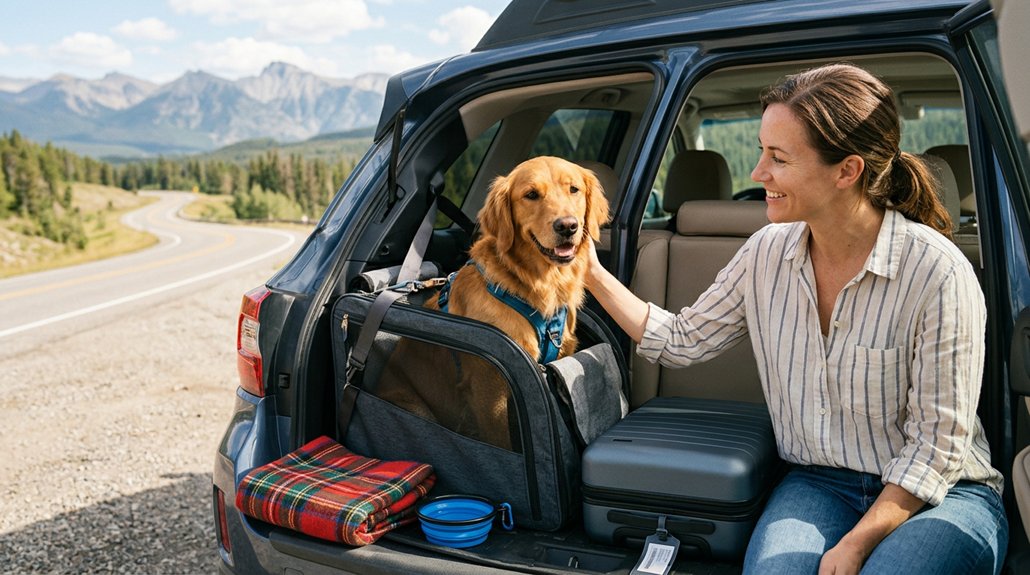
Traveling with a dog can be an exciting adventure, but it’s essential to plan ahead to guarantee it’s stress-free for both you and your furry friend. Start by scheduling a veterinary check-up to verify your dog is healthy and ready to travel. This visit is also a perfect time to discuss your dog’s travel anxiety and get professional advice for managing it. Investing in a well-ventilated pet carrier will ensure safety and comfort. Get your dog accustomed to it early to prevent unsettling dog behavior. Don’t forget a travel kit packed with essentials like food, water, and toys. Plan regular breaks during road trips to help manage restlessness. Finally, confirm pet-friendly accommodations in advance to avoid surprises.
Know Your Dog’s Comfort Level
How well do you know your dog’s comfort level with travel? Observing their behavior during short trial trips can help determine their travel acclimation and adaptability to various environments. Understanding your dog’s personality is essential; some thrive in new surroundings, while others might get anxious or uncomfortable. It’s important to consult a veterinarian if your dog has a history of stress-related issues. They can suggest solutions or calming aids. Familiarize your dog with their travel carrier or crate ahead of time by creating positive associations through treats and short acclimation sessions. Always monitor their response during trips, and be prepared to adjust plans if distress signs emerge. This guarantees that your pet’s well-being is always the priority.
Visit the Vet for a Pre-Travel Checkup
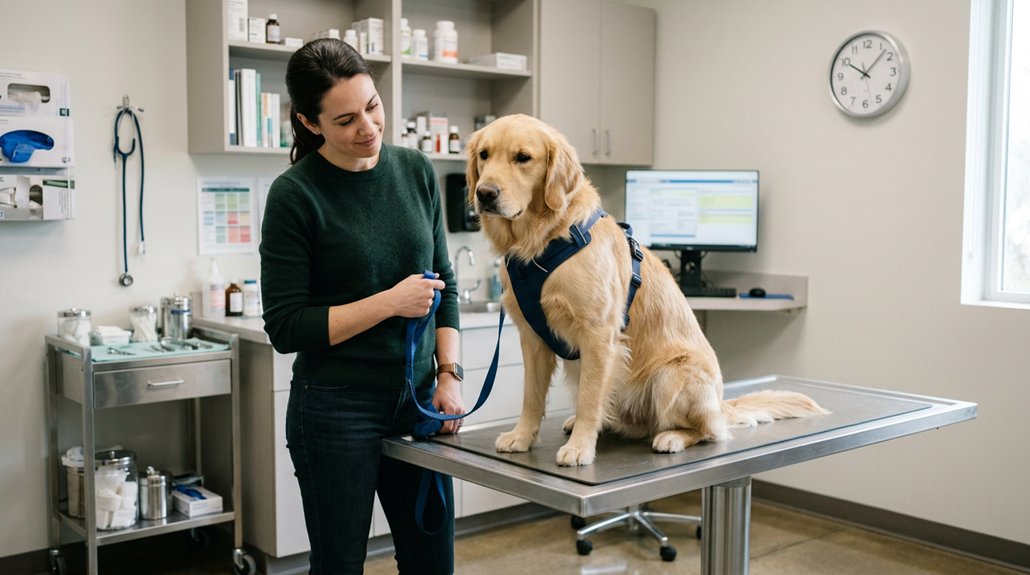
Before starting on a journey with your furry friend, visiting the vet for a pre-travel checkup is vital. Schedule this appointment a few weeks in advance to guarantee your dog is in good health and up-to-date on vaccinations. It’s the perfect time to seek veterinary advice on travel stressors like motion sickness and discuss prevention or calming solutions tailored just for your dog. Obtaining necessary health documentation, such as a health certificate, is essential, especially when traveling out of state or internationally. Some destinations require proof of vaccinations. Make certain flea, tick, and heartworm prevention treatments are current, as new environments can pose additional risks. Utilize your vet’s expertise for breed-specific health tips to guarantee a safe, comfortable journey.
Select the Right Travel Crate
With your dog’s health needs addressed, let’s focus on guaranteeing their journey is physically safe and comfortable. Choosing the right travel crate is vital. You’ll want one that meets airline regulations—airline-approved, secure, and well-ventilated. Make certain it’s the correct size so your furry friend can stand, turn around, and lie down easily. Opt for a crate made of ideal crate materials like sturdy, durable plastic or metal to withstand travel stressors. Start crate acclimation techniques early by making the crate a positive place.
- Use treats and playtime to create familiarity.
- Confirm the crate features easy-to-clean components, like removable trays.
- Check for lock mechanisms that prevent accidental opening.
- Choose a design that balances safety with comfort.
A little planning goes a long way in guaranteeing stress-free travel for both you and your dog.
Pack Your Dog’s Travel Essentials
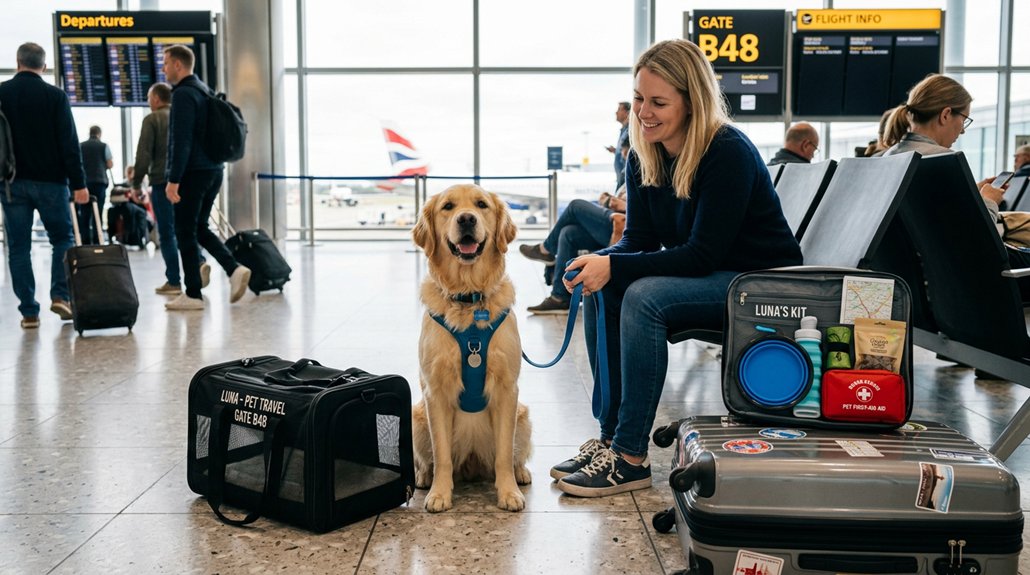
When it comes to traveling with man’s best friend, packing your dog’s travel essentials is vital for a smooth and enjoyable journey for both of you. Start by ensuring you have enough high-quality dog food and travel treats to cover the entire trip, with extra for unexpected delays. Hydration is key, so pack a collapsible water bowl and always have fresh water available. Don’t forget grooming essentials like a brush and shampoo as well as any medications your pup may need. A leash, harness, and waste bags are important for managing bathroom needs during stops. Finally, bring along comfort items like a favorite toy or blanket. These familiar items can help ease anxiety and provide comfort during travel.
Secure Your Dog Safely in the Vehicle
Securing your dog in the vehicle is essential for both their safety and your peace of mind. Use a well-ventilated crate or a properly fitted safety harness to prevent distractions and protect your dog during sudden stops. Placing them in the back seat and ensuring all restraints allow for quick access will make your travel more comfortable, reducing anxiety for both you and your furry friend.
Utilize Proper Restraints
Traveling with your furry companion can be a delightful experience, but guaranteeing their safety in the car is essential. Utilizing proper restraints offers numerous safety benefits and peace of mind, allowing for a stress-free journey. Choose from these restraint types to secure your dog:
- Doggy seat belts or safety harnesses: These prevent distractions while you drive.
- Travel crates: Opt for a well-ventilated, appropriately sized crate so your dog can stand, turn around, and lie down comfortably.
- Back seat placement: This is the safest spot, reducing injury risks from front seat airbags.
- Regular checks: Confirm the restraint fits well as your dog grows or gains weight.
You’ll protect both your pet and passengers from unexpected accidents by preventing your dog from roaming freely.
Optimize Seating Arrangement
Although it might seem simple, guaranteeing your dog’s seating arrangement in your vehicle can greatly enhance the journey’s safety and comfort. Start by selecting the right dog seating options. The back seat, paired with a doggy car seat or seat belt harness, minimizes distractions and keeps your dog safe from sudden stops or accidents. For some dogs, a secured crate provides familiarity and protection.
| Option | Benefit |
|---|---|
| Car Seat | Limits distractions |
| Seat Belt | Protects during sudden impacts |
| Crate | Familiarity and added protection |
Acquaint your dog with the travel gear at home to reduce anxiety on the road. Always keep an eye on their demeanor and adjust the arrangement to guarantee they’re comfortable and calm throughout the journey.
Ensure Rapid Access
While ensuring your dog’s safety in your vehicle, it’s crucial to focus on rapid access in case of emergencies. Securing your dog with a high-quality seatbelt or harness in the back seat helps manage travel anxiety and mitigate dog behavior that can cause distractions. Invest in an airline-approved, well-ventilated pet crate, gradually acclimating your pet to it to ease stress during the journey.
- Choose restraints that provide quick access, allowing instant help during emergencies.
- Regularly monitor your dog’s comfort and behavior to adjust their space as needed.
- Keep the back seat free of loose items to prevent accidents and distractions.
- Always prioritize safety by preventing your dog from roaming freely in the vehicle.
Caring for your pet’s safety enhances your travel experience.
Plan Regular Stops for Exercise and Hydration
When you’re on a road trip with your dog, planning regular stops every 2 to 3 hours is vital for their well-being. These breaks not only allow your pup to stretch and relieve themselves but also provide essential hydration, especially in hot weather. Don’t forget that a bit of exercise during these stops can play a big role in reducing their anxiety, making the journey more enjoyable for both of you.
Schedule Routine Breaks
Planning regular stops during a road trip isn’t just beneficial for you, it’s essential for your furry friend. Scheduling breaks every 2 to 3 hours helps your dog stretch their legs, keep anxiety at bay, and promote well-being. While driving along dog-friendly routes, consider incorporating travel games to engage your pet and make the journey enjoyable.
Here are some practical tips to keep in mind:
- Use rest areas or pet-friendly parks: These give your dog the chance to run and explore, mitigating travel stress.
- Monitor their behavior: A restless or agitated dog might need more frequent stops.
- Pack essentials: Bring a portable water bowl and snacks for energy.
- Adjust as needed: Each dog’s needs differ; cater schedules accordingly.
Hydration Is Key
Ensuring your dog’s hydration is essential for a stress-free journey, so don’t underestimate the importance of regular hydration breaks. Plan to stop every 2 to 3 hours. This lets your dog stretch and rehydrate, following essential water safety practices. Always have a collapsible water bowl ready for efficient hydration. Monitor for dehydration signs like excessive panting or dry gums.
Familiarize your pet with portable bowls to make drinking on-the-go seamless. Adjust meal portions, including revitalizing treats like carrots, during breaks. Here’s a practical reminder:
| Task | Time Interval | Hydration Tip |
|---|---|---|
| Hydration Breaks | Every 2-3 hours | Use a collapsible bowl |
| Monitor Signs | Ongoing | Watch for dry gums |
| Offer Water | During each stop | Encourage regular drinking |
| Meal Adjustment | As needed | Include carrot treats |
| Familiarization | Before the trip | Practice with portable bowl |
This strategic approach minimizes stress and maximizes comfort for your furry travel companion.
Exercise To Relieve Stress
A well-timed break on your road trip can dramatically enhance your dog’s comfort and reduce stress. Scheduling stops every 2 to 3 hours allows your furry friend to stretch, stay hydrated, and burn off excess energy. As dehydration and restlessness can exacerbate stress, these breaks incorporate essential calming techniques. Consider:
- Researching pet-friendly rest areas for designated play spaces.
- Keeping a portable water bowl handy to guarantee fresh water is always available.
- Engaging in light exercise like a short walk or play with interactive toys.
- Observing your dog’s body language and adjusting stops if anxiety arises.
These strategies not only alleviate travel stress but also transform the journey into a more enjoyable experience for both you and your dog.
Prevent Motion Sickness in Dogs Naturally
Dogs can be just as susceptible to motion sickness as humans, but with a few practical strategies, you can help make travel a more pleasant experience for them. Gradually acclimating your dog to car rides through short trips can build positive associations. Herbal remedies like ginger and peppermint can also be effective. Consider offering ginger-infused treats or using diluted peppermint oil. Additionally, calming techniques such as playing soothing music or using a ThunderShirt can provide comfort.
Here’s a quick reference:
| Strategy | Benefit |
|---|---|
| Short car trips | Builds positive associations |
| Well-ventilated car | Reduces anxiety and nausea |
| Light meal beforehand | Reduces risk of nausea |
Ensuring your dog has a secure, stable seating area and maintaining a calm environment will further ease their travel experience.
Keep Your Dog’s ID Updated
While traveling with your dog, keeping their ID updated is essential for peace of mind and quick recovery if they ever get lost. Regular ID Tag Maintenance guarantees your dog’s tags are legible and feature current contact info. Consider Microchip Benefits as a reliable option since it’s a permanent ID and invaluable if tags are lost. To enhance safety further, consider these practical tips:
- Verify ID tags display accurate ownership and contact details.
- Include your travel itinerary and emergency contacts on the tags.
- Regularly check for worn or damaged tags and replace them promptly.
- Keep microchip information updated with any changes in details.
Book Dog-Friendly Lodging Early
Booking dog-friendly lodging well in advance can save you from stress and guarantee a smooth trip, especially during busy seasons. It’s essential to research pet-friendly policies and confirm any restrictions or fees that might apply. Use reliable resources like BringFido to find accommodations that not only welcome pets but also offer amenities your furry friend will appreciate.
Research Pet-Friendly Policies
A seamless traveling experience with your dog starts by researching pet-friendly policies at potential lodging options. Make certain any accommodation explicitly allows dogs, keeping an eye out for breed or size restrictions. Booking early is essential as pet-friendly spots fill up fast, especially during peak travel seasons. Don’t overlook potential extra costs like pet fees.
Before finalizing your booking, consider:
- Reading online reviews from pet owners for insights on nearby dog parks and dog-friendly restaurants.
- Contacting properties directly to ask about pet policies and any special requirements.
- Confirming how pet travel insurance might play into your decision if plans change.
- Confirming the accommodations align with your dog’s comfort and your travel schedule.
These steps guarantee a smooth, stress-free trip with your furry friend.
Verify Amenities and Restrictions
After identifying pet-friendly policies at your chosen lodgings, focusing on amenities and restrictions becomes necessary. Start by checking for accommodation restrictions, like size, breed, or pet number limits to guarantee you’re compliant. Also, explore available pet amenities such as dog parks, pet-friendly restaurants, or walking trails nearby, enhancing your furry friend’s experience. Some places offer convenient items like food bowls or pet beds, which make for a comfortable stay.
Booking early is vital, especially during peak seasons, as pet-friendly spots fill up fast. Documentation like vaccination records might be required, so prepare those in advance. Consider using specialized travel apps and websites to easily find and compare accommodations that meet your specific needs, making sure both you and your pet enjoy a stress-free journey.
Frequently Asked Questions
What Is the 7 7 7 Rule With Dogs?
The 7-7-7 Rule suggests giving your dog seven minutes each for bathroom, exercise, and socialization per travel hour. Pairing this with proper dog travel gear and pet-friendly accommodations guarantees a stress-free journey for both of you.
How to Travel With a Dog That Has Anxiety?
Start by exploring dog-friendly destinations that prioritize relaxation. Ascertain travel preparedness; consult your vet for anxiety solutions. Familiarize your dog with travel gradually, using favorite items for comfort. Regular breaks and anxiety wraps can help too.
What Is the 3-3-3 Rule for Dog Anxiety?
The 3-3-3 Rule helps you understand dog behavior during new situations. In the first three days, expect anxiety. By three weeks, offer travel essentials for comfort. After three months, expect them to feel settled and relaxed.
How to Reset Your Dog’s Nervous System?
Did you know 40% of dogs experience anxiety during travel? To reset your dog’s nervous system, incorporate calming exercises like gentle massage and pressure wraps. These techniques boost serotonin, easing their stress and promoting relaxation throughout travel journeys.
Conclusion
You’ve mastered every trick in the travel-with-your-dog handbook! Imagine the thrill of exploring new horizons with your four-legged friend, frenzy-free. You’ve done it all—ensured comfort, vetted every detail, packed a canine backpack so perfect it’ll make dogs drool. You’ve booked lodging fit for a royal hound and avoided motion sickness like a pro! Your dog’s ID is updated to presidential standards. Now, travel stress-free knowing you’ve handled it all like an absolute dynamo!