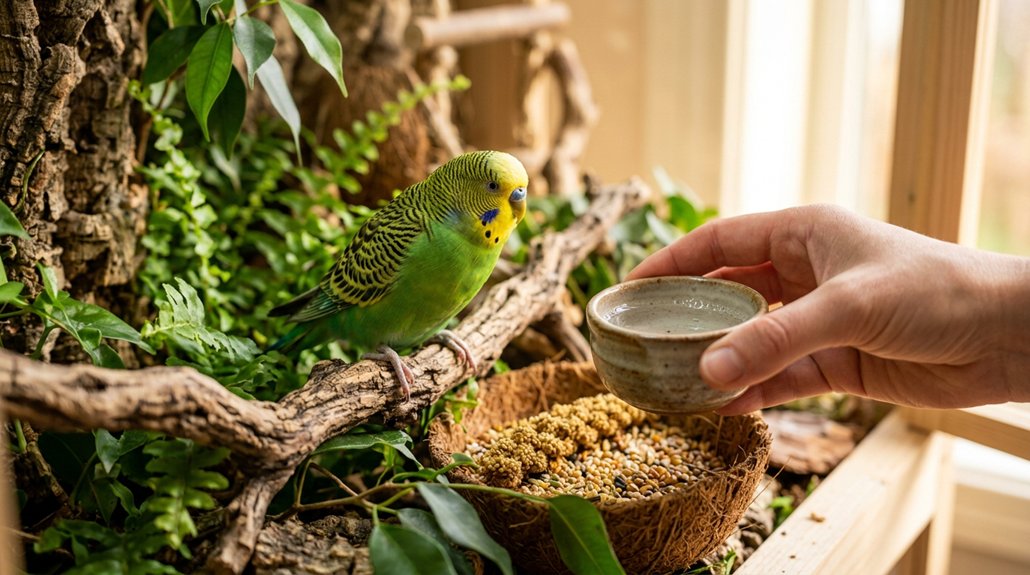
To help your bird adjust to a new home, keep the first 48–72 hours quiet, low-traffic, and predictable. Set up the cage with the same perch placement, toys, food, and familiar routine, and keep pets and children away. Speak softly, offer treats through the bars, and wait for voluntary step-up before handling. Add new toys and changes slowly, while watching appetite, droppings, and breathing. A few simple habits can make the adjustment much easier, and there’s more you can do.
Key Takeaways
- Keep the bird in a quiet, low-traffic room for the first 48–72 hours with familiar cage setup and routine.
- Preserve perch, toy, food, and cage placement habits to reduce stress and speed adjustment.
- Build trust slowly with short, calm talking sessions and treat-based step-up training.
- Offer daily enrichment with familiar and safe chew, forage, and shreddable toys, adding changes gradually.
- Maintain consistent feeding, sleep, and social routines, and monitor closely for stress or illness signs.
Set Up a Safe First-Day Space
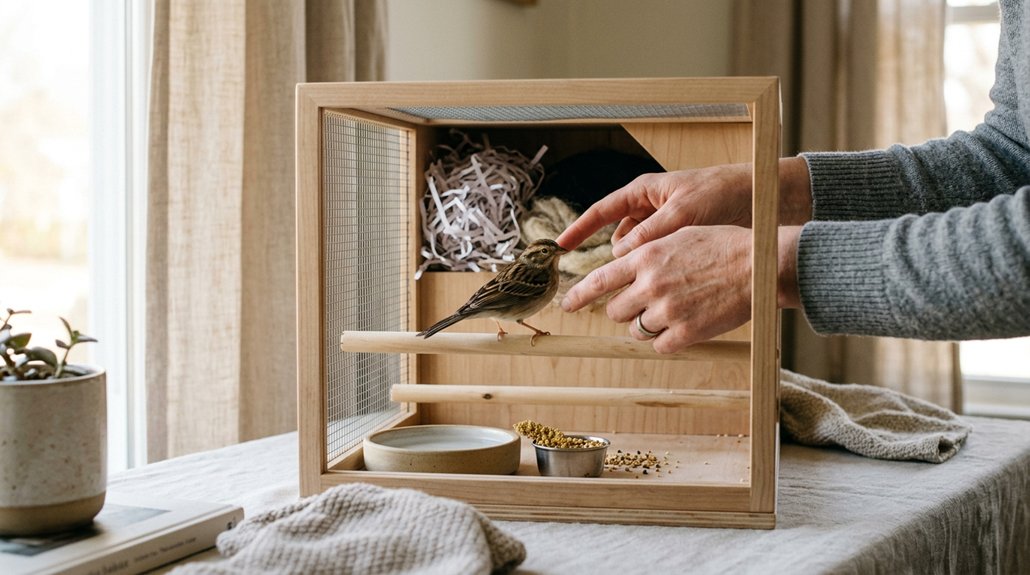
On the bird’s first day, set up a quiet, low-traffic room with the cage arranged exactly as it was before: same perch placement, familiar toys, and its usual food to give immediate visual and scent cues. Keep the room temperature stable and comfortable, and cover the cage so it isn’t fully dark; leave the front uncovered for visual enrichment while limiting stimulation. For the first 48–72 hours, don’t expose the bird to pets or children. Maintain its normal lighting and sleep schedule, covering the cage at bedtime. Low-volume TV or music can provide background sound. You can place the travel carrier or a comfort item inside for security. Monitor appetite, droppings, breathing, and stress signs, and keep your veterinarian’s and emergency contacts nearby.
Recreate Familiar Cage Habits
As soon as your bird arrives, recreate the old cage setup so its surroundings feel predictable: place the same perches, favorite toys, and food and water dishes in the new cage within 24 hours, and keep the cage at a similar height, location, and orientation to what it was used to. You should match perches by diameter and type so toes can wrap securely, and preserve orientation of doors and favored perches to reduce disorientation. Keep the usual substrate, feeding schedule, and diet in place, including familiar pellets, fruits, and treats. Leave one or two preferred chew or forage toys, but don’t overload the cage with new items. Add changes gradually over days or weeks, rotating from a prepacked box so novelty stays controlled and stress stays low.
Use Quiet Voice Training
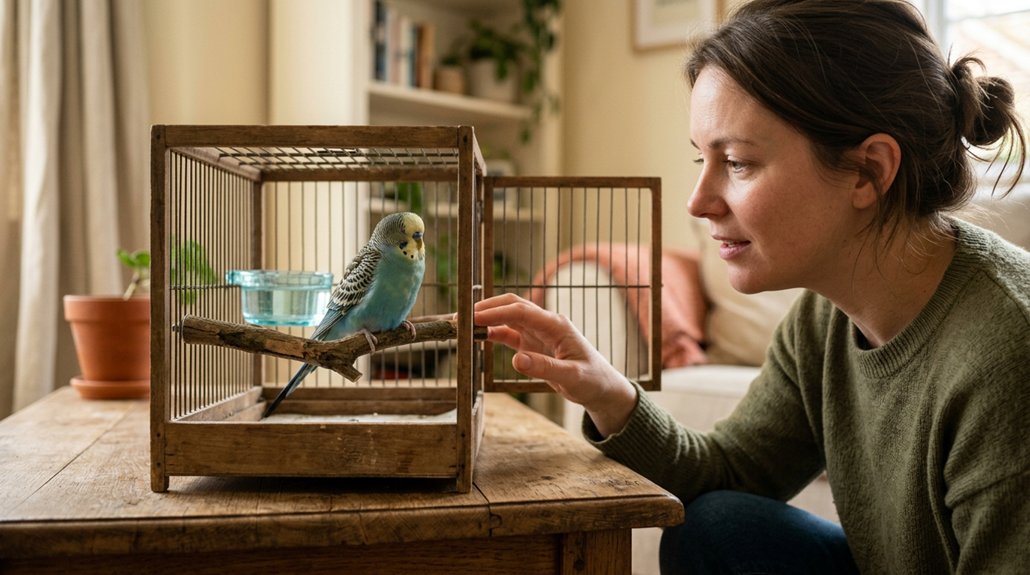
Start with short, calm talking sessions from outside the cage so your bird can associate your voice with safety rather than threat. Use 5–10 minute sessions, 2–4 times daily, and keep your tone steady, quiet, and predictable. A consistent, slightly higher-pitched version of your bird’s name can support voice recognition during the first 3–7 days of acclimation. Offer soft greetings, but avoid sudden loud sounds or raised tones, which can increase stress and trigger attention-seeking screeches. Keep your face visible, blink slowly, and maintain a relaxed posture while you speak. If you’re offering treats through the bars, do so without reaching in abruptly. After several calm days, you can gradually extend these interactions before introducing step-up training.
Start Step-Up With Treats
Once Leo is comfortable with your calm voice, begin pairing your presence with high-value treats to build trust before any attempt at stepping up. Offer millet, fruit, or nut bits through the cage bars for several days, using food reinforcement to create a predictable, safe association. When he’s relaxed, place the treat on an open palm 1–2 cm behind your fingers so he must move onto your hand to reach it. This hand target should invite voluntary stepping, not force. Keep sessions brief, 2–5 minutes, 2–4 times daily, and deliver the reward immediately after he steps up. Increase the distance from the cage gradually over days or weeks. Never chase or grab him. If he fluffs, widens his eyes, or bites, pause and return to bar-side treat offering until calm behavior returns.
Choose Stress-Reducing Toys
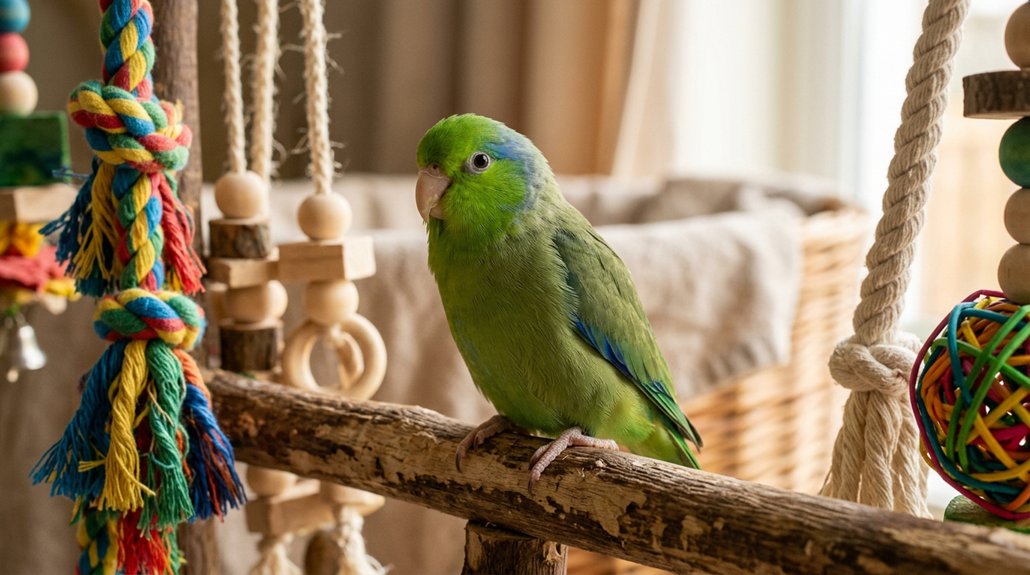
To keep Leo engaged and lower stress, offer three different toy types each day: a chewable wood toy, a foraging or puzzle toy, and a destructible paper or cork toy. This mix supports foraging enrichment and reduces boredom-linked plucking. Keep at least one familiar toy from his previous home in the cage, then add one new item every 3–7 days from a rotation box so novelty doesn’t overwhelm him. Choose bird-safe materials such as untreated wood, natural fibers, stainless steel, and cotton rope without metal crimps. Avoid toxic paints, small detachable parts, and long strings. Match toy size and durability to a yellowsided conure, and favor sensory textures he already accepts. Include swings or ropes for activity and soft shreddables for comfort.
Build Trust With a Daily Routine
After Leo has a few familiar and stress-reducing toys in place, focus on a predictable daily routine to help him feel secure. You should keep consistent mealtimes, social sessions, and sleep times the same each day, especially during the first 72 hours. Aim for about three social sessions totaling roughly 3 hours daily, but keep each visit short and calm. Use the same quiet voice, cues, and handling approach so Leo gets predictable interactions and learns your name and routine. For the first 3 days, limit care to you if possible. Keep perches, toys, and food in similar positions, and provide soft background noise plus a stable dark sleep period. This structure helps reduce stress and supports trust.
Reduce Stress During Travel
Travel can be stressful for a bird, so prepare the carrier well before departure and keep the ride as steady as possible. Secure it in the back seat with a seat belt, cushion it, and make certain the perch lets toes wrap about ¾ around. Use window shades to limit heat and glare.
| Step | Purpose |
|---|---|
| Short practice drives | Support motion desensitization |
| Familiar toys and food | Build calm associations |
| Partial cover and quiet | Reduce stimulation |
Keep the car temperature stable, away from direct sun or vents. Bring the bird’s usual treats, and offer high-water-content fruit instead of open water to prevent spills. Watch for motion-sickness signs, and if you’re planning air or long-distance travel, get a recent health certificate and confirm carrier requirements early.
Reset the Cage Area First
Set the cage up in a quiet, low-traffic room for the first 48–72 hours so your bird isn’t overwhelmed by new sights and sounds. Place it in a quiet corner with familiar scents from the previous home, if possible. Recreate the cage layout right away: keep perch locations, food and water bowls, and favorite toys in the same positions. This visual and tactile consistency helps your bird recognize the space. Remove loose, unfamiliar items so the setup stays simple. At night, or during stressful periods, cover the cage with a breathable sheet to preserve the usual light-dark cycle. You can also place the carrier or stand nearby and offer a preferred treat or high-water-content fruit to encourage calm exploration.
Apply the 3-3-3 Rule
Once the cage area is calm and familiar, use the 3-3-3 rule to structure Leo’s first weeks in the new home. Give at least three hours of social contact daily, split into three sessions, to reduce stress and support bonding. Each day, rotate three forms of mental enrichment, such as a puzzle feeder, chewable wood toy, and foraging box, from a toy box. Also provide three opportunities for physical exercise, including supervised flight, climbing, or out-of-cage play, matched to his health. Keep morning, midday, and evening routines consistent so routine predictability helps Leo feel secure. Watch for testing, louder vocalizing, or feather-plucking; if they rise during days 3-30, add quiet enrichment and consult your avian vet or parrot behaviorist.
Frequently Asked Questions
How Long Does It Take a Bird to Adjust to a New Home?
It can take you a few days to 3–30 days for adjustment, though full settling may take weeks or months. Watch stress signs, keep a steady feeding schedule, and minimize disruptions during the first 72 hours.
What Is the 3 3 3 Rule for Birds?
Of course, birds need a tiny rulebook. You’ll give three hours’ social interaction, three toy types, and three exercise chances daily. Track behavioral timelines and use gradual handling; you’ll reduce stress, boredom, and anxiety clinically.
How to Acclimate a Bird to a New Home?
You should use slow introductions and consistent routines: place the cage in a quiet room, keep familiar perches and toys, limit handling for 48–72 hours, then let your bird explore gradually while you monitor eating and behavior.
What Is the 60 40 Rule for Birds?
The 60/40 rule means you’ll spend about 60% of your bird’s out-of-cage time on social bonding and 40% on environmental enrichment. This balanced, behavior-focused routine helps you prevent boredom, clinginess, and stress-related plucking.
Conclusion
Helping your bird adjust to a new home takes patience, consistency, and calm handling. You’ll support trust best by keeping its space quiet, familiar, and predictable while introducing changes slowly. Remember, “slow and steady wins the race.” If you maintain a steady routine, offer gentle training, and watch for stress signals, your bird can settle in safely and confidently. With time, your care’ll help it feel secure, comfortable, and at home.