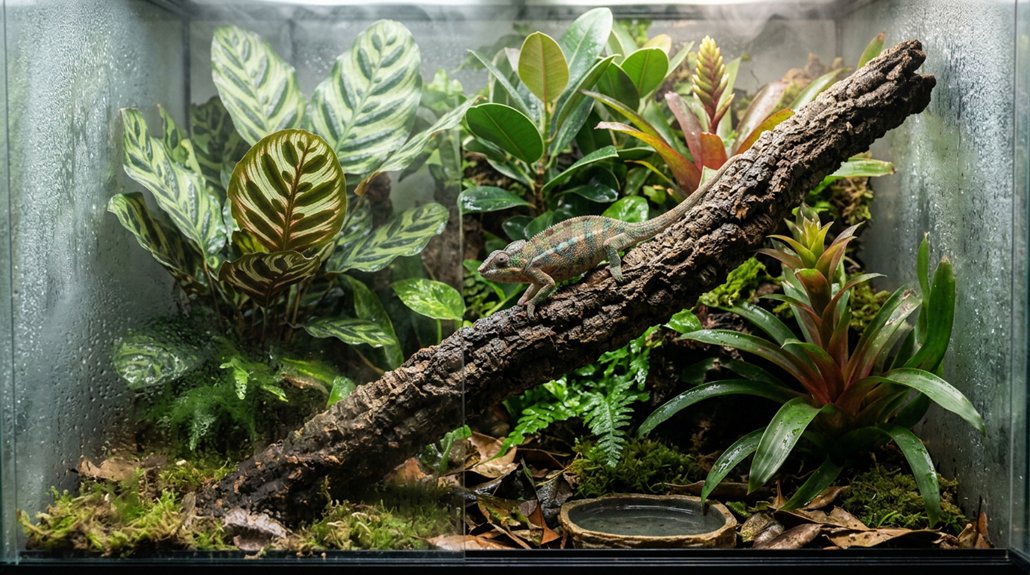
To set up a chameleon habitat, guarantee enclosure dimensions are at least 24″x24″x48″ for climbing space and ventilation. Use UVB bulbs like Arcadia T5 HO for lighting, maintaining basking spots at 85-90°F with cooler areas down to 70°F. Humidity should be kept between 40%-60% using misting systems and digital hygrometers. Integrate non-toxic live plants like Ficus and Pothos for humidity and enrichment. Explore further to optimize your chameleon’s environment.
Key Takeaways
- Maintain humidity levels between 40%-60% using misting systems and digital hygrometers to ensure chameleon health.
- Install UVB and basking lights at appropriate distances for temperature regulation and vitamin D3 synthesis.
- Use non-toxic live plants like Ficus benjamina and Pothos for humidity control and natural enrichment.
- Rotate plants and lighting to provide varied scents, textures, and light cycles for a stimulating environment.
- Ensure enclosure dimensions of at least 24″x24″x48″ for climbing space and adequate ventilation.
Step-by-Step: Setting Up a Chameleon Habitat
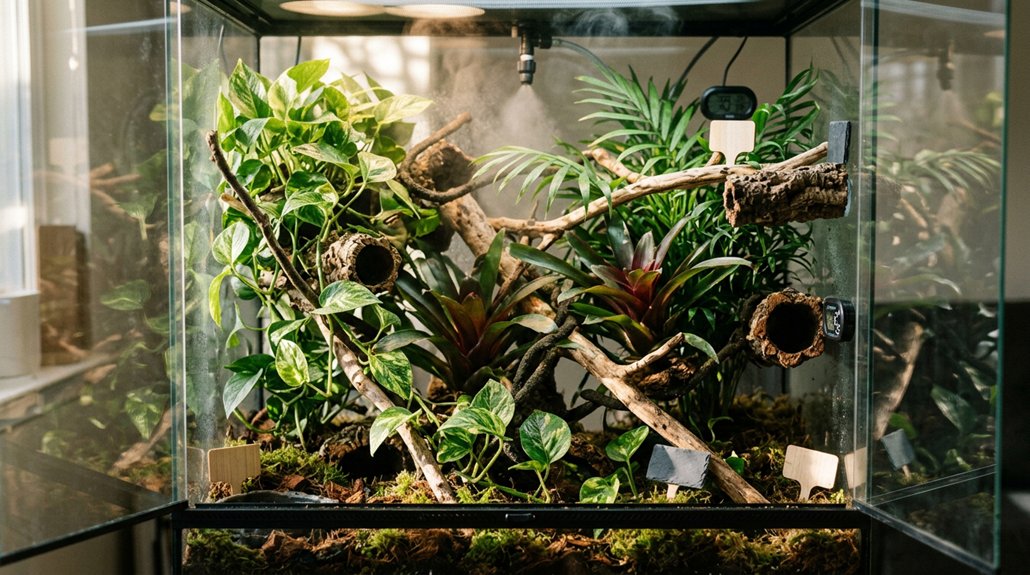
To successfully set up a chameleon habitat, you’ll begin by selecting an enclosure that is at least 24 inches in length and width, and 48 inches in height. This size guarantees ample climbing space and ideal ventilation. For lighting, install a linear UVB light covering the cage’s width, essential for proper UVB exposure, aiding in calcium metabolism. Maintain temperature control by confirming basking spots are around 85-90°F, with cooler areas not dropping below 70°F. A misting system will maintain daytime humidity levels at 40-60% and increase it to 80-100% at night. Incorporate live plants like Ficus benjamina, enhancing humidity and serving as climbing structures. Position branches vertically for natural movement while offering accessible surfaces for catching feeder insects.
Keeping Your Chameleon’s Home Clean and Safe
To maintain your chameleon’s habitat both clean and safe, it’s essential to remove waste daily, particularly if your setup features bare floors. Use safe disinfectants like F10SC or ProRep Protect wipes on surfaces and leaves, ensuring that decorative elements are free from contaminants, possibly needing to bake them before use. For ongoing maintenance, consider bioactive substrates to naturally decompose waste, while monitoring humidity levels with a digital hygrometer to sustain ideal living conditions.
Daily Cleaning Practices
Ensuring your chameleon’s habitat remains clean and safe is paramount, and daily cleaning practices are a critical component of this responsibility. Effective waste management begins with understanding your substrate choice. In bare-floor setups, promptly remove waste using a disinfectant like F10SC or ProRep Protect wipes to maintain hygiene. Choosing bioactive substrates reduces daily cleaning needs, as these substrates naturally decompose waste, fostering a healthier environment. Regularly inspect plant leaves to remove dust and prevent mold growth, safeguarding both your chameleon and the plant’s health. Monitor uneaten food, eliminating it quickly to deter pests. Keep humidity levels ideal and check water sources for mold, since stagnant water can harbor harmful bacteria, posing risks to your chameleon’s well-being.
Hygiene Maintenance Tips
Maintaining your chameleon’s habitat goes beyond daily cleaning practices; it extends to thorough hygiene maintenance to guarantee an ideal environment. Regularly remove waste from the vivarium, especially if using bare floor setups where waste accumulates rapidly. Opt for bioactive substrates to foster a self-sustaining ecosystem, reducing the frequency of cleaning once established. Clean plant leaves with disinfectant wipes like ProRep Protect to prevent harmful bacteria buildup. Engage in humidity monitoring using digital hydrometers, adjusting levels to avoid excess moisture that could promote mold and bacteria. Ascertain proper drainage to manage water from misting systems, avoiding waterlogged conditions. Together, these strategies lead to a cleaner, safer enclosure, securing your chameleon’s health and comfort.
Essential Lighting for Chameleon Health
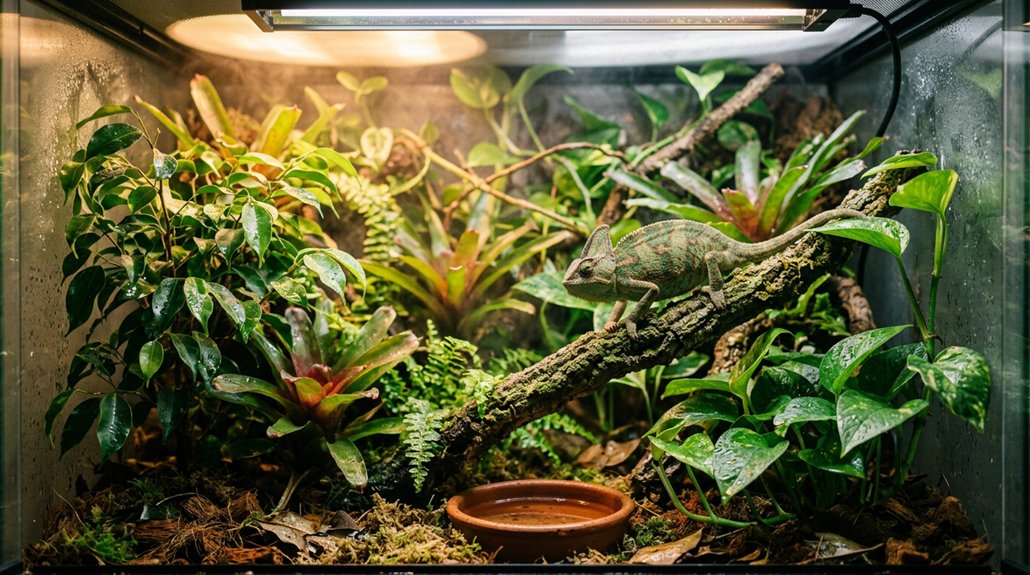
To guarantee your chameleon maintains ideal health, selecting the right UVB bulb is essential; options like the 22″ Arcadia T5 HO Forest 6% or Zoo Med T5 HO ReptiSun 5.0 provide the necessary exposure. Position the heat lamps about 6 inches above the basking branch to achieve a stable thermal gradient, which prevents thermal burns and guarantees effective UVB penetration. This setup supports proper calcium metabolism, preventing metabolic bone disease while enhancing the welfare of both the reptile and any enclosure foliage.
Proper UVB Bulb Selection
A critical element of chameleon care is selecting the right UVB bulb for your pet’s health. UVB bulb types play a significant role in guaranteeing adequate UVB exposure. Opt for a linear T5 HO bulb, such as those from Arcadia or Zoo Med, which offer superior effectiveness and reliability. Consider these three essentials:
- UVB Output: Choose bulbs providing 5-12% UVB output. Veiled and Panther chameleons thrive with 6% to 10% to prevent metabolic bone disease.
- Bulb Maintenance: Replace your UVB bulb every 6 to 12 months, as UV output diminishes over time.
- Daily Exposure: Confirm UVB lighting is available for 12 hours daily, replicating natural sunlight to aid vitamin D3 synthesis and calcium absorption.
Optimal Light Positioning
Although often underestimated, ideal light positioning is vital in guaranteeing your chameleon’s health. Proper light angle and distance play significant roles. The top branch should be above eye level, promoting both climbing and light exposure. Your linear UVB light, spanning the cage top, needs to be angled directly downward. This allows UVB rays to penetrate effectively across the habitat. For basking lights, position them approximately 6 inches from the basking branch to maintain the necessary warmth and UVB exposure. Always make sure lights are outside the enclosure to prevent burns, avoiding internal heat bulbs entirely. Follow distance guidelines meticulously, and regularly monitor lighting setups. This helps maintain a 12-hour exposure cycle, making certain your chameleon thrives without overheating.
Optimizing Humidity With Misting and Plants
When it comes to creating an ideal environment for your chameleon, fine-tuning the humidity levels is vital, and integrating misting systems with the strategic use of live plants can greatly enhance this aspect of habitat management. Mastering misting techniques helps maintain humidity levels between 40%-60%, essential for chameleon well-being. Selecting appropriate plants that facilitate transpiration contributes markedly to this balance. To optimize hydration and humidity:
- Utilize misting systems with digital hydrometers for precise control, guaranteeing spikes during misting sessions enhance atmospheric moisture.
- Install plant drippers for effective water droplet harvesting, natural hydration, and humidity enhancement.
- Allow drying periods between sessions to avert mold growth and maintain a healthful environment.
Detailed care guarantees your chameleon thrives and remains robust.
Adding Live Plants to Your Vivarium
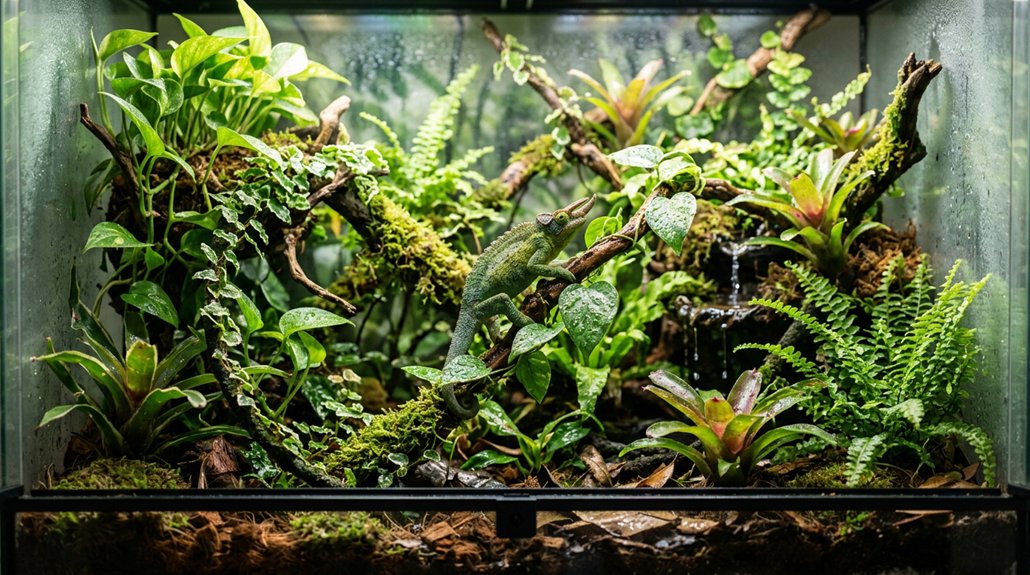
Having established the importance of maintaining ideal humidity through misting, the introduction of live plants becomes a fundamental part of the chameleon’s environment. Plant selection is critical; choose non-toxic species like Ficus benjamina, Pothos, and Schefflera, which provide not only humidity but also climbing surfaces and hiding spots, enhancing the naturalistic habitat. Guarantee your plants thrive by using suitable plant growth lights, such as the Arcadia Jungle Dawn LED, designed to promote healthy growth and support your chameleon’s needs. Regular plant care is essential; monitor for pests, diseases, and guarantee the plants remain vigorous. The strategic integration of live plants enhances vivarium aesthetics while playing a crucial role in regulating humidity and guaranteeing your chameleon’s well-being.
Ideal Climbing Structures for Chameleon Health
To promote ideal chameleon health, constructing a habitat with perfect climbing structures is essential, as these provide necessary perching spaces that mimic the chameleon’s natural environment. For maximum branch arrangement, consider:
- Branch Diversity: Use different diameters to cater to various climbing surfaces, enabling your chameleon’s physical exercise and reducing the risk of health issues.
- Stability: Secure branches with zip ties to prevent shifting and maintain a safe, stable environment, enhancing the safety during enrichment activities.
- Height Variation: Arrange branches at varying heights and angles, creating diverse movement routes and mental stimulation.
Employ natural materials like Oak or Birch, which support humidity control. Each element encourages natural climbing behavior, fostering both physical well-being and cognitive engagement in your chameleon’s habitat.
Frequently Asked Questions
How to Keep Humidity up in a Chameleon Enclosure?
To keep humidity up in a chameleon enclosure, establish a consistent misting schedule. Use a humidity gauge for accuracy. Identify reliable humidity sources like live plants. Guarantee water droplets for hydration. Consider frequent misting and proper ventilation.
What Kind of Lighting Do Chameleons Need?
Lighting your chameleon’s enclosure is more essential than the sun itself! Use a linear UVB light and basking spots with heat sources to create thermal gradients. Guarantee 12-hour photoperiods mimic natural cycles for ideal health.
What Humidity Level Does a Chameleon Need?
Your chameleon needs a daytime humidity level of 40-60%, boosted momentarily with misting. Nighttime humidity should spike to 80-100%. Utilize humidity monitoring tools and reliable humidity sources to guarantee precise, ideal conditions for their well-being.
What Plants Should I Put in My Chameleon Enclosure?
You should include Ficus benjamina, Pothos, Dracaena, and Hibiscus for ideal chameleon enclosure plant compatibility. Guarantee ideal placement by arranging plants at varied heights, creating microclimates, maximizing drinking surfaces, and enhancing enclosure humidity levels.
Conclusion
Creating a perfect chameleon habitat requires careful attention to lighting, humidity, and plant life. Imagine Molly, who transformed her chameleon’s vivarium using precise lighting for UVB exposure and a misting system for humidity. She added live pothos and ficus plants, which stabilized the ecosystem and offered climbing options. Her chameleon thrived in this well-maintained environment, showcasing vibrant colors and energetic behavior. By replicating such a setup, you’ll foster a healthy and dynamic space for your chameleon to flourish.