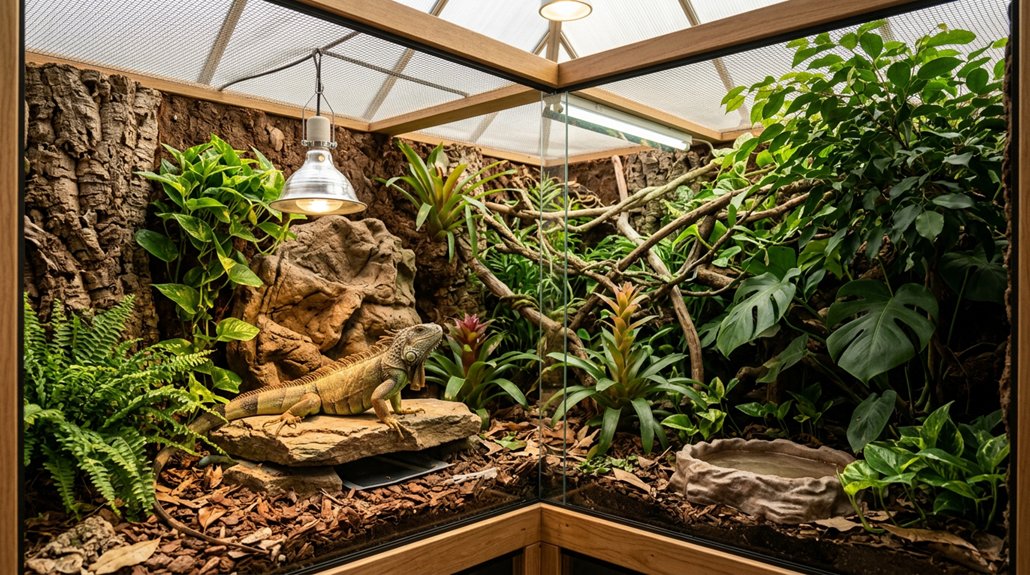
For an ideal iguana habitat, guarantee you meet space, heat, and lighting needs meticulously. Juveniles need a minimum of 4x2x4 ft enclosures, while adults require 10x5x6 ft. Maintain temperatures between 75-92°F, with a basking zone reaching 89-95°F. Use UVB lighting within 12 inches for calcium metabolism, and replace bulbs biannually. Manage humidity at 60-80% using misting systems. By understanding these essentials, you’ll discover more about fostering a healthy iguana environment.
Key Takeaways
- Juvenile iguanas need a minimum of a 4x2x4 ft enclosure; adults require 10x5x6 ft.
- Maintain overall habitat temperatures between 75-92°F, with basking areas at 89-95°F.
- UVB lighting should be within 12 inches of iguanas and replaced biannually.
- Use digital hygrometers to maintain humidity levels between 60-80%.
- Install climbing structures and provide misting systems for enrichment and hydration.
What You Need to Know: Setting Up a Green Iguana Habitat
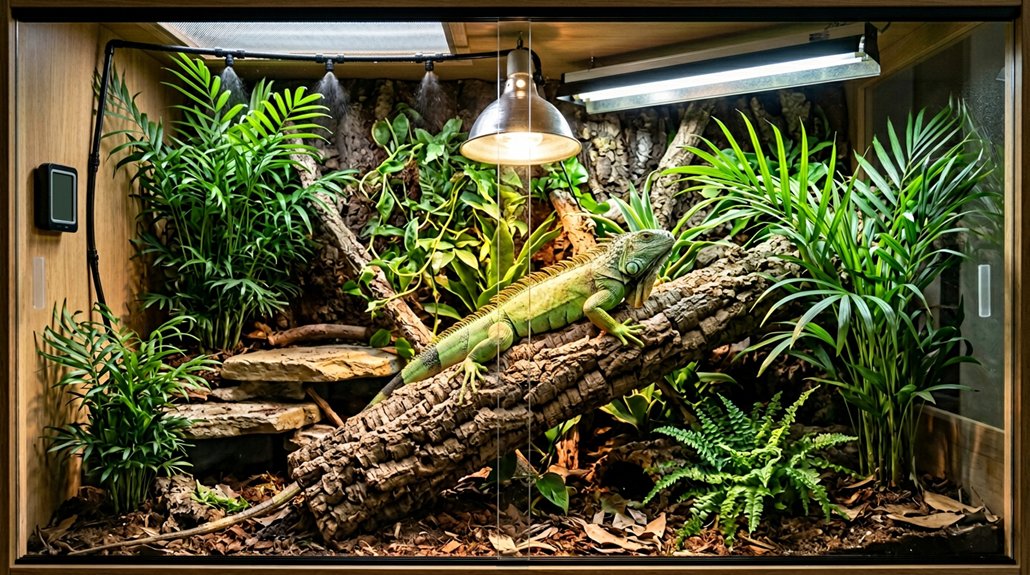
Setting up a green iguana habitat requires careful planning to secure the well-being and health of these reptiles. You’ll need to take into account iguanas habitat design with an enclosure at least 10 feet long, 5 feet wide, and 6 feet high. The habitat should allow vertical and horizontal movement with climbing structures. Maintain substrate quality by selecting non-toxic materials like newspaper or reptile carpet, facilitating ease of cleaning and replacement. Control temperature, offering basking spots at 89-95°F and cooler areas at 75-80°F. Light is essential; incorporate UVB lighting for proper D3 synthesis. Replace bulbs biannually. Keep humidity between 60-80% using misting systems to aid hydration and shedding. Proper maintenance secures the iguana’s health and natural behavior.
Choosing the Right Space for Your Iguana
To guarantee a thriving environment for your iguana, you must focus on creating a habitat that caters to their physical and psychological needs. Selecting the right space involves understanding size requirements and enclosure materials. Juvenile green iguanas need a minimum of 4 feet by 2 feet by 4 feet until they mature, whereas adults demand a 10 by 5 by 6 feet enclosure. Enclosure materials like wire mesh are beneficial over glass tanks, providing superior ventilation and reducing mold risks. Equip the habitat with climbing branches, hiding spots, and enrichment objects, fostering exploration and mental engagement. Multi iguana management requires expanded living areas; allocate at least 6 square feet per iguana to mitigate aggression and maintain tranquility in their communal setting.
Set Up Your Iguana’s Heat Requirements
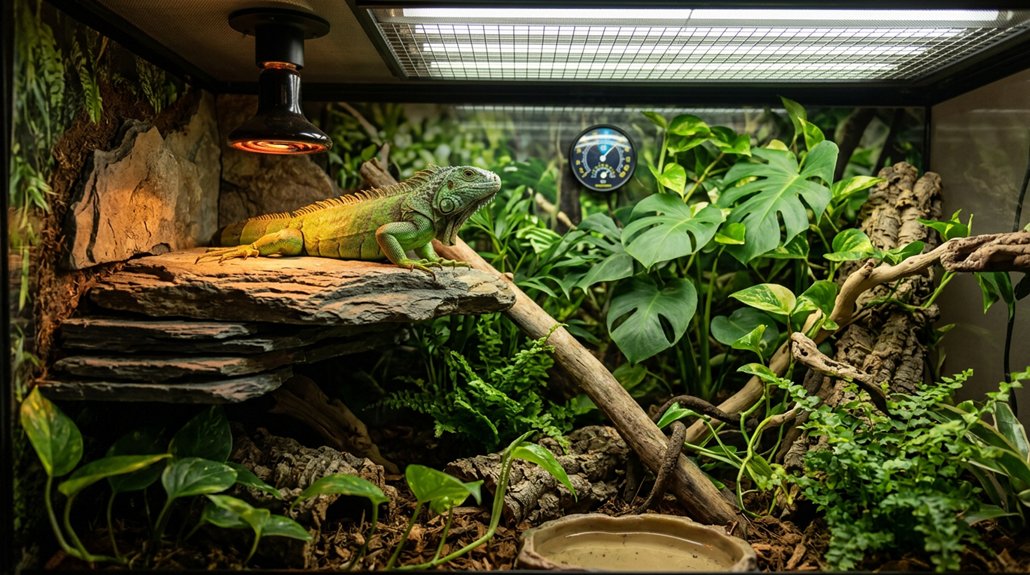
To guarantee your iguana’s health and well-being, it’s crucial to maintain an ideal temperature range within the enclosure, specifically 75-92°F (24-33°C), with a dedicated basking area reaching 89-95°F (32-35°C). Implementing an array of heat sources, such as ceramic heat emitters and UVA/UVB basking lamps, contributes to proper thermoregulation and necessary vitamin D3 synthesis. Position thermometers strategically to monitor temperature gradients, guaranteeing conditions meet the requirements consistently for your iguana’s comfort and metabolic processes.
Optimal Temperature Range
An ideal temperature range is essential for guaranteeing your iguana has a conducive environment for metabolic functions and overall well-being. Temperature fluctuations can disrupt their natural basking behavior, affecting digestion and health. To create a stable environment, consider these key temperature guidelines:
- Habitat Range: Maintain an overall temperature between 75-92°F (24-33°C) for peak metabolic processes.
- Basking Area: Confirm a designated spot reaches 89-95°F (32-35°C) to support proper thermoregulation.
- Cool Zones: Include areas around 75°F (24°C), allowing your iguana to escape excessive warmth.
- Nighttime Stability: Prevent temperatures from dropping below 75°F (24°C) overnight by using supplemental heat.
Utilize thermometers to keep precise temperature gradients consistent within your iguana’s habitat.
Heat Source Options
When setting up your iguana’s habitat, consider various heat source options to guarantee effective thermal regulation. Basking lamps or ceramic heat emitters prove vital in maintaining basking temperatures between 89-95°F—essential for proper thermoregulation and facilitating natural basking behavior. Establish a temperature gradient with cooler zones, around 75-80°F, allowing your iguana to manage its body temperature efficiently. For nighttime warmth, avoid heating mistakes by utilizing heaters devoid of light, making sure temperatures remain above 75°F. Position infrared heat lamps overhead to create an ideal basking area, enhancing the iguana’s environment. Regularly inspect and adjust your heating sources, being proactive, so overheating doesn’t threaten your iguana’s health. This detailed approach guarantees comfort and supports the iguana’s physiological needs.
Monitoring Temperature Levels
Understanding and effectively monitoring temperature levels is essential for setting up your iguana’s heat requirements. Maintaining correct temperature gradients guarantees your iguana can regulate its body heat effectively. Utilize monitoring devices like thermometers or temperature guns to check the ambient temperature, which should range from 75°F to 92°F (24°C to 33°C). Here’s a concise plan:
- Ambient Temperature: Maintain 75°F on the cooler side for ideal thermoregulation.
- Basking Area: Set the basking zone at 89°F to 95°F (32°C to 35°C) using external heat sources.
- Nighttime Heating: Confirm temperatures don’t drop below 75°F to 80°F (24°C to 27°C) overnight.
- Temperature Fluctuations: Monitor daily changes to mimic natural day/night cycles.
Regularly checking these aspects helps prevent stress and promotes your iguana’s health.
Ideal Temperature Settings
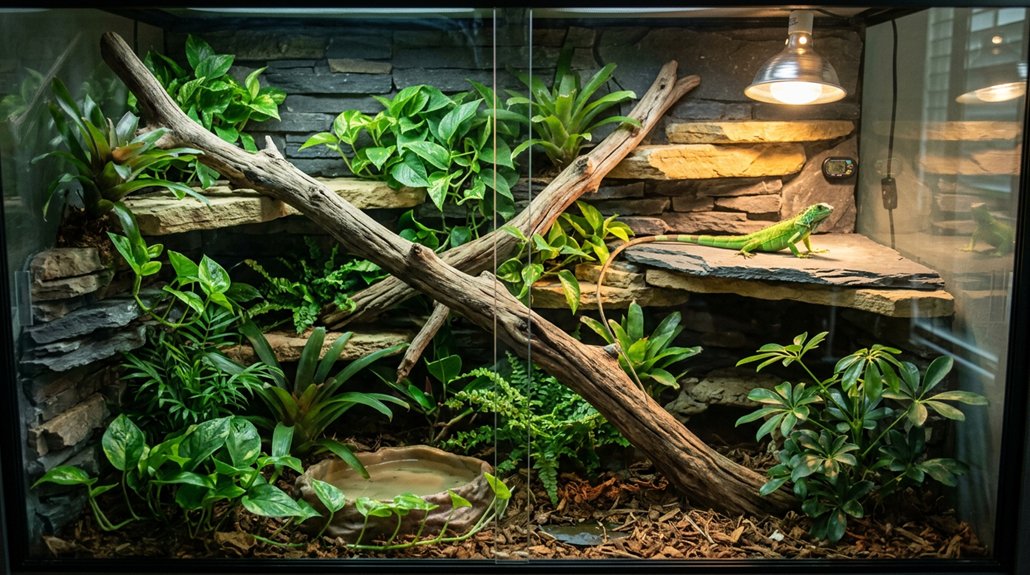
Though setting up a habitat for a green iguana might seem straightforward, maintaining correct temperature settings is vital for its health. Understanding these reptiles’ basking habits and temperature preferences is important. The ideal temperature for green iguanas ranges from 75-92°F (24-33°C), with a basking spot at 89-95°F (32-35°C). This helps enhance their thermoregulation. Nighttime temperatures should hover around 75-80°F (24-27°C) to prevent stress.
| Temperature Zone | Degrees Fahrenheit | Degrees Celsius |
|---|---|---|
| Ambient Temperature | 75-92°F | 24-33°C |
| Basking Spot | 89-95°F | 32-35°C |
| Nighttime Temperature | 75-80°F | 24-27°C |
Utilize heat sources like UVA/UVB lamps positioned outside the cage. Consistent monitoring with thermometers guarantees the enclosure remains within suitable ranges for well-being.
Why UV Lighting Is Critical for Iguanas
You’ll find that UVB lighting is indispensable for iguanas, as it facilitates the synthesis of vitamin D3, pivotal for calcium absorption and the prevention of metabolic bone disease. Position UVB bulbs wisely, ensuring they’re within 12 inches of the iguana to maximize exposure, and remember to replace them biannually to maintain efficacy. Outdoor exposure to natural sunlight can supplement artificial lighting but requires careful management due to UVB’s inability to penetrate barriers like glass or plastic.
UV Light Benefits
Although often overlooked, guaranteeing proper UV lighting is vital for iguanas, as it plays a pivotal role in their physiological health. UVB light supports your iguana’s dietary needs by enabling the synthesis of vitamin D3, affecting calcium metabolism essential for bone integrity. If your iguana’s basking habits lack access to adequate UVB, they risk developing Metabolic Bone Disease (MBD), a severe condition.
Consider these advantages of UV lighting:
- Vitamin D3 Synthesis: Facilitates calcium absorption, supporting skeletal strength.
- Disease Prevention: Reduces the risk of MBD by aiding efficient nutrient utilization.
- Optimal UVB Exposure: Tube-style lamps guarantee exposure over coil bulbs.
- Maintenance of Bulbs: Replace every six months for effective UVB range (290-320 nm).
Direct exposure guarantees full benefits, preventing health issues.
UVB Bulbs Placement
Proper placement of UVB bulbs is invariably essential in mimicking the natural environment needed for iguanas’ well-being. UVB lighting allows iguanas to synthesize vitamin D3, vital for calcium absorption and preventing metabolic bone disease (MBD). UVB placement techniques require bulbs to be within 12 inches of the iguana, ensuring effective UVB exposure. These bulbs must emit light in the UV-B range (290-320 nm). Tube-style UVB lamps are preferred as they offer a broader gradient of UVB light compared to coil-style bulbs, which often fail to deliver adequate levels. Direct UVB exposure is paramount; never let UVB rays be obstructed by glass, plastic, or mesh. Replace UVB bulbs every six months, as output declines, risking the iguana’s health.
Outdoor Sunlight Exposure
As UVB bulbs play a significant role indoors, natural sunlight exposure outdoors offers unparalleled benefits for iguanas. It’s pivotal for absorbing calcium and preventing Metabolic Bone Disease (MBD) through enhancing vitamin D3 synthesis. Consider these key points for outdoor sunlight exposure:
- Outdoor Safety: Confirm the enclosure’s temperature remains above 80°F (27°C) while providing shaded areas to prevent overheating.
- Natural Barriers: Position enclosures to maximize UVB exposure without obstructions like glass or plastic, effectively allowing for direct sunlight.
- Time Management: Aim for 10-12 hours of UVB exposure per day, balancing it with periods in shaded areas.
- Proximity: Confirm iguanas can bask within an ideal range, which mimics the close positioning of UVB bulbs indoors.
How to Install UVB Bulbs Correctly
To effectively install UVB bulbs for your iguana, the key consideration is guaranteeing ideal placement and bulb type. Tube-style lamps are preferable since coil-style bulbs often fall short in delivering adequate UVB exposure. Position the bulb within 12 inches of your iguana to assure efficient vitamin D3 synthesis. Opt for a UVB range of 290-320 nm, essential for calcium metabolism. Replace bulbs every six months to maintain peak function, as their efficacy wanes over time.
When installing, confirm minimal obstructions like glass or plastic, which can filter UVB rays, diminishing their potency. Conduct regular checks to verify the light is unobstructed and appropriately distanced, maximizing UVB absorption. Such methodical steps are critical for your iguana’s health and longevity.
Humidity Tips: Keeping Your Iguana Comfortable
Although temperature often gets the spotlight, humidity is equally important in guaranteeing your iguana’s comfort and health. Effective humidity management is vital for proper skin shedding, with levels ideally between 60-80% during the day and up to 100% at night. You can achieve this balance using the following methods:
- Daily misting: Mist your iguana at least twice daily to promote hydration and enhance humidity, particularly for younger iguanas.
- Water dish or pool: Include a large water source in the enclosure to maintain ambient humidity and offer soaking opportunities.
- Digital hygrometer: Regularly monitor humidity using a digital display to keep conditions ideal.
- Automated misting system: In larger enclosures, automate misting to guarantee consistency and reduce manual interventions.
This structured approach maximizes your iguana’s environment effectively.
Safe and Clean Substrate Choices
Choosing the right substrate for your iguana’s habitat is essential for maintaining a safe and clean environment. Focus on selecting substrate types that are non-toxic and simple to clean. Opt for materials like newspaper, butcher paper, or recycled paper pellets, which allow efficient substrate maintenance. Reptile carpet is another solid choice; having an extra piece on hand guarantees hygiene when cleaning is necessary. Avoid sand, gravel, wood shavings, corn cob, walnut shells, and particularly cedar wood shavings, all of which pose ingestion and toxicity risks. Loose substrates can elevate disease risks due to waste and bacterial buildup, so stick with solid surfaces. Regular substrate changes are key for preventing health issues, keeping your iguana’s habitat clean and sanitary.
Using Plants, Branches, and Toys for Enrichment
When enhancing your iguana’s environment, integrating a variety of plants, branches, and toys plays a crucial role in promoting their physical and mental well-being. A scientifically grounded approach to limb choice and interactive enrichment guarantees a balanced habitat. Consider the following:
- Branch Selection: Use clean, pest-free branches that slope toward UV and heat sources to facilitate climbing and necessary exercise.
- Natural Behaviors: Create hiding spots with non-toxic plants or cardboard to reduce stress and mimic natural retreats.
- Heat Regulation: Incorporate large rocks for basking, which aids in aesthetic appeal and important thermal comfort.
- Interactive Enrichment: Include reptile-specific toys to stimulate curiosity, enhancing cognitive functions and daily vigor.
These strategies collectively guarantee a stimulating, safe environment for your iguana.
Handling Behavior and Safety Concerns
While enriching your iguana’s habitat with plants, branches, and toys fosters a conducive environment, understanding handling behavior is equally vital for maintaining safety. Green iguanas, particularly males, can exhibit aggressive behavior, like territorial biting. Mastering bite prevention is imperative, so use long leather welding gloves during handling sessions. It’s important to build trust; allow your iguana to adapt for about two weeks before initiating regular handling.
Engage in supervised free-roaming to enhance trust and mitigate aggression. Always guarantee a hazard-free environment.
Below is a summarized guideline:
| Key Aspect | Recommendation | Outcome |
|---|---|---|
| Bite Prevention | Use protective gloves | Reduces injury risk |
| Trust Building | Two-week acclimation period | Builds confidence |
| Free-roaming | Supervise in a safe space | Reduces aggression |
| Continuous Learning | Consult multiple sources | Safeguards safety |
Prioritize ongoing education for peak handling success.
Frequently Asked Questions
What Kind of Lighting Do Iguanas Need?
Iguanas need UVB lighting for proper calcium metabolism. Position UVB bulbs within 12 inches for ideal exposure. Make sure basking spots align with bulbs, maintain a daylight cycle, and consider light spectrum range to prevent metabolic bone disease.
What Temperature Is Too Cold for Iguanas?
Iguanas can’t tolerate temperatures below 60°F (15°C). Cold weather leads to detrimental shifts in iguana behavior, causing hypothermia or respiratory issues. Maintaining a consistent warmth guarantees they’re able to thermoregulate efficiently, preventing stress-related health complications.
How Big of a Habitat Does an Iguana Need?
An iguana needs a habitat at least twice its body length. Factor in habitat enrichment for climbing and basking areas, and maintain ideal humidity levels between 60% to 80% to support its health and natural behaviors.
How Much Heat Do Iguanas Need?
Iguanas need a tropical embrace of warmth, requiring heating sources maintaining 75-95°F. Temperature regulation is essential to mimic their natural environment, ensuring proper health. Think of it as providing a sun-kissed island paradise for them.
Conclusion
Creating the perfect iguana habitat is vital for their well-being. Imagine this: a green iguana can grow up to six feet, requiring a spacious habitat to thrive. Make sure temperatures range from 80°F to 90°F and UVB lighting is essential for calcium absorption and bone health. Maintain humidity levels between 70% and 80% using safe substrates. Enrichment with plants and branches keeps them engaged. Remember, setting up a meticulous environment directly impacts their health and happiness.