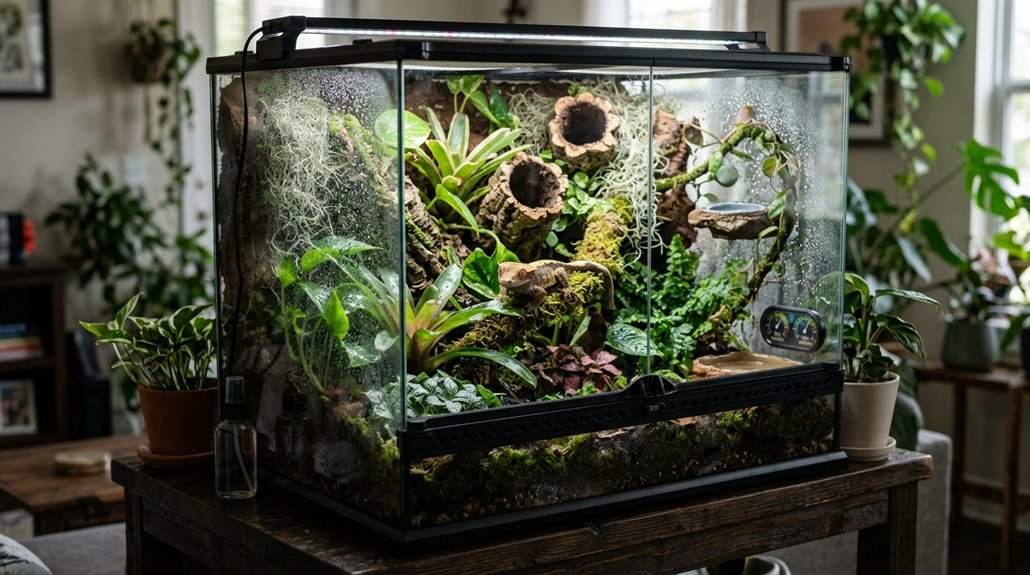
To set up a habitat for your crested gecko, guarantee a vertical enclosure (minimum 45x45x60 cm for adults) with branches and vines. Maintain humidity at 60-80% using regular misting and hygrometers. UVB lighting with a UVI of 1.0-2.0 boosts health, and a thermal gradient of 82-85°F for basking and 70-75°F for cooling is essential. These elements mimic natural conditions, promoting well-being and encouraging natural behaviors. Discover how to perfect their environment further.
Key Takeaways
- Maintain humidity at 60-80%, ensuring spikes during shedding for crested gecko health.
- Provide a minimum enclosure size of 45x45x60 cm for adult crested geckos.
- Use UVB lighting with a UVI of 1.0-2.0 to support gecko health.
- Create a thermal gradient with a basking area temperature of 82-85°F.
- Ensure vertical climbing surfaces and proper substrate for moisture retention and gecko well-being.
Understanding Crested Gecko Habitat Needs
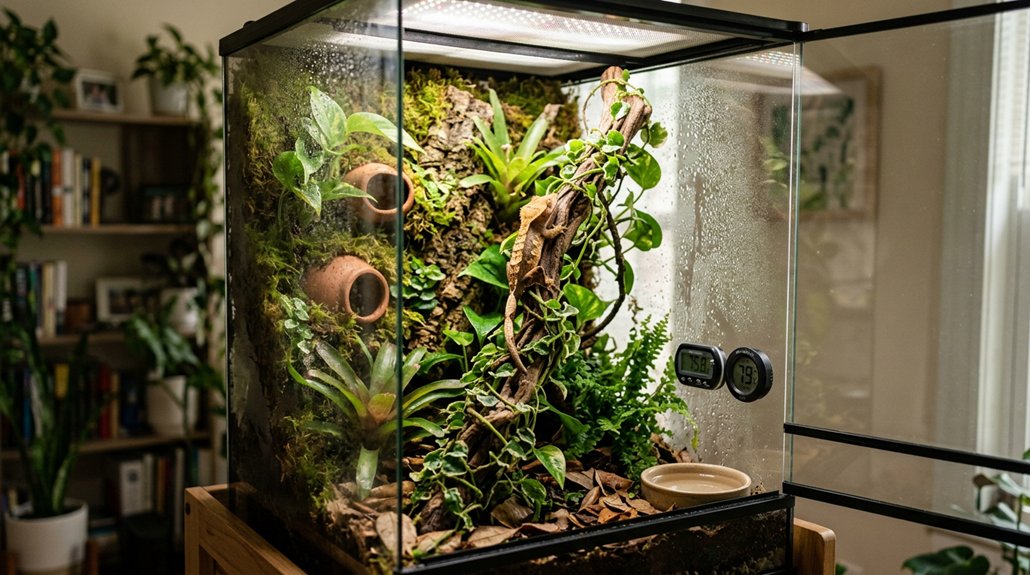
Even though crested geckos are resilient creatures, creating a habitat that closely mirrors their natural environment is imperative for their well-being. In replicating their natural habitat, focus on vertical climbing surfaces and humidity management. These arboreal reptiles thrive with abundant climbing structures like branches, cork bark, and vines, promoting natural behaviors and exercise. Maintaining a humidity range between 60-80% is essential for proper shedding, requiring substrates like loose soil mixtures, moss, and leaf litter to enhance moisture retention. Aim to allow the substrate to dry to around 40-50% before rehydrating to prevent mold formation. Consistent misting is necessary to sustain stable levels, fostering a microclimate that resembles their wild ecosystem, ensuring your gecko’s behavioral health and well-being.
Choosing the Right Tank Size for Your Crested Gecko
Choosing the appropriate tank size for your crested gecko is crucial in ensuring their well-being and fostering natural behavior patterns. Adult geckos thrive in enclosures with tank dimensions no less than 45x45x60 cm. Taller setups cater to their arboreal nature, enabling climbing—a crucial behavior supported by ample branches and vines. Hatchlings benefit from smaller terrariums of roughly 20x20x30 cm, providing a secure habitat necessary for their early development. Opt for reptile-specific enclosure materials, as they are designed for ideal airflow and humidity maintenance, unlike typical aquariums. Adequate tank size plays a significant role in the gecko’s physiological health by influencing activity levels and supporting temperature regulation. Prioritize structural features within the enclosure to mimic their natural environment.
Humidity’s Impact on Crested Gecko Health
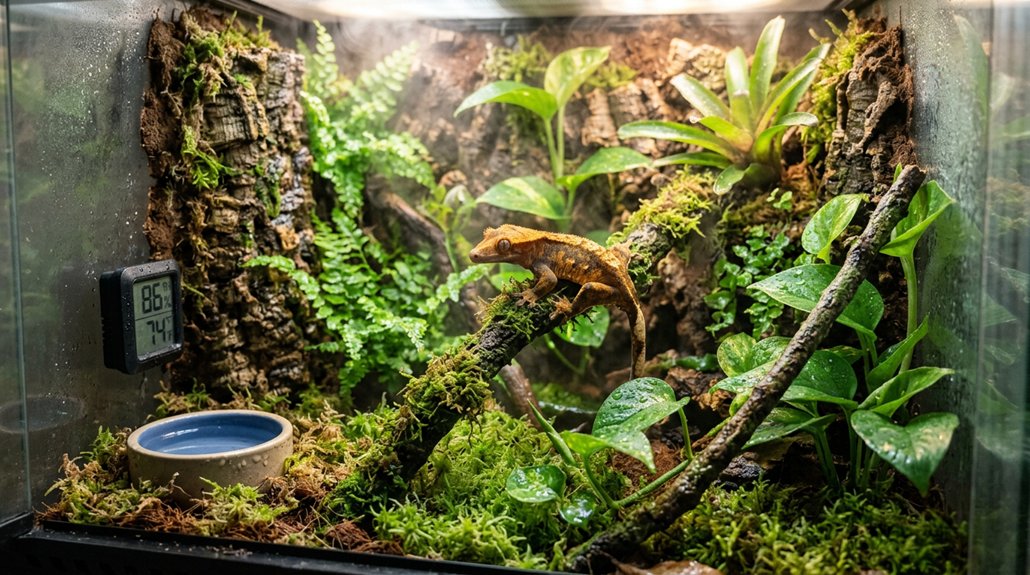
In providing an ideal habitat, the size of the tank is just one piece; maintaining proper humidity levels is another critical aspect that directly influences your crested gecko’s health. Humidity effects are profound, given crested geckos thrive in a relative humidity of 60-80%, crucial for biochemical and physiological processes. Utilizing strategic hydration strategies is vital; humidity should not drop below 50% to avert dehydration. During ecdysis, humidity spikes to 80-100% facilitate successful skin shedding. Geckos are known to prefer hydration via droplets, so accurately monitoring with a hygrometer, such as the Zoo Med Combometer, guarantees favorable conditions. Let the substrate return to 40-50% before misting again to mitigate mold proliferation and preserve the health of your gecko.
Misting Techniques for Consistent Humidity
Ensuring consistent humidity in your crested gecko’s habitat is vital for their health and well-being. Misting frequency should be calibrated to maintain a humidity range of 60-80%. Allow humidity to drop to 50-40% before the next misting to avoid mold. Use a pressure sprayer as misting equipment; this produces droplets fine enough for your gecko to drink directly from surfaces, mimicking natural hydration behaviors. Misting timings in the morning and evening replicate natural humidity fluctuations. Employ a hygrometer, such as the Zoo Med Combometer, for precise humidity monitoring, ensuring ideal conditions within the enclosure. Be cautious of over-misting as it can lead to bacterial issues. Allowing the substrate to dry between sessions is essential for a balanced habitat.
Decoding Crested Gecko Lighting: The Case for UVB?
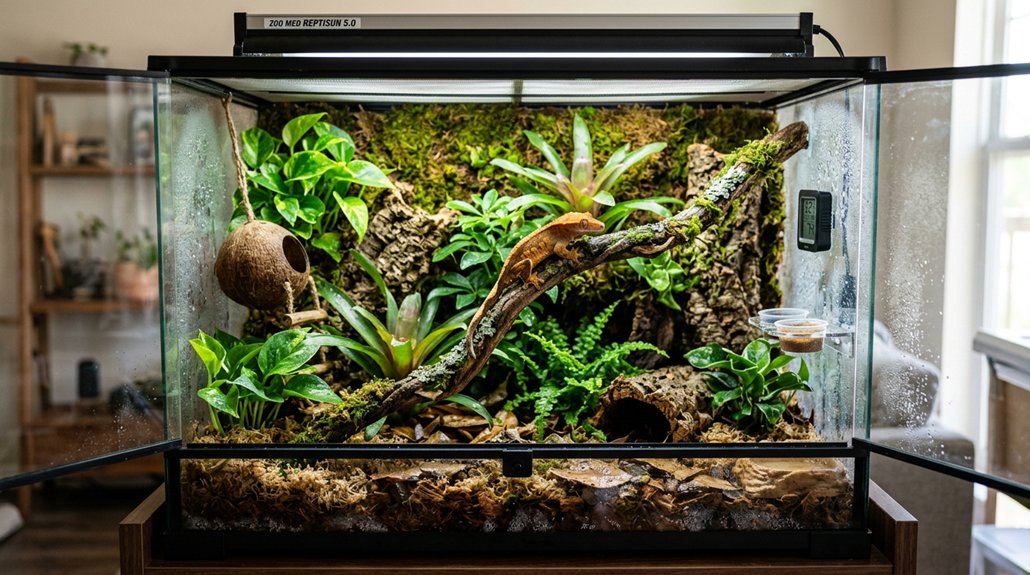
Maintaining an ideal habitat for your crested gecko involves more than just proper humidity—lighting plays a notable role, too. While not strictly essential, UVB lighting can yield multiple UVB benefits, enhancing your gecko’s health by providing vital UVA rays. Research shows crested geckos benefit from a UV Index (UVI) between 1.0-2.0. Selecting the appropriate UVB bulb, such as Zoo Med 5.0 T8 or Arcadia ShadeDweller 7% UVB, is imperative. Proper Lighting Placement guarantees unobstructed exposure by avoiding barriers between the bulb and the habitat. Employ a thermometer or a UV meter to carefully monitor the UV intensity reaching the enclosure. Correct lighting can considerably fortify the physiological well-being of these enchanting reptiles, optimizing their overall life quality.
Optimizing Light Cycles for Crested Gecko Activity
While ensuring an ideal habitat for your crested gecko, paying close attention to light cycles can greatly impact their activity levels and health. Begin by replicating their natural light cycle: 14 hours in summer and 10 in winter to align with circadian rhythms and reduce light stress. Seasonal adjustments should be gradual, preventing disruption in crepuscular behavior.
Utilize full spectrum lighting to foster plant growth and enrich visual spectrum exposure. Though UVB benefits aren’t critical, incorporating UVB bulbs with a UVI of 1.0-2.0 can offer valuable habitat simulation.
Night lighting isn’t required; crested geckos thrive in darkness, which supports their sleep cycles effectively.
| Light Type | Purpose | Recommendation |
|---|---|---|
| Natural Light | Circadian Rhythm Support | 14h summer, 10h winter |
| UVB Lighting | Enriched Visual Spectrum | UVI 1.0-2.0 |
| Full Spectrum | Plant Growth, Habitat Enrichment | Use for plant aiding |
Setting Up Your Gecko’s Cozy Corner: Temperature Management
Even though it may seem straightforward, establishing a thermal gradient is vital for the well-being of your crested gecko. Proper temperature management guarantees their metabolic and digestive processes function ideally. Monitoring temperature fluctuations is essential; aim for a basking area between 82-85°F (28-29°C) and maintain a cool zone at 70-75°F (21-24°C). This encompasses the gecko’s basking preferences, facilitating daily thermoregulation. During nighttime, allow the temperature to naturally drop to 65-72°F (18-22°C) to mimic their native environment. To stabilize emissions, employ low-wattage incandescent or halogen bulbs controlled by thermostats. Especially for hatchlings, use compact coil UVB and heat pads. Utilize infrared temperature guns for precise monitoring, guaranteeing environmental conditions remain within these parameters, contributing to your gecko’s health and comfort.
Crested Gecko Accessories: Elevating Their Habitat
Enhancing your crested gecko’s environment involves integrating essential habitat features such as climbing structures and elevated feeding platforms to support natural behaviors and prevent substrate contamination. The inclusion of live plants or moss not only elevates the aesthetic quality but also plays a vital role in humidity regulation, replicating a more authentic ecosystem. Furthermore, providing secluded areas with coconut shell hides or artificial caves helps alleviate stress by offering secure retreats, while the right substrate guarantees ideal humidity maintenance between 60-80%.
Essential Habitat Features
Providing the right habitat for crested geckos is essential to their health and well-being, as these arboreal reptiles require specific environmental features to thrive. Prioritize vertical space by integrating climbing structures like branches and vines, an ideal strategy since these creatures are natural climbers. Utilize bioactive substrates with live plants, forming a sustainable ecosystem that stabilizes humidity and supports beneficial microfauna like springtails and woodlice. Incorporate hiding spots to reduce stress; coconut shell hides can offer security. Environmental enrichment fosters natural behavior; tank decor should include feeding ledges and horizontal surfaces for diverse activities. Regular misting with a pressure sprayer maintains humidity between 60-80%, aligning with their hydration needs and mimicking the lush, mist-laden environments of their native habitat.
Enrichment and Interaction
When working to elevate the environment of your crested gecko, integrating specific accessories can profoundly enhance both their physical and psychological health. Climbing structures like branches and vines cater to the gecko’s arboreal tendencies, ensuring adequate exercise and facilitating social enrichment. By adding coconut shell hides or cork bark, you’re promoting behaviors that naturally reduce stress levels. Sensory exploration is encouraged through the inclusion of moss and leaf litter, providing a textured landscape that stimulates curiosity. Live plants not only enhance the enclosure’s visual appeal but also offer foraging opportunities, promoting both humidity and mental engagement. Feeding ledges, securely positioned, enable easy access to nourishment, maintaining hygiene and preventing contamination. Such environmental enrichment fosters a habitat that nurtures the gecko’s well-being.
Substrate and Plant Options
For ideal enrichment in a crested gecko’s habitat, the choice of substrate and plants is fundamental. Opt for substrate types like Zoo Med Eco Earth for humidity retention and microfauna benefits. These organic materials support bioactivity and simulate natural environments. Plant selection focuses on species that enhance aesthetics and provide functional benefits, such as hiding spots and climbing surfaces, which foster mental well-being.
Here’s a quick guide to enhance your setup:
| Element | Purpose |
|---|---|
| Bioactive Substrate | Supports microfauna, retains moisture |
| Live Plants | Aids humidity, offers climbing/hiding |
| Moss or Leaf Litter | Increases moisture during shedding |
| Hiding Spots | Reduces stress, enhances security |
| Climbing Structures | Promotes activity, utilizes verticals |
Integrating tank layering and maintenance tips will create a thriving environment.
Frequently Asked Questions
How Humid Does a Crested Gecko Tank Need to Be?
You’ll need to maintain your crested gecko’s tank at 60-80% humidity using diverse humidity sources. Be diligent in humidity monitoring with a reliable hygrometer; fluctuations can impact health. Conduct regular research-based observations for ideal environmental conditions.
Is a 12x12x18 Big Enough for a Crested Gecko?
Ah, a cozy 12x12x18 inch abode! It’s just barely adequate for a juvenile’s exploratory whims but fails a majestic adult. Prioritize vertical tank decorations and guarantee dietary needs are met to maximize such limited dimensions.
Can Geckos Hear You?
Yes, crested geckos can hear you through Crested Gecko Sounds. They’re attuned to Gecko Communication via vibrations and lower-frequency sounds. While not fully communicative, they recognize familiar voices and movements, evidencing intricate auditory perception despite lacking external eardrums.
What Size Tank Do Full Grown Crested Geckos Need?
Imagine a crested gecko named Luna thriving in a tank of 45x45x90 cm. Immediate attention to habitat enrichment guarantees substrate choices aid temperature regulation, providing a balanced environment essential for Luna’s health, ensuring lively, natural behaviors.
Conclusion
Crafting the ideal crested gecko habitat is like piecing together a complex puzzle. Each element, from tank size to UVB lighting, requires precision and care. Confirm the humidity mimics their natural environment with diligent misting and select a suitably sized tank for exploration. Use UVB light cautiously, based on recent studies that hint at benefits for bone health. By fine-tuning light cycles and temperature, you’re creating a miniature ecosystem where your gecko thrives.