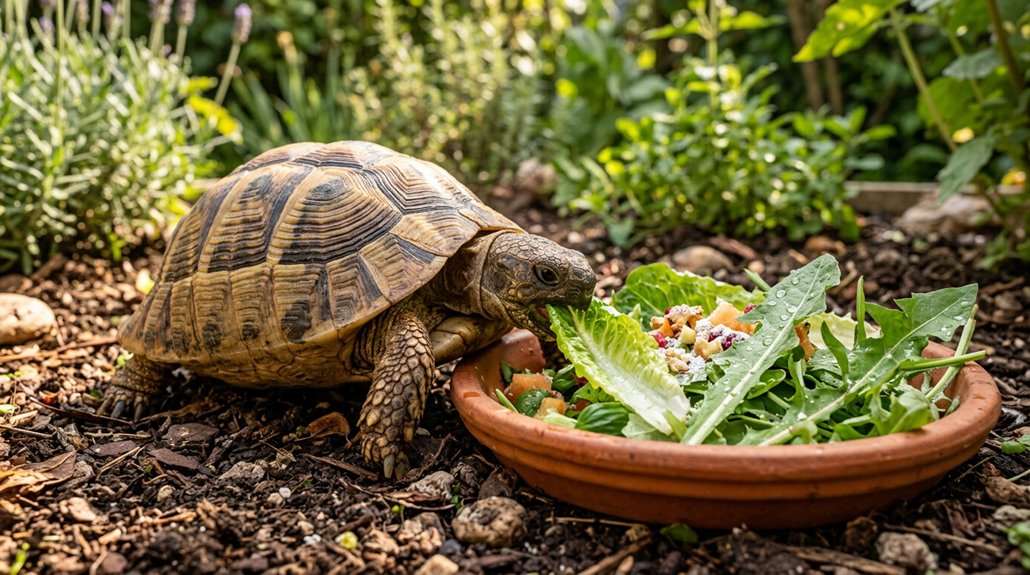
You’ll need to provide tortoises with a diet rich in fibrous leafy greens, grasses, and select flowers, aligning with their herbivorous nature. Breed specifics matter; Mediterranean tortoises thrive…
Reptiles
How to Care for a Tortoise: Outdoor vs Indoor Setup
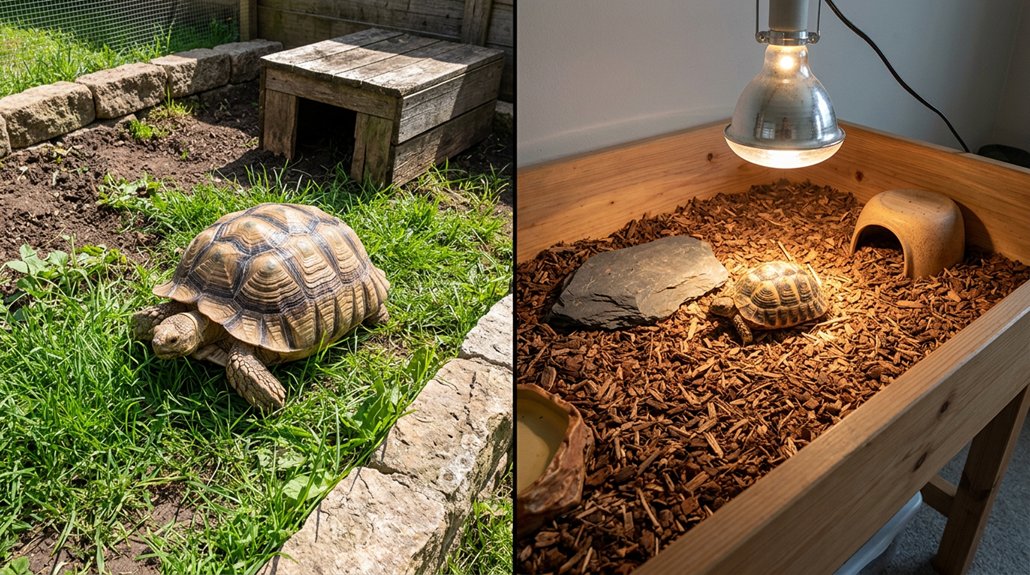
To care for a tortoise, balance indoor stability with outdoor natural benefits. Indoors, maintain stable temperatures and UVB lighting for calcium absorption, essential for cooler climates and predator…
Reptiles
Turtle Tank Setup: Water, Filtration, and Lighting Explained
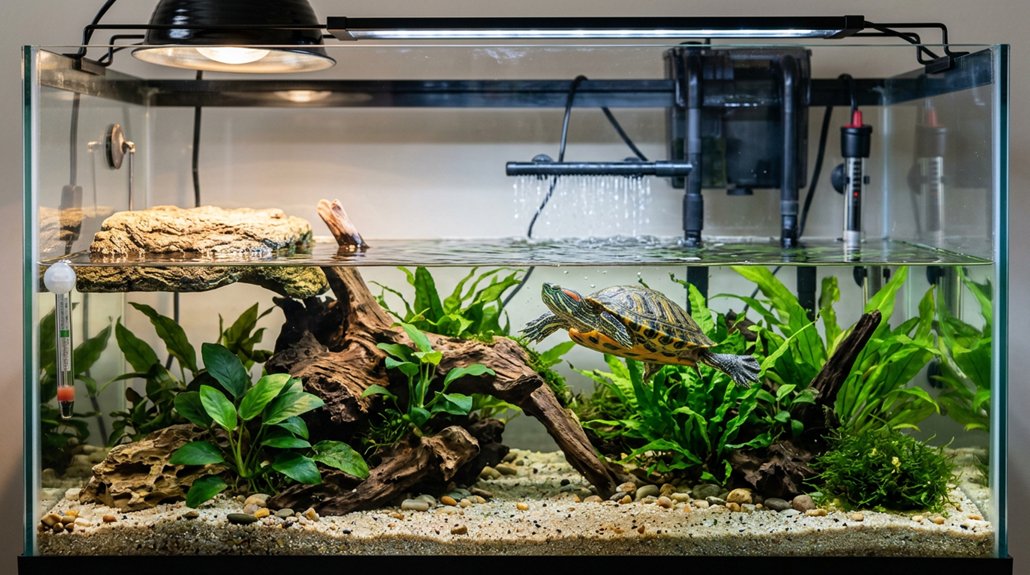
To set up a turtle tank, maintain water at a stable 73-84°F using an aquarium heater with a thermostat, and conduct regular water testing. Use a canister filter…
Reptiles
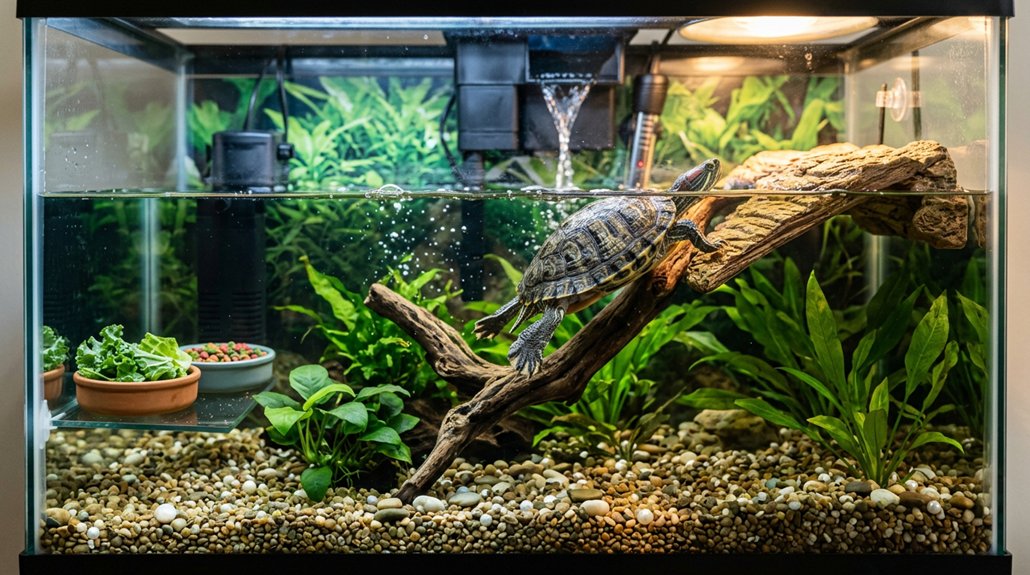
Red-Eared Slider Care Guide: Habitat, Diet, and Maintenance
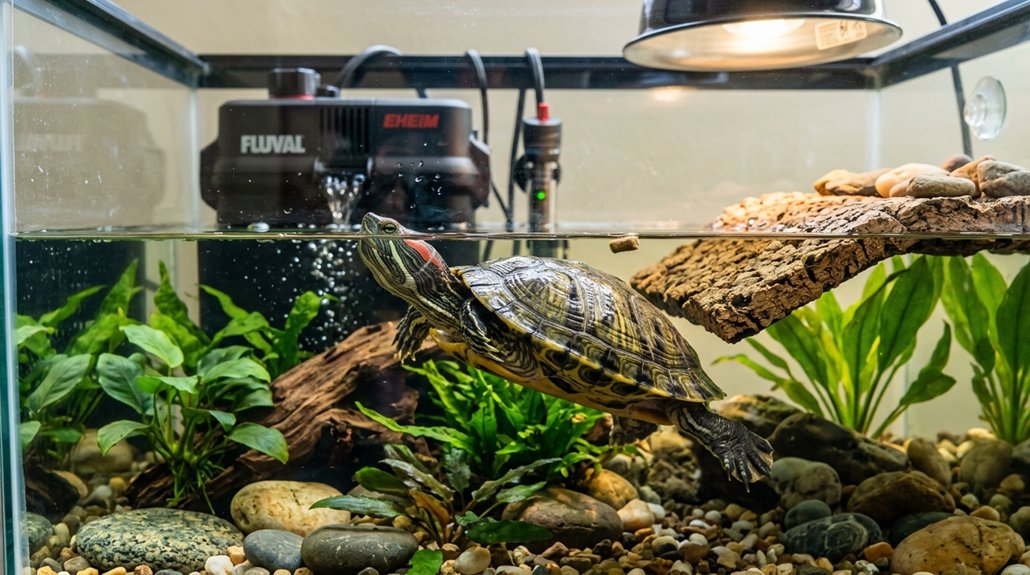
To care for red-eared sliders, provide a tank of at least 40 gallons with proper filtration and water depth double the shell length. Offer a balanced diet reflecting…
Reptiles
How to Care for a Pet Turtle: Tank Setup and Feeding Guide
To care for a pet turtle, start with a tank of at least 30 gallons for small species, or 100-120 gallons for larger ones. Verify water depth is…
Reptiles
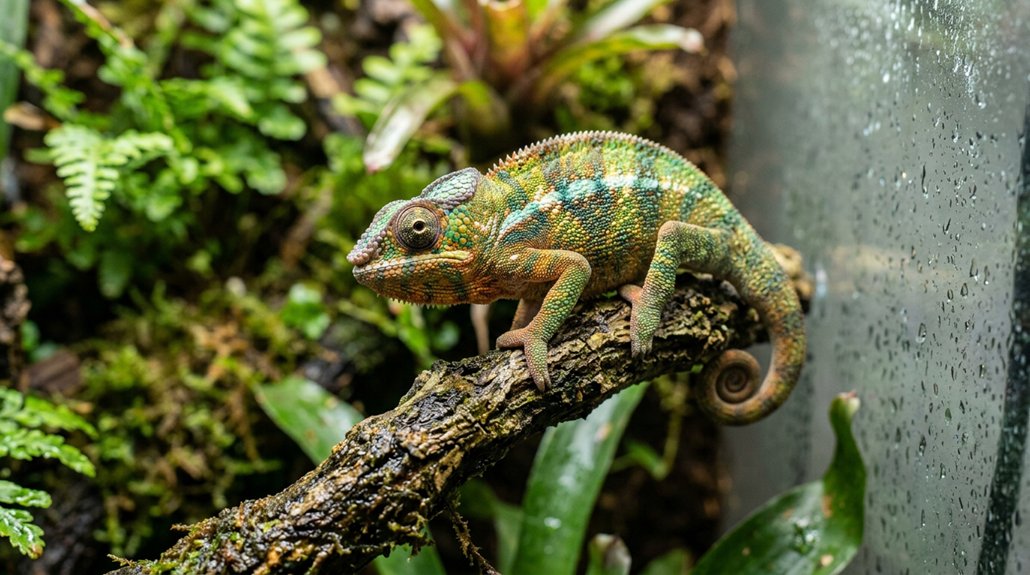
Why Chameleons Are Difficult Pets for Beginners
Chameleons are challenging for beginners due to their precise environmental needs, including specific temperature and humidity levels. They require daily misting and a varied diet of gut-loaded insects…

Reptiles
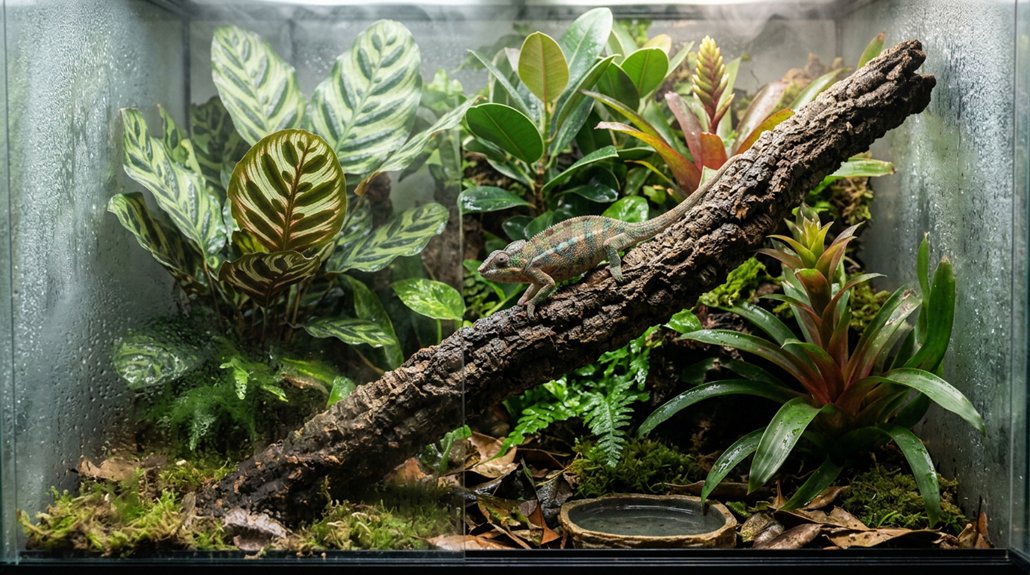
What to Feed a Chameleon and How Often
Feed your chameleon a variety of live insects, such as crickets, roaches, and grasshoppers, tailored to its life stage. Juveniles should eat 10-15 small insects daily, while adults…
Reptiles
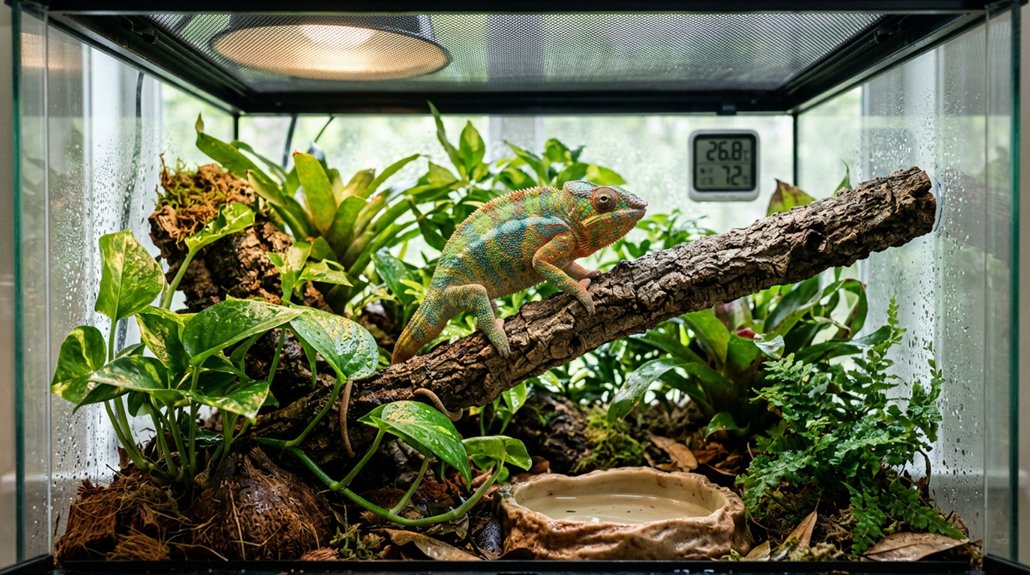
Chameleon Habitat Setup: Lighting, Humidity, and Plants
To set up a chameleon habitat, guarantee enclosure dimensions are at least 24″x24″x48″ for climbing space and ventilation. Use UVB bulbs like Arcadia T5 HO for lighting, maintaining…
Reptiles
How to Care for a Chameleon: Setup and Daily Care Guide
To care for a chameleon, choose your species based on available care information and specific environmental needs. Create a habitat with a minimum size of 24”L x 24”W…
Reptiles
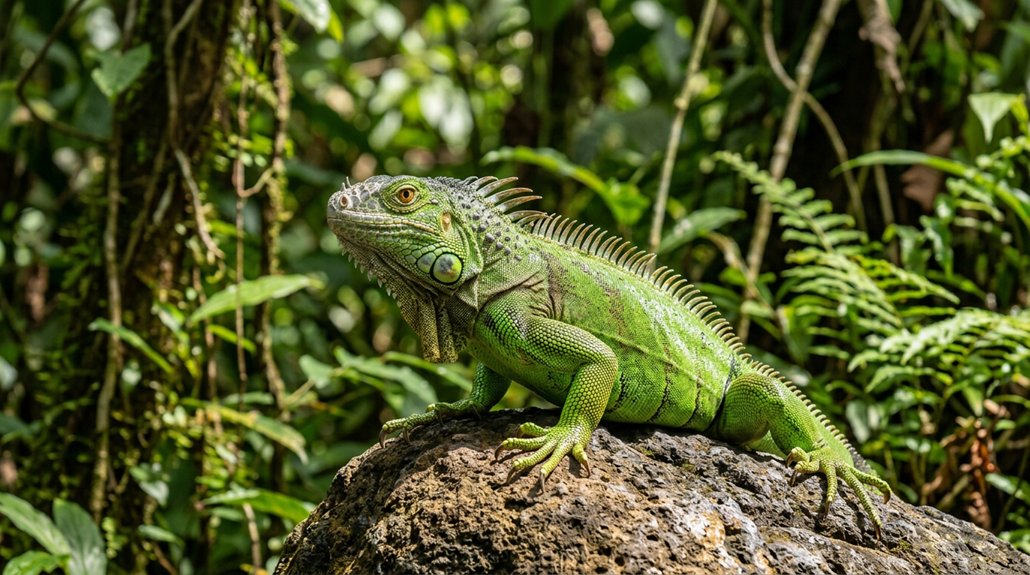
Why Iguanas Are Not Ideal for Beginners (What to Know)
Iguanas aren’t ideal for beginners due to their complex care requirements. They need large enclosures, specialized diets of fresh greens, and regular veterinary care. Handling involves patience and…
Reptiles
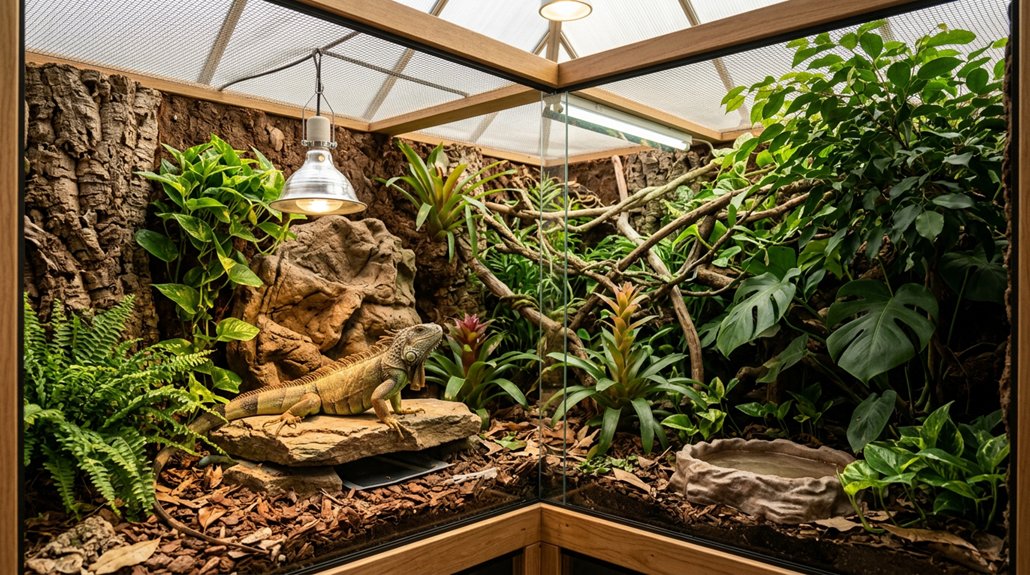
Iguana Habitat Setup: Space, Heat, and Lighting Requirements
For an ideal iguana habitat, guarantee you meet space, heat, and lighting needs meticulously. Juveniles need a minimum of 4x2x4 ft enclosures, while adults require 10x5x6 ft. Maintain…
Reptiles
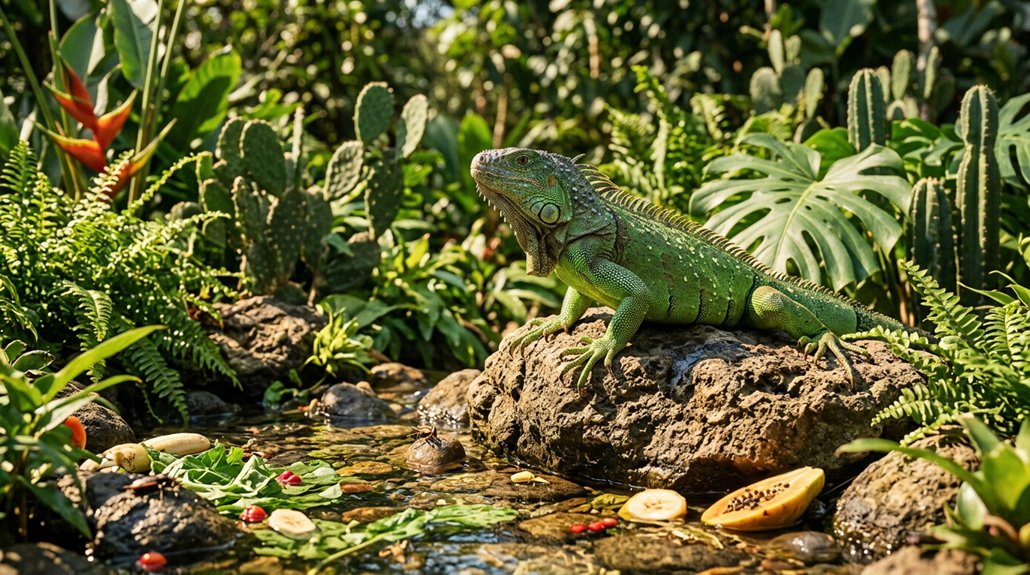
What Do Iguanas Eat? Complete Diet Guide
Your iguana’s diet should be 95% vegetables, mainly dark leafy greens like collard and mustard greens, essential for calcium intake. Adult iguanas can be fed daily or every…
Reptiles
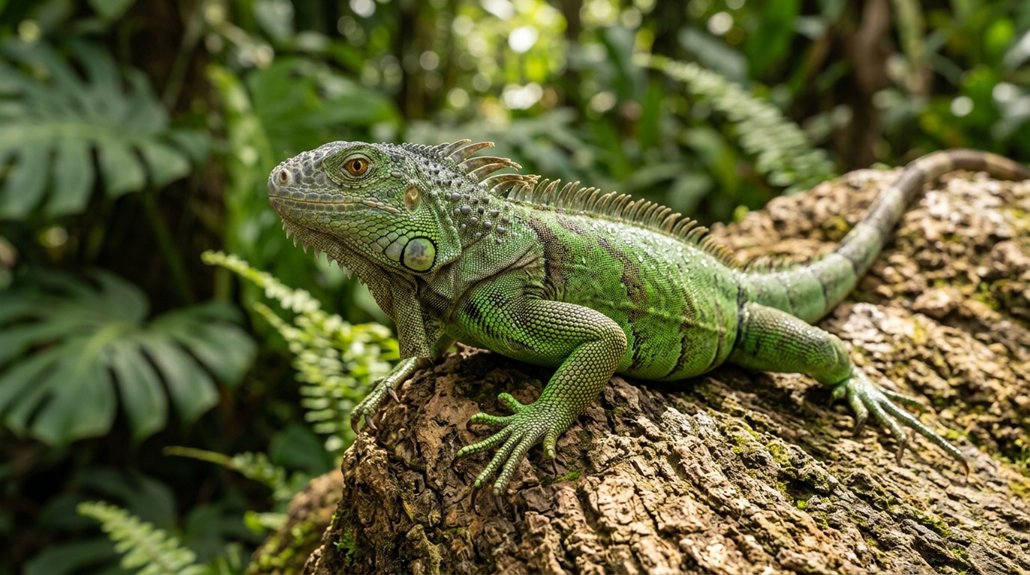
How to Care for an Iguana: What to Know Before You Start
Caring for an iguana involves creating a habitat that mimics its natural environment. You’ll need a spacious, well-ventilated enclosure with controlled temperatures between 75°F and 95°F, plus proper…
Reptiles
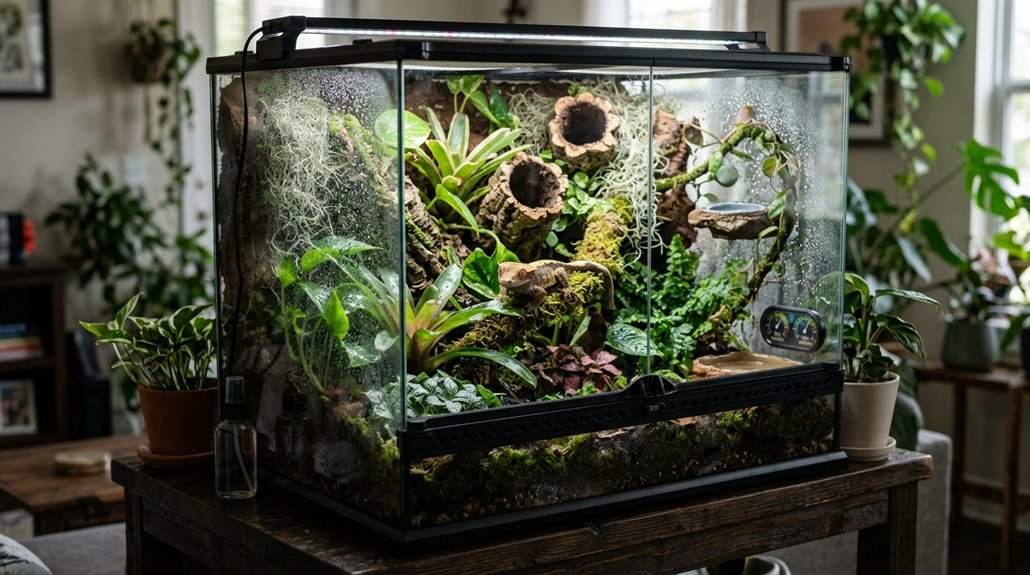
Crested Gecko Setup: Humidity, Lighting, and Tank Size
To set up a habitat for your crested gecko, guarantee a vertical enclosure (minimum 45x45x60 cm for adults) with branches and vines. Maintain humidity at 60-80% using regular…
Reptiles
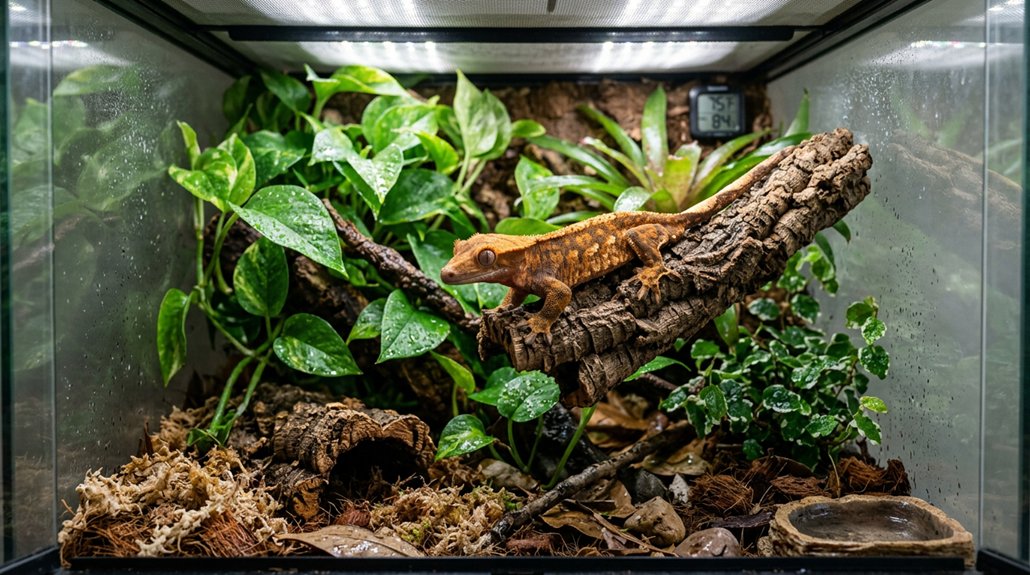
How to Care for a Crested Gecko: Habitat and Feeding Guide
To care for a crested gecko, set up a minimum 20-gallon habitat with climbing structures, maintain humidity at 70-80%, and temperatures between 72-80°F. Feed them high-quality powdered diets…