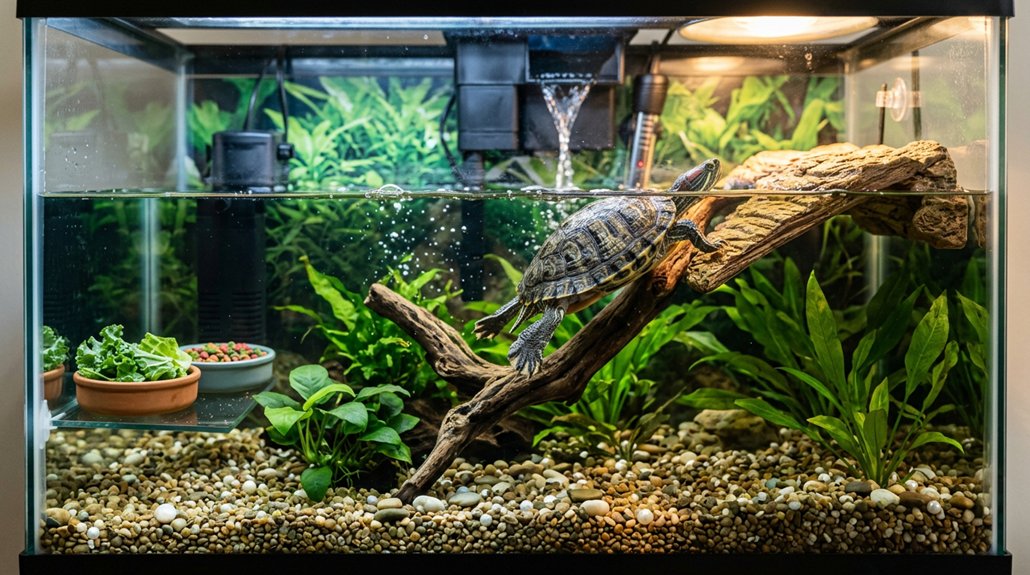
To care for a pet turtle, start with a tank of at least 30 gallons for small species, or 100-120 gallons for larger ones. Verify water depth is 1.5-2 times the shell length and maintain temperatures between 72-82°F with a basking area of 85-90°F. Provide UVA/UVB lighting for vitamin D3 synthesis. Feed a balanced diet of 50% plant, 25% pellets, and 25% protein. Regularly monitor water quality to prevent ammonia buildup. Discover further insights to optimize turtle care.
Key Takeaways
- Ensure a minimum tank size of 30 gallons for small turtles and 100-120 gallons for larger turtles.
- Maintain water temperature between 72-82°F and provide a basking area with temperatures of 85-95°F.
- Use UVA/UVB bulbs within 18 inches of the basking area for vitamin D3 synthesis and replace bulbs every six months.
- Feed a balanced diet of 50% plant material, 25% pellets, and 25% animal protein, adjusting portions for age.
- Perform regular tank maintenance with a 25-50% water change every two days and a complete change weekly.
Select and Set Up Your Turtle Tank and Location
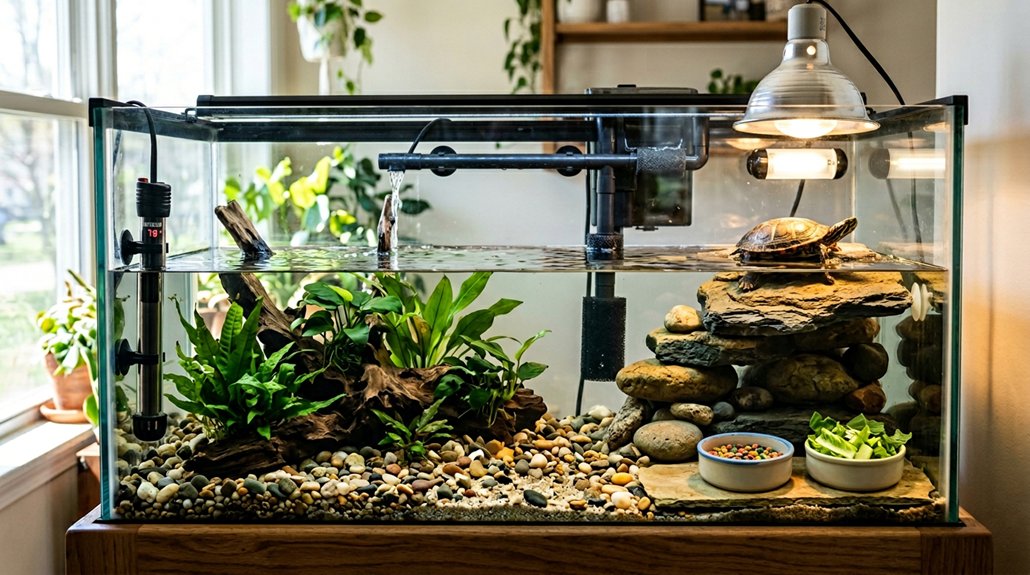
Selecting an appropriately sized tank is vital for a turtle’s health and wellbeing. You’ll need a tank size of at least 30 gallons for small species, like the musk turtle, and 100-120 gallons for larger species, such as red-eared sliders. This guarantees sufficient swimming space allowing turtles to exhibit natural behaviors. The water should be 1.5–2 times the turtle’s shell length deep, promoting ease of movement. A secure basking area is important, where your turtle can regulate its body temperature out of water. Keep this basking spot at 85-90°F. Avoid direct sunlight, positioning the tank on a sturdy surface to minimize temperature fluctuations and stress. Glass aquariums provide excellent visibility and cleaning ease, while substrates must facilitate unobstructed movement.
Configure Your Turtle’s Aquatic Environment Essentials
Having arranged the perfect tank setup, your next focus should be on tailoring your turtle’s aquatic environment to support ideal health and natural behaviors. Start with water quality; a high-quality filtration system rated for 2-3 times your tank’s volume is essential. It prevents ammonia buildup and keeps the water pristine, a non-negotiable factor for turtle health. Confirm correct water levels and temperature, maintaining between 72-82°F, allowing for natural thermoregulation.
Tank Decorations | Purpose
———————-|————————————-
Basking platform | Enables turtles to regulate body temperature
Aquatic plants | Mimics natural habitat, reduces stress
Gravel substrate | Provides substrate safety, no sand
Incorporate these basics to transform a simple tank into a thriving aquatic ecosystem for your turtle.
Ensure Optimal Lighting and Heating for Turtle Health
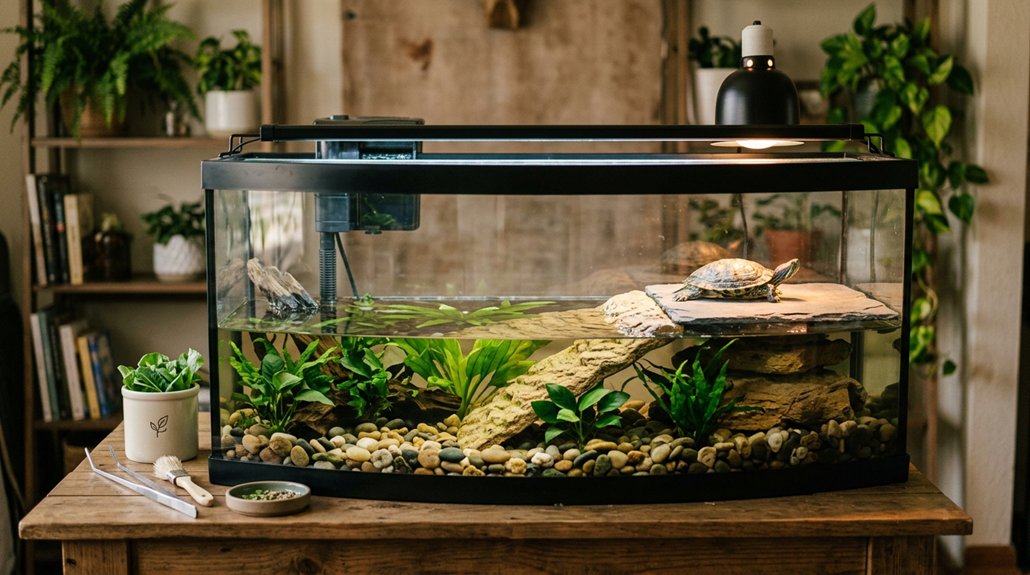
To guarantee your pet turtle thrives, integrating ideal lighting and heating systems is essential. Start by installing full-spectrum UVA/UVB bulbs within 18 inches of the basking area. This precise setup facilitates important vitamin D3 synthesis and encourages natural behaviors. There are diverse lighting types, but ensuring optimal UVB output is significant. Despite bulbs emitting light, replace them every six months to maintain effective UVB penetration. Basking benefits include thermoregulation, critical for metabolic and immune function. Maintain basking spots at 85-95°F, while water temperatures should range from 72-82°F. Use a submersible aquarium heater for consistent warmth. Avoid glass tops, as they obstruct significant UVB rays. Instead, utilize covers that permit UV penetration, ensuring your turtle remains healthy and active.
Decoding a Nutritious Diet for Your Turtle
Every turtle owner should understand the dietary needs of their shelled companion to guarantee ideal health and longevity. A balanced composition of food types is essential: 50% plant material, 25% high-quality commercial turtle pellets, and 25% animal protein efficiently meet nutritional requirements. For juveniles, increase the protein fraction due to their growth demands. Adult turtles shift to a mainly herbivorous diet to support optimal health. Incorporate dark leafy greens like kale, orange vegetables, and infrequent fruit treats. Brands like Mazuri and Reptamin guarantee a nutrient-rich commercial component in your feeding routine. Feeding frequency should align with head-sized portions, avoiding overfeeding. Always remove uneaten food promptly to prevent water contamination, a critical practice for maintaining turtle vitality.
Tips for Maintaining a Clean and Healthy Turtle Tank
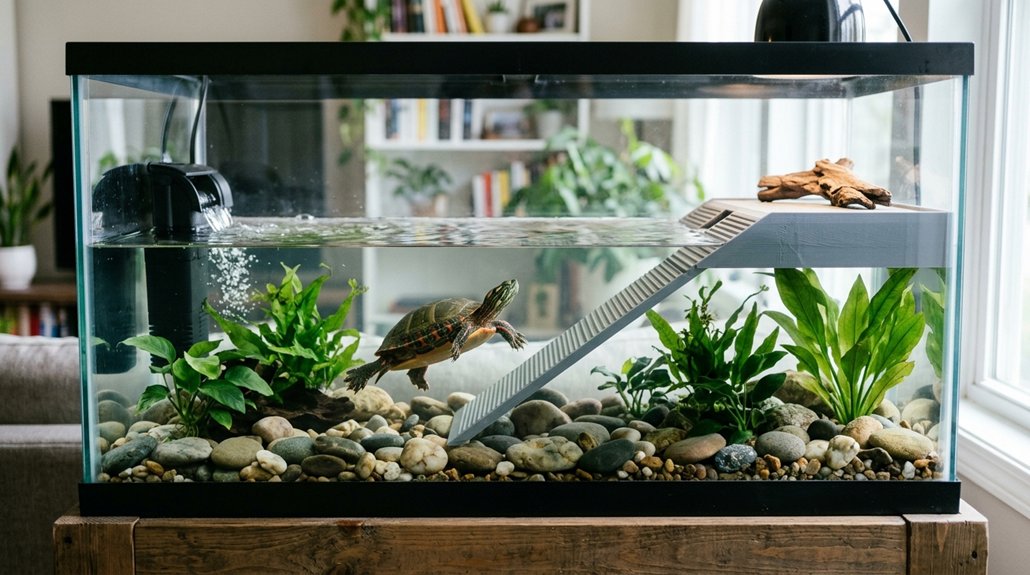
While maintaining a clean and healthy turtle tank may seem intimidating, employing evidence-based practices guarantees a thriving aquatic environment. Start with regular tank cleaning; change 25-50% of the water every two days and perform a complete water change weekly to guarantee peak water quality and minimize disease risk. Utilize a scrub brush with hot water for tank surfaces and disinfect ornaments using a dilute bleach solution, followed by thorough rinsing to eliminate harmful microbes. Invest in high-capacity filters rated for 2-3 times the tank’s volume to efficiently clear debris and waste. Monitor water temperatures, maintaining them between 72-82°F to support physiological wellness. Additionally, systematically inspect and clean basking zones to prevent mold and create a safe area for thermoregulation.
Frequently Asked Questions
How to Set up a Turtle Tank for Beginners?
You’ll need appropriate turtle tank essentials: a 30-gallon tank minimum, basking platform, and full-spectrum UVB lighting. Proper water filtration is essential for maintaining water clarity and quality, ensuring an ideal, evidence-based aquatic environment for your turtle’s health.
What Should You Never Feed a Turtle?
In the domain of turtle care, discern wisely between nourishment and peril. Avoid iceberg lettuce, citrus, human snacks, and toxic plants. These contain toxins and hazards, making them inappropriate foods that disrupt physiological equilibrium and compromise health.
What Are Common Turtle Enclosure Mistakes?
You’re likely to err by underestimating enclosure size, neglecting water quality, and ignoring temperature control. Misjudged lighting needs and poor substrate choice can also jeopardize turtle habitat, compromising habitat enrichment and perpetuating common misconceptions about appropriate care.
How Long Do You Have to Wait to Put a Turtle in a New Tank?
Like a symphony tuning before a concert, wait 24-48 hours for tank acclimation and environmental adjustments. Confirm temperature stabilizes, and check pH levels. Scientific studies suggest this fosters a safe shift to the new habitat.
Conclusion
With turtles living up to 50 years in captivity, it’s essential you get their care just right. By meticulously setting up their tank, ensuring ideal lighting and heating, and offering a balanced diet, you’re promoting a healthy and thriving environment. Remember, clean water reduces disease risk, making regular tank maintenance indispensable. As you begin on this journey, embrace evidence-based practices for the well-being of your turtle, ensuring they aren’t just surviving, but truly flourishing.