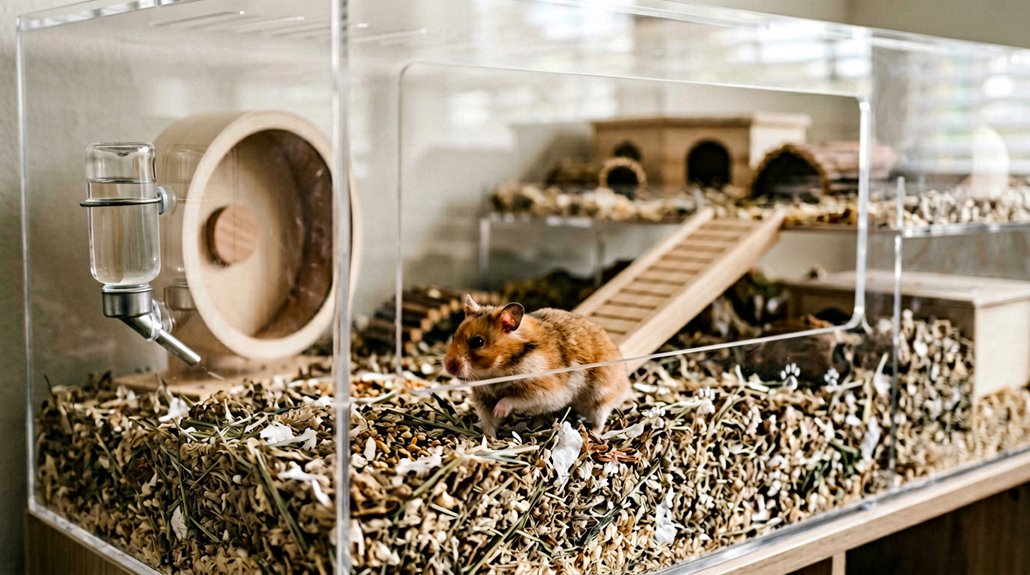
For ideal well-being, hamsters need cages that support their natural behaviors. Syrian hamsters require at least 900 square inches of floor space, while dwarf species need 700 square inches; both benefit from a minimum cage height of 24 inches. Deep bedding facilitates burrowing, reducing stress. Bin cages, aquariums, or Niteangel models, with proper ventilation and enrichment items, are recommended. Larger habitats foster better mental and physical health. Explore further to guarantee your pet’s happiness and health.
Key Takeaways
- Syrian hamsters need at least 900 square inches of cage space; dwarf hamsters need 700 square inches for optimal health.
- The recommended minimum cage dimensions for hamsters are 100 cm x 50 cm, providing essential space for natural behaviors.
- Larger cages enable enrichment items, reducing stress-induced behaviors like bar biting, improving hamster welfare.
- Deep bedding of 10-25 cm is vital for burrowing, promoting emotional well-being and reducing stress in hamsters.
- Bin cages provide cost-effective spaciousness and require mesh lids for proper ventilation and airflow.
Why Cage Size Matters for Hamster Well-Being
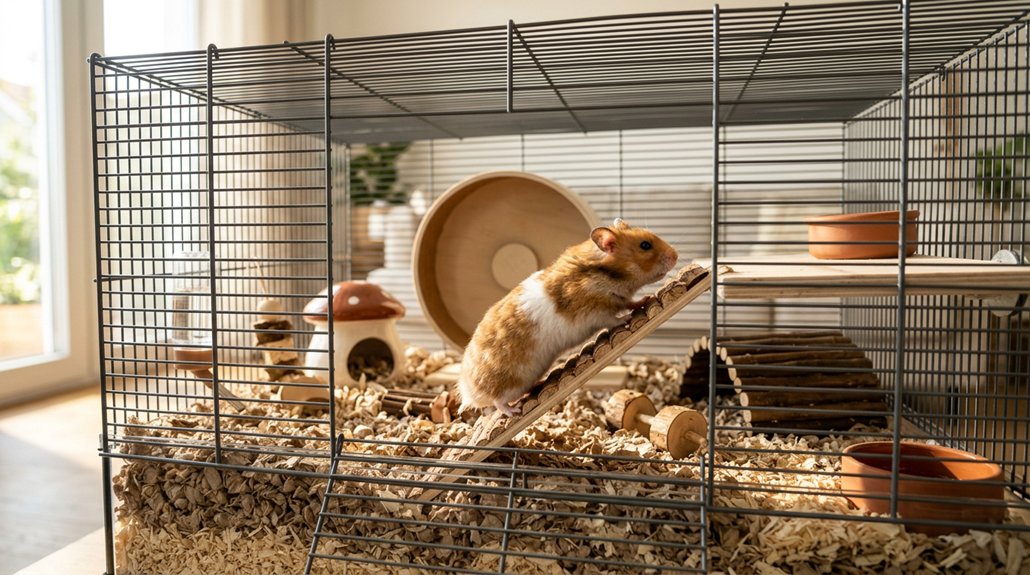
Understanding why cage size matters for hamster well-being is fundamental for ensuring their health and happiness. Selecting the right cage materials plays an important role, as inadequate choices can impede proper air circulation and enrichment opportunities. For instance, wire cages provide ventilation but might lead to uncomfortable foot conditions, whereas tanks offer visibility but require regular cleaning. Enrichment importance can’t be understated; providing room for activities like running and burrowing mimics natural behaviors, indispensable for both Syrian and dwarf species. Without a spacious environment, health ramifications arise—stress-induced ailments, such as shortened lifespans, may result from confining, undersized spaces. Furthermore, species differences necessitate consideration; larger species demand more extensive layouts to flourish. Prioritizing proper space reduces stress and fosters both mental and physical well-being.
Optimal Cage Dimensions Based on Research
Recognizing the profound impact of cage size on hamster well-being, it’s imperative to explore the ideal dimensions supported by scientific research. Empirical data underscores the significance of adequate floor space and cage height to properly support natural behaviors. Specifically, a minimum cage dimension of 100 cm x 50 cm (5000 cm²) is recommended, aiming for at least 900 square inches for Syrian hamsters and 700 for dwarf species, with a requisite cage height of 24 inches for both. Such measures are essential for promoting space utilization that mimics their natural habitat. A larger ground floor area of 10,000 cm² significantly enhances welfare, reducing stereotypic behaviors and fostering activity. Many commercial cages fall short, so prioritize meeting these scientifically-backed dimensions.
Choosing the Right Hamster Enclosure Type
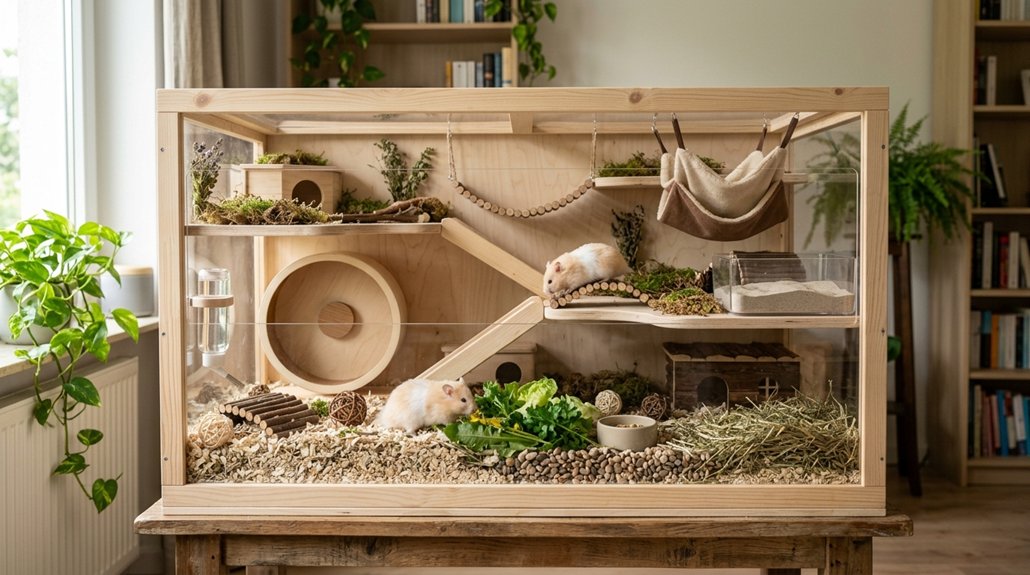
When selecting an enclosure for your hamster, consider the comparative benefits of bin, aquarium, and solid-walled cage styles based on space, security, and practicality. Evidence suggests that bin cages, while requiring DIY assembly, are an economical option that offers the essential unbroken floor space for hamster well-being. Additionally, securely fitting lids, particularly in aquarium enclosures, are vital due to the escape-prone nature of Syrian hamsters.
Comparative Enclosure Benefits
While selecting a hamster enclosure, it’s essential to weigh the advantages of each type carefully, as the habitat dramatically influences your pet’s health and happiness. Bin cage benefits include being cost-effective, guaranteeing ample 200 qt space for enriched burrowing activities. This promotes enhanced welfare. Conversely, aquarium pros provide clear visibility and substantial burrowing depth. However, enclosures like aquariums are heavier despite offering up to 930 square inches in a 75-gallon tank.
| Enclosure Type | Key Benefits | Drawbacks |
|---|---|---|
| Bin Cage | Cost-effective, ample burrowing space | Typically DIY setup |
| Aquarium | Visibility, substantial floor area | Heavy, less ventilated |
| Niteangel | Ease of maintenance, spacious | Higher cost |
| Retail Cages | Good ventilation | Often cramped |
Choosing the right habitat guarantees your hamster thrives.
Popular DIY Options
For hamster enthusiasts keen on DIY solutions, several innovative enclosure options offer both cost-effectiveness and customizability tailored to their pet’s needs. Bin cages utilize large plastic containers, important for their affordability and ability to be modified. To guarantee proper ventilation, create a mesh lid allowing airflow, vital for maintaining a healthy environment. Adhering to scientific guidelines, make sure the cage provides at least 600 square inches of interior floor space. Habitat customization can be achieved using creative solutions like integrating IKEA furniture, such as the Linnmon series, to meet specific size and spatial criteria. Additionally, incorporate 10-25 cm of bedding for burrowing activities important to the animal’s wellbeing. DIY cages surpass commercial ones, delivering more spacious living quarters for hamsters.
Space and Security Essentials
Selecting the ideal hamster enclosure necessitates a careful evaluation of space and security features to assure the pet’s well-being and safety. Prioritize enclosures with a minimum of 600 square inches of unbroken floor space, keeping in mind that Syrian hamsters thrive with 900 square inches and dwarf hamsters with at least 700. Secure lids are imperative due to their escape-prone nature. Cage materials should guarantee durability while facilitating adequate ventilation, vital for preventing respiratory issues. Avoid barred flooring to reduce injury risks. Solid-walled bin cages are cost-effective and customizable but require DIY skills. Confirm internal dimensions meet size requirements, accommodating enrichment elements like deep bedding for burrowing. By understanding these parameters, you’ll create a safe, enriching environment for your hamster.
Smart Safety and Space Setup
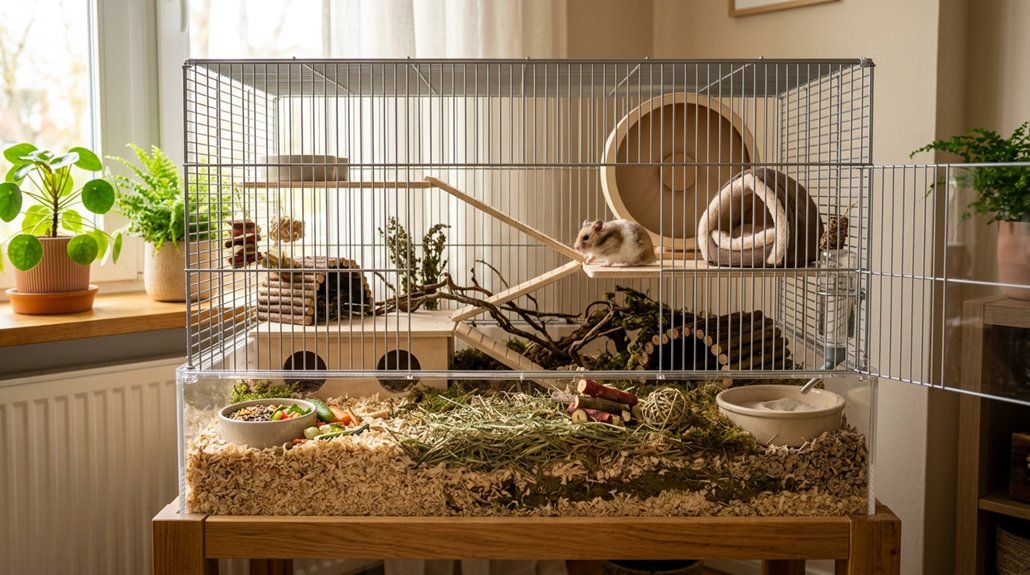
Ensuring your hamster’s habitat meets safety and spatial requirements is vital for its well-being. Space maximization can truly enhance your hamster’s quality of life. Scientific studies suggest a minimum cage size of 900 square inches for Syrian hamsters, allowing adequate movement and accommodation of deep bedding of 10-25 cm for natural burrowing. The structural integrity should prioritize safety features, such as secure lids to prevent escapes from these adept contenders. Potential gaps pose escape risks, emphasizing the significance of an impeccably secured environment. Accurate assessment of internal dimensions assures compliance with spatial needs, imperative for minimizing stereotypic behaviors linked to inadequate areas. Enhanced comfort arises from thorough attention to habitat specifics, ensuring both ideal space and safety for your beloved pet.
Creating Ideal Living Conditions
To foster ideal living conditions for your hamster, guarantee the cage meets the minimum size requirement of 5000 cm² to support their extensive locomotor and exploratory behaviors, appreciably reducing stress-induced health detriments. It’s essential to afford Syrian hamsters at least 900 square inches of floor space with a 24-inch height for effective enrichment and substrate depth, facilitating natural burrowing activities which are crucial for their psychological well-being. Additionally, incorporate a secure, well-ventilated enclosure featuring tunnels and platforms to address innate behavioral needs and prevent escape attempts.
Optimal Cage Size Guidelines
When considering ideal living conditions for hamsters, it’s crucial to follow evidence-based guidelines to secure their well-being. A minimum of 900 square inches of floor space is recommended for Syrian hamsters, with 700 square inches for dwarf hamsters, based on their distinct behavioral needs. Additionally, confirm the cage materials are non-toxic, durable, and provide adequate ventilation to maintain a healthy habitat. Recent studies indicate that a more expansive 1,550 square inches of floor space appreciably benefits Syrian hamsters by supporting both their physical and psychological needs. Measurements must refer to internal dimensions, confirming practical living space. Incorporating proper bedding depth, ideally 10-25 cm, encourages natural burrowing, further enhancing the health and contentment of your pet hamster.
Enhancing Hamster Happiness
Building upon the foundational criteria of cage size for hamsters, elevating their living conditions through meticulous habitat enhancement is vital for their happiness and well-being. Adequate space of at least 1,800 square inches provides the essential groundwork for natural behaviors like running and foraging, markedly diminishing stress indicators such as cage aggression. Incorporating environmental enrichment within these parameters, including tunnels, hideouts, and platforms, not only promotes mental stimulation but also mirrors their natural habitat, which plays an essential role in their psychological health. Achieving ideal social dynamics through these enhancements reduces abnormal repetitive behaviors. Deep bedding, between 10-25 cm, encourages burrowing and further supports emotional well-being. Finally, ensuring a secure, escape-proof enclosure safeguards their habitat, mitigating stressors linked to potential escapes.
Addressing Behavioral Needs
While often overlooked, addressing the behavioral needs of hamsters is essential for fostering their well-being and preventing stress-induced issues. Ensuring a spacious environment with at least 900 square inches for Syrian hamsters and 700 for dwarf varieties accommodates their natural behaviors. Important to this space is deep bedding, ideally 10-25 cm, facilitating burrowing, an innate behavior important for stress reduction. Additionally, consider incorporating sturdy toys, tunnels, platforms, and hiding spots to promote mental stimulation and diverse playtime activities. Such enrichments not only curb boredom but also prevent stereotypic behaviors like wire gnawing and cage aggression. Providing opportunities for social interaction, exploration, and exercise in an adequately sized enclosure greatly enhances their temperament and overall welfare.
Improving Hamster Behavior Through Spacious Cages
Understanding the significant impact of cage size on hamster behavior is crucial for their well-being. Providing ample space fosters enhanced spatial awareness and behavioral enrichment, critical components in ensuring your pet’s overall health. Research underscores that enclosures with a minimum ground floor area of 10,000 cm² substantially improve welfare. These larger environments allow for substantial movement, fostering natural behaviors such as burrowing and running, which can alleviate stress and reduce stereotypic actions like wire-gnawing.
Furthermore, a spacious cage accommodates essential enrichment items—larger wheels, tunnels, and hideouts—enhancing both physical and mental stimulation. Such conditions contribute positively to temperament, decreasing aggression and stress responses. Consequently, adopting a cage size that meets these criteria is paramount in promoting a healthy, stress-free environment for your hamster.
Avoiding Common Cage Selection Mistakes
Spacious enclosures undeniably promote healthier behaviors in hamsters, yet many fall into the trap of purchasing visually appealing cages that don’t meet space requirements. A common misconception is that pet store cages suffice, though most fall short of the 600 square inches minimum, fundamental for mental and physical well-being. Inadequate cages lead to stress-induced behaviors like bar biting and lethargy. It’s essential to address these pitfalls by understanding important features for proper hamster care. Products like Crittertrail offer visually enticing designs but compromise on crucial floor space, especially given Syrian and dwarf hamsters need 900 and 700 square inches, respectively. Prioritize internal dimensions over misleading external measurements to guarantee your hamster’s habitat supports its natural behaviors effectively.
Enrichment Strategies for Optimal Hamster Habitat
Although many underestimate the significance of enrichment, a well-rounded habitat profoundly impacts a hamster’s mental and physical health. Implementing enrichment strategies through foraging opportunities and sensory materials is essential for ideal well-being. Deep bedding (10-25 cm) enables natural burrowing, decreasing stress. Utilize various digging mediums like corn cob bedding and coconut fiber to promote tactile exploration. Implement scatter feeding to mirror natural foraging behaviors, alongside sand baths for grooming. Multiplying elements such as tubes, branches, platforms, and hideouts offers physical stimuli, mitigating boredom-induced behaviors.
| Enrichment Element | Benefits |
|---|---|
| Deep Bedding | Reduces stress, facilitates burrowing |
| Scatter Feeding | Mimics natural foraging behavior |
| Sensory Materials | Promotes tactile exploration |
| Sand Baths | Encourages grooming and digging |
Strategically crafting a habitat enhances health and engagement.
Frequently Asked Questions
How Big Should a Hamster Cage Actually Be?
You should guarantee cage dimensions accommodate your hamster’s space requirements to promote well-being. Evidence-based standards suggest 700-900 square inches for appropriate exercise and burrowing space. Stress and health issues arise if smaller enclosures are used.
Do Hamsters Recognize Their Name?
Do hamsters recognize their name? Indeed, though not as vividly as dogs, with consistent pet training and understanding hamster communication, you’ll find them responding to familiar sounds. Patience and positive reinforcement bridge that communication gap effectively.
Do Hamsters Prefer Long or Tall Cages?
Hamsters prefer long cages over tall ones due to their need for ample cage dimensions that support natural behaviors like running and burrowing. Prioritizing horizontal space guarantees habitat enrichment and reduces stress, maximizing their overall well-being.
Is a 32 Inch Cage Good for a Hamster?
A 32-inch cage isn’t suitable, considering hamsters might run 9 km nightly. For ideal cage dimensions, exceeding 5000 cm² guarantees habitat enrichment, promoting natural behaviors essential for mental well-being and avoiding stress-triggered aggression and boredom.
Conclusion
In the grand tapestry of hamster care, the cage isn’t just a container—it’s a vibrant ecosystem that nurtures their mental and physical health. Envision this: a spacious haven that emulates their natural habitat, where each inch is carefully curated for exploration and security. By prioritizing research-backed dimensions and innovative enclosure types, you’re crafting a sanctuary that fosters healthy behavior and boundless curiosity. Avoid pitfalls with informed choices, and transform your hamster’s habitat into a thriving microcosm of well-being.