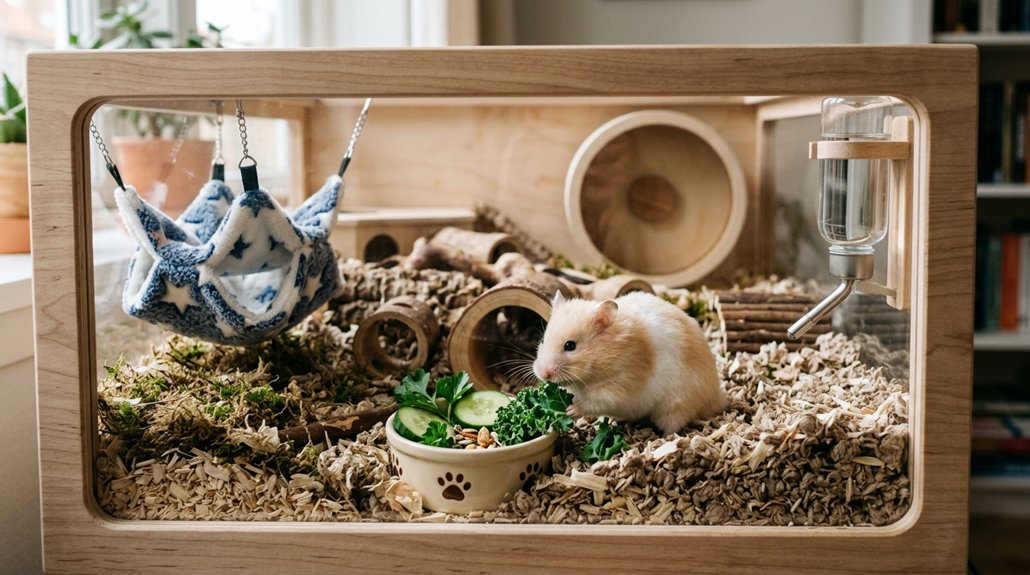
To set up the perfect hamster cage, choose a calm spot with dim lighting, good airflow, and minimal human traffic. Opt for a spacious cage with at least a 6-8 inch bedding layer for digging. Use safe materials like dust-free wood shavings, and include tunnels, platforms, water sources, and hiding spots for enrichment. Keep everything clean and observe your hamster for any behavioral changes. Discovering more secrets to make your hamster thrive awaits.
Key Takeaways
- Choose a spacious cage (minimum 24×12 inches) to enhance the hamster’s mental and physical well-being.
- Provide a minimum of 6-8 inches of safe bedding for fostering natural burrowing behaviors.
- Position the cage in a dim, quiet area with good airflow, away from drafts and pollutants.
- Include essential components like platforms, tunnels, hiding spots, and chew toys for enrichment and engagement.
- Regularly monitor and maintain the cage for hygiene and safety, checking for damages and adjustments in setup.
Find the Ideal Spot for Your Hamster Cage
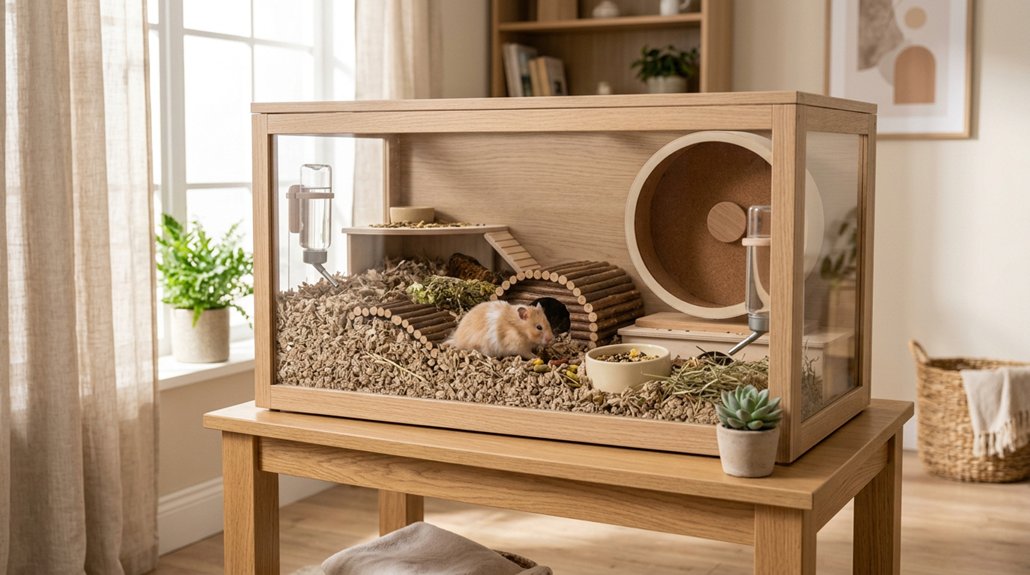
When setting up your hamster’s happy home, the choice of location is vital to their well-being. Selecting an area with ideal lighting—dim and soothing—helps reduce stress, allowing your hamster to thrive without hiding from harsh brightness. Avoid placing the cage near strong odors or pollutants; these can affect your pet’s health. Ensuring excellent airflow is essential; while natural air circulation is beneficial, avoid drafty spaces, as chilly breezes could stress your hamster. A place with minimal human traffic fosters comfort, yet it’s important the cage is accessible for interaction. Positioning the cage at eye level strengthens the bond between you and your furry friend, as it promotes visibility and social engagement while maintaining a peaceful environment for your pet.
Pick the Perfect Cage Size for Your Hamster
Choosing the right cage size for your hamster is like laying the foundation for their kingdom. To foster explorative and active behaviors, consider cage dimensions of at least 24 inches long and 12 inches wide for Syrian hamsters. Larger cages considerably boost mental and physical well-being, encouraging hamster activity through enriched, complex environments. Bin cages, with starting sizes around 200-quart storage, provide ample vertical and horizontal space for burrowing and hiding. Such setups allow for a deep bedding layer of 6-8 inches, accommodating natural digging instincts. Avoid small cages, as confined spaces can lead to stress-induced behaviors like wall scaling and excessive chewing. Ensuring generous cage dimensions is key to nurturing a happy, healthy kingdom for your furry companion.
Gather Essential Cage Components
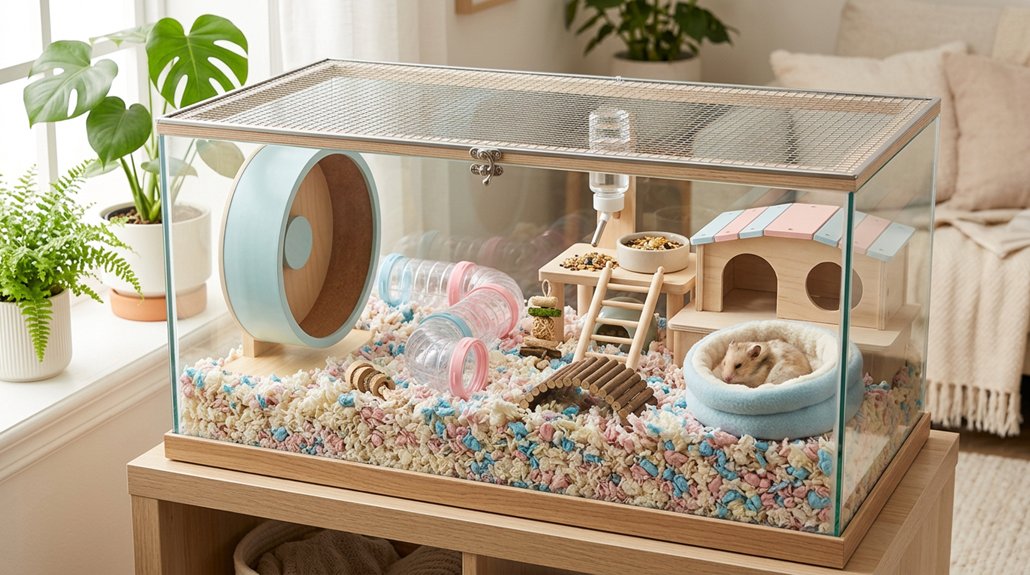
Setting up your hamster’s home isn’t just about picking a cage—it’s about creating a sanctuary filled with essential components that cater to their every need. Start with selecting cage materials like plastic or stainless steel mesh, spacious enough for thick bedding layers vital for digging and nesting options. Offer a selection of safe bedding, remembering to avoid aspen chips, pine, and cotton fluff to prevent harm. Platforms and tunnels made from safe materials let your hamster climb and explore, reducing the risk of injury from unstable surfaces. Add a water bottle and bowl for versatility in hydration. Elevate their environment with hiding spots, nesting boxes, and enrichment items such as chew toys and seed sprays, encouraging natural behaviors and combating boredom.
Choose Safe Bedding and Substrates
Selecting the right bedding and substrates for your hamster is essential for their comfort and safety. Opt for materials like white paper bedding, hemp bedding, and dust-free wood shavings, which are safe and cozy. Be cautious to avoid options like pine, cedar, and aspen chips as they can lead to allergies and toxicity, while other materials like orchard grass hay carry risks of injury and allergic reactions.
Recommended Bedding Materials
A hamster’s cozy home starts with the right bedding, ensuring they have a safe and comfortable environment to burrow and play. When making bedding comparisons, you’ll find remarkable options like white paper bedding, hemp bedding, and coconut soil. These choices excel in safety, avoiding any toxic substances, and bring bedding benefits of enhanced comfort and absorbency, essential for a healthy pet habitat. Unlike pine or cedar, which are harmful, or citric bedding materials that may cause allergies, these recommended options are gentle on your hamster’s skin and paws.
Incorporating a variety of bedding textures can further enrich your hamster’s enclosure, providing stimulation and a more natural setting. Steer clear of small-particle or fibrous beddings like cotton fluff, which risk blockages. Prioritize safety and comfort in their sanctuary.
Bedding Safety Precautions
When choosing bedding and substrates for your hamster’s home, safety should be your top priority. Avoid bedding types like aspen chips, pine, and cedar—they’re toxic and can cause severe allergies or respiratory issues for your pet. Opt for allergy awareness with safer options like white paper bedding, hemp bedding, or coconut soil. These choices provide a comfortable, stimulating environment without risking your hamster’s health. Make sure the bedding is deep enough for natural digging behaviors; a suitable depth encourages your hamster’s instincts to burrow. Steer clear of cotton fluff and kamuk, as they pose a risk of intestinal blockages if consumed. Regularly spot check and change soiled bedding to maintain hygiene and prevent any health complications in your beloved pet.
Create a Textured, Enriching Environment
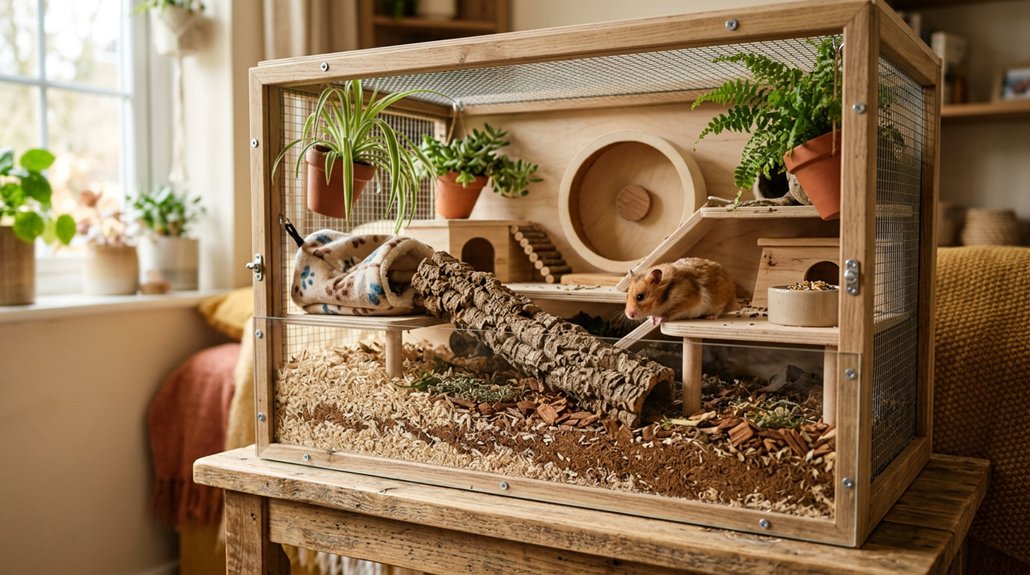
Creating a textured, enriching environment for your hamster is essential for their physical and mental well-being. Start by incorporating a mix of bedding materials like white paper bedding, hemp, and loose sphagnum moss to offer a variety of textures and surfaces for exploration. Enhance their habitat with platforms, tunnels, and enrichment items like seed sprays, encouraging your hamster to climb, forage, and burrow just as they would in the wild.
Diverse Bedding Textures
While setting up your hamster’s habitat, incorporating diverse bedding textures can be a game-changer for their well-being and happiness. Use bedding combinations like white paper, hemp, sand, and coconut soil to enhance sensory enrichment. Each material offers unique textures that stimulate natural digging and burrowing instincts. Piling different bedding materials on opposite sides of the cage not only boosts sensory variety but also offers contrasting environments for your furry friend to explore and nest.
Here’s a quick guide:
| Bedding Type | Benefits | Placement Suggestion |
|---|---|---|
| White Paper | Soft, absorbent | Base layer |
| Hemp Bedding | Natural, dust-free | Spot piles |
| Sand | Smooth, interactive | Digging area |
| Coconut Soil | Moisture-retaining | Burrowing, nesting |
Avoid materials like aspen chips that can harm your hamster’s health. Maintain deep layers for stress-free, comfortable burrowing.
Enrichment Through Accessories
Transforming your hamster’s cage into a stimulating haven is key to their happiness and well-being. By integrating a blend of creative hiding spots and stimulating activities, you can foster a dynamic environment your hamster will love. Start by focusing on the essentials:
- Textured Environment: Utilize diverse bedding materials like paper, hemp, and coconut soil. These layers encourage exploration and natural burrowing.
- Activity Essentials: Introduce sand baths, tunnels, and wheels to engage your hamster in climbing and digging while promoting physical health.
- Vertical Spaces and Hiding: Use sanded wood platforms and bridges to enhance vertical exploration. Guarantee at least one more hiding space than the number of hamsters, offering them secure retreats to reduce stress and boost comfort during their exploratory adventures.
Encourage Natural Behaviors
Building on the importance of creative and stimulating accessories, it’s essential to establish an environment that encourages your hamster’s natural behaviors. Start by providing a mix of hemp and paper bedding for varied textures, stimulating their instinct to burrow. Designated digging areas with sand and coconut soil further enrich behavioral experiences. Add platforms and tunnels crafted from safe materials to encourage climbing and exploration, maximizing vertical space and fostering physical activity.
Introduce hiding spots and nest boxes that offer security, promoting natural shelter-seeking behaviors. This setup aids in mimicking their wild habitats, enabling mental engagement through visible social interactions. Finally, hang chew toys and foraging treats to enhance mental enrichment, replicating the diverse behaviors your hamster would naturally engage in.
Securely Attach Accessories and Maintain Cleanliness
Guaranteeing the safety and cleanliness of your hamster’s cage involves both securely attaching accessories and regularly maintaining the space. Start your accessory attachment with industrial-strength Velcro for water bottles, guaranteeing they’re leak-free and easily accessible. Skip duct tape, as its potential ingestion could harm your furry friend. To guarantee a healthy and hazard-free environment, follow this cleanliness routine:
- Monitor Accessories: Regularly check hanging toys for wear and tear, replacing chewed or damaged items.
- Prioritize Spot Cleaning: Every few days, remove soiled bedding, uneaten food, and waste to maintain a clean habitat.
- Easy Access: Guarantee you can access all cage areas during cleaning without disrupting your hamster’s comfort or nesting preferences.
Compassionate care involves both vigilance and a commitment to providing a safe, hygienic home.
Observe and Adjust Based on Hamster Behavior
After ensuring your hamster’s cage is safely and securely set up, it’s important to pay attention to how your hamster interacts with its environment. Begin by behavior monitoring to identify any accessibility issues. Watch closely as your little one explores, noting any areas that might benefit from habitat adjustments. A Wyze camera can help you understand your hamster’s nocturnal activities when you’re not around. For improved navigation, add adhesive cork or nail file paper on slippery surfaces. Regularly check for large drop-offs or hazards, and adjust the layout to enhance safety and comfort. Document any changes in behavior or preferences following these modifications. Through attentive observation and thoughtful changes, you’ll create a nurturing and secure space for your furry friend.
Help Your Hamster Acclimate and Thrive
When welcoming a new hamster into your home, it’s essential to foster an environment that allows them to acclimate smoothly and thrive. This process can take up to two weeks during which irregular behaviors might occur. Here are some acclimation tips and socialization strategies that can help:
- Environmental Control: Position the cage in a location with minimal drafts and pollutants, maintaining a stable lighting routine to reduce stress-related behaviors.
- Noise Minimization: Keep sounds around the cage limited to prevent stress and promote comfort, encouraging your hamster to be more active and visible.
- Early Interaction: Offer gradual socialization opportunities to foster trust and connection, aiding in your hamster’s adjustment and overall happiness.
Frequently Asked Questions
How Should a Hamster Cage Be Set Up?
You should set up your hamster’s cage by choosing safe bedding types, like white paper or hemp, and include cage accessories such as tunnels and chew toys. Create a comfortable, enriching environment that matches their natural behaviors and needs.
Can Hamsters Hear You?
Yes, hamsters hear you, detecting sounds up to 30 kHz with impressive sound sensitivity. They may recognize your voice and link it to feeding. Keep their environment calm to prevent anxiety from loud noises. Be compassionate.
What Are Common Hamster Cage Mistakes?
You’re making common mistakes if you choose a small cage size or poor bedding material like cotton fluff. These errors can cause stress, health problems, and limit exploration. Guarantee your hamster’s habitat promotes safety and comfort.
Do Hamsters Prefer Lights on or Off?
Hamsters prefer lights off to align with their nocturnal behavior. By respecting their natural sleeping habits, you’ll create a comfortable environment. Providing a dimly lit space promotes exploration and reduces stress, encouraging your hamster’s natural behavior.
Conclusion
You’ve done it—crafted the perfect hamster kingdom, complete with a cozy spot, spacious digs, and enriching toys. Ironically, while you chose everything with care, it’s your hamster who’ll decide if it meets their high standards. As they burrow, climb, and nibble, keep an eye on their behavior and tweak the setup if needed. You’ve learned the art of understanding their tiny needs, now enjoy watching your little adventurer thrive in their carefully curated habitat.