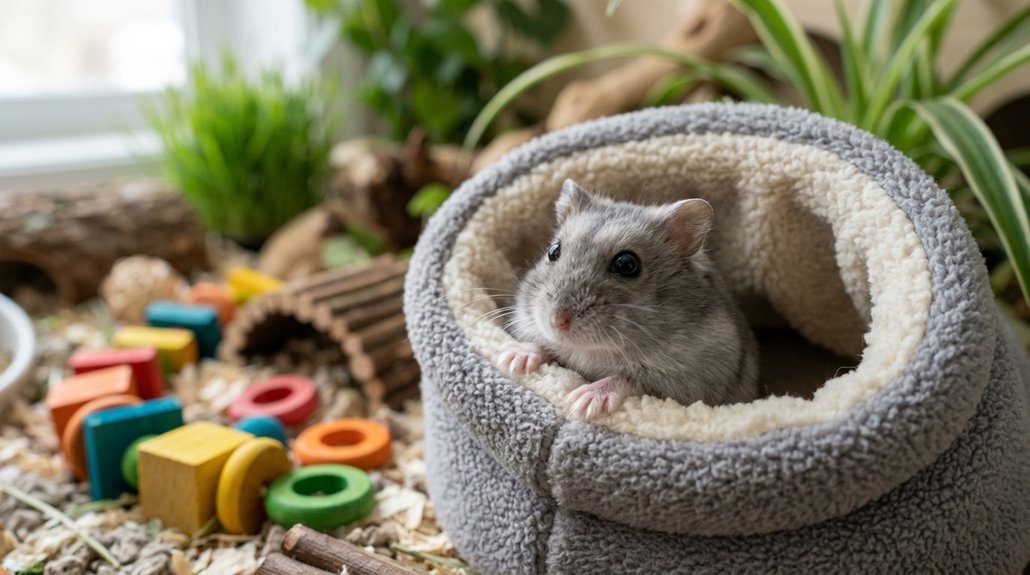
If your hamster seems stressed or unhappy, start by identifying signs like unusual behaviors or weight changes. Verify its habitat is stress-free by placing the cage in a quiet location with adequate space and enrichment like tunnels and toys. Maintain a consistent feeding and cleaning routine, and promote trust through gentle interactions. Speak softly and offer treats to build positive associations. By exploring further, you’ll discover more strategies to enhance your hamster’s well-being.
Key Takeaways
- Observe for unusual or aggressive behaviors like excessive digging or bared teeth as indicators of stress.
- Relocate the cage to a quiet area to minimize disturbances and support a calm environment.
- Enhance the habitat with tunnels, chew toys, and ample substrate for natural burrowing activities.
- Offer a varied diet with fresh vegetables and proteins to ensure nutritional balance and reduce stress.
- Gradually build trust by spending time near the cage and reinforcing positive interactions with treats.
Spotting Hamster Stress Signs

While it’s important to monitor your hamster’s behaviors regularly, identifying stress signs can help guarantee their well-being. Start by noting any unusual behavioral clues such as excessive digging, repetitive scurrying, or increased vocalization. These actions are well-being indicators suggesting stress or discomfort. Aggressive behaviors, including bared teeth and flattened ears, often imply your hamster feels threatened or displeased. Pay close attention to weight loss or shifts in appetite; refusal to eat or drink can denote stress or underlying illness. Hair loss and fur changes due to overgrooming signal anxiety, requiring immediate attention. Additionally, hiding more than usual or freezing upon approach indicates environmental discomfort. Recognizing these stress signs early enables prompt intervention, safeguarding your hamster’s health and quality of life.
Creating a Stress-Free Habitat
To guarantee a stress-free habitat for your hamster, it’s important to take into account its environmental needs meticulously. Start by selecting an ideal cage location; place the enclosure in a quiet area, minimizing loud noises and disturbances. It’s necessary that the cage offers at least 450 square inches of unbroken floor space, facilitating adequate movement and exploration.
Focus on substrate depth; provide a thick layer of at least 6 inches to encourage burrowing, significant for mental stimulation and comfort. Introduce a variety of safe toys and hiding spots to prevent boredom, fostering natural behaviors like climbing and foraging. Additionally, maintain a regular cleaning routine to uphold hygiene, ensuring a comfortable, stress-free environment, which is key for reducing stress related to unsanitary conditions.
Steps to Reduce Hamster Stress
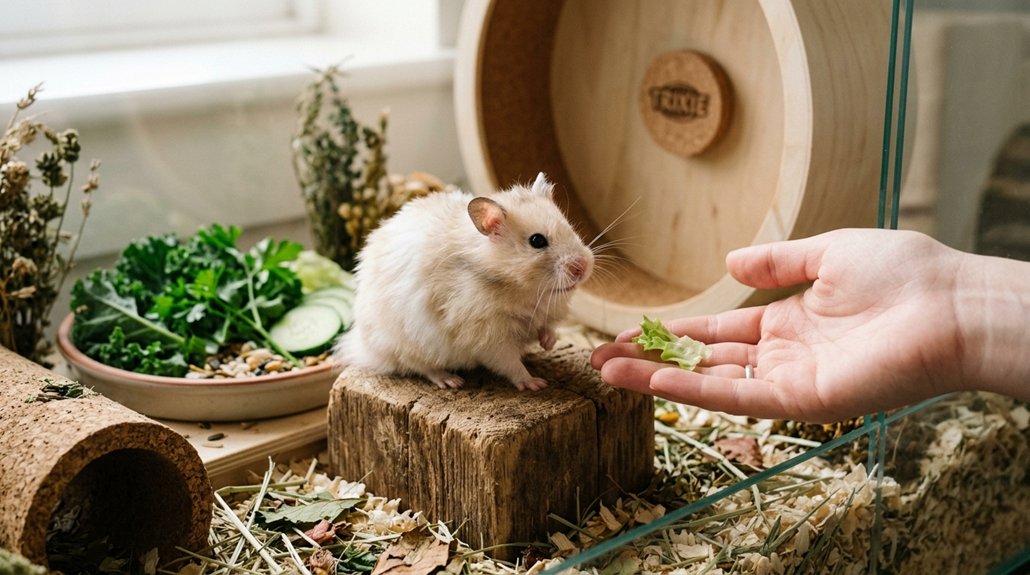
Having set up a stress-free habitat for your hamster, it’s time to focus on specific steps that further mitigate stress. First, verify diet adjustments by offering varied, nutritionally balanced meals. Consider incorporating fresh vegetables and protein sources like mealworms to boost their dietary profile. Next, look into habitat additions that enhance physical and psychological comfort. Introduce elements like tunnels, climbing apparatuses, and chew toys within their cage. These additions simulate natural behaviors, enriching their environment. Maintain a calm setting by situating the cage in a quiet area, away from disturbances. Confirming this serene backdrop supports uninterrupted sleep, essential for stress reduction. Finally, establish a consistent routine synced with your hamster’s natural activity cycles to cultivate stability and predictability, important for well-being.
Building Trust Through Interaction
Developing trust with your hamster is an essential aspect of their care, as it influences their overall well-being and comfort in their environment. A gradual approach to trust building techniques is important. Allow your hamster to come to you, rather than forcing interaction. This helps build trust over time. Spend time near their cage, speaking softly, to reinforce a sense of security. Use positive reinforcement, such as offering treats through cage bars or on your hand, linking your presence with positive experiences. Monitoring body language is significant; look for comfort signals like stretching and grooming, and be mindful of fearful behaviors like hiding. By handling your hamster consistently during active hours, you can establish a non-threatening, familiar routine.
Keeping Your Hamster Happy and Healthy

How can you guarantee your hamster remains happy and healthy? Start by creating a spacious cage with at least 450 square inches of floor space and 6 inches of substrate for burrowing, satisfying their natural instincts. Establish a structured routine for feeding — an essential dietary consideration that aligns with their active hours. Enrich their environment with social enrichment through safe toys and nesting materials, preventing boredom and promoting mental stimulation. Guarantee a calm, quiet environment to minimize stress, allowing your hamster to flourish without anxiety. Regularly observe behavioral changes to track well-being efficiently. Use the table below for key considerations:
| Factor | Recommendation |
|---|---|
| Cage Space | 450 square inches minimum |
| Substrate Depth | 6 inches deep |
| Feeding Routine | Consistent, during active hours |
| Environmental Enrichment | Safe toys, nesting materials |
| Stress Management | Calm, quiet surroundings |
Frequently Asked Questions
How Do I Help My Stressed Hamster?
Start by introducing enrichment activities, like chew toys or exercise wheels, to stimulate their mind. Apply calming techniques such as maintaining a quiet environment and using products like calming diffusers to create a serene atmosphere for your hamster.
How Do You Say “Hi” in Hamster Language?
Curious about saying “hi” to your hamster? Notice their scent marking; rubbing cheeks on objects is their way. It’s hamster communication at work, indicating
What Are End of Life Signs in Hamsters?
When observing end-of-life signs in hamsters, you’ll notice lethargy, reduced activity, changes in appetite, and altered grooming habits. Health observations may include labored breathing and behavioral alterations, impacting overall hamster behavior markedly, indicating serious health issues.
How Do I Tell if My Hamster Is Stressful?
Imagine a calm hamster as a ship sailing smoothly; behavior changes are turbulent waves. Stress signs like excessive grooming or avoiding interaction signal rough seas. Consider environment factors and handling techniques to keep their voyage peaceful.
Conclusion
Imagine your hamster as a tiny explorer maneuvering the vast unknowns of their habitat. When the terrain gets rocky, it’s your role as the guiding star to smooth the path. By recognizing stress signals, crafting a serene environment, and nurturing trust through gentle interaction, you become the architect of their happiness. In doing so, you guarantee your little adventurer thrives in a balanced ecosystem, where curiosity flourishes and peace prevails, like a scientist safeguarding a delicate experiment.