Owning a hamster costs vary, starting with adoption ($10-$30) or breeder purchase ($50-$75). Set up a cage costing $30-$200 and initial supplies $102-$394. Monthly costs, including diet, bedding, and vet care, hover around $45. Annually, expect $400-$600, accounting for food, bedding, and wellness visits. Embrace smart savings by opting for DIY solutions and thrift finds. There’s more to explore in creating an enriching and budget-conscious environment for your tiny companion.
Key Takeaways
- Initial adoption costs range from $10 to $75, depending on the source.
- Suitable cage and habitat setup costs can range from $30 to $200.
- Monthly expenses, including food and bedding, average at least $45.
- Annual hamster care expenses typically range between $400 to $600.
- Emergency veterinary bills start at approximately $80, necessitating financial preparedness.
What Are the Initial Costs of Bringing Home a Hamster?
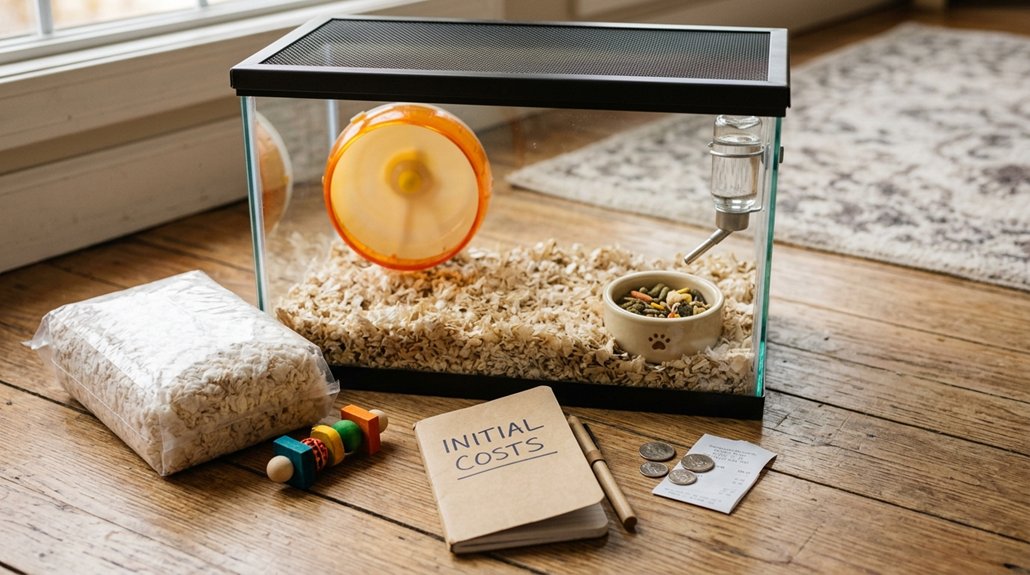
Getting your first hamster involves several initial costs, and it’s important to be prepared for these expenses to secure your new pet’s well-being. Hamster adoption costs vary: shelters charge $10 to $30, breeders $50 to $75, and pet stores $15 to $25. Beyond adoption, initial setup expenses are essential. You’ll need a suitable cage and habitat, costing between $30 to $200, guaranteeing a minimum of 650 square inches of floor space. Initial supplies like food and water essentials may set you back another $102 to $394. Don’t forget toys and enrichment items, important for mental stimulation, priced from $20 to $80. Investing in proper care now secures your hamster thrives in its new home.
What Monthly Expenses Should You Expect for a Hamster?
Owning a hamster comes with some monthly expenses that you should be prepared for. Your hamster’s diet is essential and will cost between $5 and $12 each month. Selecting a balanced diet is important for your hamster’s health. Bedding, another necessity, will set you back $10 to $15 monthly; it’s best to choose unscented paper-based or hemp bedding. Enrichment variety is crucial for your hamster’s well-being and involves a range of toys and accessories, potentially costing $20 to $80, depending on how often you purchase them. Don’t forget about regular veterinary care, averaging about $2.50 to $8.33 monthly. Overall, budgeting at least $45+ per month covers your pet’s primary needs, ensuring a happy, healthy home for your furry friend.
How Much Will You Spend Annually on Your Hamster?
Caring for your hamster means preparing for an annual expense that can range from $400 to $600, with food and bedding typically costing around $45 each month. You’ll also want to budget for essential veterinary care, including wellness check-ups that range from $30 to $100 annually, alongside potential emergency visits that start at $80. Remember, keeping your hamster happy and healthy involves regular bedding replacements costing between $120 and $180 each year, plus a little extra for toys and accessories to enrich their environment.
Annual Vet Expenses
When planning for your hamster’s well-being, you’re looking at an annual veterinary care cost of around $360 or more. This includes regular wellness check-ups essential for maintaining preventative health. Initial vet visits typically range from $30 to $100, addressing vaccinations and parasite control, which help guarantee your pet’s continued health and possibly avoid more costly issues down the road. Additionally, it’s important to take into account emergency preparedness. Unexpected health problems can arise, with emergency care costs starting at $80. By budgeting for unforeseen medical needs, you safeguard your hamster’s well-being and your finances. Regular vet visits act as a safeguard, minimizing risks and aiding in early detection of illness, ensuring your furry friend leads a long, healthy life.
Food and Bedding Budget
Taking care of a hamster involves more than just love and time; financial planning is fundamental to cover food and bedding costs, which are essential for your pet’s comfort and health. Annually, these expenses can range from $180 to $300. For hamster nutrition, a budget of $60 to $144 is typical. You’ll need to invest $10 to $15 monthly on quality food to support your hamster’s dietary needs. Bedding materials also form a significant expense, averaging $120 to $180 per year. It’s important to choose unscented paper-based or hemp bedding for safety and comfort, avoiding cedar shavings. Proper bedding safeguards your hamster’s wellbeing, highlighting the significance of selecting the right materials. Planning these expenses is key to guaranteeing your hamster’s thriving lifestyle.
Choosing: Adopt Your Hamster or Buy From a Breeder?
How do you decide between adopting a hamster and buying one from a breeder? Adopting provides the shelter benefits of affordability, costing $10 to $30, plus you support animal welfare and often receive a health report. It saves you money especially during special events. Alternatively, breeder advantages include a higher price of $50 to $75, offering detailed genetic history and better socialization for the hamster. Breeders can guarantee the hamster’s lineage is free from common genetic issues, providing reassurance of pet health. While pet stores offer hamsters too, they might lack specific knowledge about each animal’s needs or health background. Consider your priorities: supporting shelters, financial constraints, or prioritizing socialization and genetic health when deciding the best option for you.
Crafting a Perfect Hamster Habitat: Overcoming Common Challenges
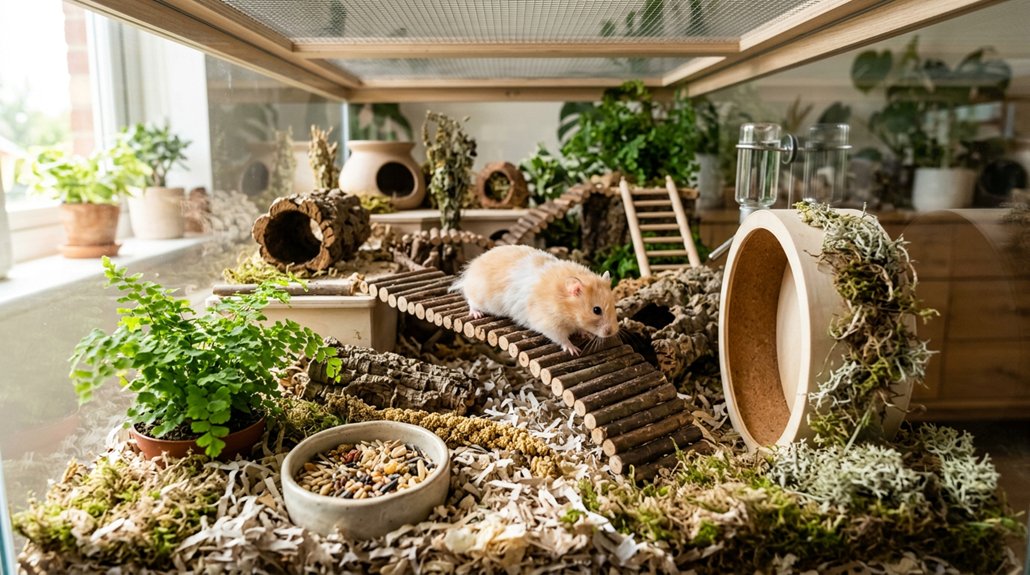
Creating a comfortable and suitable habitat for your hamster might seem overwhelming, but understanding their specific needs can make the process smoother. When diving into hamster habitat design, start by ensuring a minimum of 650 square inches of floor space, essential for their exercise needs. Solid materials with good ventilation and a deep base are important, allowing at least 6 inches of bedding for burrowing. For bedding material considerations, stick to unscented paper-based or hemp options. Avoid pine, cedar, and cotton, as they can be harmful. Enrichment makes a huge difference; tunnels, chew toys, and platforms (costing $10 to $30 each) are crucial. Regular cleaning, with bedding changes every few weeks, minimizes odors and maintains a wholesome environment.
Smart Saving Strategies for Hamster Owners
As a hamster owner, embracing DIY enrichment solutions like crafting playful structures from torn paper rolls can help stretch your budget while engaging your pet’s curious nature. It’s wise to explore thrift stores or keep an eye out for promotions on essential supplies, enabling you to save considerably without compromising your hamster’s comfort. By prioritizing these smart strategies, you’ll find it’s possible to maintain a joyful and healthy environment for your hamster without breaking the bank.
DIY Enrichment Solutions
There’s a wealth of creative solutions that can transform everyday household items into effective enrichment tools for your hamster, saving you money while boosting their mental and physical well-being. You can create engaging cardboard tunnels and foraging activities right at home, tapping into their natural instincts. Here’s how:
- Toilet paper rolls: Perfect for making tunnels. Stack them creatively to build an enticing maze.
- Cardboard boxes: Cut out entrances for a cozy hideaway your hamster will love.
- Empty egg cartons: Use them as obstacle courses, encouraging exploration and exercise.
- Repurposed containers: Craft small nests, offering a safe place for your hamster to retreat.
- Shredded paper mixed with food: Encourage foraging by scattering treats to stimulate their senses.
These DIY projects bring a world of fun!
Thrift and Secondhand Finds
When you’re looking to care for your hamster without breaking the bank, exploring thrift and secondhand options can be a game-changer. Thrift shopping for secondhand supplies like cages, toys, and bedding can be both budget friendly and eco friendly. Just make sure you thoroughly sanitize these items before using them. Investing in a larger cage from a thrift store might reduce bedding expenses since it requires less frequent cleaning. Everyday household items, like containers for sand baths and cardboard boxes for hideouts, also offer economical solutions. You can even use toilet paper rolls for DIY enrichment. Keep track of your monthly expenses on these thrifted finds to maintain a sustainable budget for ongoing care. This mindful approach benefits your wallet and the environment.
Essential Veterinary Care for Your Hamster
Though often overlooked, veterinary care is an essential component of responsible hamster ownership. Regular wellness check-ups, ranging from $30 to $100, can greatly impact your hamster’s health and prevent costly medical issues later. With veterinary insurance, you might mitigate some financial burdens, but you’ve got to be prepared to invest in your hamster’s well-being. Total annual veterinary expenses can exceed $360, emphasizing the importance of budgeting for routine care and potential emergencies. By prioritizing preventative health care, you guarantee a happier, healthier life for your pet.
- Routine check-ups: Monitor for subtle health changes.
- Dental care: Avoid painful issues.
- Weight monitoring: Detect obesity early.
- Skin and fur checks: Identify and treat infections.
- Diet recommendations: Tailored for ideal health.
Planning for Emergency Vet Bills and More
Even with the best preventative care, unexpected health issues can arise, making it crucial to prepare for emergency vet bills along your hamster’s journey. Emergency preparedness involves setting aside a budget specifically for unforeseen veterinary costs. Starting at approximately $80, emergency vet bills can surge greatly, so having at least $100 ready for such situations is wise. Remember, cost fluctuation can occur, and it’s not uncommon for expenses to exceed initial estimates in the event of an emergency.
In addition to emergencies, prioritize regular wellness check-ups, which typically range from $30 to $100 annually, to maintain your hamster’s health. Keeping financial plans in place for both routine and unexpected care guarantees you can support your hamster’s needs without financial strain, offering peace of mind for any situation.
Frequently Asked Questions
How Much Does a Hamster Cost per Month?
You’re looking at approximately $45+ monthly expenses for hamster supplies. Food, bedding, and veterinary checks contribute to this cost. It’s crucial to account for toys and enrichment items for their wellbeing, which especially enhance their environment.
Is 2 Hamsters Better Than 1?
While hamster companionship sounds delightful, their social behavior leans toward independence. Managing two could complicate things with territory disagreements, but you might enjoy their quirky dynamics. Remember, double the love means double the commitment and care.
Can You Leave a Hamster Alone for 3 Days?
You shouldn’t leave your hamster alone for three days without extensive hamster care preparation. Make certain they have sufficient food and water, a comfortable habitat, plus toys for enrichment to support healthy feeding habits and reduce anxiety.
Is It Hard Owning a Hamster?
Yes, owning a hamster isn’t hard but requires consistent care. Balancing their solitude and daily interaction while understanding hamster behavior is key. You’ll guarantee they’re happy, keep their habitat clean, and provide proper nutrition.
Conclusion
Owning a hamster is both a delightful journey and a financial responsibility. Like crafting a masterpiece, the key lies in balancing initial costs, monthly expenses, and emergency funds. Picture creating a cozy haven for your furry friend, sparking joy and curiosity. Embrace smart saving strategies like collecting precious jewels and prioritize essential veterinary care like a guardian. With thoughtful planning, you’ll nurture a bond that blossoms as beautifully as a garden in full bloom.